
Paris Rediscovers its Poetic Eye: Robert Doisneau Returns Home
Brian Byrd is a freelance photographer with more than two decades of experience advancing communication as a catalyst for social change. He serves on the board of directors for the Overseas Press Club of America and the advisory board for WITNESS, a global NGO founded by musician Peter Gabriel that uses video and digital technology to document human rights violations.
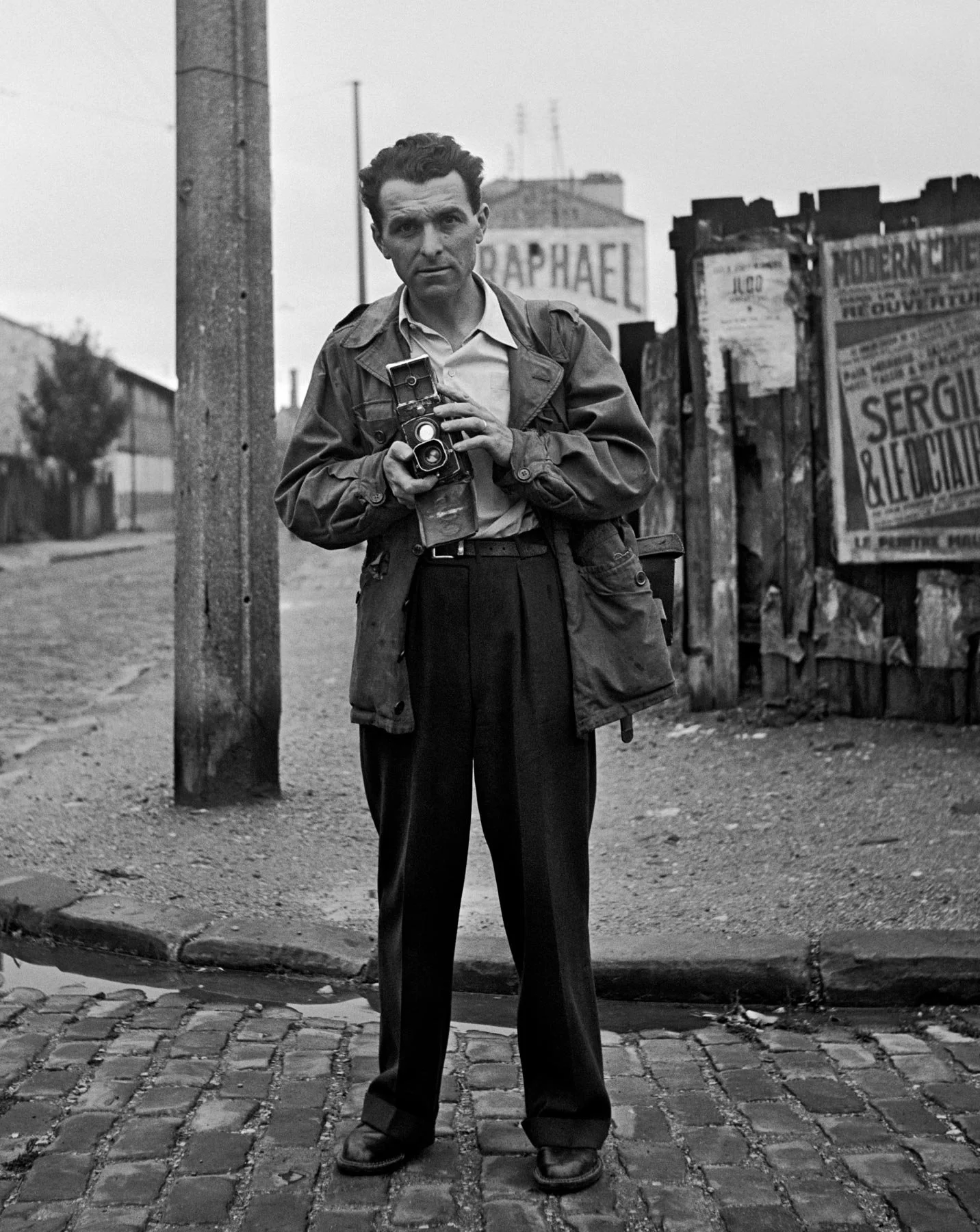
Autoportrait, Villejuif, 1949
© Atelier Robert Doisneau
Robert Doisneau (1912-1994) was more than just a photographer—he was Paris's most beloved chronicler of everyday magic. Born in the suburbs of Gentilly and raised in "the narrow confines of modest lives," this master of humanist photography spent nearly six decades capturing the poetry hidden in ordinary moments. From his early industrial documentation at Renault in the 1930s to his iconic street photography that made images like "Le Baiser de l'Hôtel de Ville" universally recognizable, Doisneau possessed an extraordinary ability to find dignity, humor, and profound humanity in the most humble circumstances.
Working alongside contemporaries like Henri Cartier-Bresson and Édouard Boubat, Doisneau helped define the French school of humanist photography, yet his vision remained uniquely his own. Whether documenting children at play in Parisian streets, workers in industrial settings, or artists in their studios, he brought what he called "poetic realism" to every frame—seeing the world as it was while revealing its hidden wonders.
After years of absence from the capital's galleries, this master was back where he belongs. Robert Doisneau. Instants Donnés at the Musée Maillol presented over 400 carefully curated photographs from his archive of 450,000 images, reminding us why Doisneau's vision of Paris—and humanity itself—remains unmatched. On a recent visit to Paris, I had the privilege of experiencing this extraordinary exhibit.
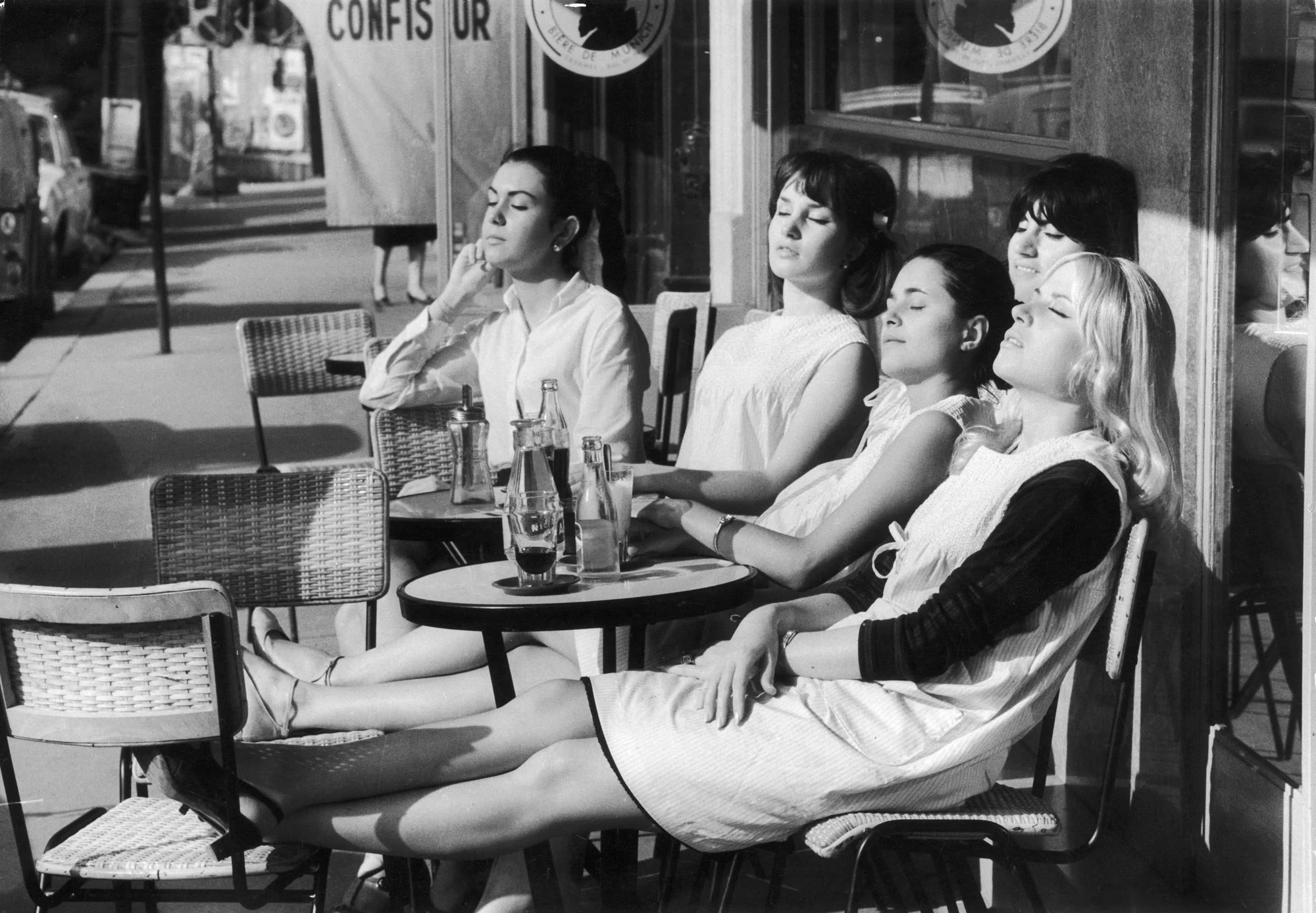
Les Coiffeuses au soleil, juin 1966
© Atelier Robert Doisneau
The Dreamer's Documentary
Doisneau once said, "I don't photograph life as it is, but as I would like it to be." This exhibition proves that statement was both modest and profound. Drawing from a deep trove of images, the retrospective reveals how Doisneau transformed ordinary moments into universal poetry. His lens found magic in a child's glance, tenderness in a stolen kiss, and profound humanity in the humblest café corner.
The show spans his entire career, from his early industrial documentation at Renault (1934-1939) to his surprising fashion work for Vogue (1949-1952). Each photograph demonstrates his uncanny ability to capture what he called "instants donnés"—those fleeting moments when reality reveals its hidden beauty. As the curators note, these are "a few hundredths of a second here, a few hundredths of a second there, put together, they make one, two, three seconds snatched from eternity."
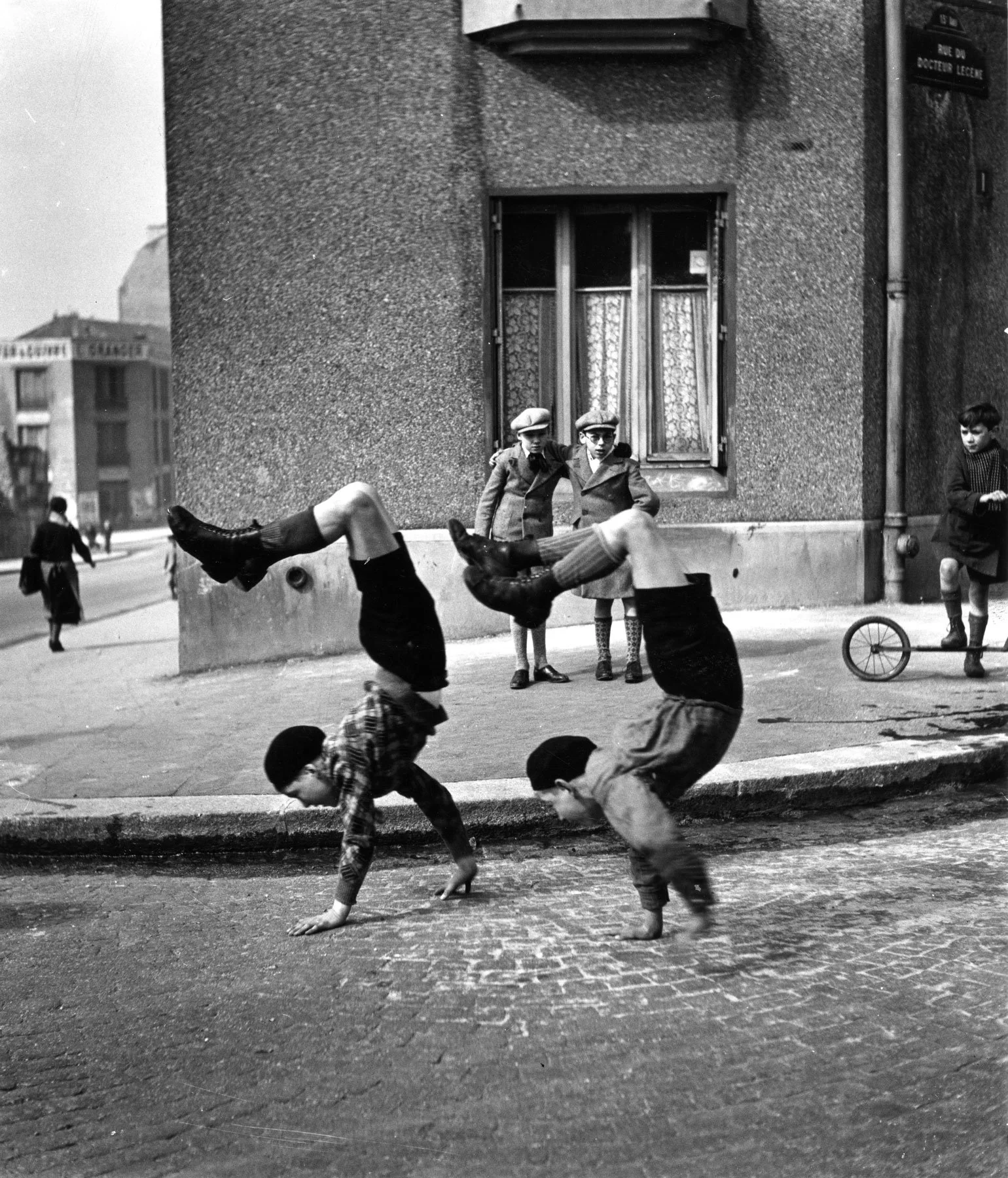
Les frères, rue du Docteur Mecène, Paris, 1934
© Atelier Robert Doisneau
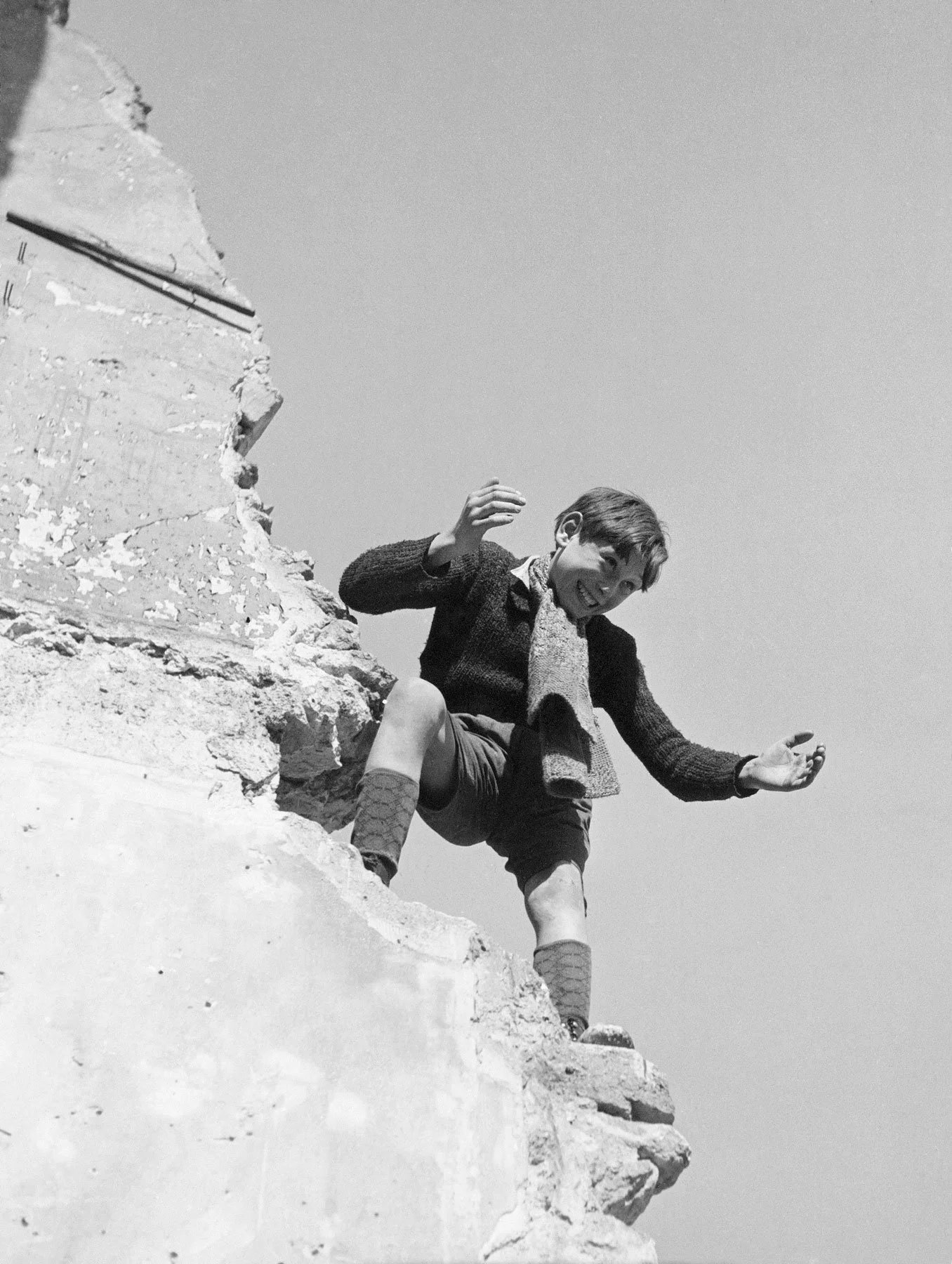
Le Saut, 1936
© Atelier Robert Doisneau
Beyond the Iconic
While visitors encountered beloved images like "Le Baiser de l'Hôtel de Ville," the exhibition's strength lies in its revelation of lesser-known series and the stories behind the famous ones. The show unfolds across multiple floors of the Musée Maillol, with each section offering a distinct perspective on Doisneau's multifaceted career. From the opening "Childhood" galleries that preserve the "benevolence, disobedience, and imagination" he carried throughout his life, to the striking "Gravités" section where "the color chart darkens" and reveals his deep sensitivity to social issues—documenting everyone from miners of Lens to steelworkers of the Fensch Valley, consistently showing "the isolation and dignity of those to whom life had not been kind."
His famous "Vogue Years" (1949-1952) occupied their own fascinating space in the exhibition. Hired by Michel de Brunhoff to capture post-war French society's renewal, Doisneau gained access to "a world that was not his own, one with which he did not really associate, but whose beauty and sophisticated grace he was able to appreciate." These photographs of exquisite refinement now serve as "precious testimonies from an outsider, slightly out of place in a world that has now disappeared."
Particularly revelatory are his photographic "bricolages"—experimental montages, collages, and direct interventions on prints that his daughter Francine describes as "cries of freedom to escape the routine of commissions." As his daughter, Annette Doisneau, recalls from working alongside her father: "When there was a lull at the agency, he always found another project. He created montages, collages... Today, this type of installation is highly appreciated, but at the time, it was frowned upon."
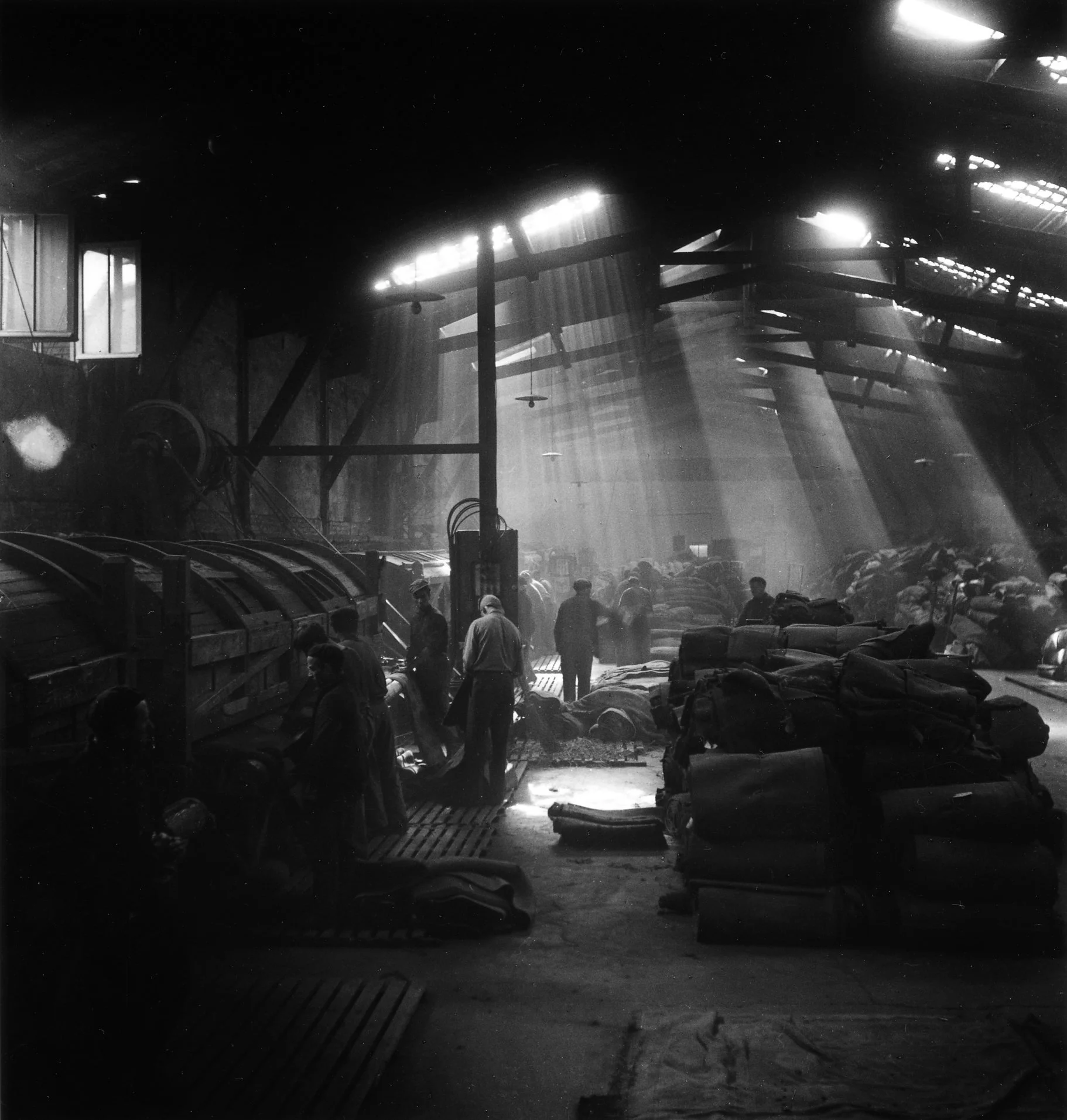
L’usine Bobin à Montrouge, 1945
© Atelier Robert Doisneau
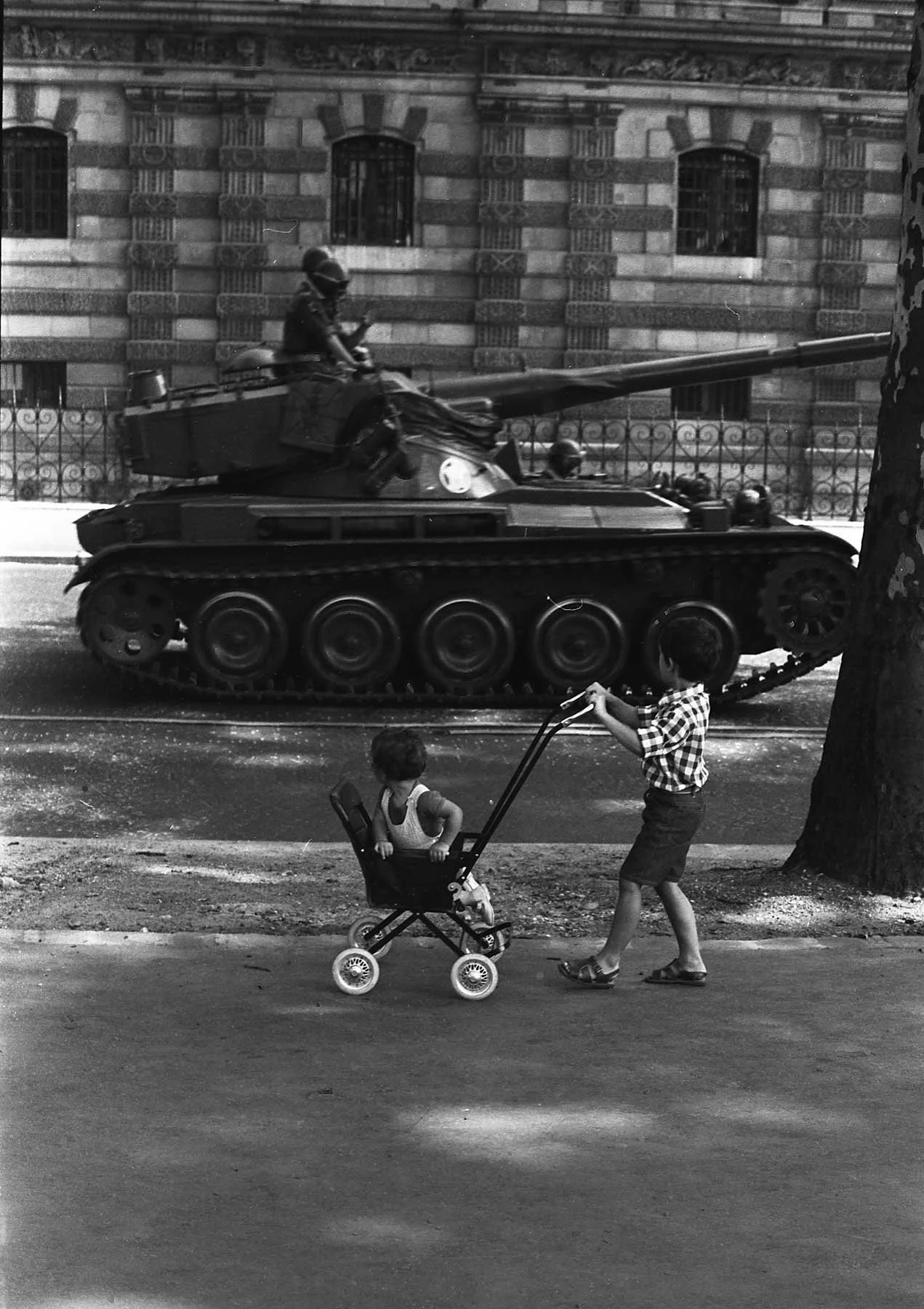
Véhicule militaire 14 juillet, 1969
© Atelier Robert Doisneau
A Life's Work Illuminated
The exhibition dedicates meaningful space to exploring Doisneau's relationship with writers, who were "essential companions in his life as a photographer." His 1945 meeting with Blaise Cendrars—the Swiss-born French modernist poet and novelist known for works like La Prose du Transsibérien—proved pivotal: Cendrars helped him publish his first book and "leave behind his status as an illustrator to become an author in his own right." With friends like Jacques Prévert (met in 1931), the beloved poet and screenwriter known for his whimsical verse and collaborations with Marcel Carné, and later Daniel Pennac, the contemporary novelist celebrated for his Malaussène series, Doisneau enjoyed "recreating his own little theatre, whether on the street, in the café, in a private flat, in a studio."
The "Artist Studios" section shows Doisneau in natural environments where he displayed his talent as portraitist and director, capturing the place where ideas became works of art. In "Bistros", we see his belief that "it's good to have a familiar bistro. Two are even better"—spaces where ordinary life revealed its extraordinary character.
The inclusion of personal objects, rare documents, and interactive elements—curated with the involvement of his daughters Francine Deroudille and Annette Doisneau—creates an intimate encounter with the photographer's world. "Being at work was the only way to live for him," Annette explains. "It was a total joy! When you work with someone so passionate, it's always a pleasure to be there."
An audioguide featuring Doisneau's own voice, drawn from original audiovisual tapes from the 1960s to the 1990s, accompanies around thirty works, allowing the photographer himself to guide visitors through his vision.
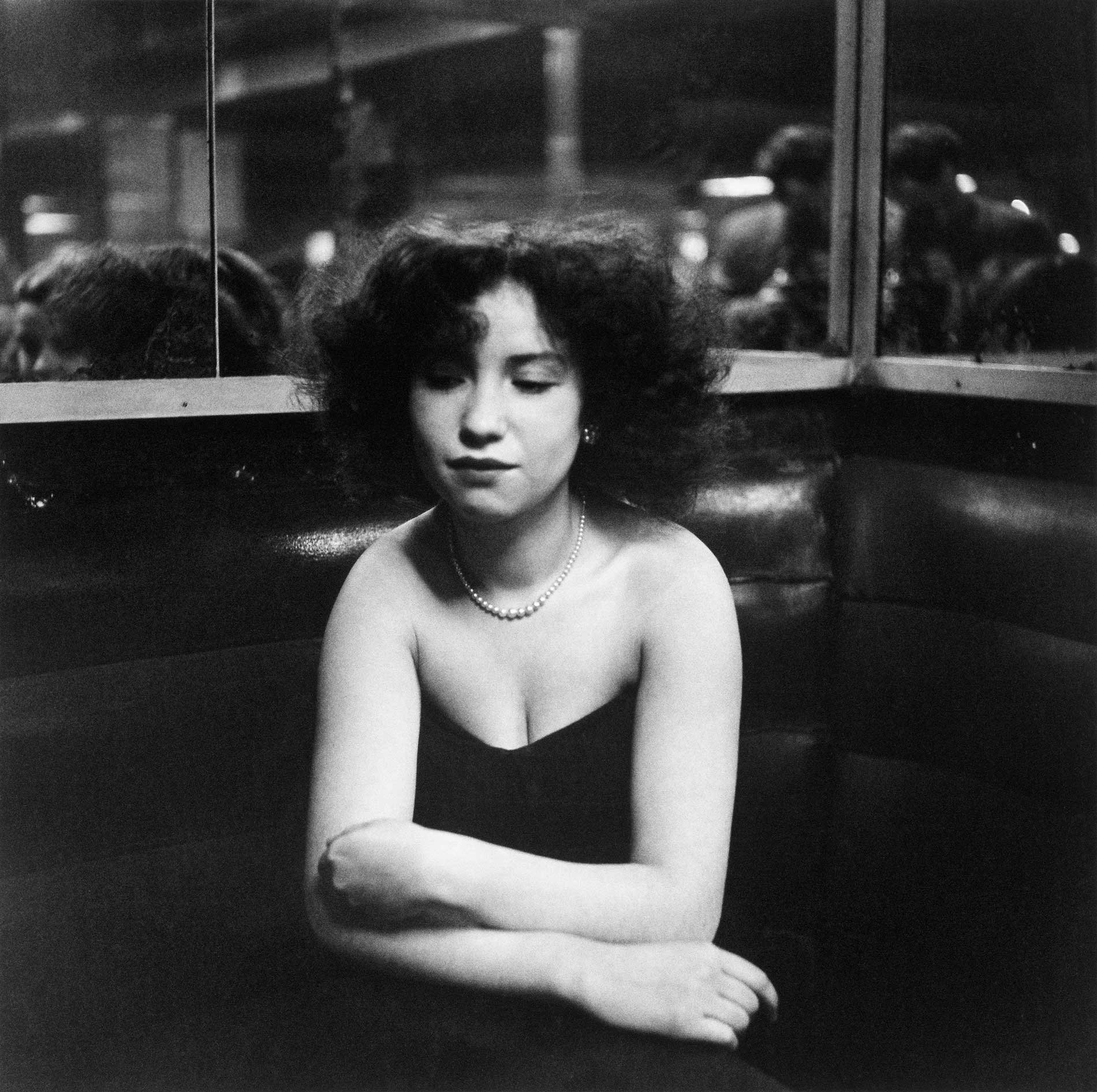
Mademoiselle Anita, 1951
© Atelier Robert Doisneau
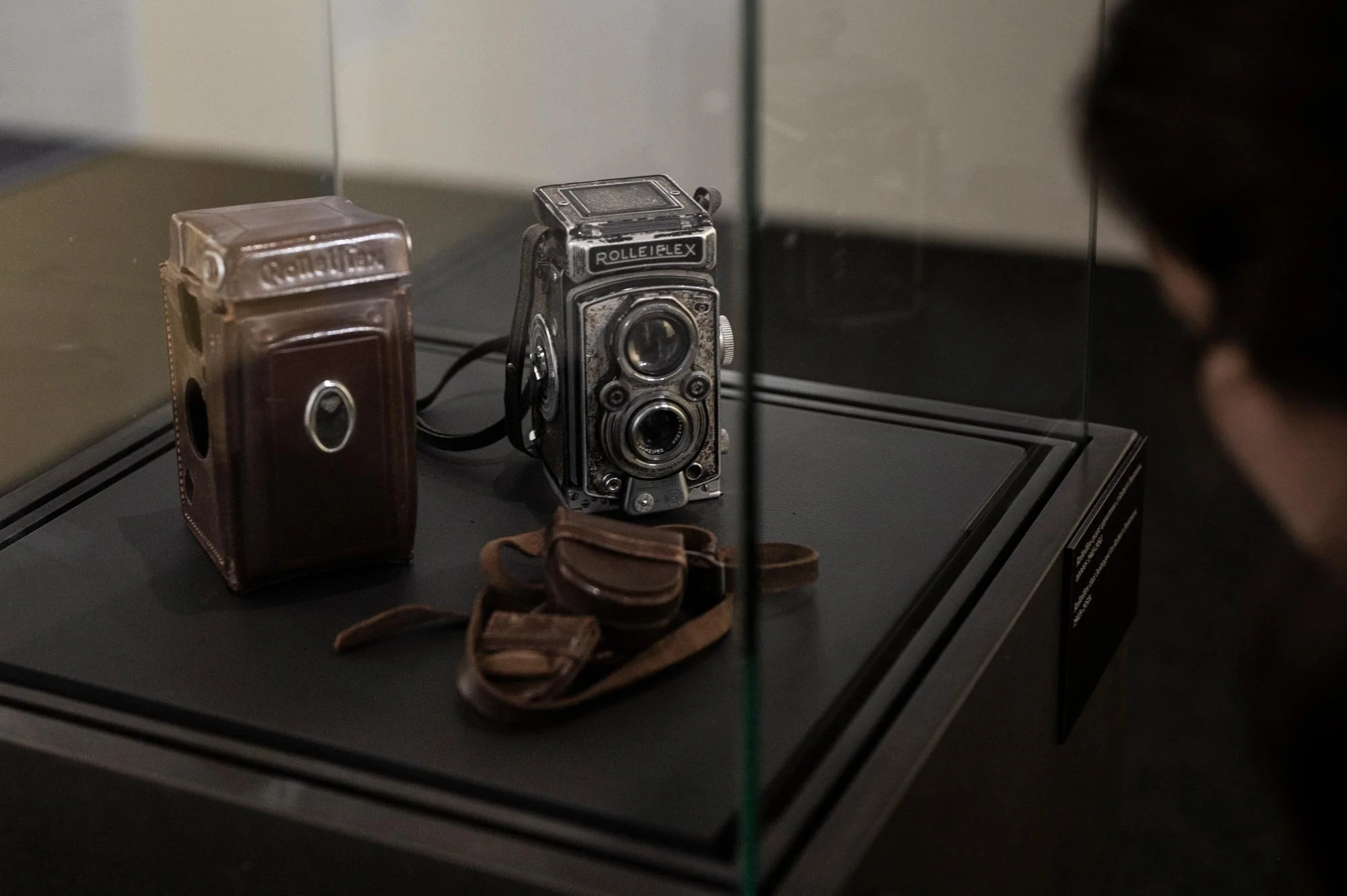
Photo by Denis Decaluwe © Tempora
The Art of Seeing
What distinguishes Doisneau from his contemporaries like Cartier-Bresson and Boubat isn't just technique—it's perspective. His "poetic realism" captures the world as it is while illuminating the marvelous within the mundane. As co-curator Isabelle Benoit notes, the exhibition examines how Doisneau navigated between poetry and realism: "Here, it is poetry that engulfs realism... There, it is realism that has devoured poetry."
This duality is evident throughout his work, from his documentation of Parisian bistros to his studies of people encountering art. At the Louvre in 1945, he "scrutinized the expressions of the visitors" viewing the Mona Lisa, "revealing the doubts and questions of these unwilling actors." Later, at his friend Robert Giraud's gallery on Rue de Seine, he positioned himself behind a mirror to capture "the movements and reactions of the various iconolaters," transforming art appreciation into theater. The exhibition features a special section, "In Front of the Artwork", exploring these fascinating series.
His daughters reveal the practical philosophy behind this approach. "He didn't care about the status of artist nor about a purist stance in black and white," Francine explains. "For him, only freedom mattered." This freedom manifested in his extraordinary adaptability—from industrial documentation at Renault (where "his political awareness was born") to fashion work for Vogue, from social testimony to experimental "tinkering."
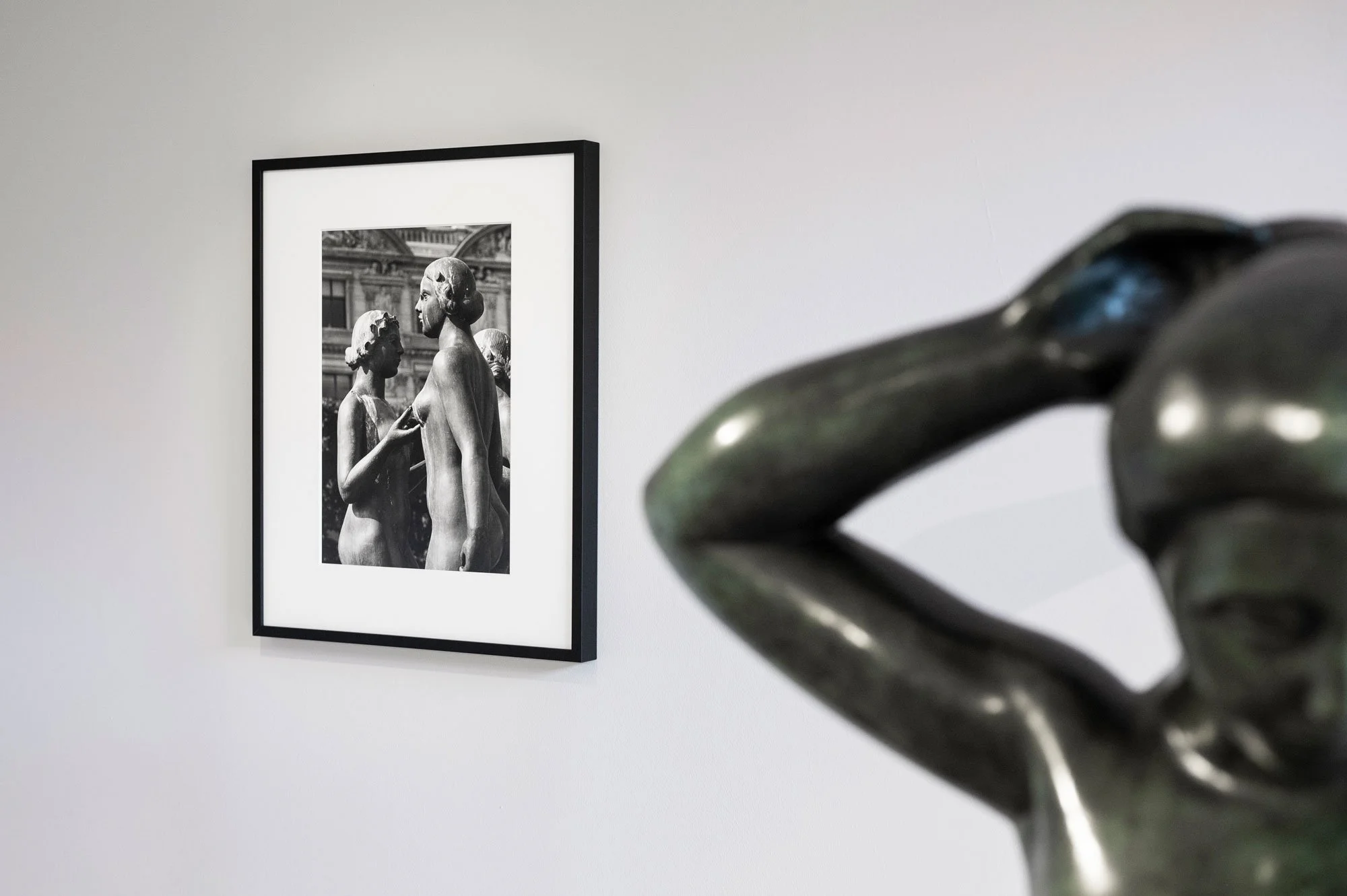
Photo by Denis Decaluwe © Tempora
A Timeless Return
The "Suburbs" section (35 photographs) reveals Doisneau as an astute observer of a transforming present, capturing the banlieues on two separate occasions: the grimy, dirty suburbs of the 1950s, published in a book with Blaise Cendrars, and his return in 1984 for the DATAR mission, where he revealed images saturated with color and a sense of human erasure. As he wryly observed: "Yes, I know, before it was ugly, today it's still ugly, but in a different way."
The exhibition design itself mirrors Doisneau's philosophy, hovering "between lightness and gravity, between dream and reality" as visitors move through the museum's floors. From the tender observations in "Childhood" to the stark realities of "Banlieues," each section reveals different facets of an artist who, as Annette fondly recalls, "always said 'yes' to every order" and "didn't know how to say 'no.'"
A delightful installation celebrates the chance encounter between Doisneau and sculptor Aristide Maillol. In 1964, while heading to a meeting for advertising photographs, Doisneau witnessed the installation of Maillol's statues in the Carrousel Gardens under André Malraux's direction. The opportunity was too great, and the meeting was quickly forgotten. Doisneau spent the day photographing the statues being installed under the watchful eye of Dina Vierny, Maillol's original model, who graced him with her presence—a magical moment preserved in the "Maillol/Doisneau Dialogue".
The journey concluded with "Encounters" (18 photographs), featuring images where "the privilege of chance" produced photographs that "do not conclude, that do not tell a story to the end, but remain open, allowing people to make their own journey with the image, to continue it as they wish: a stepping stone to a dream."
Yet this apparent simplicity masked profound complexity, revealing an extraordinary capacity for adaptation. Doisneau's work represents not just a career but a philosophy: the belief that every moment holds potential magic, that ordinary life deserves the most careful attention. This retrospective—the most significant in Paris in twenty years—successfully balanced the darker and lighter aspects of his oeuvre, developing what curator Isabelle Benoit describes as "a more universal language" than previous exhibitions.
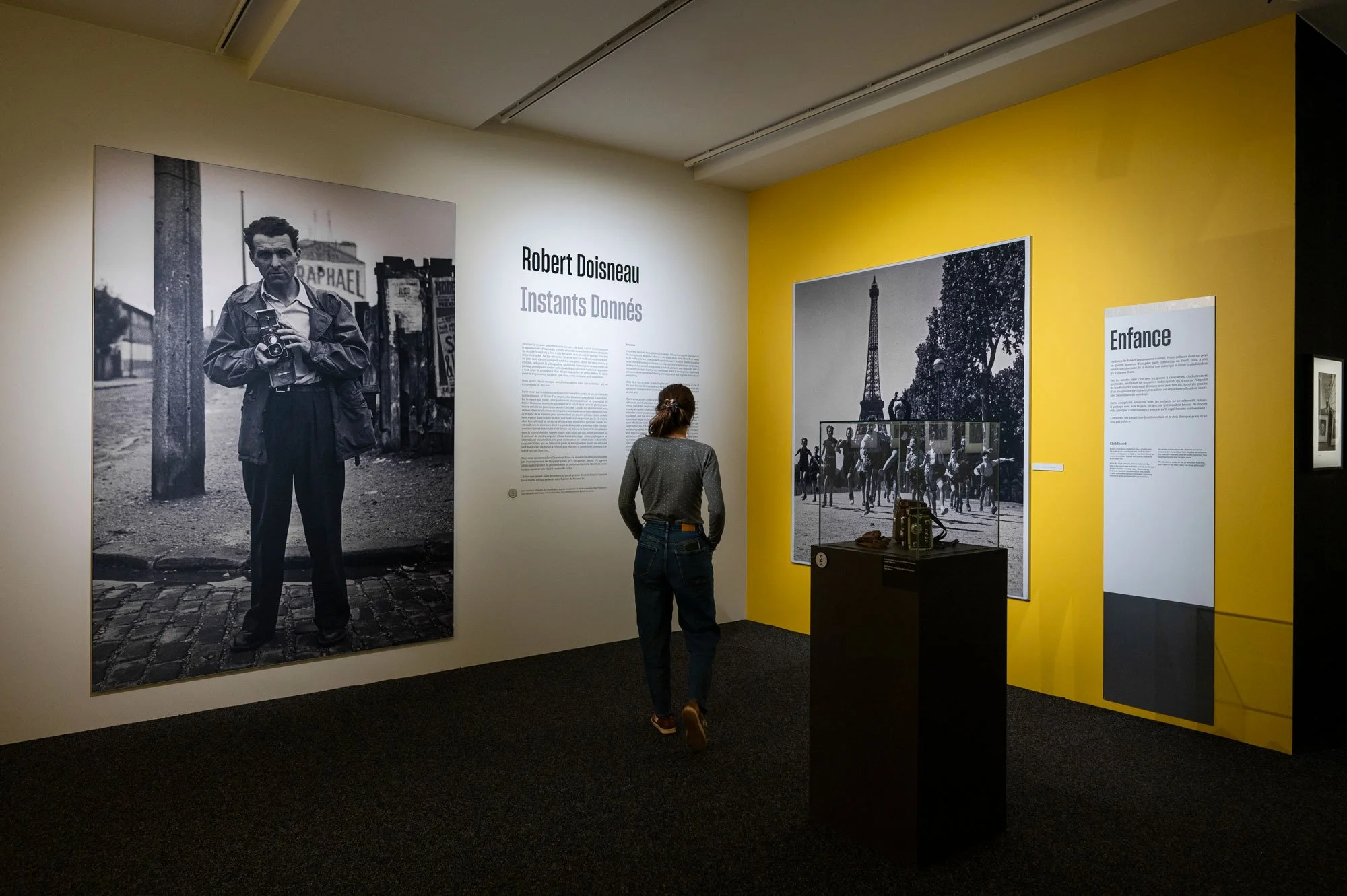
Photo by Denis Decaluwe © Tempora
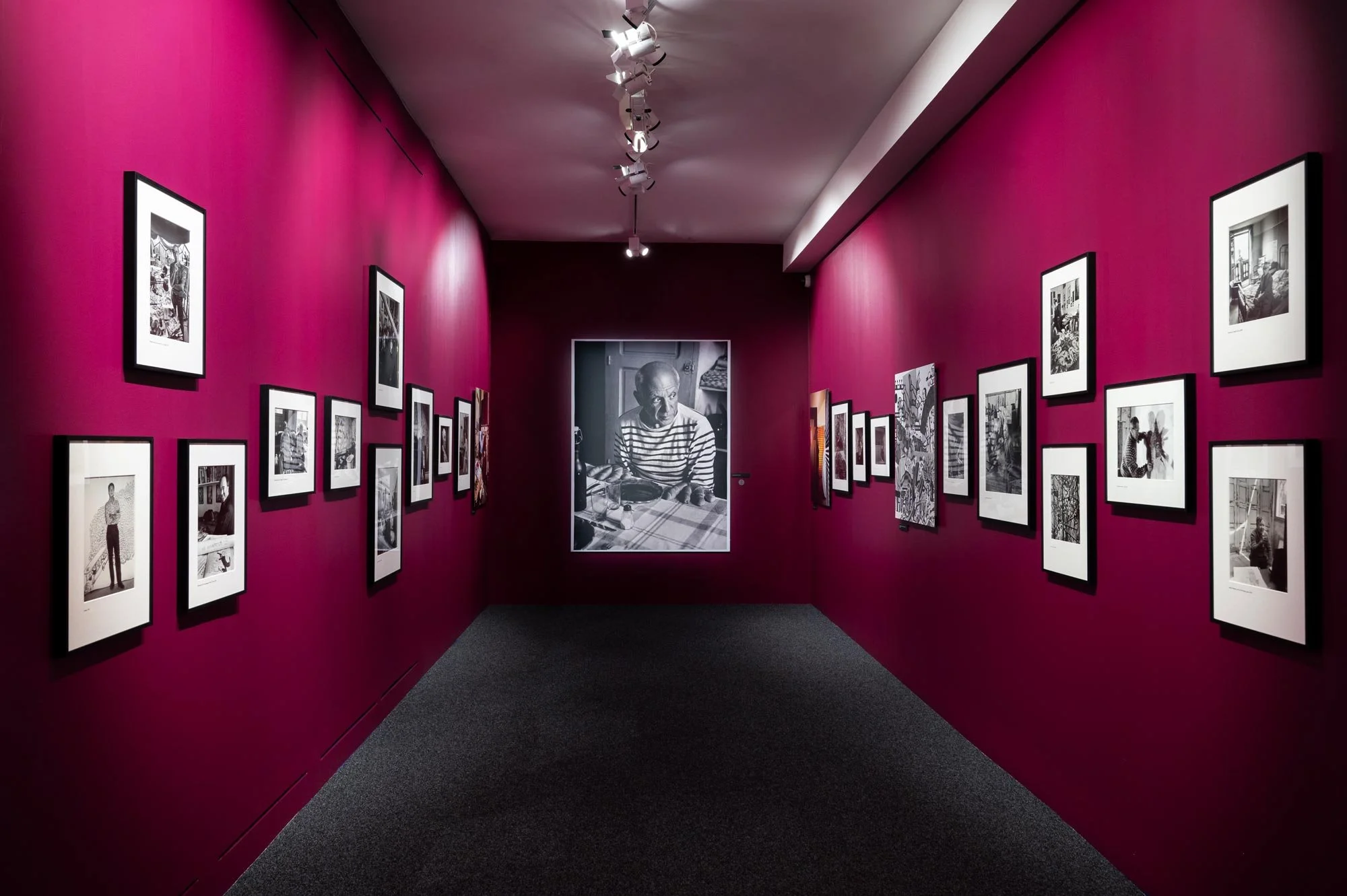
Photo by Denis Decaluwe © Tempora
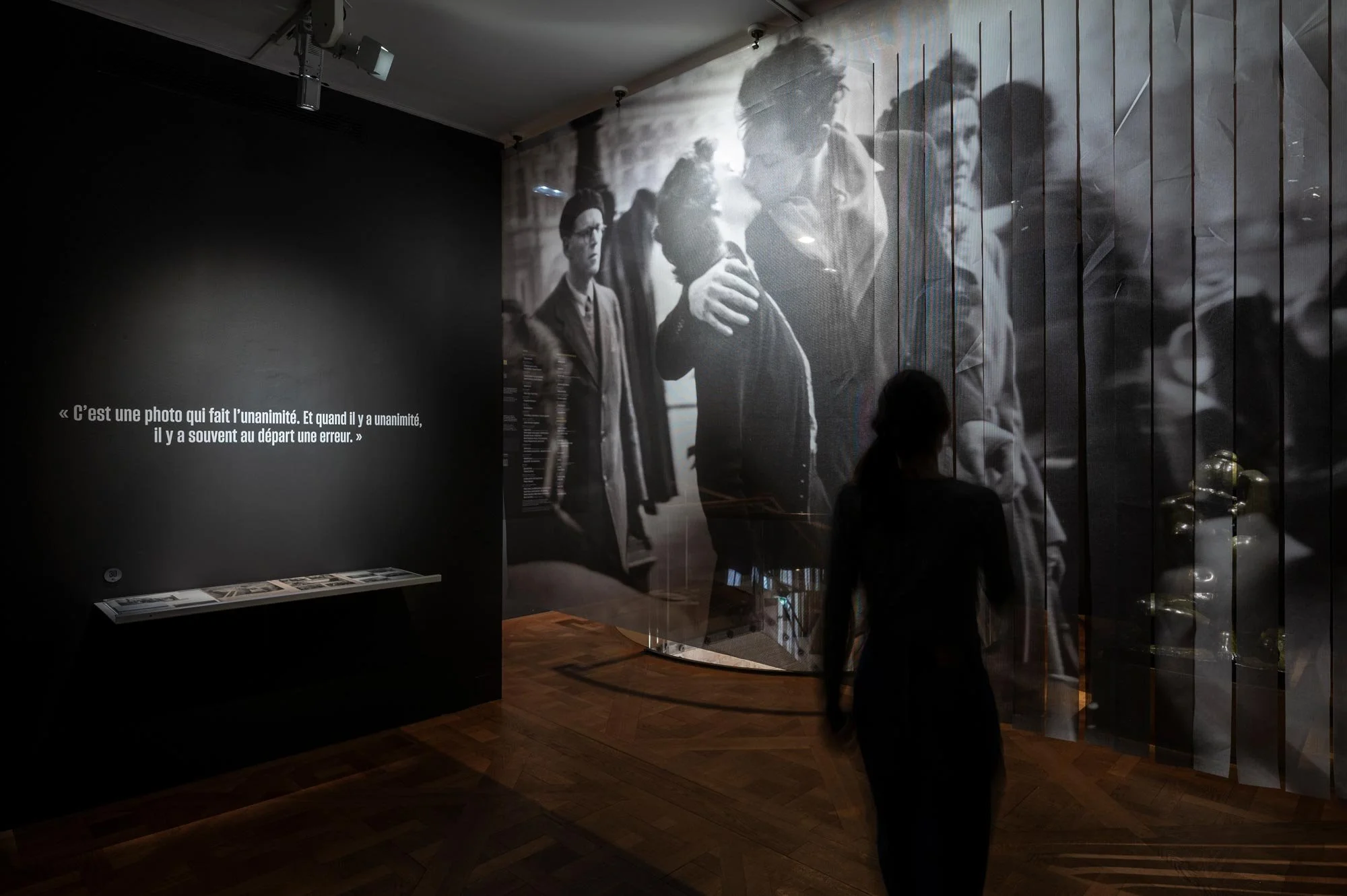
Photo by Denis Decaluwe © Tempora
Robert Doisneau. Instants Donnés concluded its run on October 19, 2025, at the Musée Maillol (59-61, rue de Grenelle, 75007 Paris). The exhibition represents a collaborative effort between Tempora, the Atelier Doisneau, and the Musée Maillol.