
The Arctic is the New Frontline: A Conversation with Louie Palu
Photographer Louie Palu argues that the world’s next great conflict—and our clearest climate signal—is unfolding in a place few ever see.
Louie (Luigino) Palu is a Canadian/American photographer and filmmaker whose work has examined social political issues including war, resource extraction, and climate change for over 30-years. He has been selected for a John Simon Guggenheim Foundation Fellowship and World Press Photo award. He has covered the Arctic since 1993 and for the past 10-years been focused on the changing geopolitics in the high North and effects on indigenous communities.
His work has been widely published, and his documentary films have been broadcast and screened worldwide. Louie’s work has appeared in Bloomberg Opinion, The New York Times, The Washington Post, National Geographic, The Guardian, Die Zeit, Le Monde, PBS, and BBC. His work is held in numerous collections including the Museum of Fine Arts Boston, Imperial War Museum, and National Gallery of Art and has been exhibited at the Baltimore Museum of Art, National Portrait Gallery, and Brooklyn Museum. He is a graduate of the Ontario College of Art and Design, holds an MFA from the Maryland Institute College of Art, and is a member of the Paris based photo agency Agence VU.
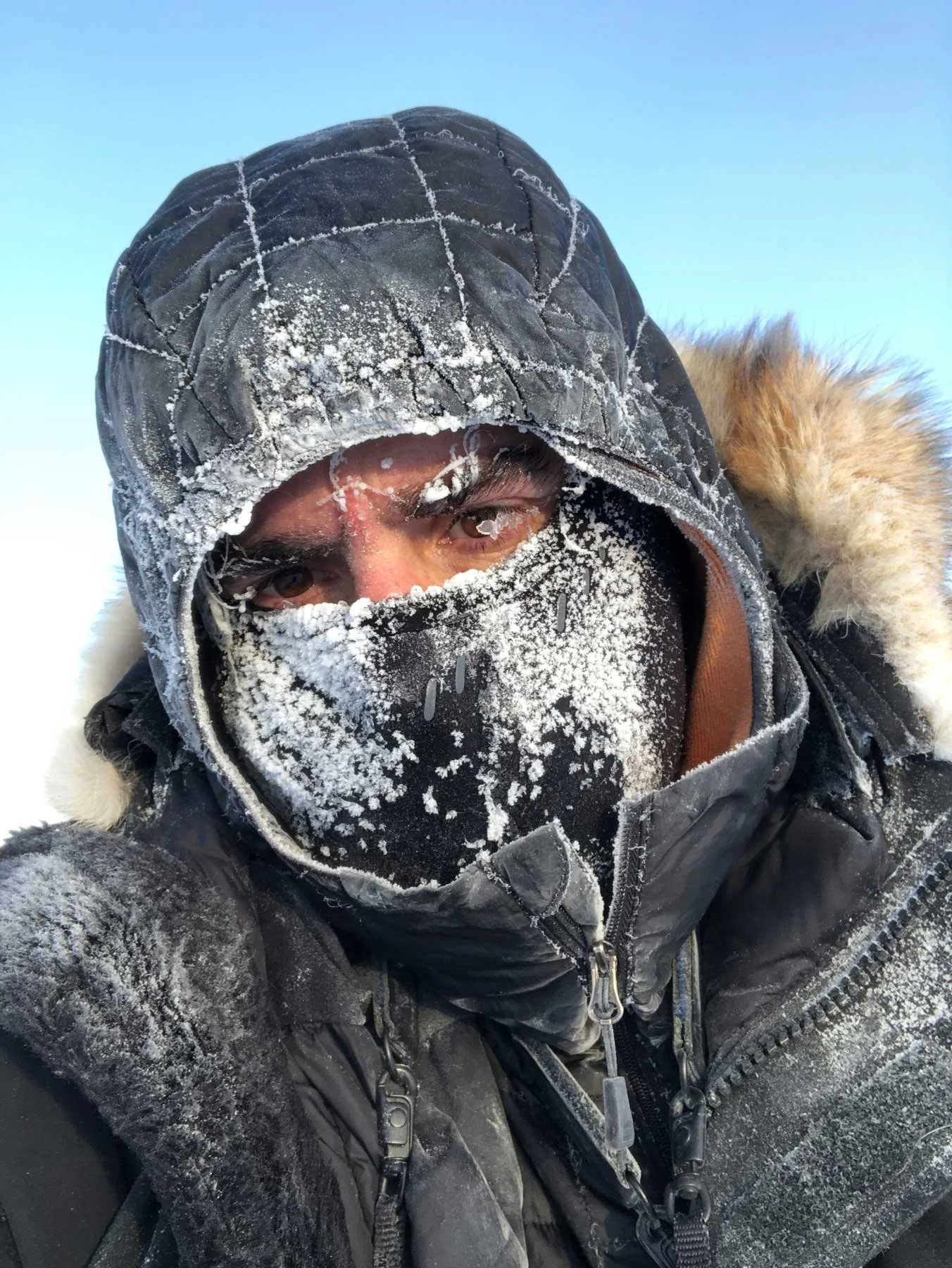
HM: Where are you from, and what did “home” feel like when you were growing up?
LP: I was born in Toronto to Italian immigrant parents. Technically I’m “from Toronto,” but emotionally and culturally, I grew up on a street full of post–Second World War Europe.
My neighborhood was almost entirely immigrants—mostly Italian, with some German and Irish families mixed in. Many of the adults had been children during the war. So my identity was shaped at the dinner table by stories of conflict, occupation, hunger, and survival.
It wasn’t abstract history to them. It was immediate: Nazi occupation, partisans in the hills, families split between collaborators and resistance. That atmosphere is a huge part of how I see the world and why I photograph what I photograph.
DISCOVERING PHOTOGRAPHY THROUGH WAR, MEMORY AND TRAUMA
HM: How did you move from those stories at the table to becoming a photographer? What pulled you into this “crazy thing,” as you once called it?
LP: It took me more than 50 years to really understand the answer. For a long time, if you’d asked why I’m a photographer, I’d have given you the usual names—Eugene Smith, Don McCullin, all the greats we admire.
But the real origin is more personal: it’s my parents’ old family photographs. My parents were born into a valley in Italy controlled by the Nazis. Some of our cousins were partisans fighting them. As a child, I’d hear these stories and try to do the emotional math: who is the “good guy,” who is the “bad guy,” what does “winning” even mean if you grow up in the middle of that?
Canada’s story about the Second World War is, “We went to Europe, we fought, we won.” My family’s story is, “We were in the middle of it.” There is no clear “we won” in that version. I struggled with that oral history at first. Then I discovered visual history—books on the Second World War in the library. Suddenly, I could see: this is what German soldiers looked like, this is what American soldiers looked like, this is what the camps looked like, this is what fascism looked like, and these are the victims of the Holocaust.
Images made the stories real. Without fully realizing it, I began a lifelong, mostly subconscious project to understand my parents’ trauma through looking at and making pictures.
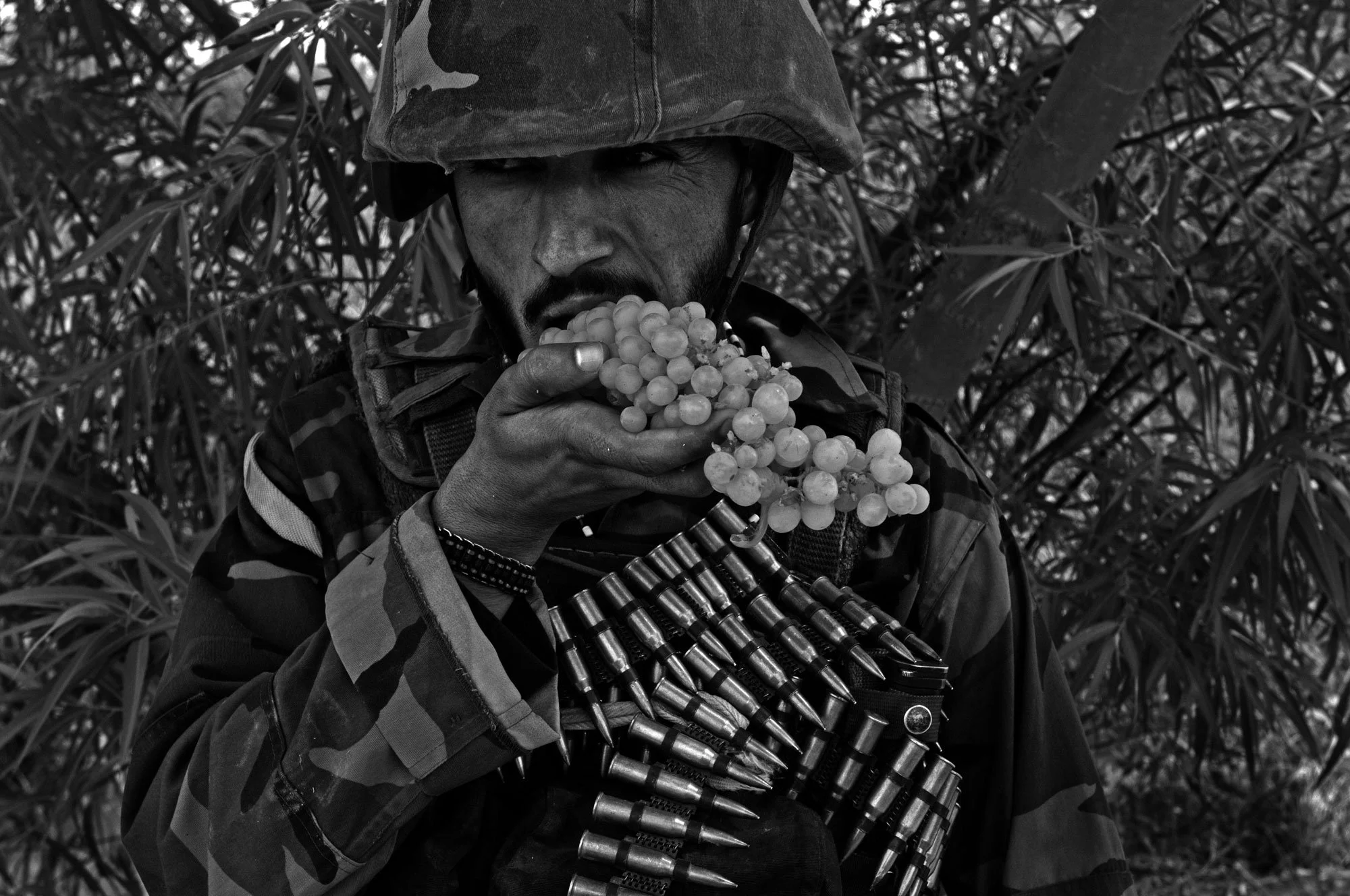
An Afghan soldier eats grapes during a patrol in Pashmul in Zhari District, Kandahar Province, Afghanistan.
FROM DRAWING WAR TO PHOTOGRAPHING THE WORLD
HM: You started out drawing and painting, right? When did photography take over?
LP: Yes, my first language was drawing and painting. And what did I draw? War. Soldiers. Tanks. I was basically illustrating my parents’ stories without knowing it.
I was terrible at math, but art made sense. In high school we had an unusually strong art program: life drawing, industrial design, Bauhaus, all before I was 18. I also had a philosophy teacher with a PhD who had us reading Marcus Aurelius at 18. I’m not sure I grasped all of it, but certain ideas stuck—duty, ethics, how to live—and those ideas converged with what I was doing visually.
When I took my first photography class, it was purely practical at first: I thought I’d make reference photos for painting. But then the camera did something painting couldn’t: it gave me a reason to go out into the world.
This was the Reagan era, the early days of the HIV/AIDS crisis, protests in the streets. I started photographing homelessness, demonstrations, people on the margins. Subconsciously I think I was trying to do the opposite of my parents’ experience: instead of just witnessing history in fear, I wanted to participate by making a record and sharing it.
My parents were horrified at first: “You go downtown? With homeless people? Is that safe?” They grew up under the Gestapo. Fear of the state was reasonable to them. I’d say, “We live in a democracy. I’m a photojournalist. I’m allowed to be there.” That was a big break between generations.
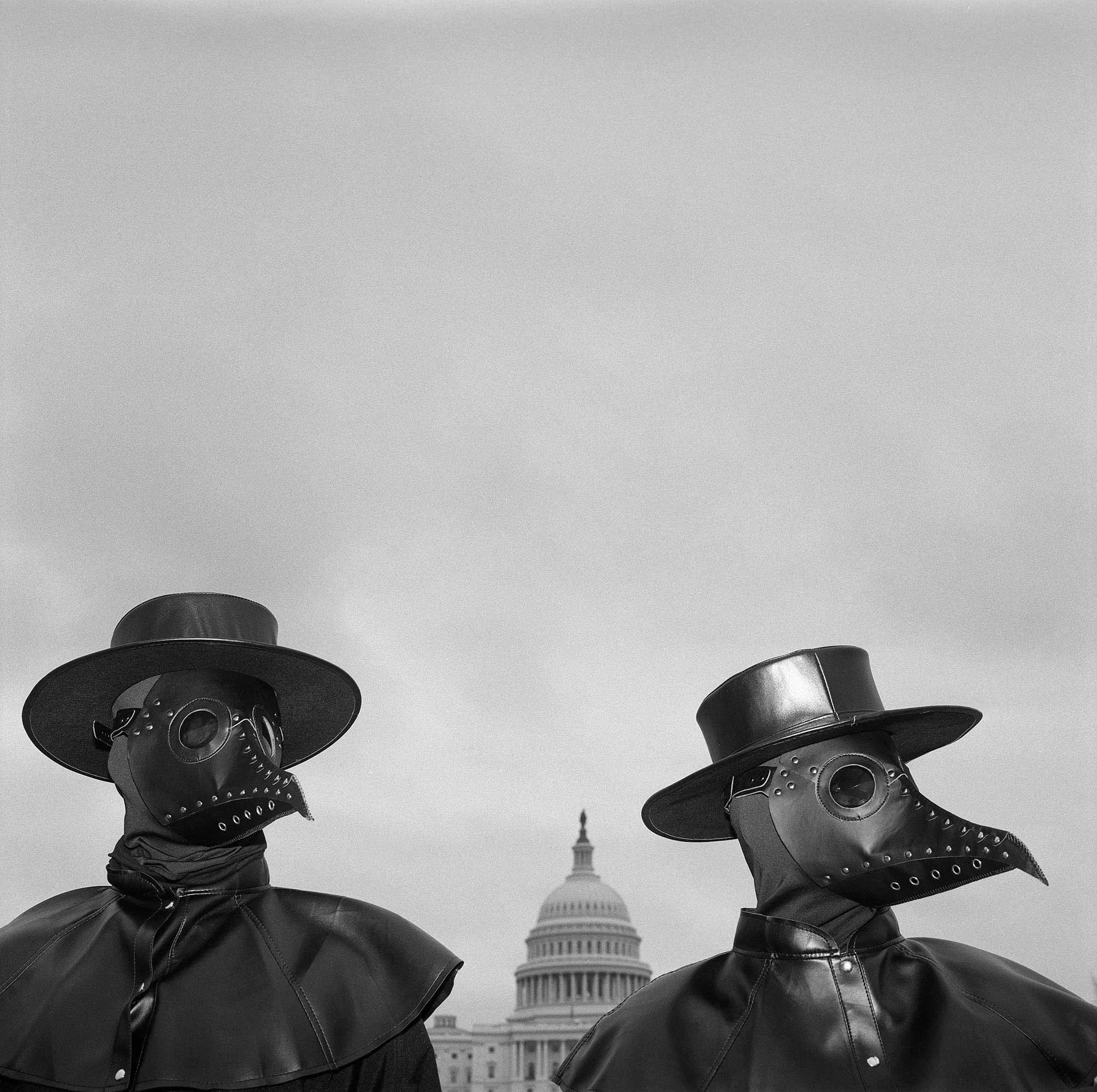
Two activists wear beaked masks like doctors wore in the 17th century during times of plague, seeking to draw the attention of spectators around Capitol Hill. Their message: Refusing to be vaccinated will prolong the COVID-19 pandemic. On the same day, two House subcommittees held a joint hearing titled “Disinformation Nation: Social Media’s Role in Promoting Extremism and Misinformation.”
ART COLLEGE AND NEW YORK: LEARNING THE CRAFT
HM: What happened after those intense teenage years with a camera?
LP: I went to the Ontario College of Art and Design in Toronto. It was heaven: art all day, no math. The college was next to a major art gallery, so I’d go from lectures to galleries to bookstores. At first I experimented with painting and drawing, but after the first year it was clear—photography was my path. I had a great advisor who pushed both the technical side and the intellectual side. Every week he’d send me to the library to pull a photo book; we’d sit down and discuss it.
This was the late 1980s, early 1990s—an interesting time to be thinking about documentary work and the Vietnam legacy.
Then came a pivotal moment: a summer program in New York in 1991. We were asked, “Why do you belong in New York?” My answer: because it’s one of the capitals of photography. New York then was very different—pre-Giuliani, no internet, no cell phones. I went to the public library, fought to borrow a phone book so I could get phone numbers to cold call photographers for assisting and internship work. I was rejected a lot, but eventually I landed an internship with Mary Ellen Mark.
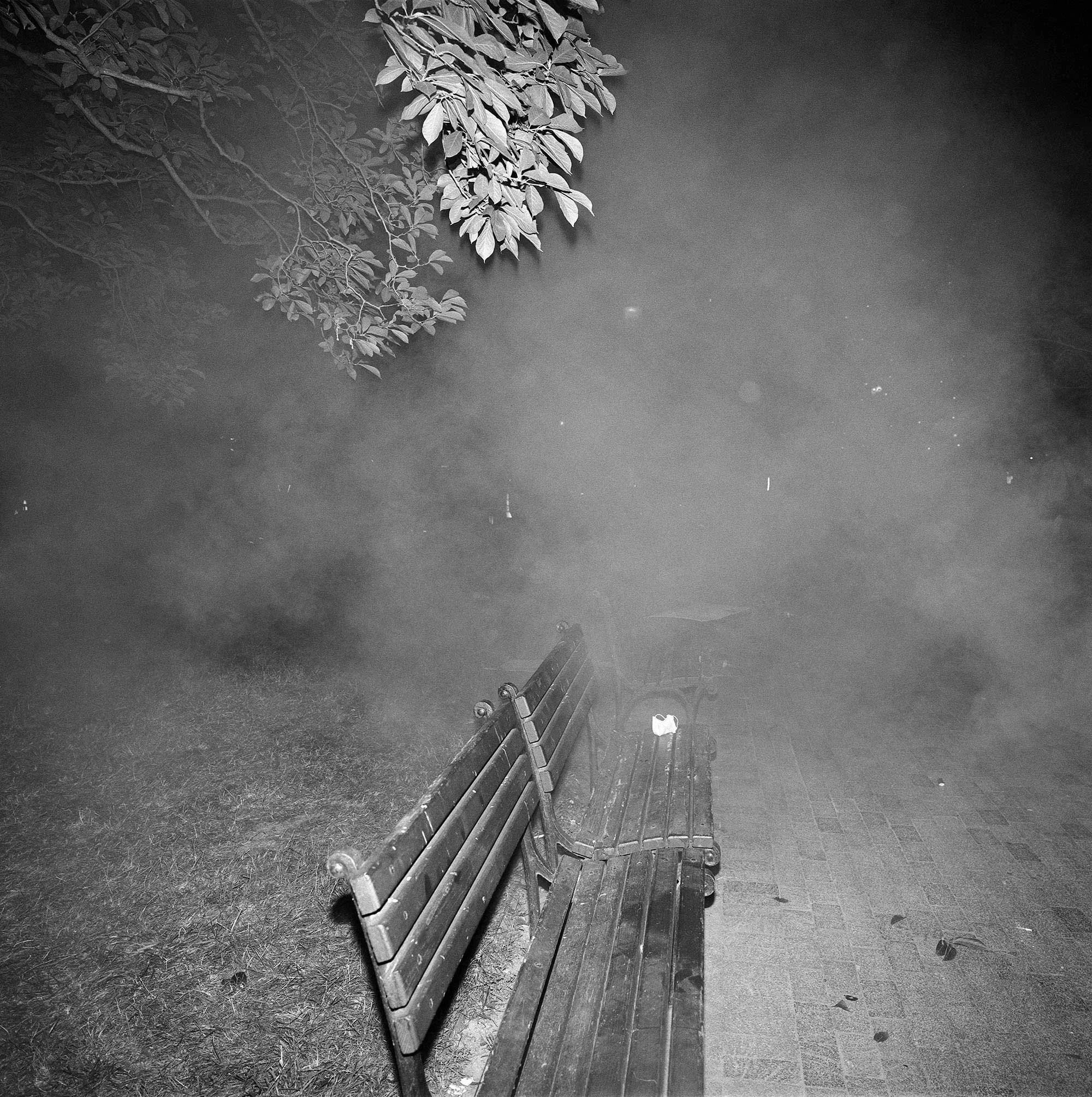
Tear gas fired by police seen by a bench and a mask in Lafayette Park not far from the White House during the second night of protests related to the murder of George Floyd, a black man who died at the hands of Police in Minneapolis. The security situation in Lafayette Park lead to the White House bringing in several units of the National Guard including additional police and security forces from the federal government.
MARY ELLEN MARK AND THE POLITICS OF PICTURES
HM: What did you learn in Mary Ellen Mark’s studio?
LP: It was like walking inside a living history of socially engaged photography.
She was deeply committed to the forgotten and the marginalized, and every bit of money or energy she could muster went right back into long-term projects. In the studio, I watched her fight with editors on the phone about fees, assignments, and access—and then turn around and talk about her subjects with enormous empathy and curiosity.
I also saw her archive and early scanning technology, and how a lifetime of work could crystallize into a body of evidence about a society. That idea—that your work might become a record people consult later—stayed with me.

A statue of Albert Pike, a Confederate general, lies in Judiciary Square, a noose around its neck, after protesters pulled it down and set it on fire. The toppling came on June 19, which is celebrated as Juneteenth, marking the emancipation of enslaved people. The statue was one of many Confederate monuments torn down around the country to protest racism.
MINING, LABOR AND THE FIRST BIG PROJECT
HM: You’ve done major work on mining and labor. How did that start?
LP: When I got back from New York, my father—who was a stonemason with a fourth-grade education—said something that changed my life.
He had always wanted me to go into construction. I kept saying, “No, I want to be an artist, a photographer.” When I finished school, he said, half-joking, “Okay, I let you be an artist. Now you should photograph people who have a real job.”
He was working in a gold mining town in northern Ontario called Kirkland Lake. He said, “Come up here. If you connect your work to history, people will look back and learn from what you’ve seen.”
So I drove seven hours north. I thought I’d learn something about Canada, but what I really found was the architecture of a whole economic system: extraction, risk, profit, corporate power, and workers’ lives.
There was a brutal labor history there, industrial disease, accidents, fights between unions and companies. I realized, this is a project. It became the blueprint for my long-term working method: go where the story is underreported, stay for years, and build an archive.
I was broke, sleeping in my Jeep in the mine parking lot. Miners would bang on the window to wake me up on their way underground. It was dangerous, physically and financially, but it taught me more about capitalism and labor than any book could.
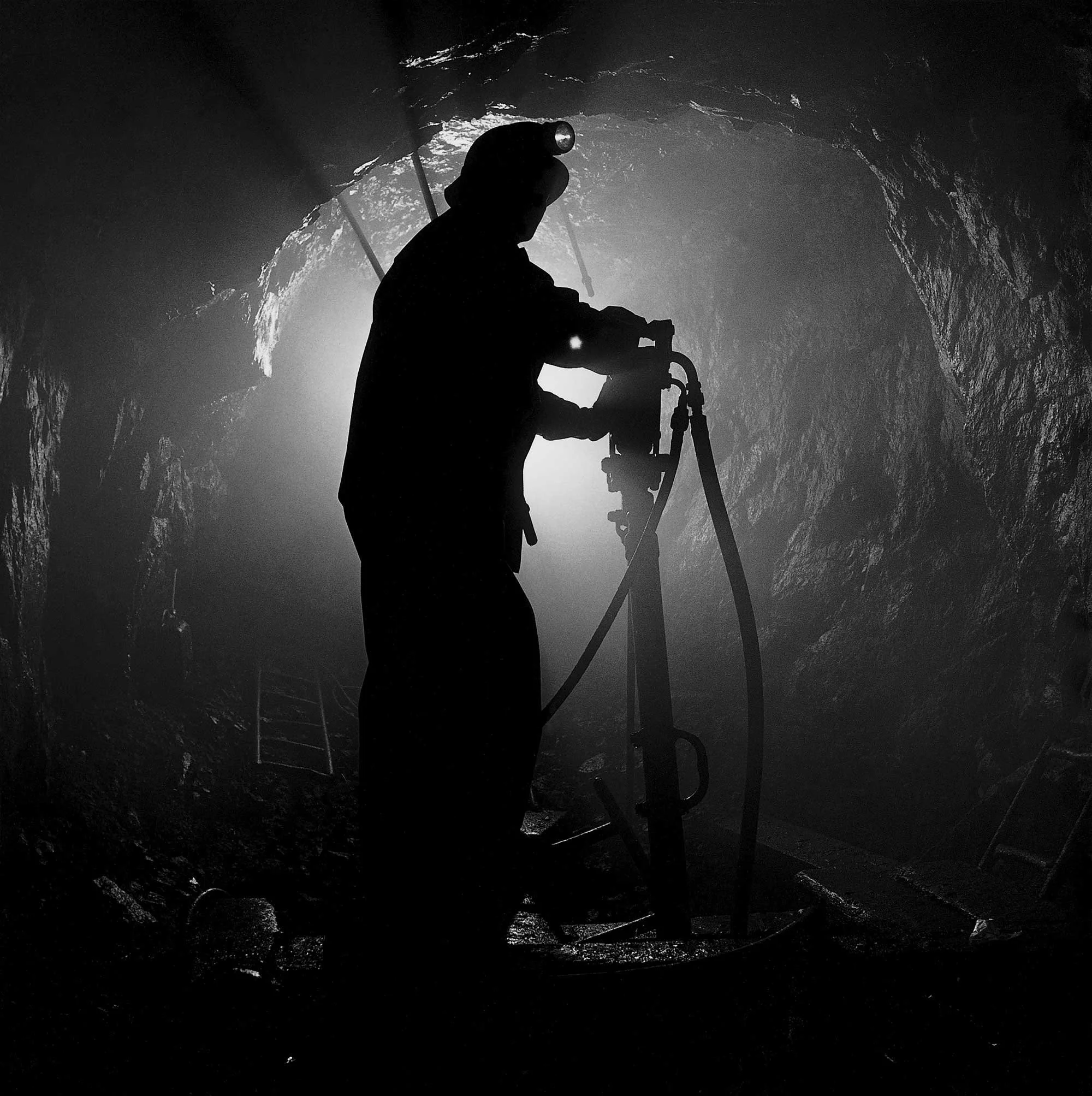
A miner after completing the drilling of a breast in a shrinkage stope, 700 foot level, Cheminis Mine, Larder Lake, Ontario. From the book Cage Call: Life and Death in the Hard Rock Mining Belt. An in-depth project spanning over 12-years examining communities in one of the richest mining regions in the world located in Northwestern Ontario and Northeastern Quebec in Canada.
THE ARCTIC ENTERS THE FRAME (QUIETLY AT FIRST)
HM: How did mining lead you toward the Arctic?
LP: In 1993, an art director saw my mining photographs and said they felt like “frontier pictures.” He sent me to the Northwest Territories to photograph a new diamond discovery.
I thought, “Diamonds? In Canada?”
When I arrived, some men came up to me, very aggressive: “Who the hell are you?” I later learned there had been a bitter strike at a nearby gold mine in Yellowknife. The strike dragged on for a year. A miner planted a bomb underground. Nine other miners were killed.
In some ways, that was my first glimpse of conflict in the Arctic—not tanks and missiles, but the violence of who gets what from natural resources. And I noticed immediately: none of the workers in that diamond project were Indigenous. That absence told its own story.
I filed the assignment, but from then on, every time there was a mining story in the North, people called me. The Arctic became this recurring presence on my horizon.
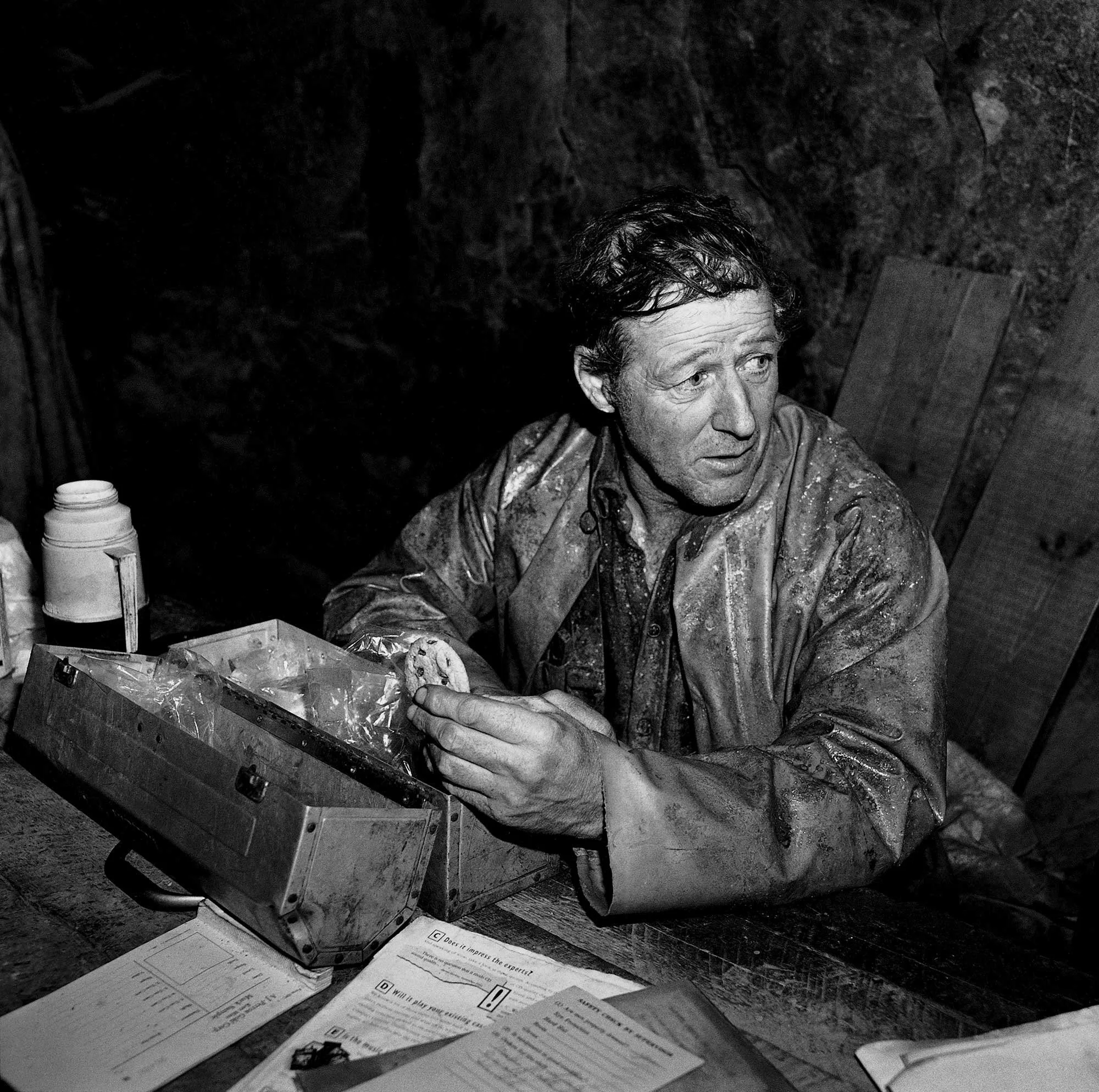
Lunch break, 1450 foot level refuge station, Kerr Mine, Virginiatown, Ontario.
DAILY NEWS Vs LONG GAME
HM: You later worked at The Globe and Mail. How did that shape you?
LP: I eventually got a staff job at The Globe and Mail, Canada’s national newspaper. I went from an occasional assignment to 400 assignments a year. I had six different photo editors over that period, which was actually invaluable.
Photo editors are often the unsung heroes of documentary photography. They’re the ones who help you see what you’ve really brought back.
At the Globe, I started going more seriously to the Canadian North, photographing Indigenous communities along James Bay and Hudson Bay. I was already noticing flooding and climate impacts in the early 2000s, long before “climate crisis” became the dominant phrase.
But I also realized something: daily news is important, but I’m not built to only chase headlines. I’m built for the long game—projects that develop over years and become archives.
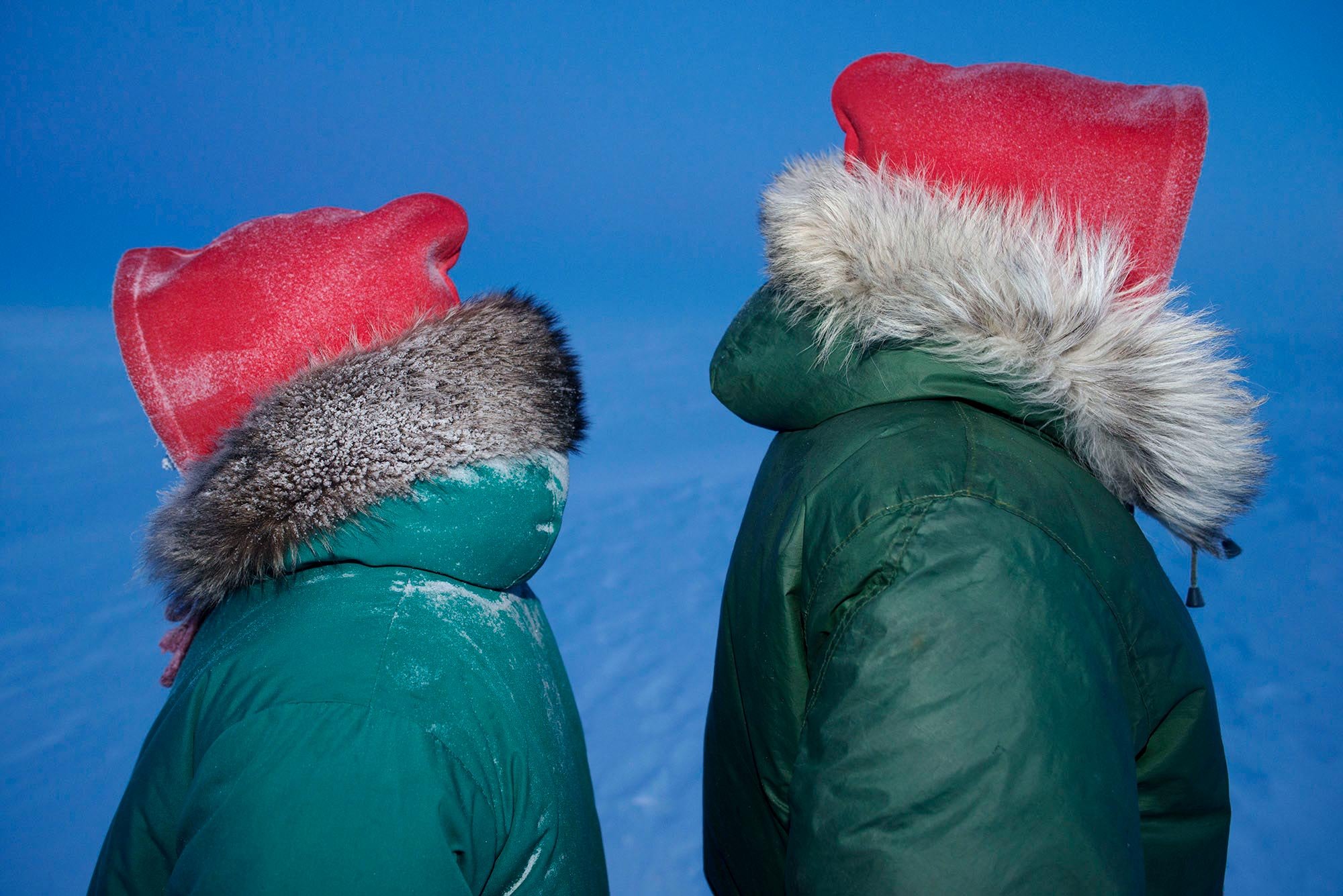
Canadian Rangers prepare to train non-indigenous soldiers in Arctic survival at temperatures as low as -60 degrees Celsius (-76 F) in Resolute Bay, Nunavut in Canada.
AFGHANISTAN: TRAUMA, UNDERSTANDING, AND RESPONSIBILITY
HM: At some point, you moved from Canada’s North to Afghanistan. Why?
LP: Around 2006, Canada deepened its military role in Afghanistan. I grew up with this idea of Canada as “peacekeepers,” and suddenly we were in a very real war. That challenged my identity as a Canadian.
I felt a responsibility to go. So I sold my furniture, based myself in Washington, DC, and started flying to Afghanistan every year. My first plane ticket was paid for by photographing a wedding.
When I arrived in Kabul the first time, I saw a young boy standing in the middle of all this chaos, and I felt a physical jolt: That’s my father in the Second World War. In that moment I understood why I had come—not just to cover “the war,” but to understand what conflict does to a child, what it does to memory, to identity, to a family.
Afghanistan traumatized me. There’s no way around that. I covered it for about five years, under both George W. Bush and Barack Obama.
When I came home, it took months for my mind to catch up with my body.
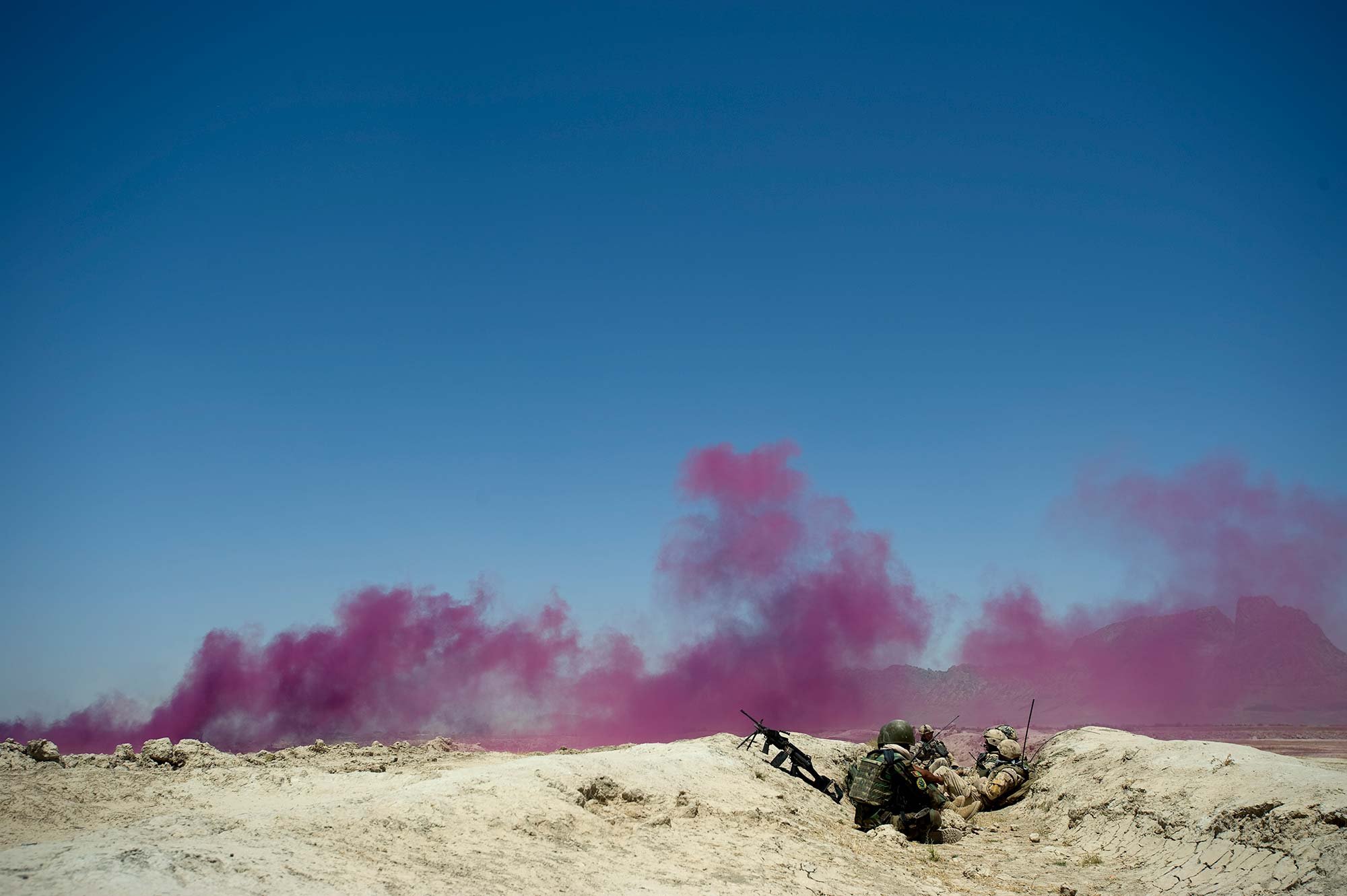
Afghan and Canadian soldiers in a trench mark their position with purple smoke during a drone strike on insurgents nearby, Panjwa’i District, Kandahar Province.
THERAPY, HORSES, AND STAYING HUMAN
HM: You’ve spoken openly about therapy and even “horse therapy.” How did that come into your life?
LP: After Afghanistan, a very good friend basically staged an intervention. She said, “Go to a therapist. I’ll pay. If you hate it, I’ll never bring it up again.”
Walking into that office felt like turning myself in to the police after being on the run. That’s how much I was holding things in.
I found a therapist who specialized in journalists and trauma.
In parallel, I started spending time at a barn, grooming horses. Horses, unlike humans, give you instant, honest feedback, I think of them as trauma vacuums. That physical, wordless connection helped me re-inhabit my own body again.
We now have an Arabian pony called Trouble, who fully lives up to his name, and another older, steady horse. The barn became essential to staying grounded.
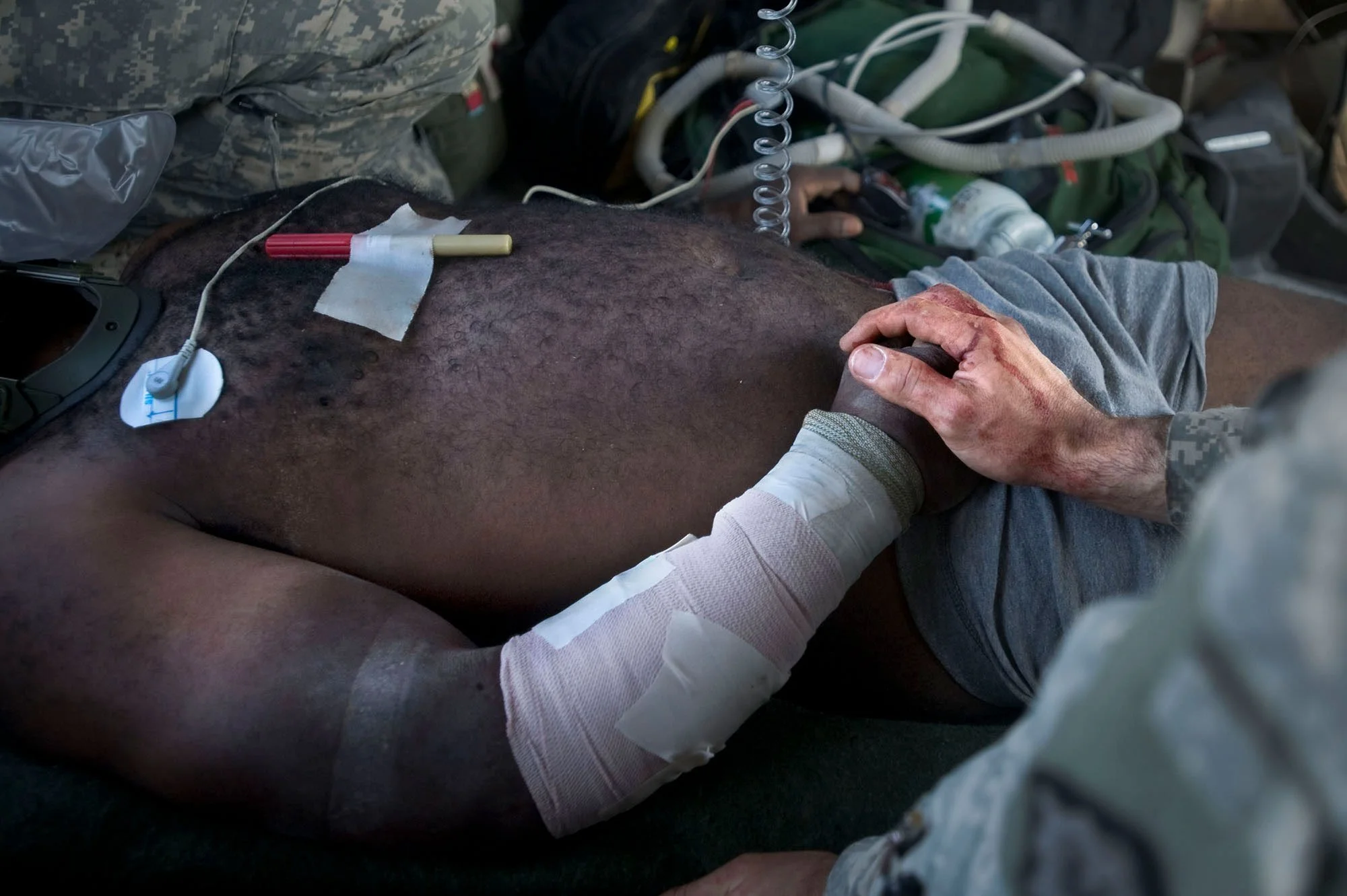
While being transported by medevac helicopter a US soldier holds his comrades hand after he was critically injured in an insurgent attack on their patrol in Maiwand District, Kandahar Province, Afghanistan.
THE U.S.–MEXICO BORDER AND POLICY WORK
HM: After Afghanistan, you shifted to the U.S.–Mexico border. Why that subject?
LP: I grew up in a neighborhood in Toronto where organized crime was present. So when a fellowship at the New America Foundation came up, I pitched a project on the U.S.–Mexico border.
I spent about three years driving the border, trying to understand why and how people were being killed, how cartels operate, and how policies fail.
Cities like Juárez had staggering murder rates then—thousands a year. It was important to me that policymakers saw the work, not just the public.
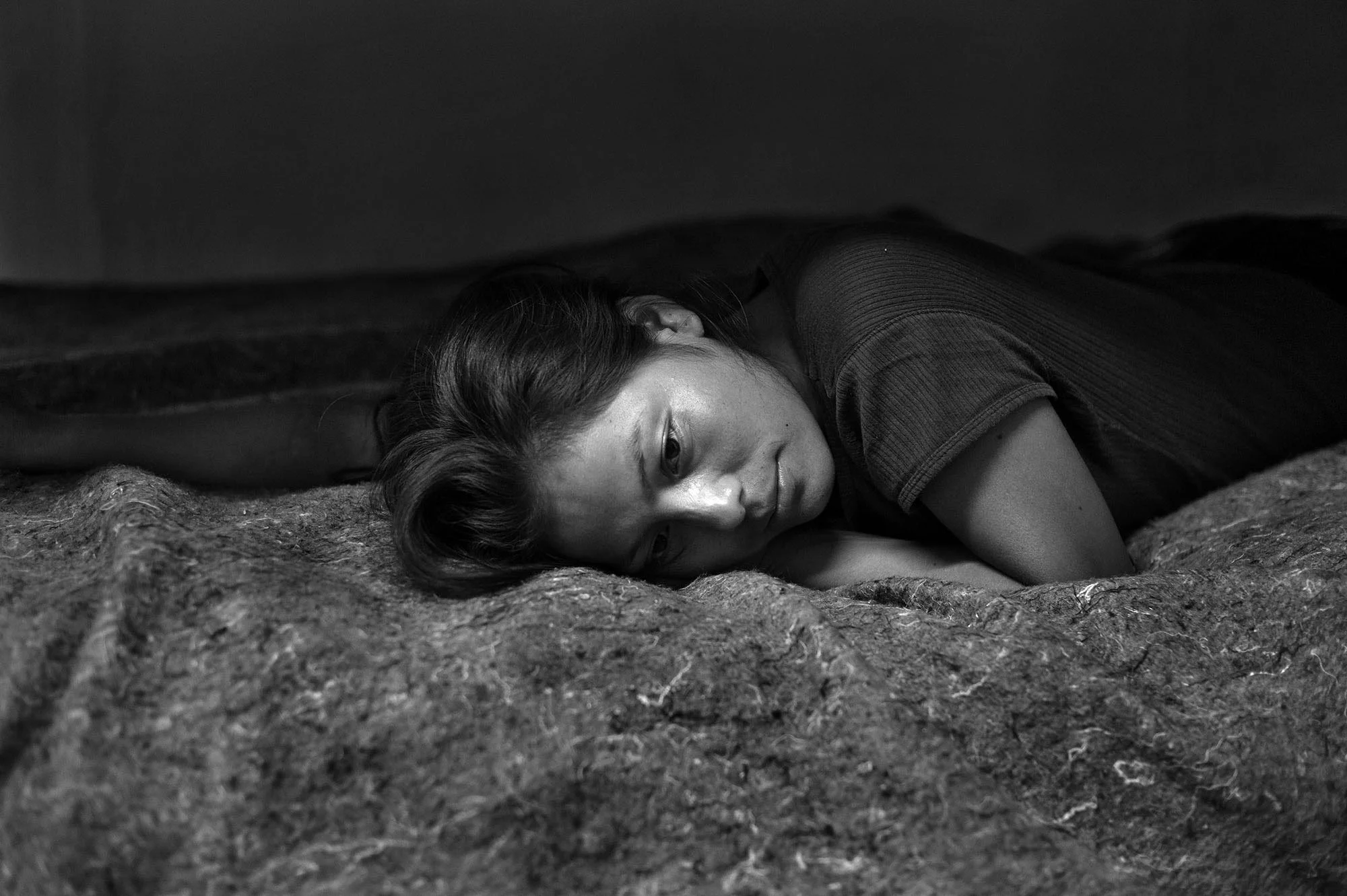
Marisol Espinoza, a 20-year-old woman from Chiapas, Mexico in a shelter for deportees and migrants the night after she was deported from the United States. She crossed the into the United States and walked through the Arizona desert for 6-days until she was arrested by the U.S. Border Patrol.
THE ARCTIC AS “DISTANT EARLY WARNING”
HM: Let’s jump to the Arctic. You’ve called your long-term project there Distant Early Warning. How did the idea truly crystallize?
LP: Strangely, the Arctic fully entered my consciousness in Afghanistan.
I was in a media tent in Kandahar, watching news footage of a Russian submarine planting a flag on the seabed at the North Pole.
At first it seemed like a stunt. Later I understood it as a geopolitical signal.
I started collecting articles in a folder called “Arctic.” Costs were insane—flights alone could be $4,000–$8,000. But the more I learned, the more I realized the Arctic is where everything converges: war, mining, borders, climate. And very few journalists were working there.
THE RADAR LINE THAT CAN’T SEE CLIMATE CHANGE
HM: You’ve used a powerful metaphor: a radar line that can detect missiles but not climate change. Can you explain?
LP: During the Cold War, the U.S. and Canada built the Distant Early Warning (DEW) Line—140 radar stations meant to detect Soviet missiles.
People have been stationed there for 70 years, waiting for a nuclear attack that hasn’t come. The radar can detect a missile, but it can’t detect climate change, melting ice, or disrupted hunting seasons.
That contrast—between high-tech surveillance and blindness to climate change—became a central metaphor.
LISTENING FIRST: INDIGENOUS KNOWLEDGE AS ORIGINAL SCIENCE
HM: You’ve said that you changed the way you worked with communities in the Arctic. How so?
LP: I realized I couldn’t just show up in Inuit communities and take pictures.
So I planned trips where, for days, I didn’t take any photographs at all. I listened. Indigenous knowledge is science—environmental science developed over millennia without destroying the ecosystem.
That shifted the whole structure of my work.
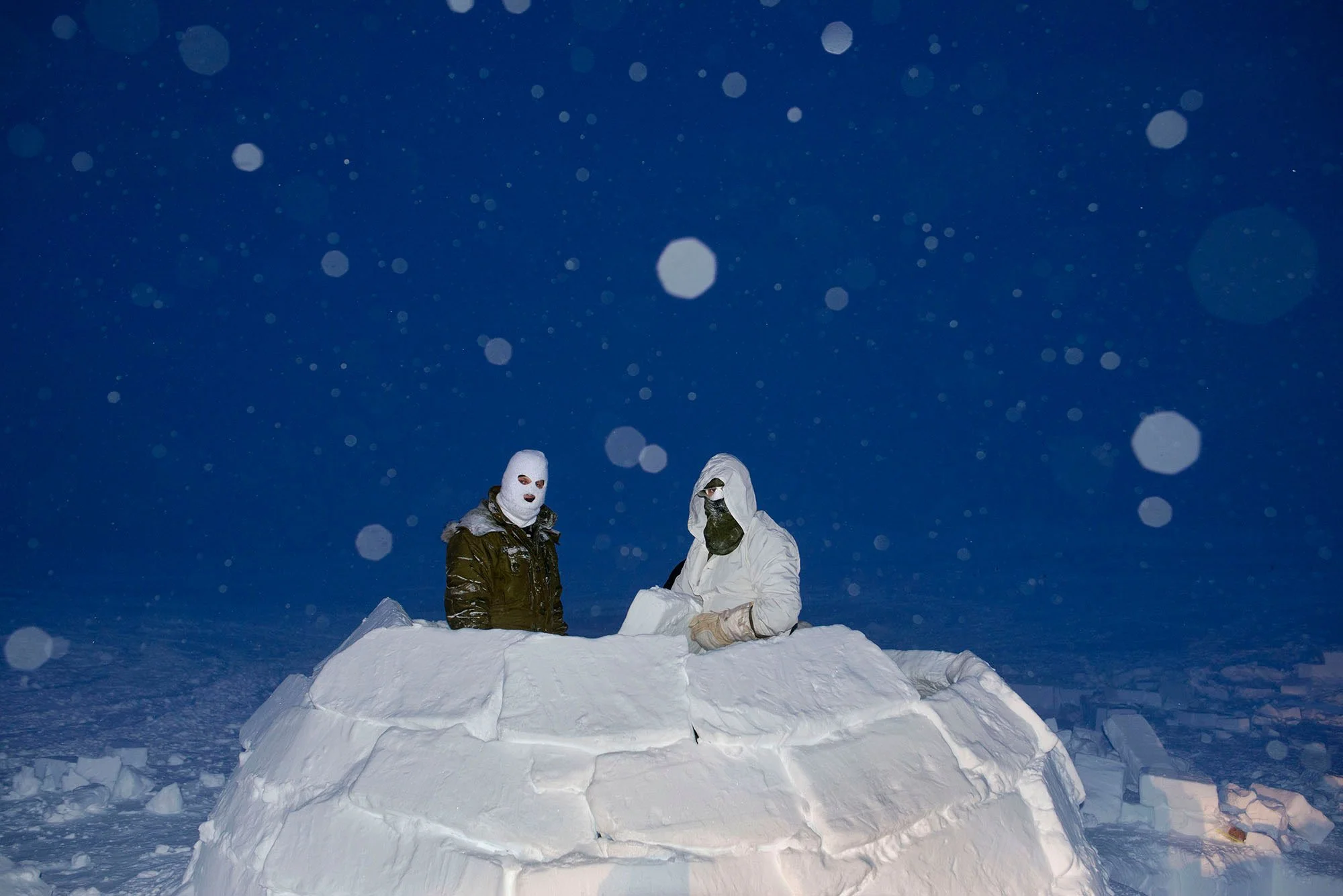
Canadian soldiers building igloo's as an improvised survival shelter near a camp at the Crystal City training area near Resolute Bay, Nunavut, Canada.
COSTS, GUGGENHEIM, AND THE LONG ARC OF A PROJECT
HM: The logistics and costs of working in the Arctic sound brutal. How did you actually manage to do it?
LP: Flights alone could be $8,000.
A military media contact, invited me to document Arctic exercises, but I couldn’t afford it. A former photo editor offered me $1,000; my mother said, “This is your next project—put the rest on your credit card.”
I applied for a Guggenheim Fellowship for ten years before finally getting one. In 2015 Even the $50,000 fellowship doesn’t go far in the Arctic. I’ve been working on this since 2015. I’m maybe 80% done. The final 20% involves getting to the hardest places that I have not been to yet.
ICE BLOCKS, FRANKLIN, AND MELTING IMAGES
HM: You also have a more “art school” side to this project—your ice block installations. How did that begin?
LP: I was reading a book about the Franklin Expedition. In it Margaret Atwood wrote that the camera that went north on the expedition was never found, so we’ll never see what they saw.
I imagined glass plate negatives frozen underwater. That led to the idea of freezing photographs in blocks of ice and letting them melt in public as an art installation.
I began tests with small prints. I used my mothers freezer, at which point she called my sister saying, “He’s gone crazy—he’s freezing his photographs in my freezer.”
Eventually I scaled up for the annual South by Southwest Festival in Austin, Texas People touched the ice, felt the pain from holding their hands on the cold ice, then watched the ice blocks melt and destroy themselves.
It became a unique way to understand climate change combining art, science, and journalism.
THE ARCTIC AS INVISIBLE CONFLICT ZONE
HM: You’ve said that “we’re under attack in the Arctic, but we can’t see it.” What do you mean?
LP: People imagine the Arctic through symbols like polar bears and icebergs. But there is a lot more unfolding geopolitically in the Arctic. That’s the Trojan horse of the situation, how we are seeing and not seeing what is unfolding— what’s unfolding is a low-visibility conflict:
– undersea cables cut
– GPS jamming in Norway
– Ukrainian drones attacking Russian bombers in the Arctic
– Sweden and Finland joining NATO
– covert influence campaigns and espionage
It doesn’t look like tanks. It’s pressure on infrastructure, information systems, ecosystems. Meanwhile the Arctic is the planet’s climate regulator. If the ice sheet disappears, major cities may flood.
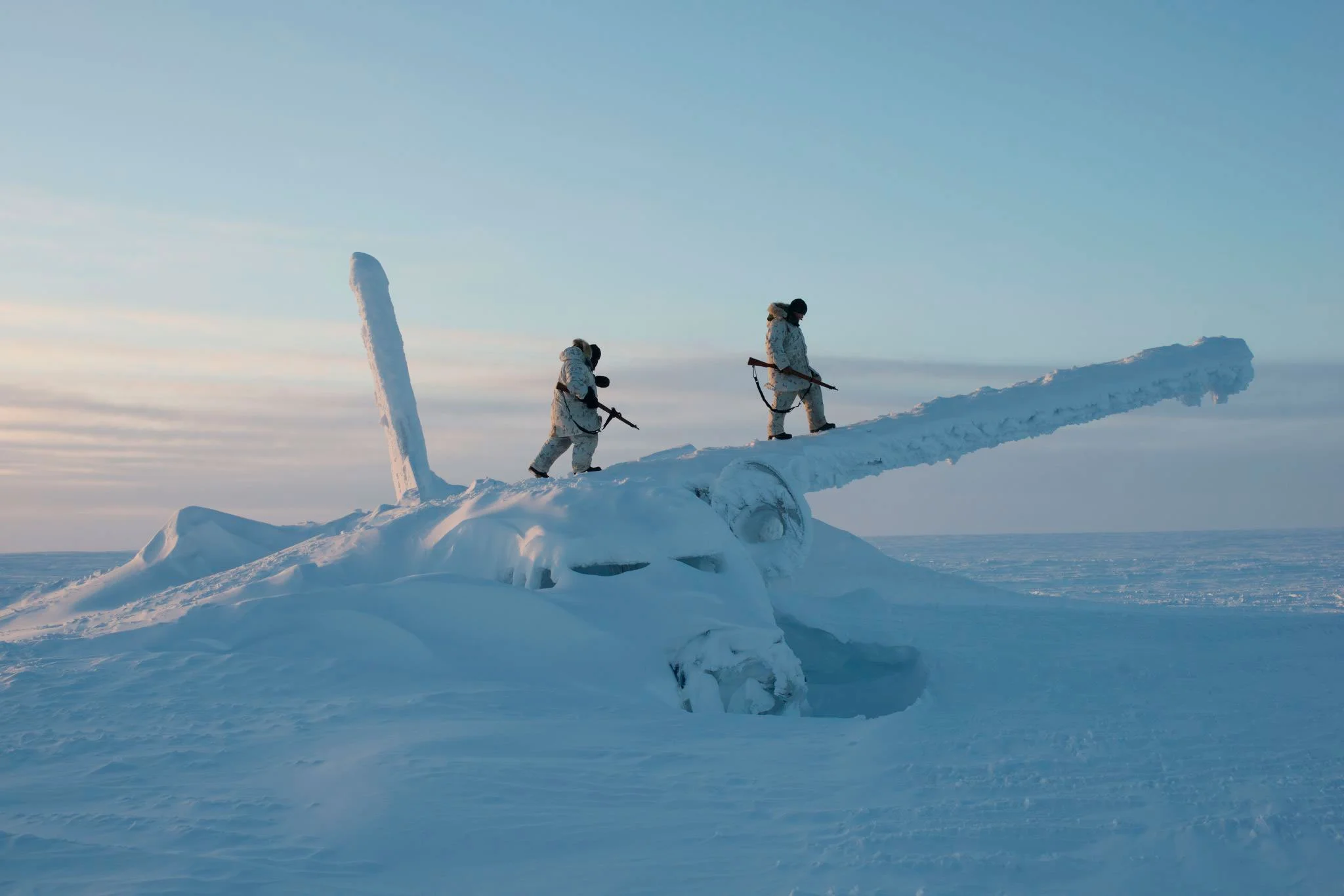
Canadian Soldiers on the wreckage of an airplane while on a range reconnaissance outside of Resolute Bay on Cornwallis Island in Nunavut Canada.
LABOR, UNIONS AND THE ROMANCE OF STRUGGLE.
HM: You’ve spent years around mines and industrial labor… How do you think about unions and labor now?
LP: There’s a deep through-line from the mines I photographed in Canada to what you saw in the UK during the miners’ strike under Thatcher.
Unions were essential for safety and dignity. But technology always changes the landscape.
A new mechanized drill might replace ten men with shovels. The shovels were breaking backs—but without training or transition support, workers were left behind.
The big lesson: If you don’t move with technological change, you might end up on the losing side of the equation.
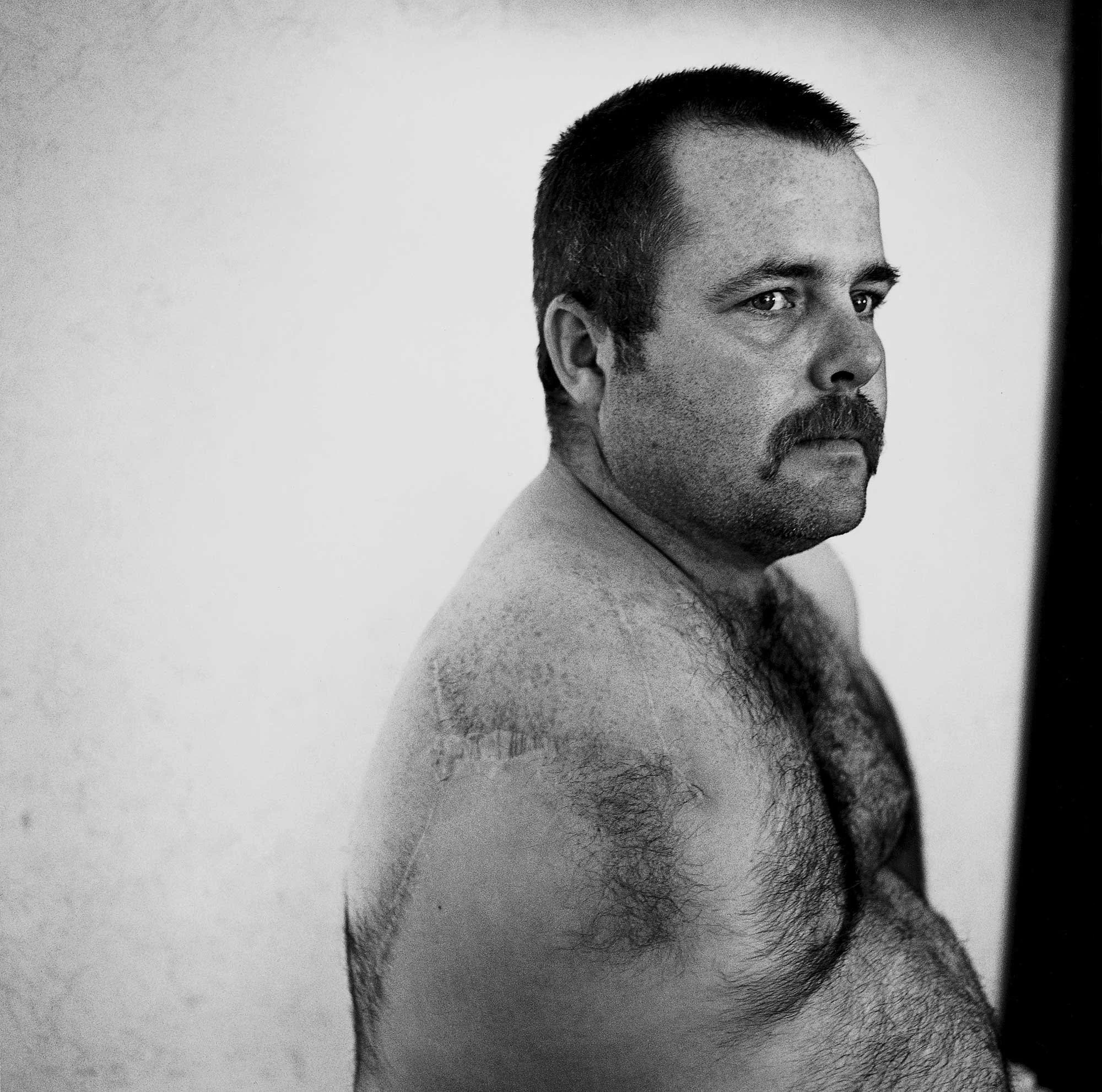
Bill Whelan who had his arm torn from his body by a surface rock crusher at the St. Andrews Mill, Timmins, Ontario.
TEACHING, HOT MIRROR, AND WHY SMALL AUDIENCES MATTER
HM: You teach regularly at London College of Communication… How do education and platforms like HOT MIRROR fit into your mission?
LP: I’ve been lecturing there for about a decade. I do three sessions: safety, long-term projects, and my career.
I love London’s culture of debate.
HOT MIRROR matters because it bridges deep storytelling and accessibility.
For the Arctic—it’s remote but central to our future—that’s essential.
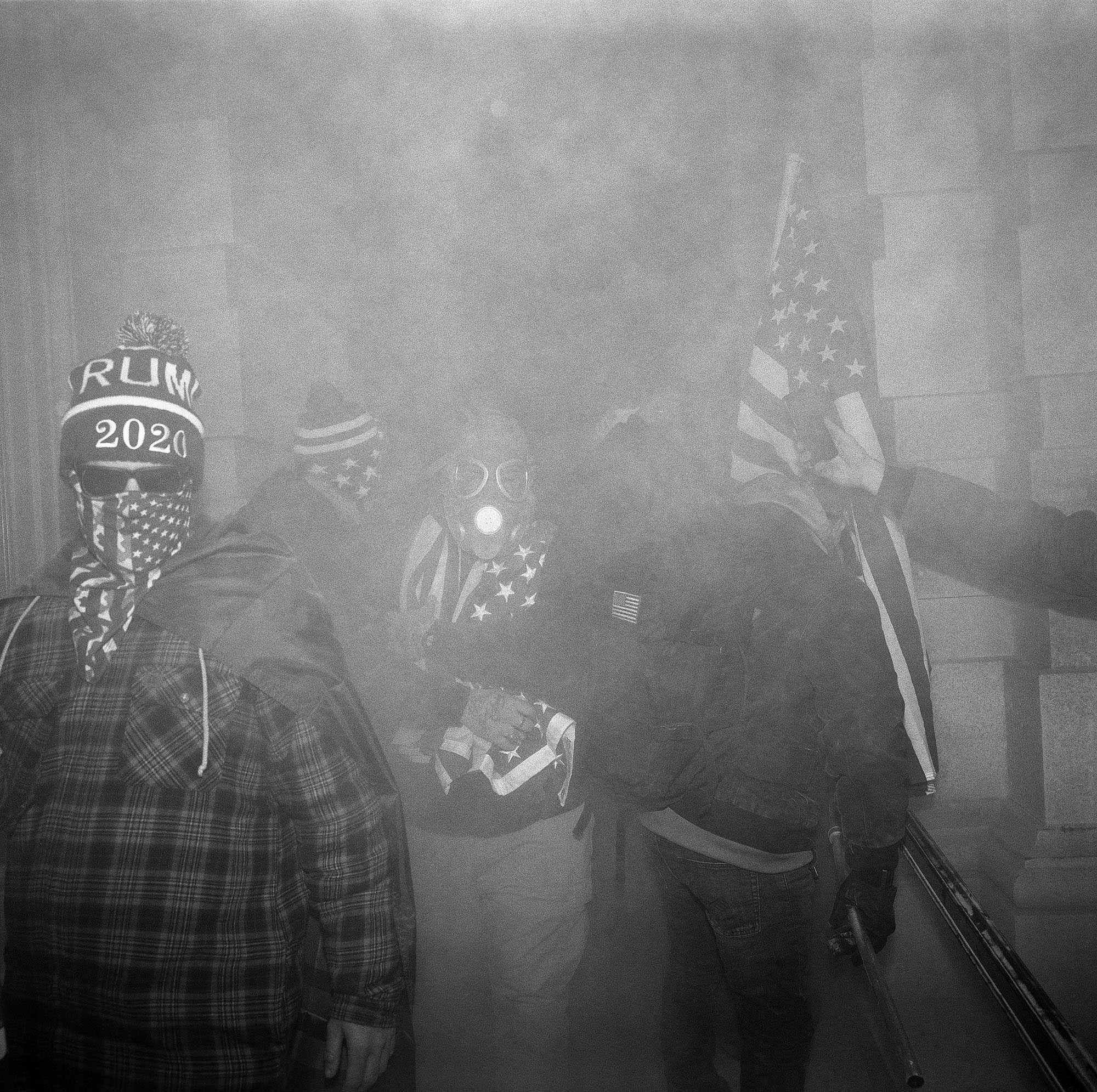
Members of a Pro-Trump mob in the midst of violently attacking police and breaching the U.S. Capitol building are seen in a cloud of tear gas, pepper spray and dust from fire extinguishers which were used as weapons against police at the North entrance of the U.S. Capitol in Washington D.C. Republican Senate Leader Mitch McConnell later labelled the attack as a "failed insurrection" provoked by the president's "lies" and said that the Senate "will not bow to lawlessness or intimidation".
THE MISSION
HM: After everything—mines, wars, borders, ice—do you see your work in the Arctic as a mission?
LP: Yes. Completely.
My father once dragged me waist-deep into an icy lake in November and said, “Now you know how cold it is.” Brutal, but unforgettable.
Climate change is an existential threat.
The Arctic is the clearest warning signal we have—if you know how to look.
All images © Louie Palu/Agence VU unless otherwise stated