
Life on the Edge: Conversation with Goran Tomasevic
For this edition of Hot Mirror, on our behalf veteran Reuters cameraman and award winning photographer Antonio Denti interviewed Goran Tomasevic. When we asked him “Why Goran?” he said “although— as he says himself— there are many great photographers, including many great war photographers, I have never seen anyone like Goran who can step, again and again, into that split second where life is about to slip away, or be taken, or be held on to with all the strength a human being has—and then make the picture.”
Goran Tomasevic (born 1969) is a Serbian war photographer whose career spans more than three decades and some of the world’s most significant conflicts. After beginning his work in the early 1990s covering the wars in the former Yugoslavia for Politika, he joined Reuters in 1996 and went on to document major global events across the Balkans, the Middle East, Africa, Latin America, and beyond. Since 2022, he has been a staff photographer for The Globe and Mail.
Renowned for his uncompromising frontline photography, Tomasevic has produced some of the most iconic images of modern warfare—from the NATO bombing of Yugoslavia and the U.S. invasions of Iraq and Afghanistan to the Arab Spring uprisings and the Syrian Civil War. His work captures both the intensity of combat and the human cost of conflict, earning him widespread acclaim and international recognition. He has also covered major global news stories outside war zones, including political upheavals, humanitarian crises, and major sporting events such as the Olympics and FIFA World Cups.
Tomasevic’s photography has earned him numerous prestigious awards, including being named Reuters Photographer of the Year four times and sharing the 2019 Pulitzer Prize for Breaking News Photography. His images have appeared in exhibitions worldwide, and in 2022 a 444-page monograph of his work was published, cementing his reputation as one of the most influential conflict photographers of his generation.
HM: I’d like to start from the very beginning. As a boy growing up in what was then Yugoslavia, how did photography enter your life?
GT: How did photography enter my life? Straightforward punishment. My late father wanted to get me off the streets. He thought I was hanging on corners, doing stupid things. One day I bought a motorbike—I was 13 or something. He slapped me, sold the bike, took the money and literally threw two new cameras in my face. He said: “I don’t want to see your mother crying anymore.”
A friend of my sister—Misha, a good photographer—then showed me light meters, darkroom, all that. I made an improvised darkroom in some shack, blocked the windows with cloth, started developing film and printing my first pictures. This was 1982, 1983.
I did it for a couple of years, then lost interest, did my compulsory military service. After I came back, the same guy, Misha, helped me again and I started working for local papers as a stringer. He gave me a proper education. We went deep into grayscale, darkroom technique, chemicals, what different developers do, problems you can have, F-stops, depth of field… I was playing with all that very young.
What I learned then is still how I work now. I use that knowledge every day.
Back then—what kids today don’t get—we shot on film. At Reuters in the early ’90s you couldn’t shoot more than two or three rolls on an assignment. If you shot too much, it meant you didn’t know what you wanted and you didn’t know how to edit. Basically, you weren’t a good photographer. It was proper old-school photography.
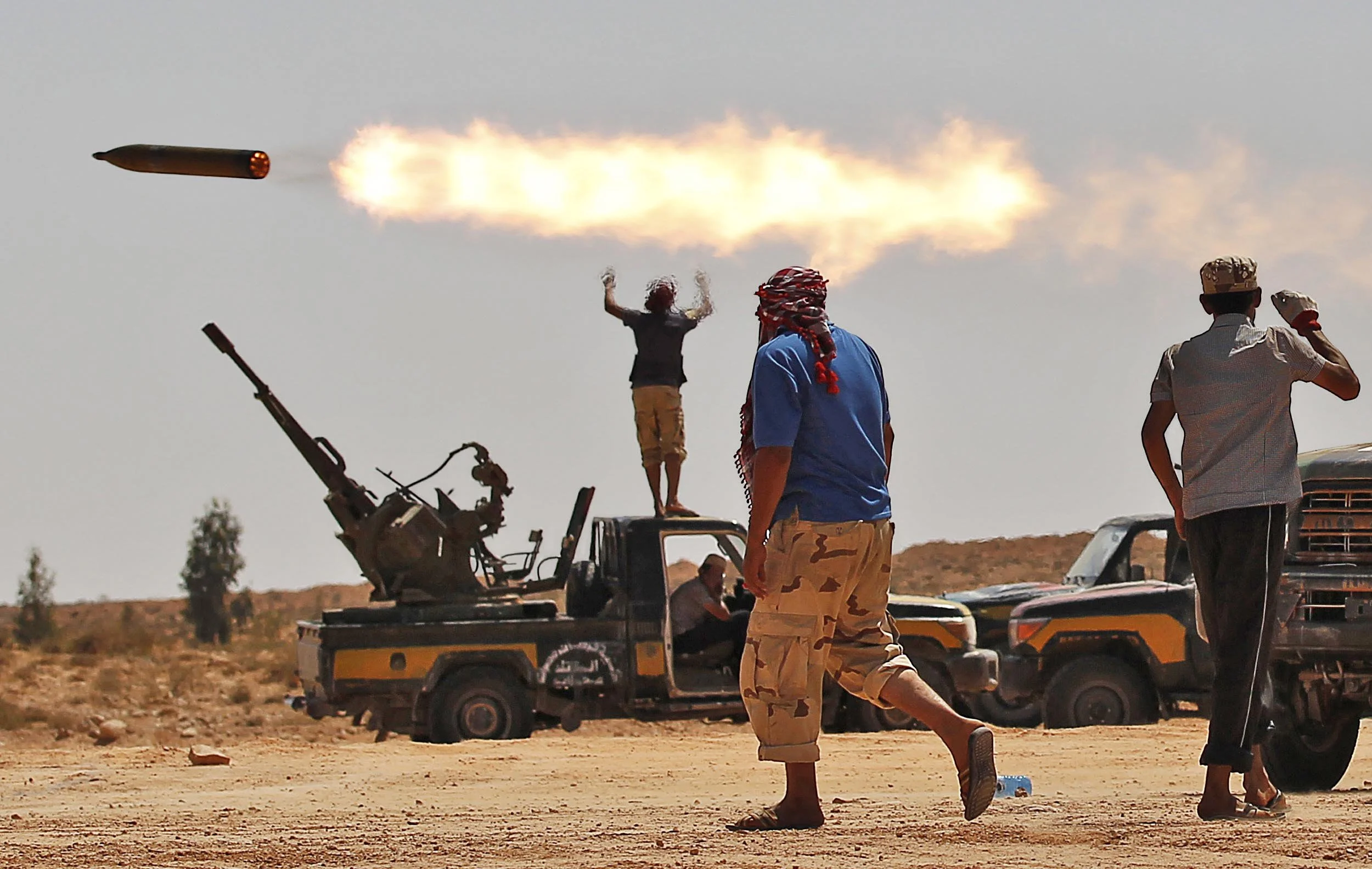
Anti-Gaddafi fighters fire a rocket launcher at one of Muammar Gaddafi's last remaining strongholds near Sirte, Libya, September 23, 2011
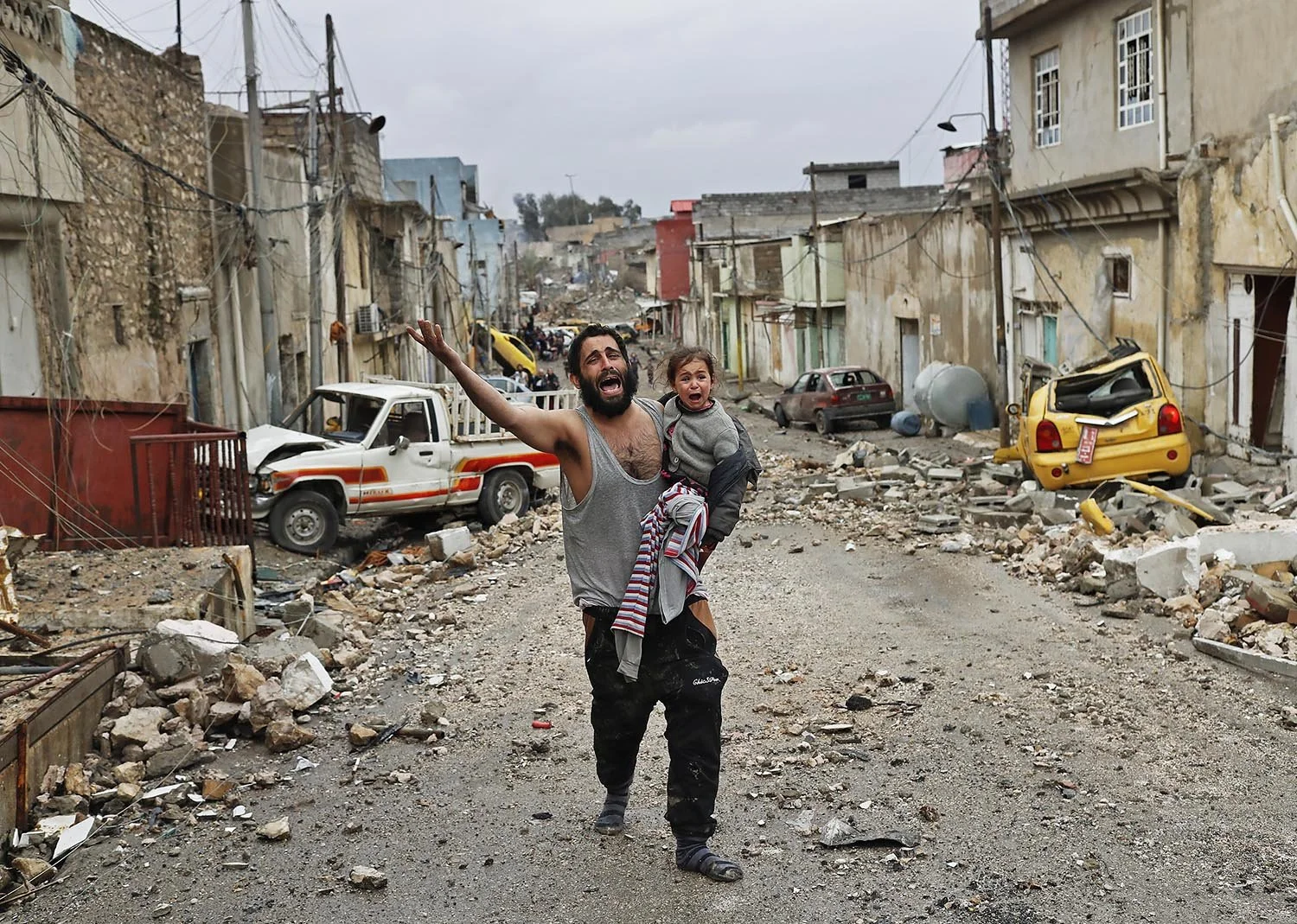
A man weeps as he carries his daughter away from an Islamic State-controlled part of Mosul, Iraq, March 4, 2017
HM: Then you grew to be one of the best war photographers of your generation…
GT: When a photographer believes he’s the best, it’s the end of his career. What is “the best”? There are many amazing photographers—war and everything else.

Rebel fighters jump away from shrapnel near Bin Jawad, Libya, March 2011
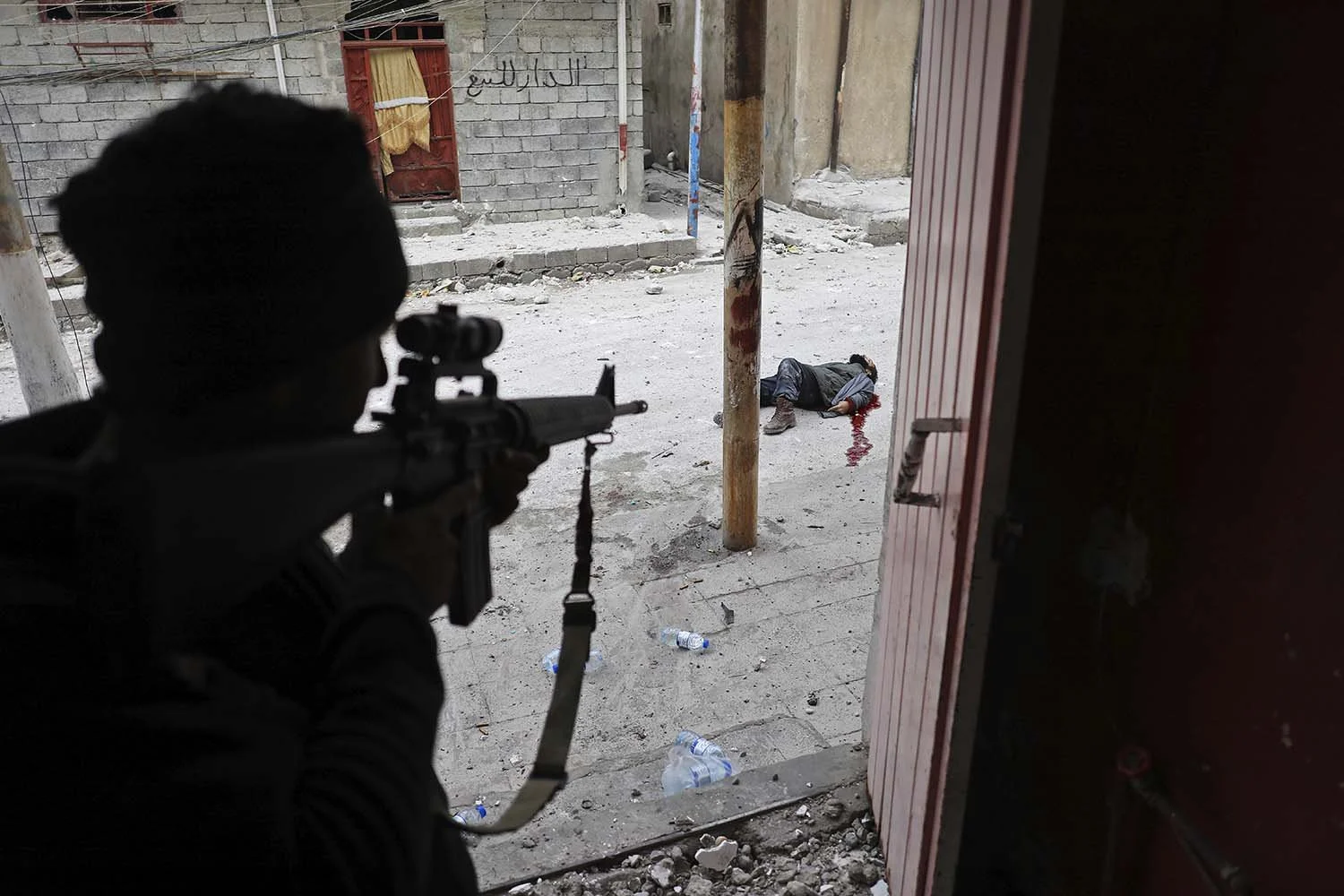
An Iraqi special forces soldier shot dead an Islamic State suicide bomber in Mosul, Iraq, March 3, 2017
HM: But your first war was special. It was happening at home.
GT: Yes. And it was the hardest. Covering war in your own country is difficult because your people are involved. You get emotional—and you can’t be emotional when you work.
The story was there, that part was good. But seeing your own people suffer is not good. By 2000, when Reuters offered me a job abroad, I was really tired. I’d started right at the beginning: Croatia, back and forth to Bosnia, protests in Belgrade, Kosovo. When Kosovo was over, Reuters sent me for a long assignment to Baghdad, then to Jerusalem. I was relieved.
I still care when I see suffering, of course. But it’s different when it’s your people.
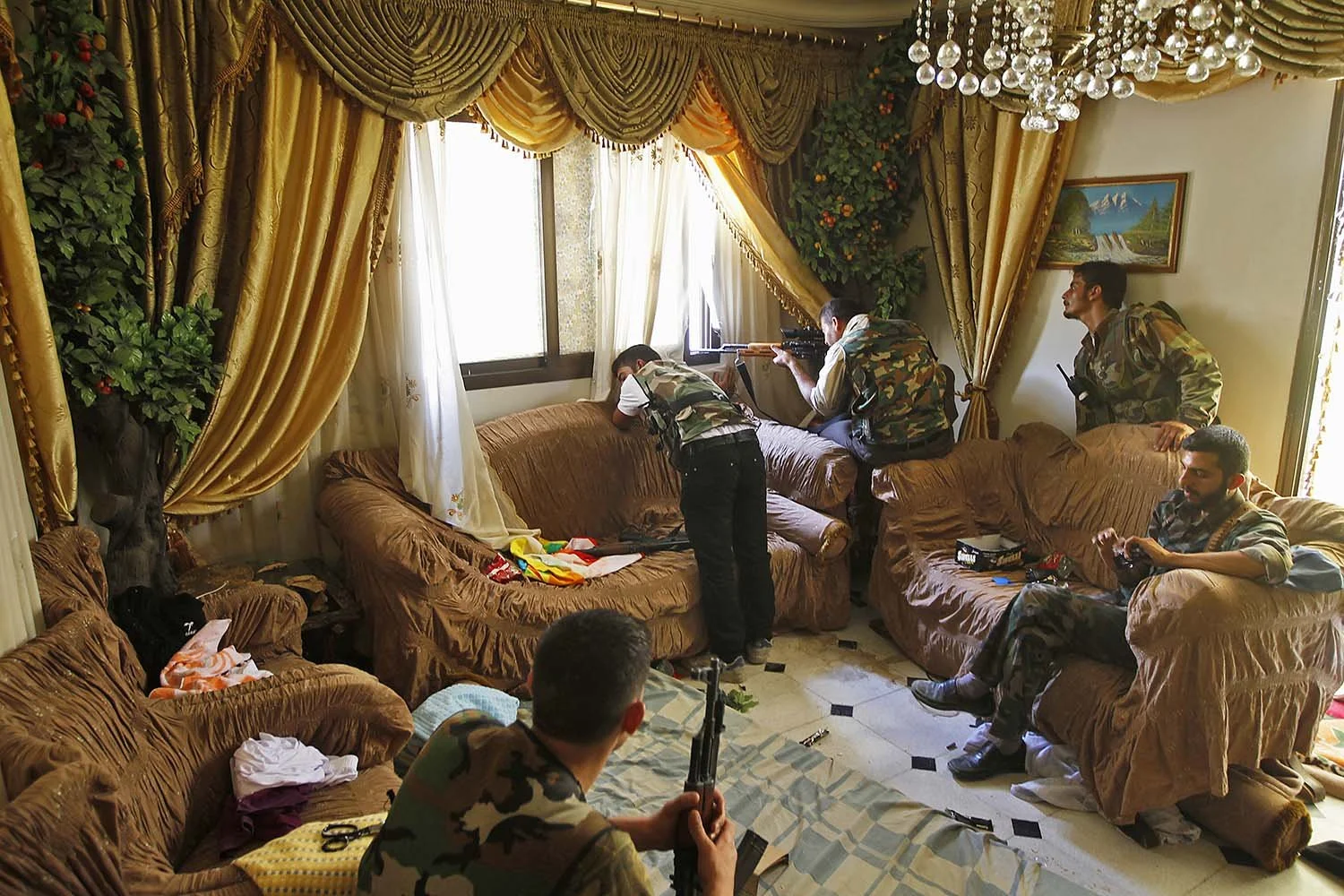
A Free Syrian Army fighter fires his sniper rifle from a house in Aleppo, Syria, August 14, 2012
HM: Do you have clear memories from the very beginning of the war in Yugoslavia?
GT: Most of that early work is gone—rolls of black and white and color, no idea where.
I was broke, crossing the Drina river, trying to find army units, make contacts. I had a couple of sardines in my pocket. When you find a good unit, they feed you. Otherwise, you find some bread, stab the sardines, pour the oil on the bread, eat, and keep the rest for dinner. One sardine a day—I could live a long time like that.
I just wanted to take pictures. That’s all I cared about. I was 22, 23.
A SHORT GAME OF ASSOCIATIONS
HM: You’ve covered so many wars. We can’t go into all of them, so let’s play a kind of free association. I say a country, you give me first thoughts—anecdotes, fragments. Let’s start with Afghanistan.
GT: I absolutely love Afghanistan. And I love Afghan people.
I was with the US Marines when I took one of my best-known pictures—Sergeant Bee falling under Taliban fire. I planned to stay three weeks and stayed more than three months. I had a good relationship with a colonel, so I had a lot of freedom. If I liked a mission, I’d ask the Marines, they’d sort it with the Army, and next day I’d be on a helicopter.
Batteries were a nightmare. No power in the middle of nowhere. Once a week the Marines took my laptop and Sat Phone, charged them somewhere and brought them back two days later. I slept on hard ground for about a month. My shoulders and hips were blue.
When I finally got out, I called Steve Crisp and said: “Civilization at last.” He asked where I was. I said: “Kandahar.” He told me: “If Kandahar is civilization for you, you’re in serious trouble.”
I wanted to cover Afghanistan in 2001, but Steve put me on Iraq. So Afghanistan had to wait until after my Jerusalem posting. I started going there in late 2006. I absolutely love it.
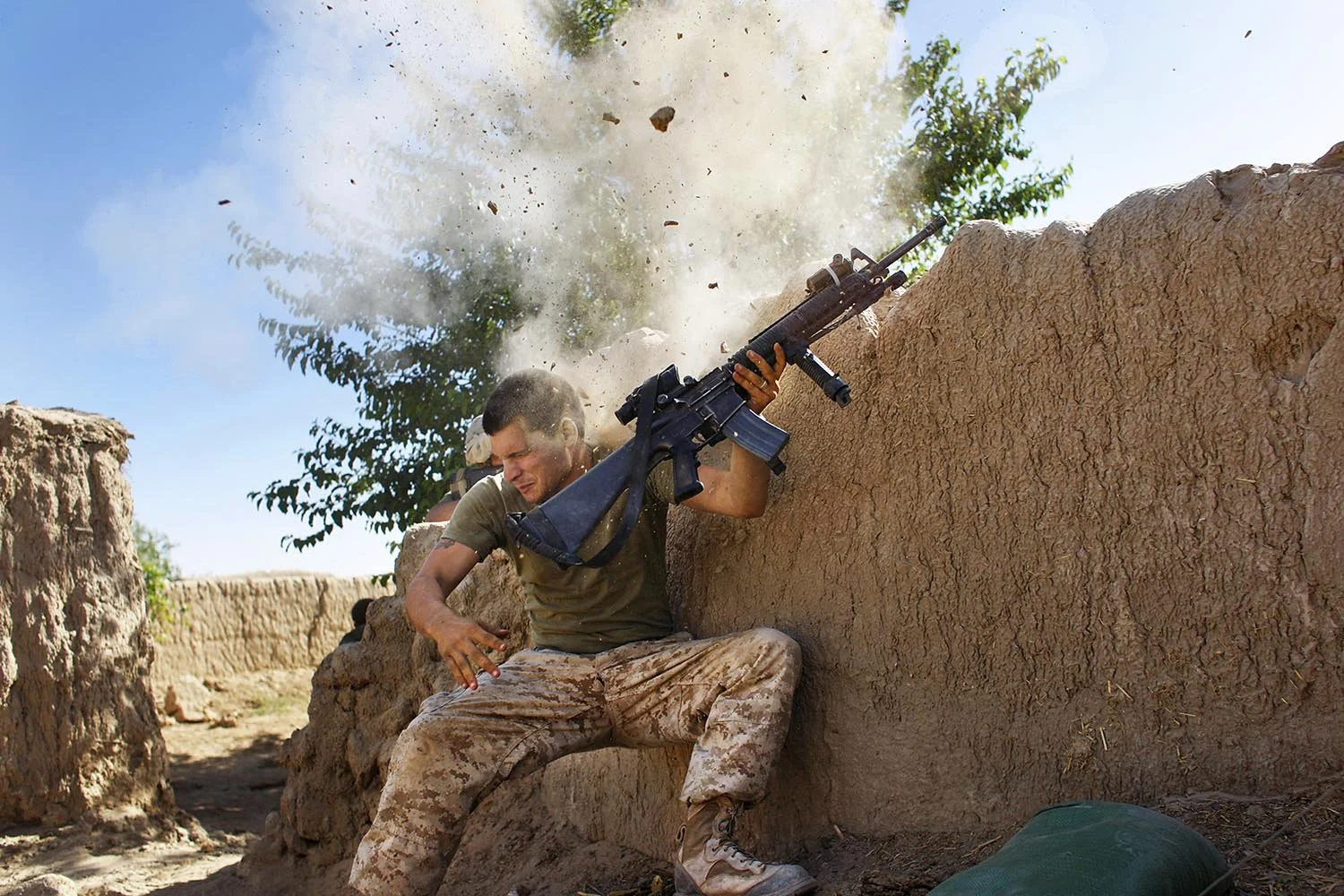
Sgt. William Olas Bee, a U.S. Marine from the 24th Marine Expeditionary Unit, has a close call after Taliban fighters opened fire near Garmser in Helmand Province of Afghanistan, May 18, 2008
HM: Iraq?
GT: Not 2003—2002. Saddam’s “elections.” He was the only candidate, so it was basically a referendum. In Tikrit, I watched soldiers cut voters’ fingertips so they could sign in blood.
Then in October 2002, he released all the prisoners because he could smell war coming. I went to Abu Ghraib to photograph them coming out. I wasn’t patient enough, so I jumped the gate, went inside, shot my pictures and ran back out. They started releasing prisoners just then, so they didn’t arrest me. They complained, but the pictures were good.
As for the statue coming down—I don’t like talking about it. The day before, our Reuters office was hit. Taras Protsyuk was killed, others were injured.
That morning, before leaving the hotel, I called Taras to ask him to come out with me. The phone rang, and then I hung up. I thought: “You want to go into trouble, fine. But don’t pull your friends and colleagues into it.” I went with two English photographers instead.
When we came back, the hotel was hit. Taras was dead. Samia was injured, Paul too. He was in what was supposed to be the safest place in Baghdad, and they still blew up his room. You never know.
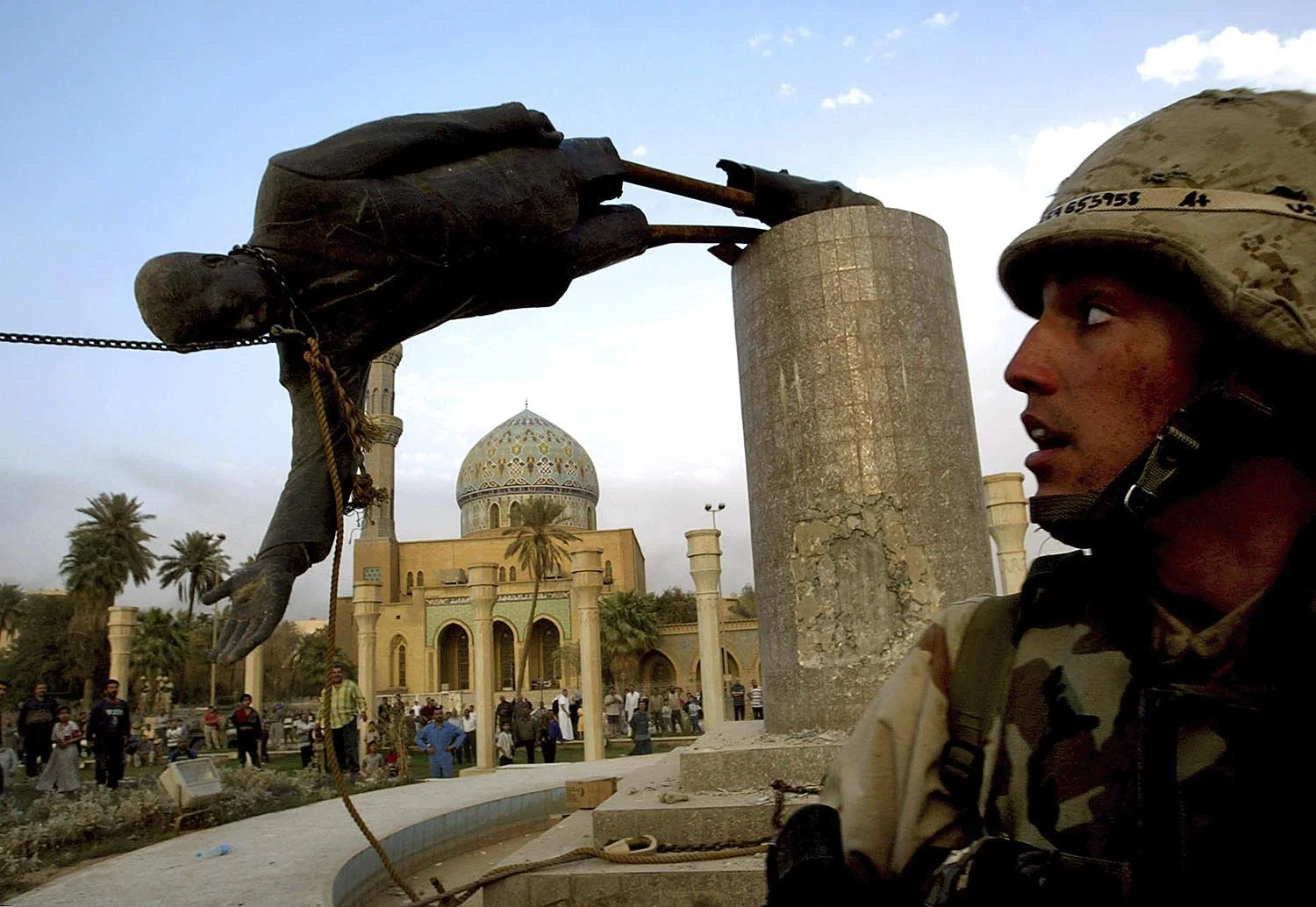
A U.S. soldier watches as a statue of Iraq's President Saddam Hussein falls in central Baghdad, Iraq, April 9, 2003
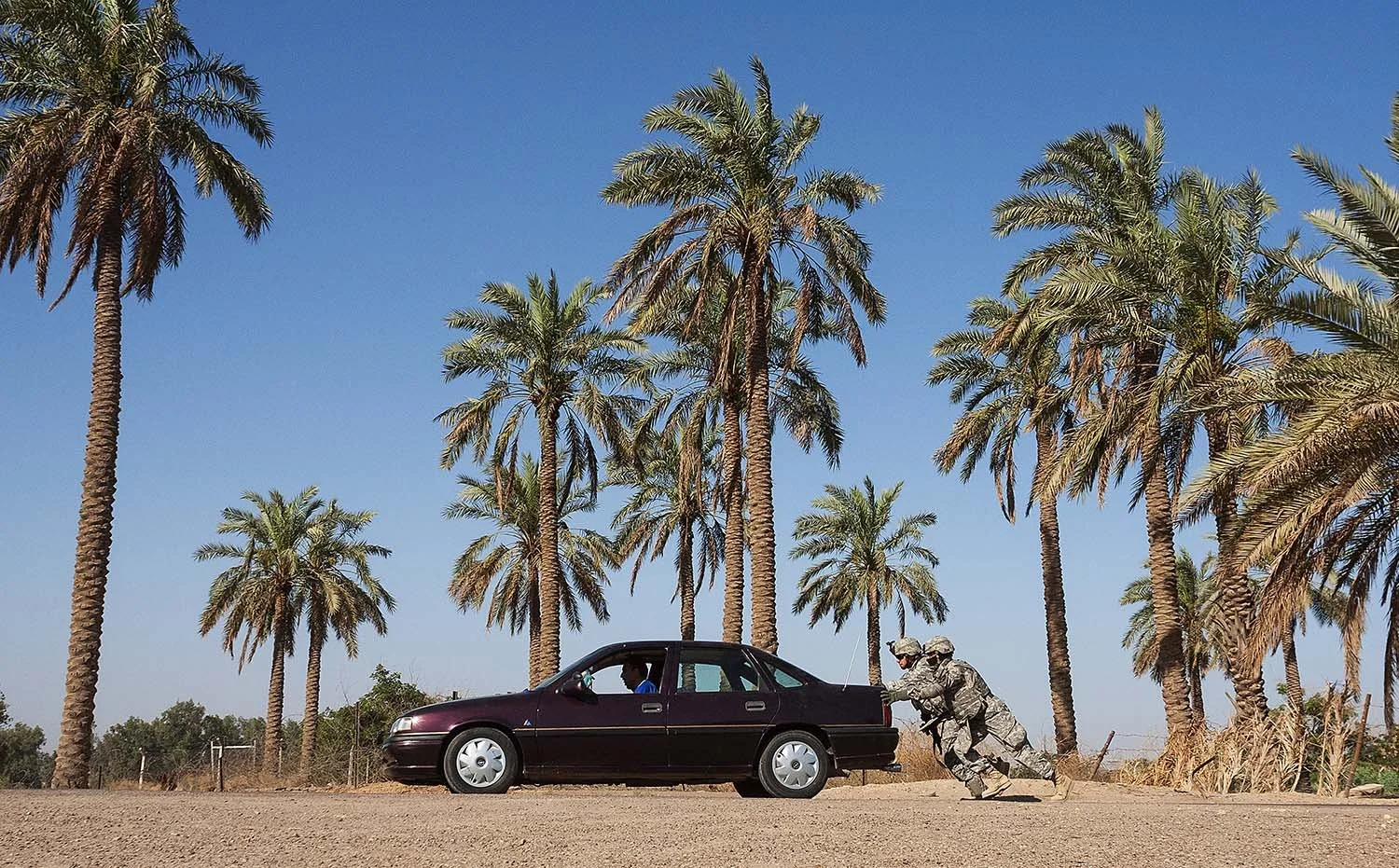
U.S. soldiers push a car of an Iraqi man to start the engine at a check point in north Baghdad, Iraq, June 13, 2007
HM: Syria?
GT: I love Syria too. Syria is in my heart. Beautiful people, good-hearted people. What happened to them is tragic.
To get in, I ended up throwing bags over a fence on the Turkish border, dragging a text reporter’s bags, dodging Turkish soldiers shooting in the air. They said: “Goran is fucking crazy.” Maybe. But I always help my colleagues.
Aleppo was terrible. I’d read books about it, about the Middle East, but reality was something else.
In Syria, for the first time, I saw people fight at distances of five, ten, fifteen meters. Everything flying at head height—shrapnel, grenades, bullets. Completely crazy.
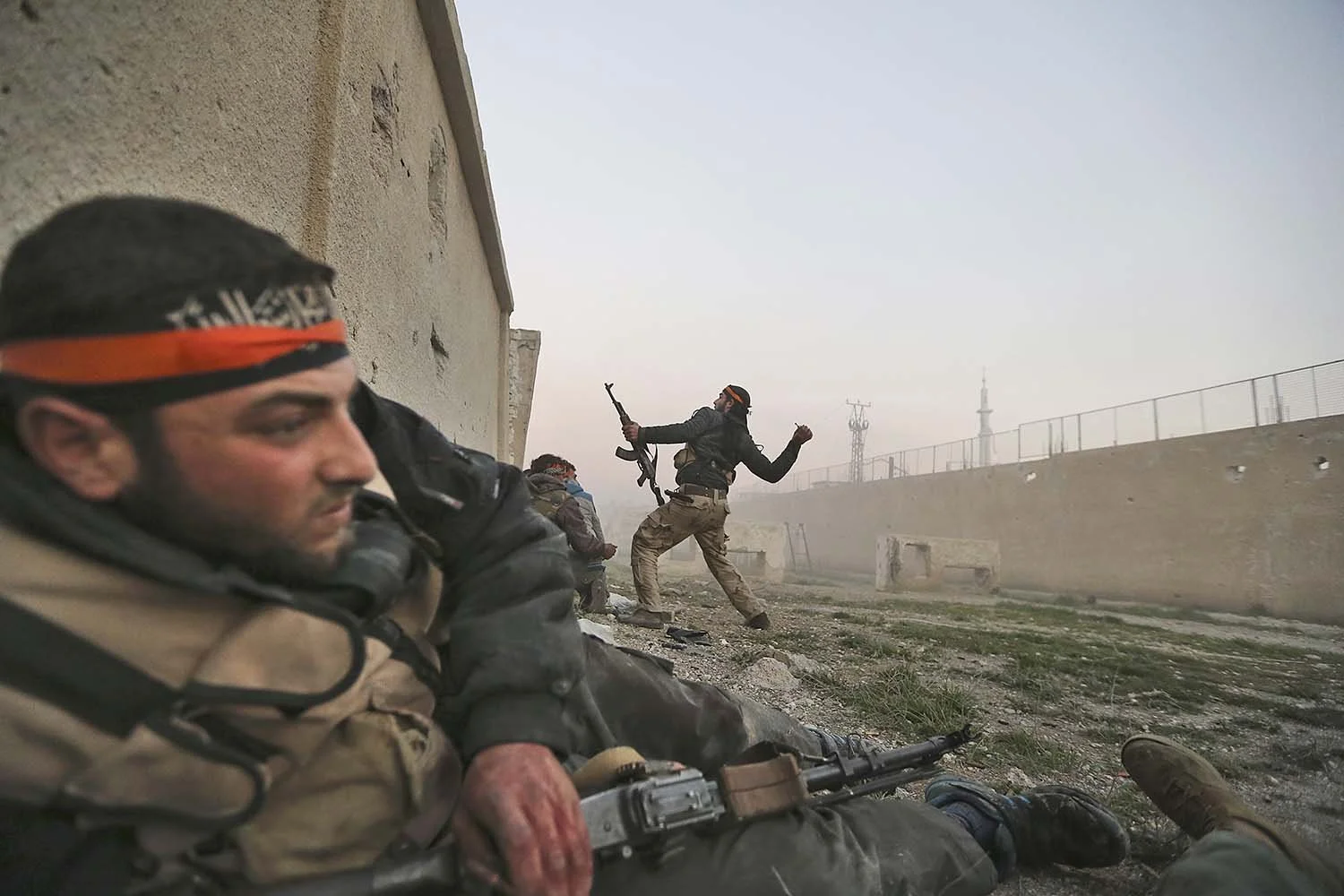
A Free Syrian Army fighter throws a hand-grenade inside a Syrian Army base during heavy fighting in the Arabeen neighbourhood of Damascus, Syria, February 3, 2013
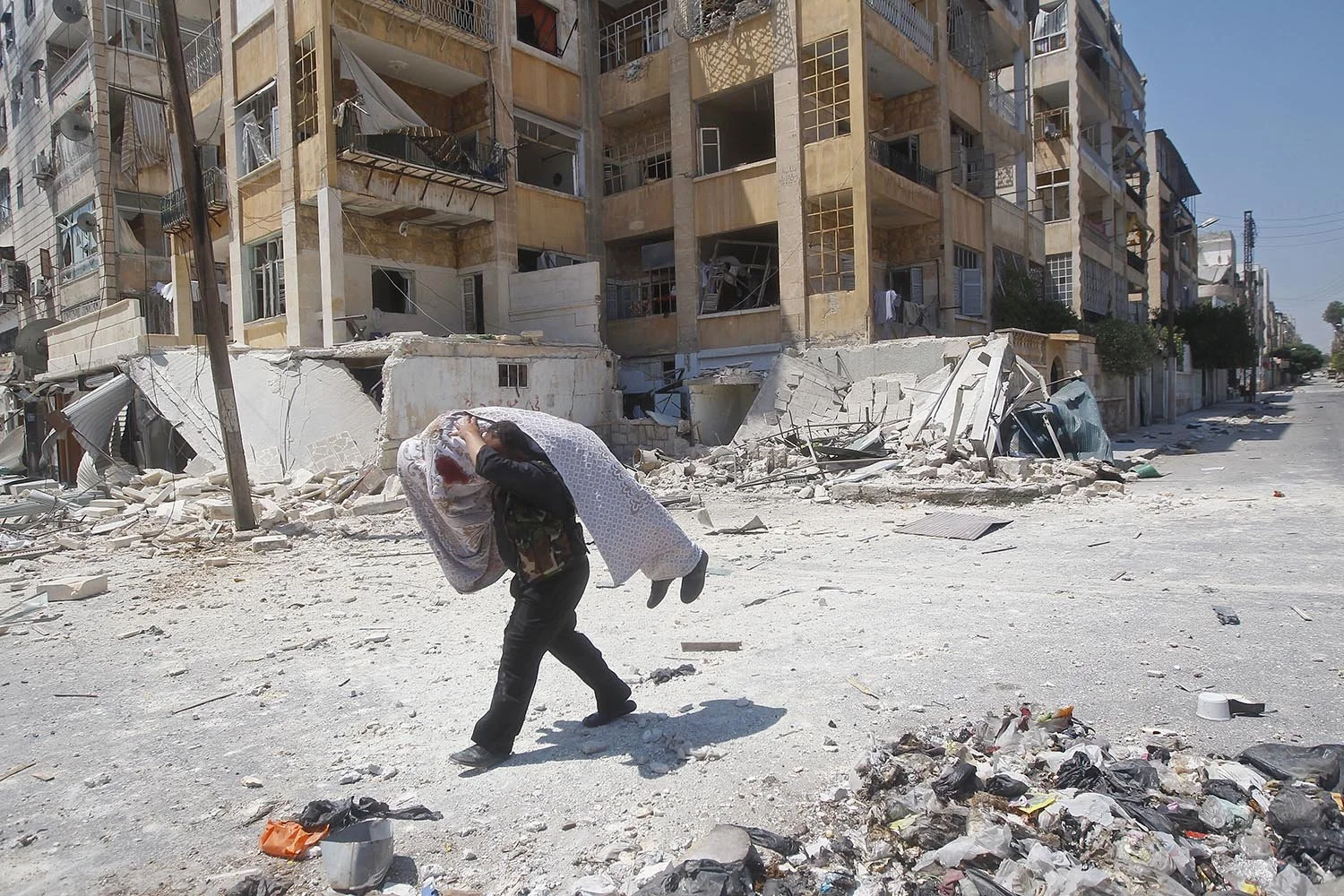
A Free Syrian Army fighter carries the body of a fellow fighter during clashes in Aleppo, Syria, August 16, 2012
HOW HE WORKS
HM: Let’s move to how you operate. One of the striking things about your work is the access you get. How do you manage to get so close?
GT: I work very hard. I stay long. I push. I ask.
On most assignments—Reuters before, now The Globe and Mail—I go alone. I like to decide for myself, and I don’t want anyone in trouble because of my decisions. For me, “no” doesn’t exist. There is always a way.
I’m honest. I don’t lie. When I give my word, I keep it. People usually feel that and trust me.
Covering one side doesn’t mean you support that side. You’re there to report. You’re not a soldier. Journalism shouldn’t hide anything, and that’s why we exist.
In all these places I met amazing people in very hard situations. We went through real hardship together. I never regret going. I did my job, made friends, and I can still go back because I never lied and never manipulated. Even when governments or organizations don’t like my pictures, they can’t really complain—that’s what happened. If you lie, you’re doomed.
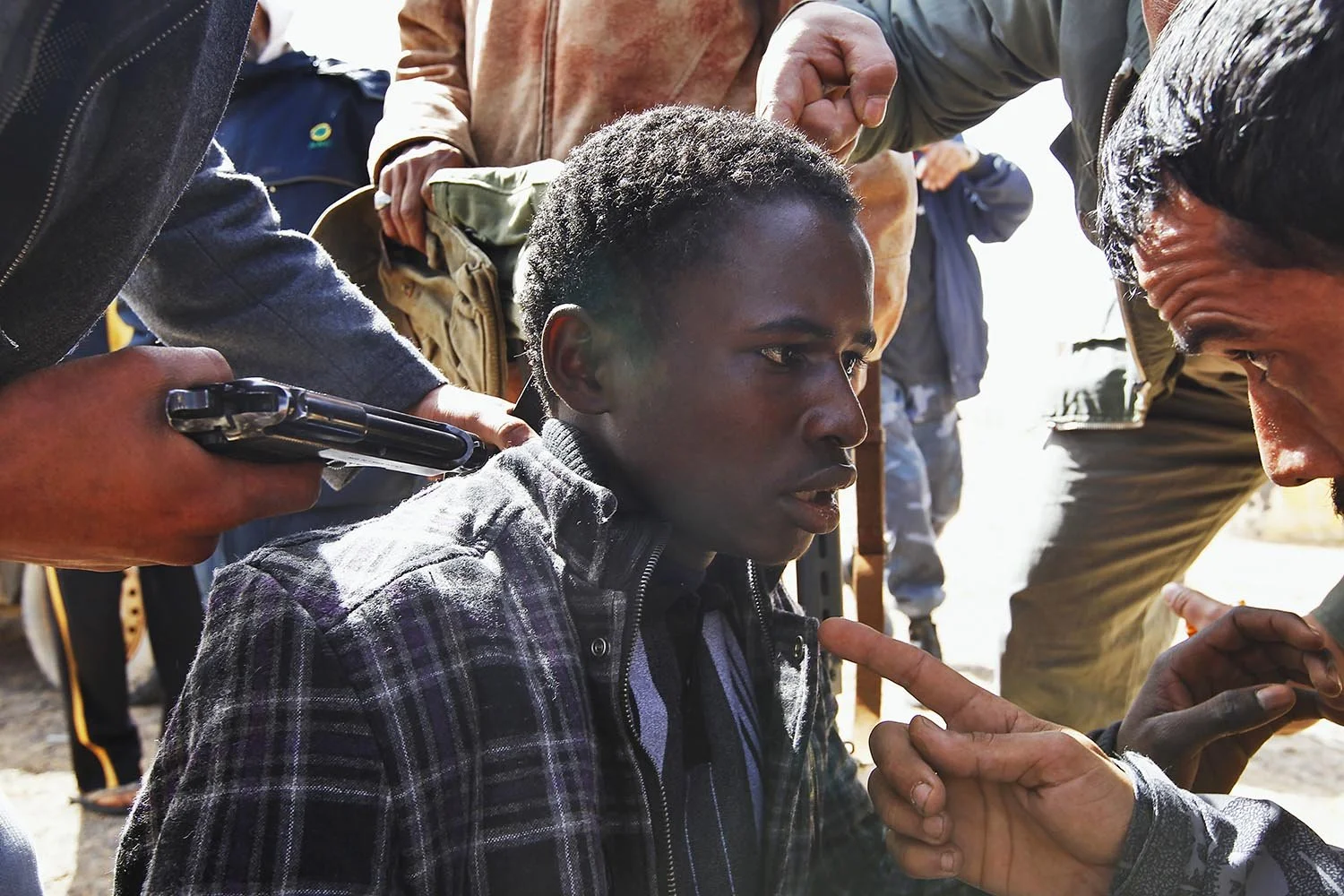
Rebels question an African man in Libya, March 2011
HM: What is your relationship with danger?
GT: If you can’t control yourself and make good decisions, you shouldn’t work in hostile environments. However bad it is, you need to keep thinking.
Later, at Reuters, they brought in security advisors and people in New York making decisions for us in the field. People with no clue, sitting far away, telling us what to do. I don’t work like that. I need to feel the situation myself.
Some of those advisors were good guys, but I often spent more time keeping them safe than listening to their advice. Sometimes I’d park them in a corner and tell them to wait for me.
Look, if you are completely safe, you will make bad pictures. To make strong pictures, you have to go to unsafe places. But you think all the time—about yourself and everyone with you. You all need to survive.
If you go somewhere and don’t shoot anything, that’s the stupidest thing. There’s no reason to be there—and you are still in danger.
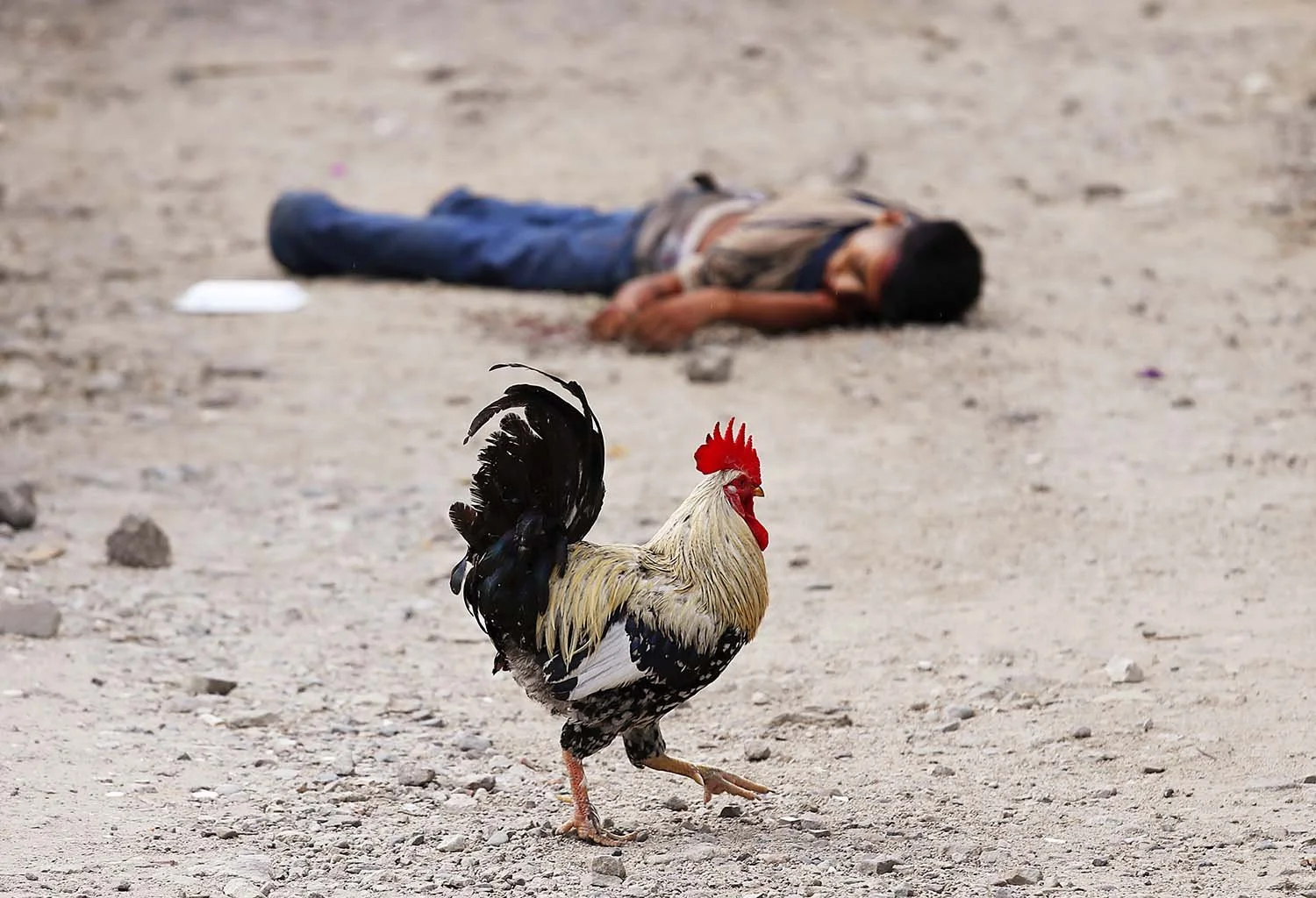
A rooster walks in front of the corpse of a gang member in San Pedro Sula, Honduras, September 2018
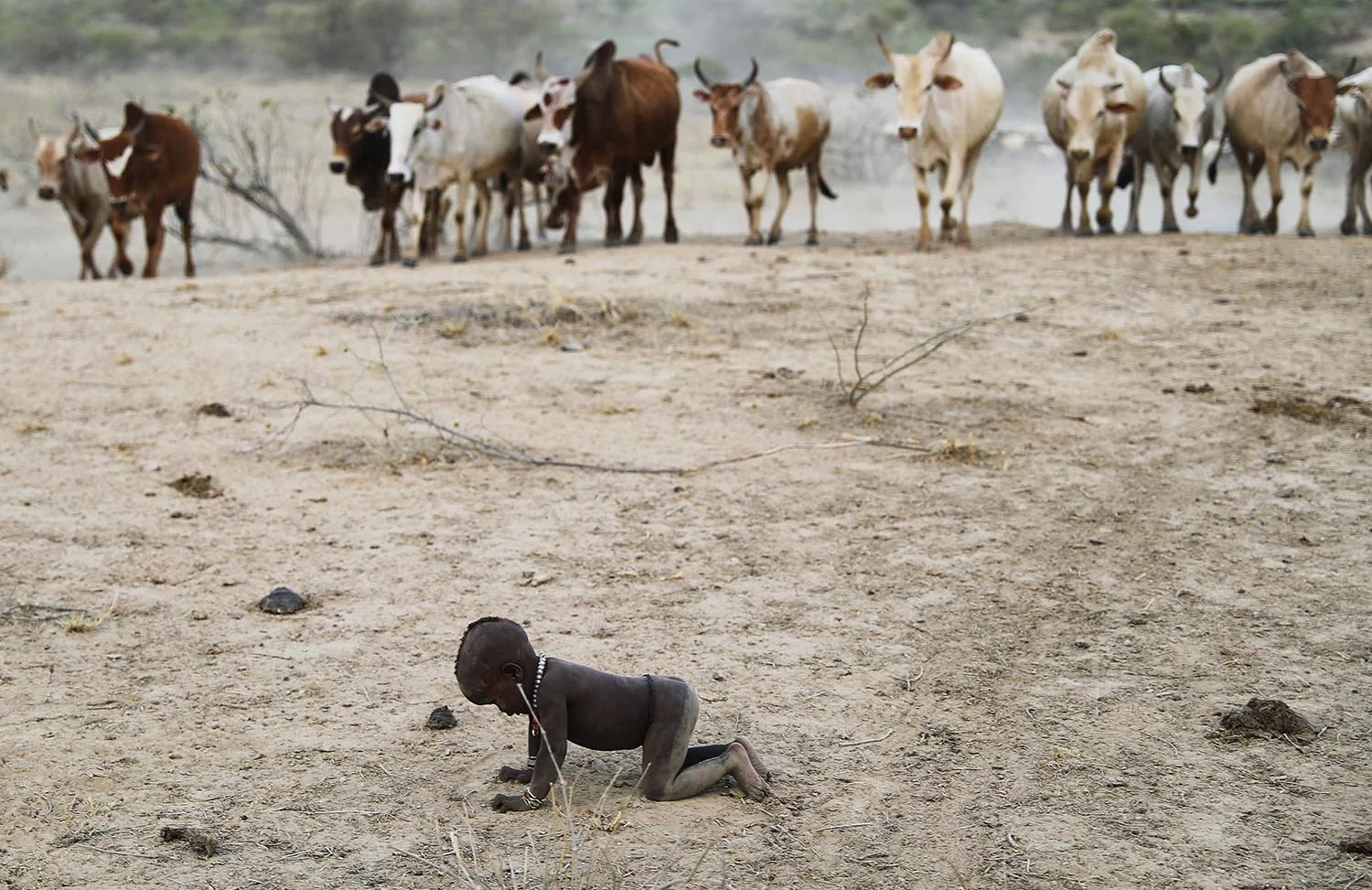
A Turkana boy is seen outside a settlement in the Ilemi Triangle, July 21, 2019
HM: And your relationship with fear?
GT: Fear has to be controlled. No fear, no happiness—I learned that early.
I remember being in Croatia once, very scared. I didn’t shoot a single frame. Then I told myself: “If you behave like this, there is no reason for you to be here.”
I don’t take unnecessary risks. I can sit in one corner for weeks. But when I see the picture, then I push like a dog. That’s when I risk it.
You can be smart and experienced, but if a random mortar lands next to you, you’re dead. The people firing often have no idea where the shell will land. You can’t control that. But you can control how you move, how you work, what you do.
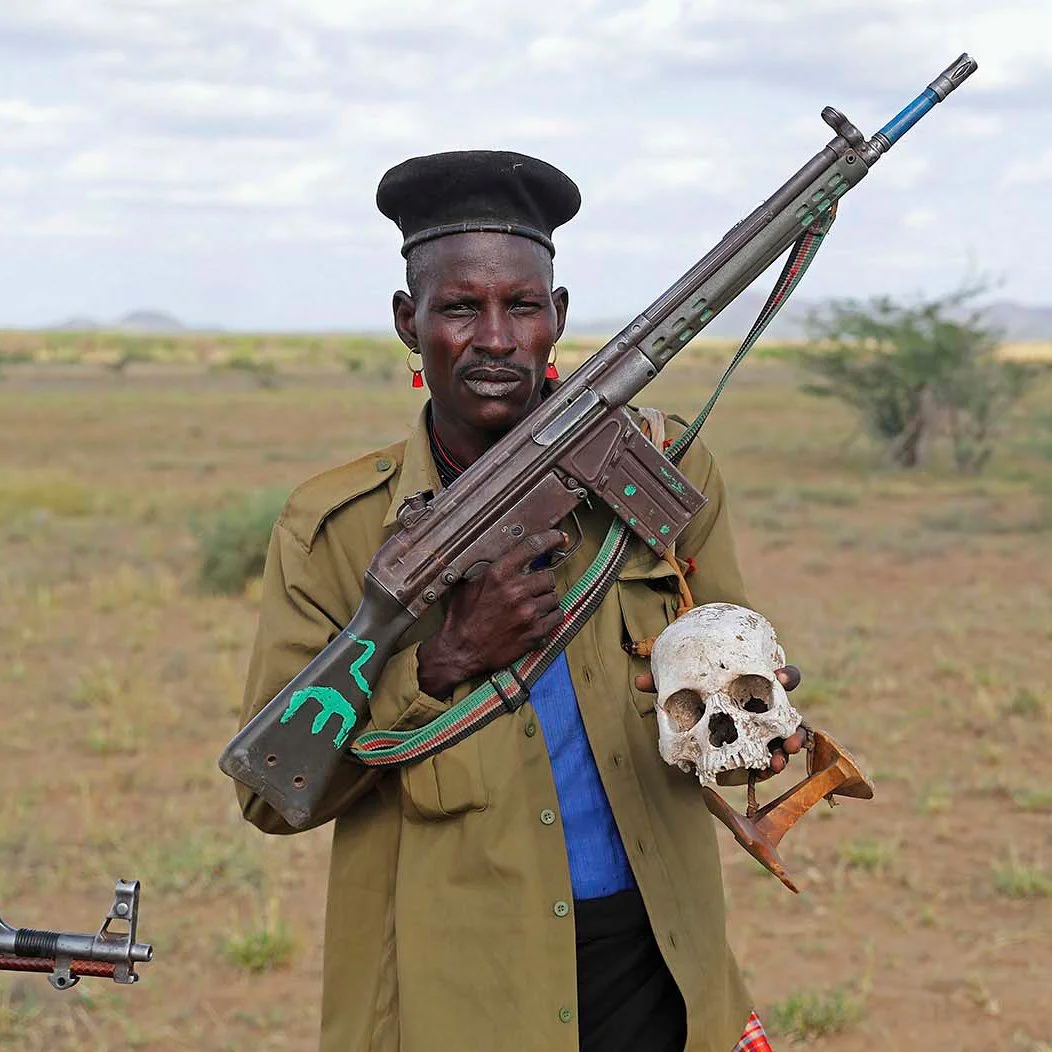
A Turkana warrior holds a skull of a Nyangatom warrior in the Ilemi Triangle, July 16, 2019
ON AI AND TRUTH
HM: There’s a lot of talk about artificial intelligence and the risk that it will disconnect us from reality. Does that worry you?
GT: Not much. The world is already full of lies and fake journalists. Why should AI scare me more than that?
I don’t trust any report that isn’t backed by visuals shot by a proper photographer. And by “proper” I mean someone not staging things, not faking.
On social media, people put out whatever they want with zero responsibility. We, as professional visual journalists, do have responsibility for our stories. That’s the difference.
And technology will evolve. We’ll get better tools to recognize AI or manipulated images and to distinguish them from originals.
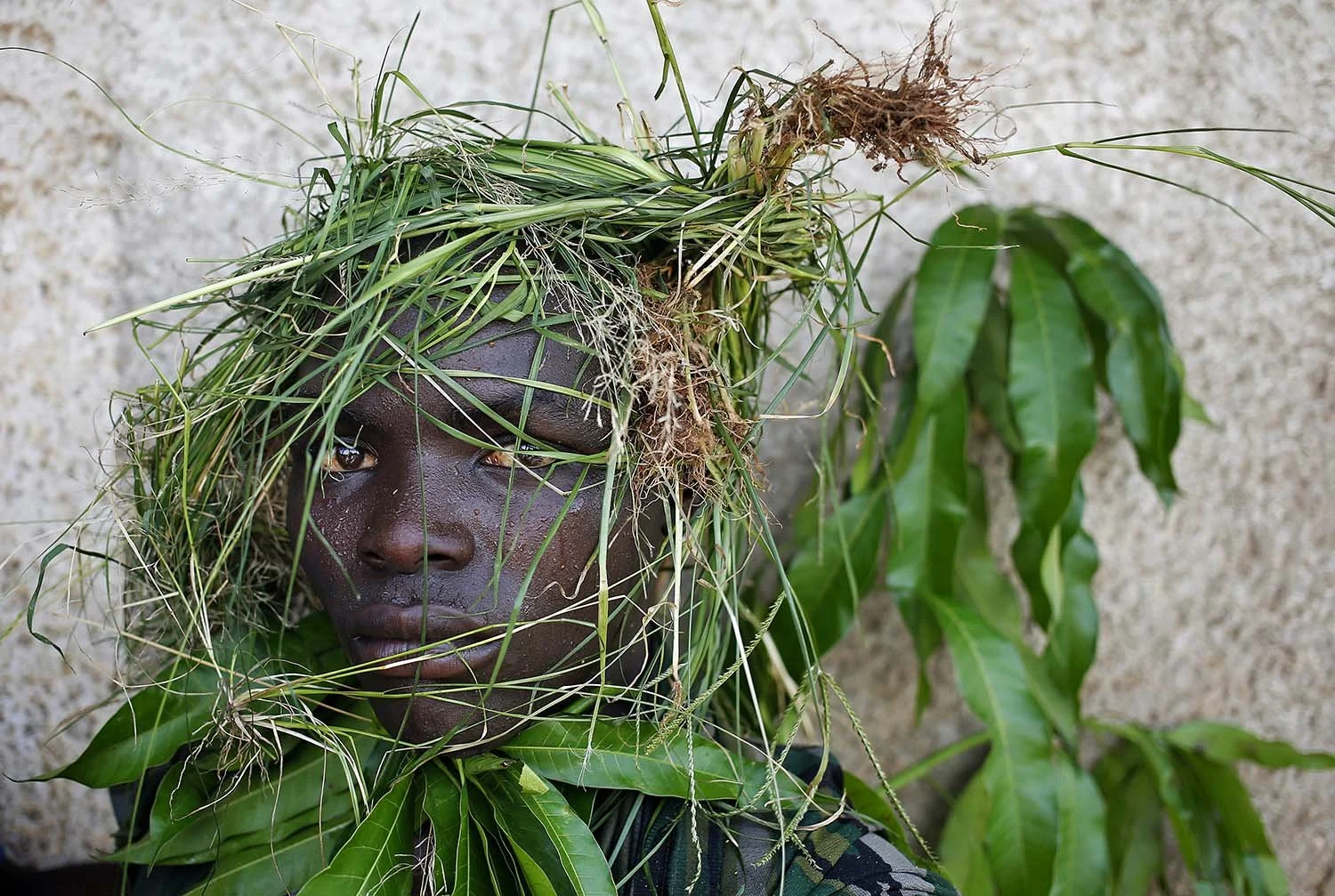
Protester in Bujumbura, Burundi, May 11, 2015
WHAT MAKES A GOOD PICTURE
HM: Last question: what is a good picture?
GT: When the “telling” is there. When one photo tells the whole story, that’s a good picture.
It has to be strong, complete. Everything needs to be inside the frame. Photography gives you so many ways to express yourself and show people what you see. Every lens, every movement, every kind of light gives a different perspective. If you know how to read the light and the movement, you’ll get a good picture.
It’s a wonderful tool to tell the story.
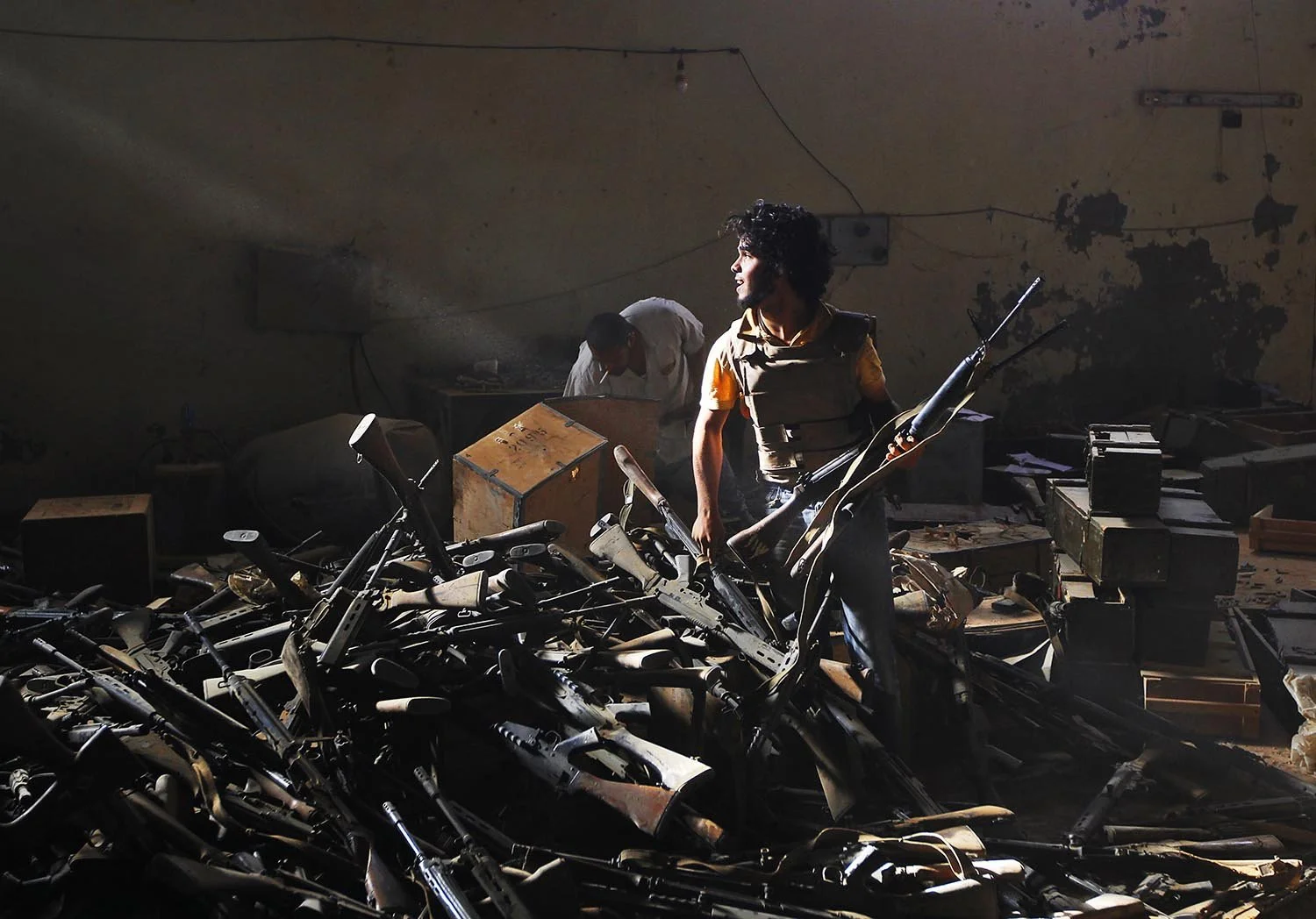
An anti-regime fighter salvages weapons at a weapons and ammunition compound in a village near Sirte, Libya, 19 September, 2011