
The Necessary Balm: Peter Turnley's Fifty Years of Healing in Paris by Brian Byrd
Brian Byrd is a freelance photographer with over two decades of experience using communication to drive social change. He serves on the boards of the Overseas Press Club of America and WITNESS, a global human rights organization founded by Peter Gabriel.
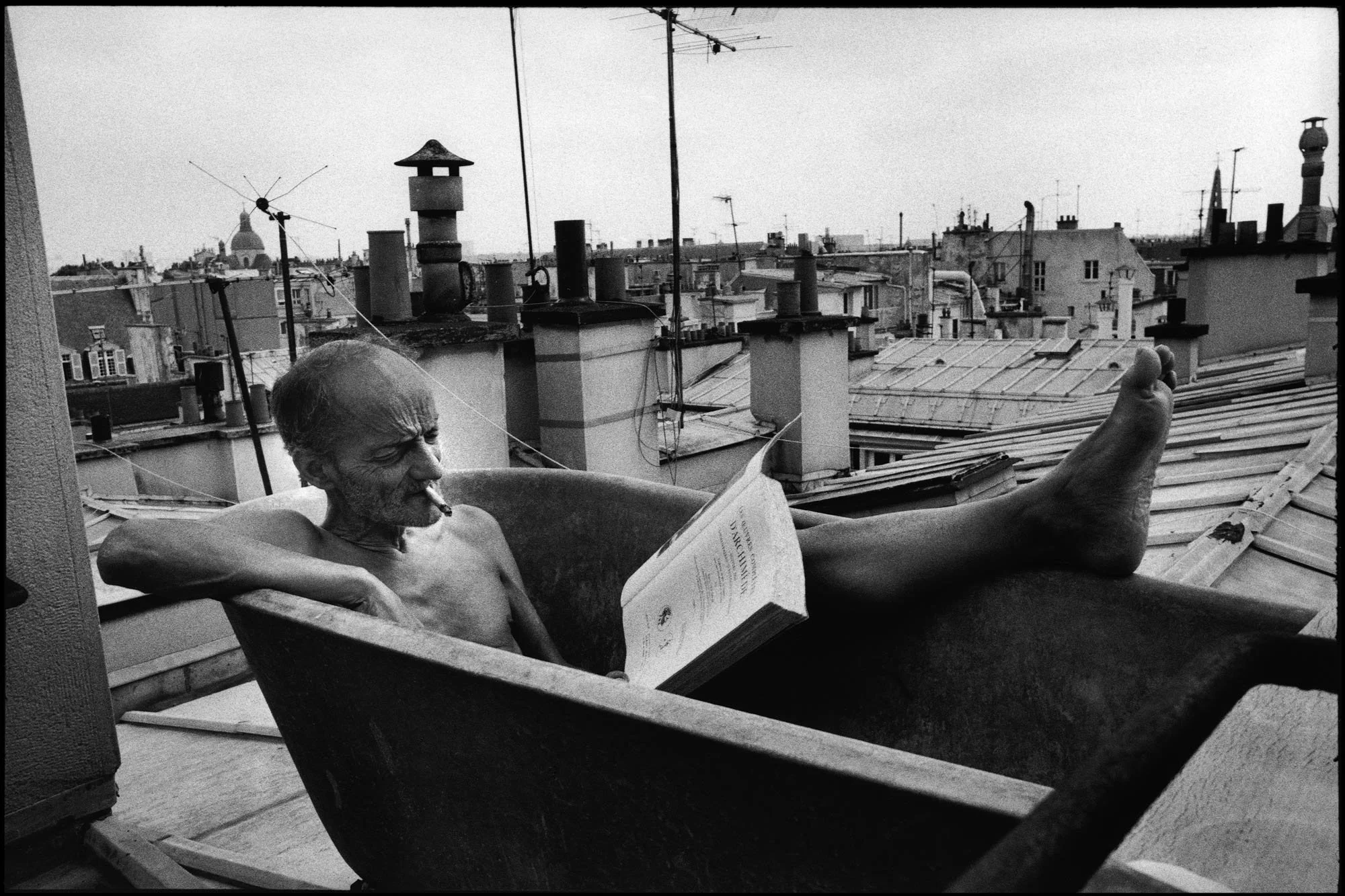
Monsieur Bernard, Ile Saint-Louis, 1999
When I first started out as a photographer, my inspiration was my father, who loaned me his Miranda T SLR camera. One piece of advice he gave me about photography was: "Be patient, be aware, be quick." Those three sentences have served me well over the years, whether covering presidential campaigns in the US, the AIDS crisis in southern Africa, or events in Europe. As I view the images in Peter Turnley's new book, Paris: Je t'aime - 50 Years of Photographs, my father's words came to mind.
Turnley has seen things most of us only glimpse through photographs - the fall of the Berlin Wall, Mandela walking free, the aftermath of Rwanda, Ground Zero still smoldering. For four decades, he was there when history cracked open, his Leica raised, bearing witness. But there has always been a counterweight, a place he returns to when the weight becomes too much.
"After covering assignments involving wars, famine, despair," Turnley explains in a recent CBS interview, "I would return to Paris to heal."
His new book, Paris: Je t'aime - 50 Years of Photographs, released this fall, is the document of that healing. It is also, unmistakably, a love letter - 320 pages of black-and-white images that trace his relationship with the city from his arrival as a twenty-year-old in September 1975 through the present day. The book opens with a quote from Sacha Guitry: "Being a Parisian is not about being born in Paris, it is about being reborn there." For Turnley, that rebirth has happened again and again, each return from a conflict zone a kind of resurrection.
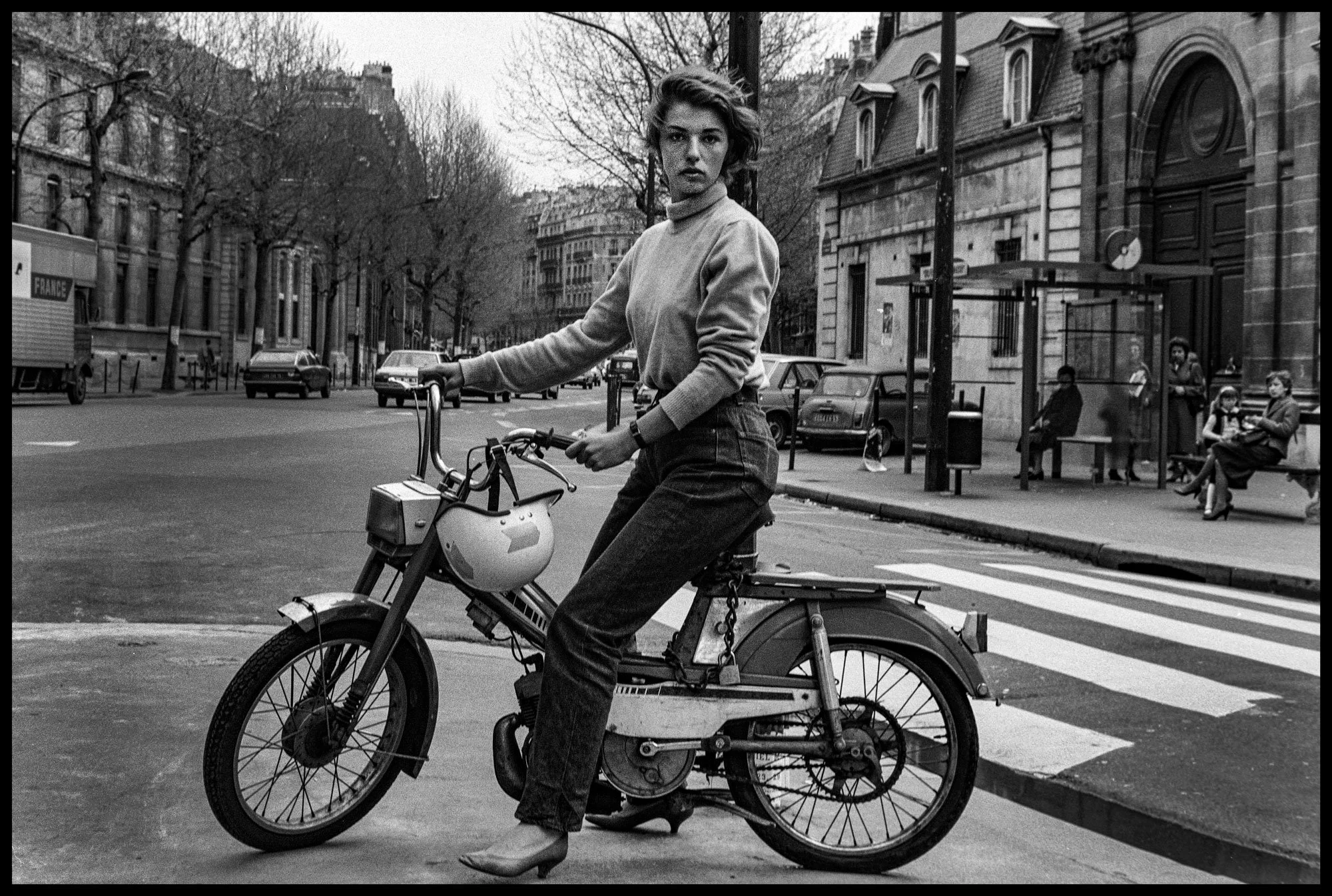
Boulevard Saint-Germain, 1983
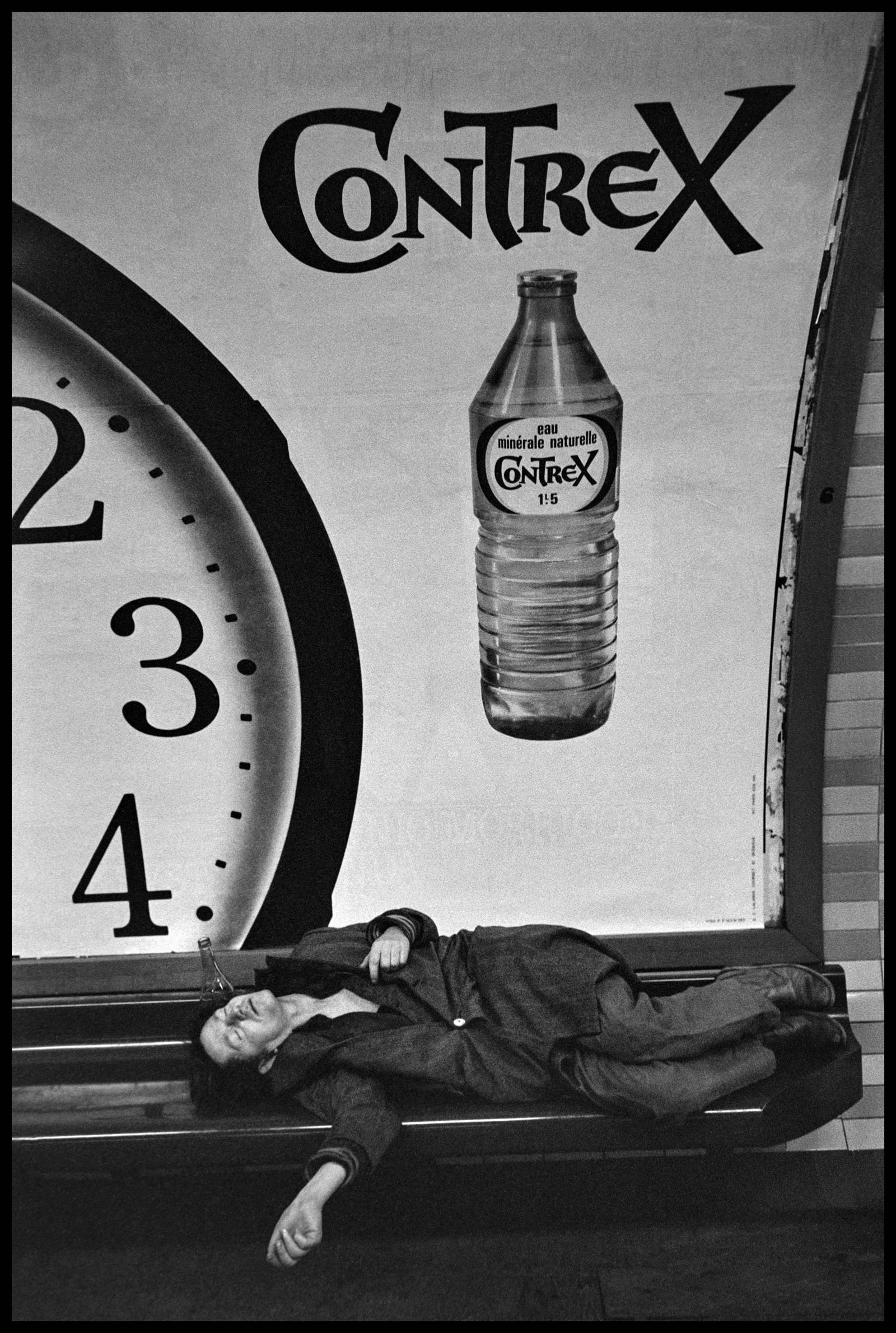
Métro, 1982
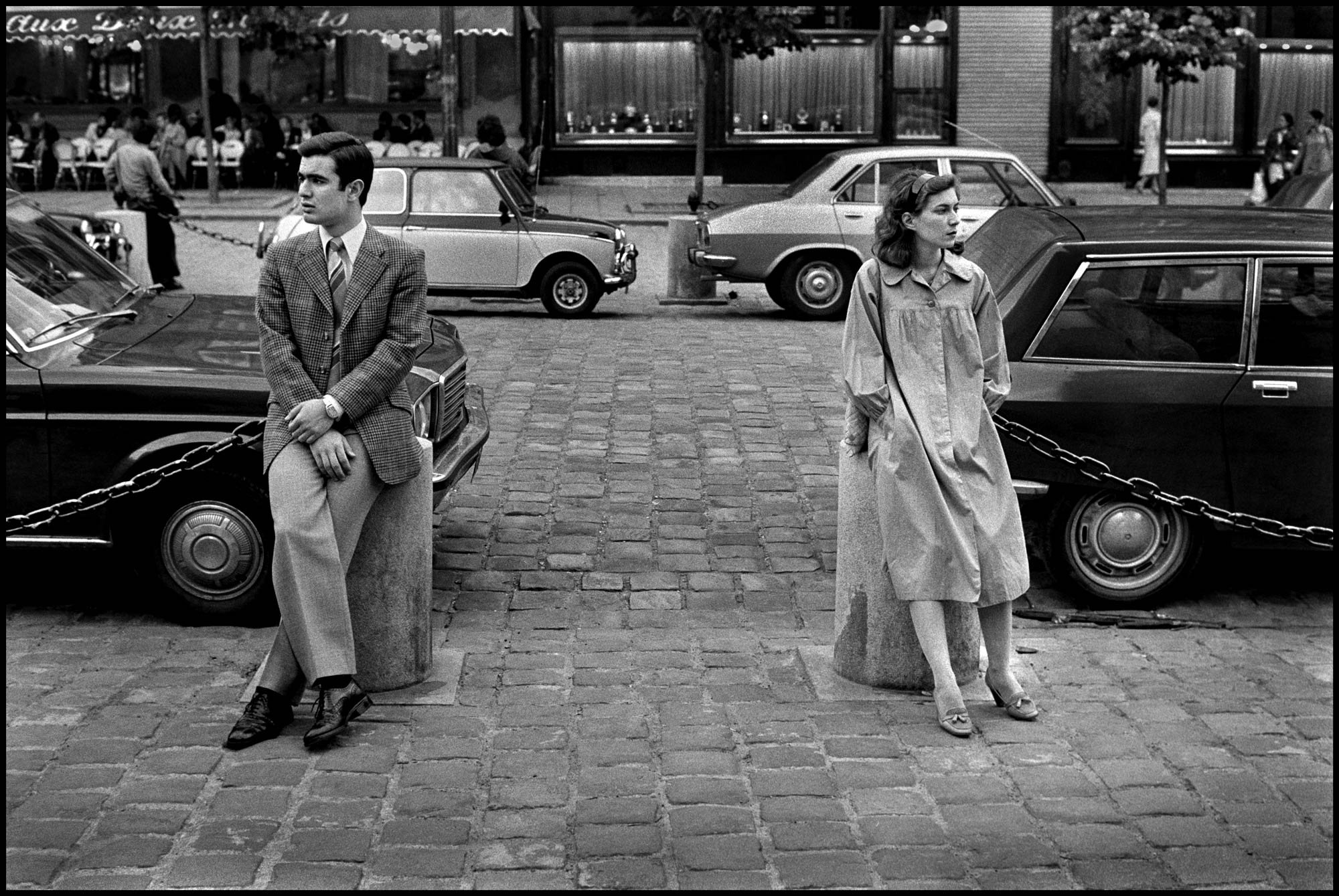
Saint Germain-des-Prés, 1980
The Education of the Eye
Turnley arrived in Paris with little more than an address - that of Edouard Boubat, the humanist photographer whose work he admired. The two became friends, meeting weekly for "an afternoon glass of rouge and warm conversation" until Boubat's death in 1999. He found Robert Doisneau's number in the phone book and cold-called him. "I told him I didn't want anything from him," Turnley recalls. "I just wanted to be in the presence of the spirit of the person who had made those photographs."
He became Doisneau's assistant. He met Cartier-Bresson, Kertesz, Koudelka, Ronis. Most became not just mentors but close friends. What they shared, Turnley says, was a conviction that "when one walks out the door in the morning with heart and eyes open, there may be a gift waiting to be discovered at every street corner."
This is the education that shaped Paris: Je t'aime - not technical instruction but a way of seeing, of being present. Doisneau’s advice became a kind of mantra: “Peter, description kills.”
In 1983, Doisneau wrote a note about his young American friend: “Peter Turnley is one of those rare and precious Americans who take their pleasure by melting into the soul of Paris street life. Among those I have met as I worked the city, some have become true Beaujolais believers, no longer able to regard Parisians as a halfhearted or decadent people. For any photographer and for all who can read images Peter’s work displays a brotherly tenderness for my fellow citizens. Thus, I have the feeling that an accomplice has arrived from the opposite Atlantic shore, ready to disobey the rules, just as I do. So how else other than in sincere friendship can we welcome this American?” The note captures what made their bond possible: a shared willingness to feel rather than merely observe, to participate in the life of the street rather than document it from a distance.
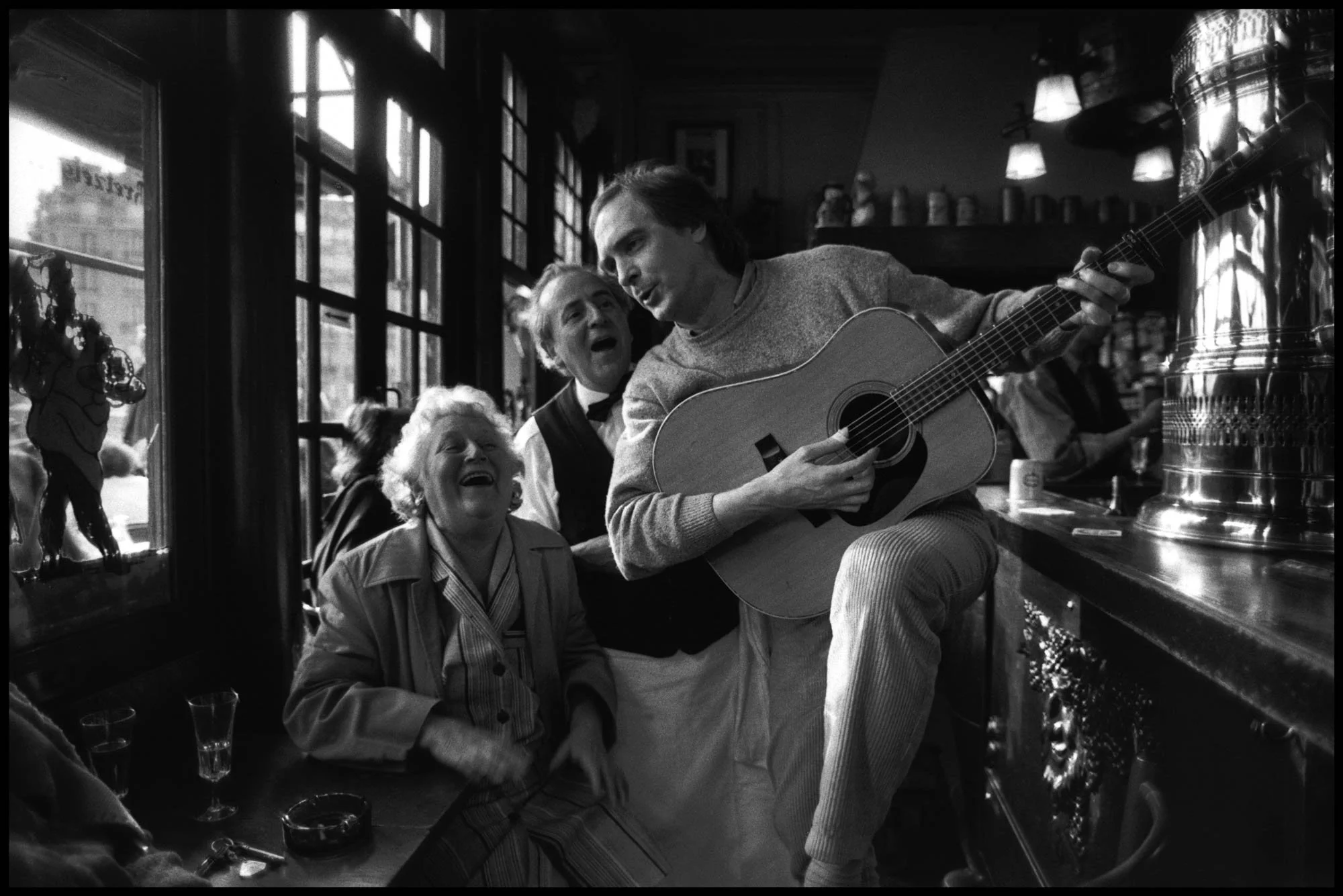
La Brasserie de l’Isle Saint-Louis, 1994
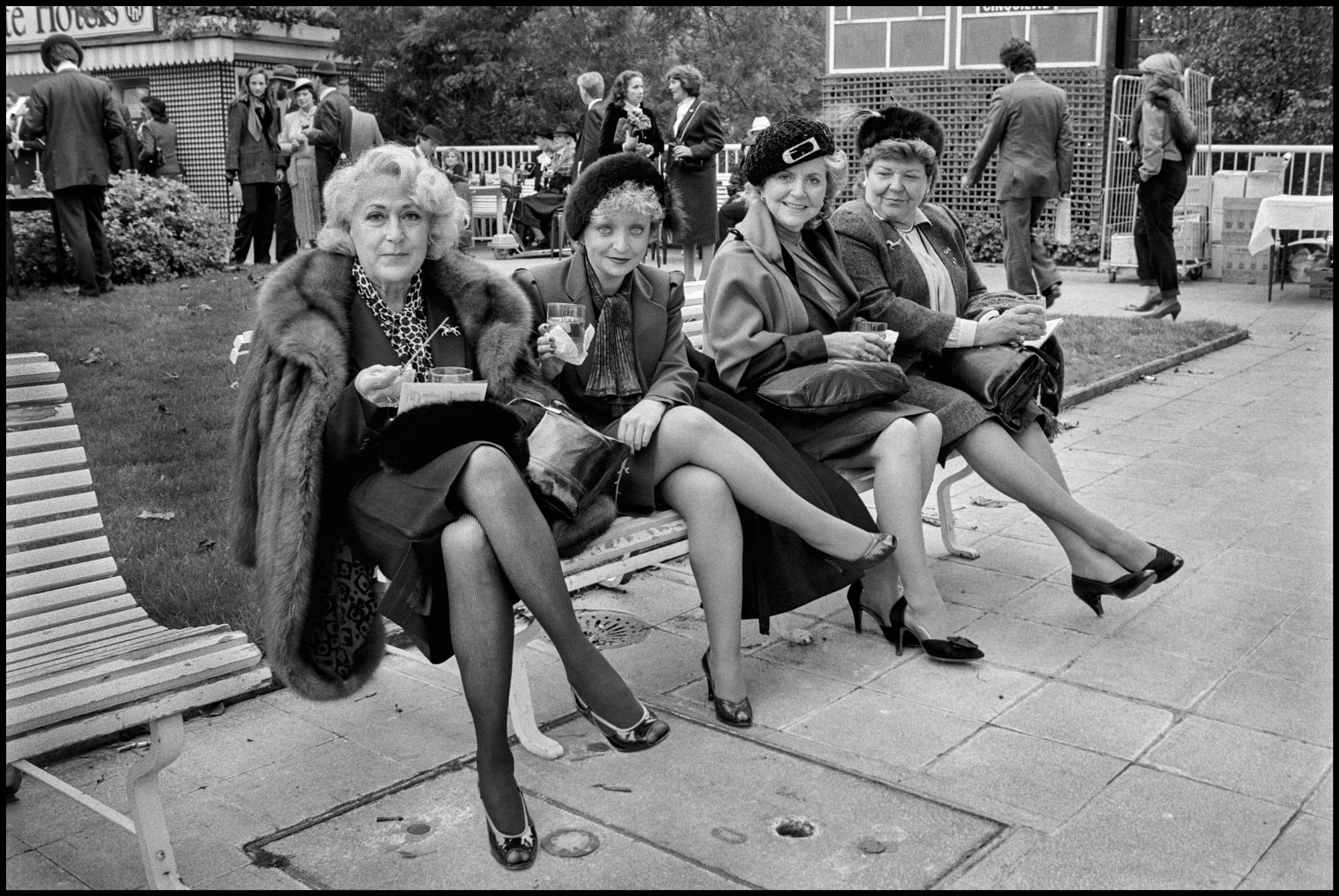
Prix de l’Arc de Triomphe, Longchamp, 1984
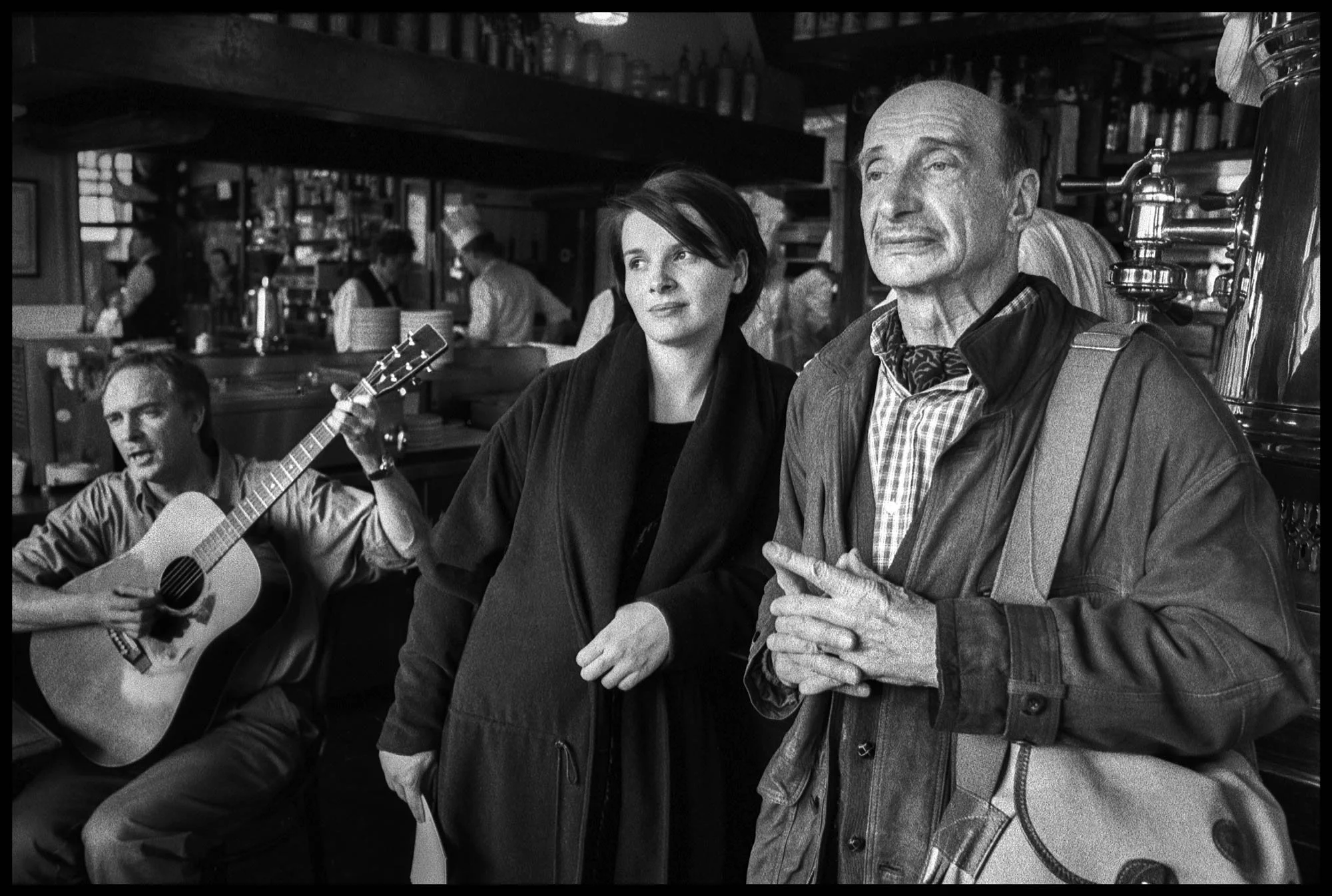
Edouard Boubat and Juliette Binoche, La Brasserie de l’Isle Saint-Louis, 1993
The City of Grey Tones
The photographs in the book are almost entirely black and white, shot on Leica M cameras across five decades. Turnley explains the choice in visual terms: Paris, he says, represents "a multitude of tones of grey, making it a place where black and white photographs best express certain universal and timeless humanistic qualities."
But the grey is also emotional - the space between extremes. In his CBS interview, Turnley describes Paris as offering "life at its very best with family, love, affection, tenderness, and then everything in between, which is most people's daily life." That in-between is where most of us live, and it is precisely what his Paris photographs capture: the woman alone at a cafe table at Cafe de Flore, the couples dancing in front of the Trocadero, the man reading his newspaper with a glass of wine, the children playing in the street.
Turnley loves the outdoor cafes particularly - the way they foster socializing, the way Parisians use them as extensions of their living rooms. There is a celebration and pride in public displays of affection here that you don't find elsewhere. The French, he notes with evident admiration, take love seriously. As for governing a nation with four hundred types of cheese - that's another matter. The complexity and contradiction of Parisian life delights him. Even the complaints are beautiful, he observes, because they reveal a people who expect life to be beautiful and refuse to settle for less.
These are not decisive moments in the Cartier-Bresson sense - no geometric perfection frozen at the instant of maximum tension. They are quieter than that, more sustained. They accumulate into something like a feeling rather than a narrative.
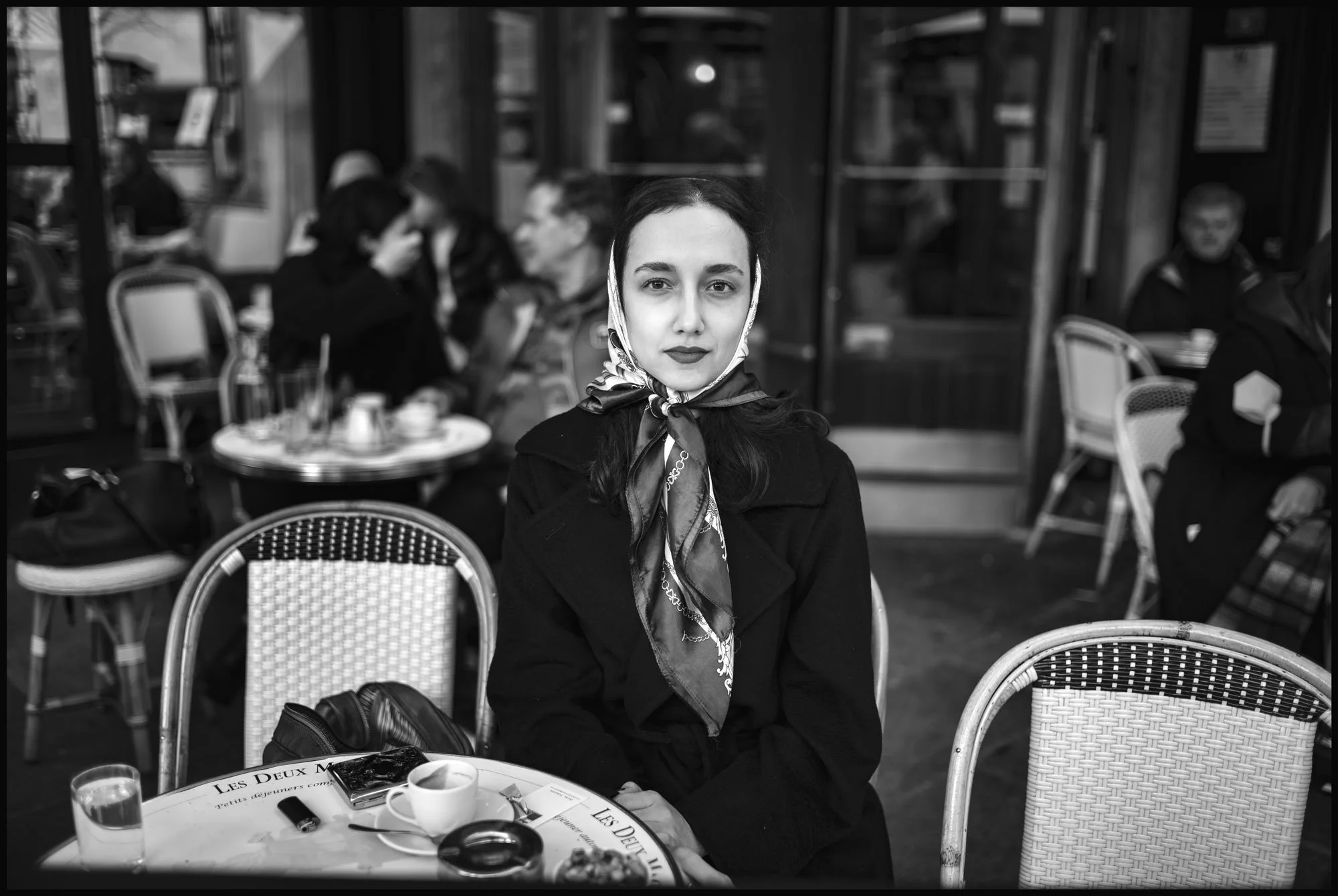
Café Les Deux Magots, Saint-Germain-des-Prés, 2022
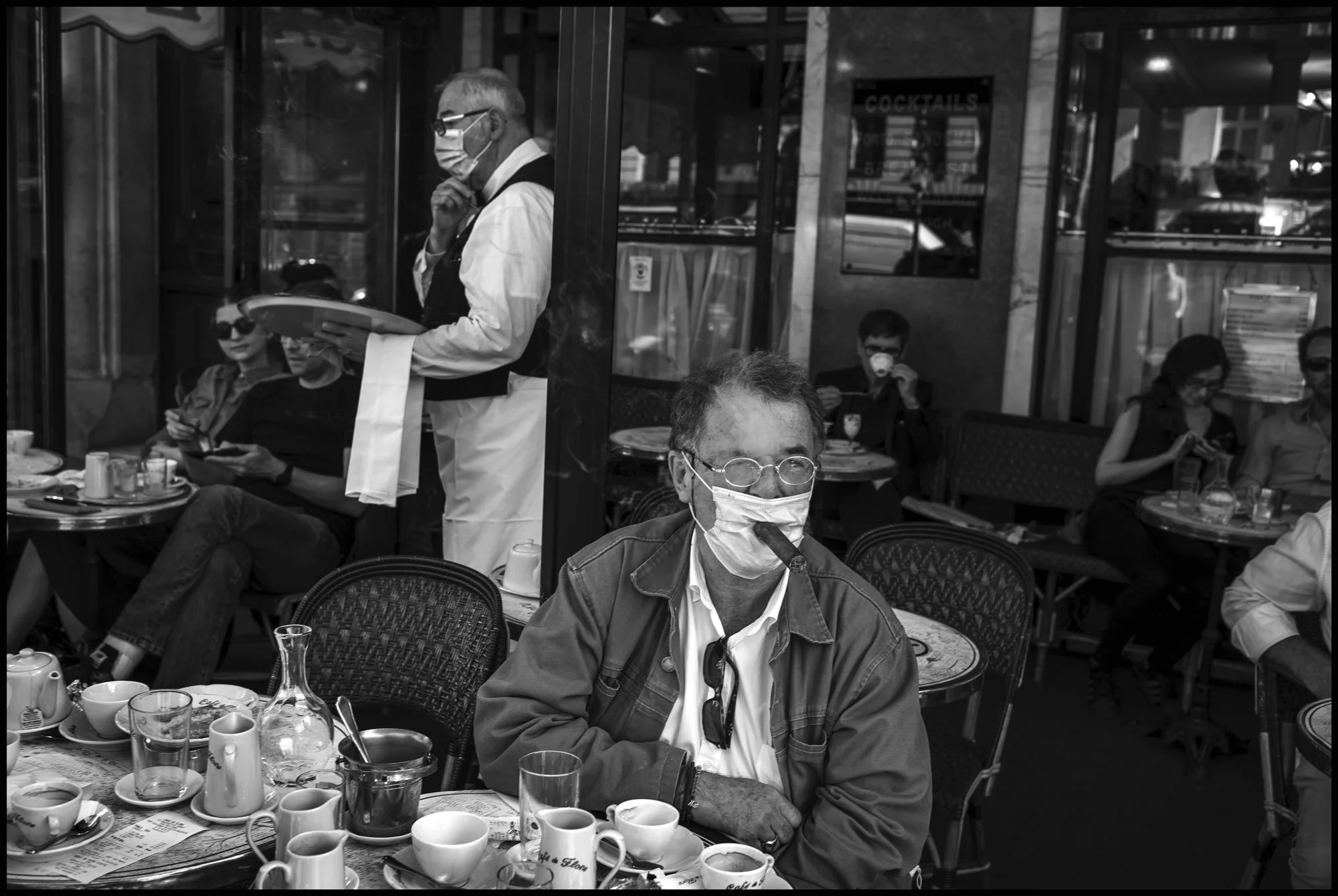
Café de Flore, Saint Germain-des-Prés, 2020
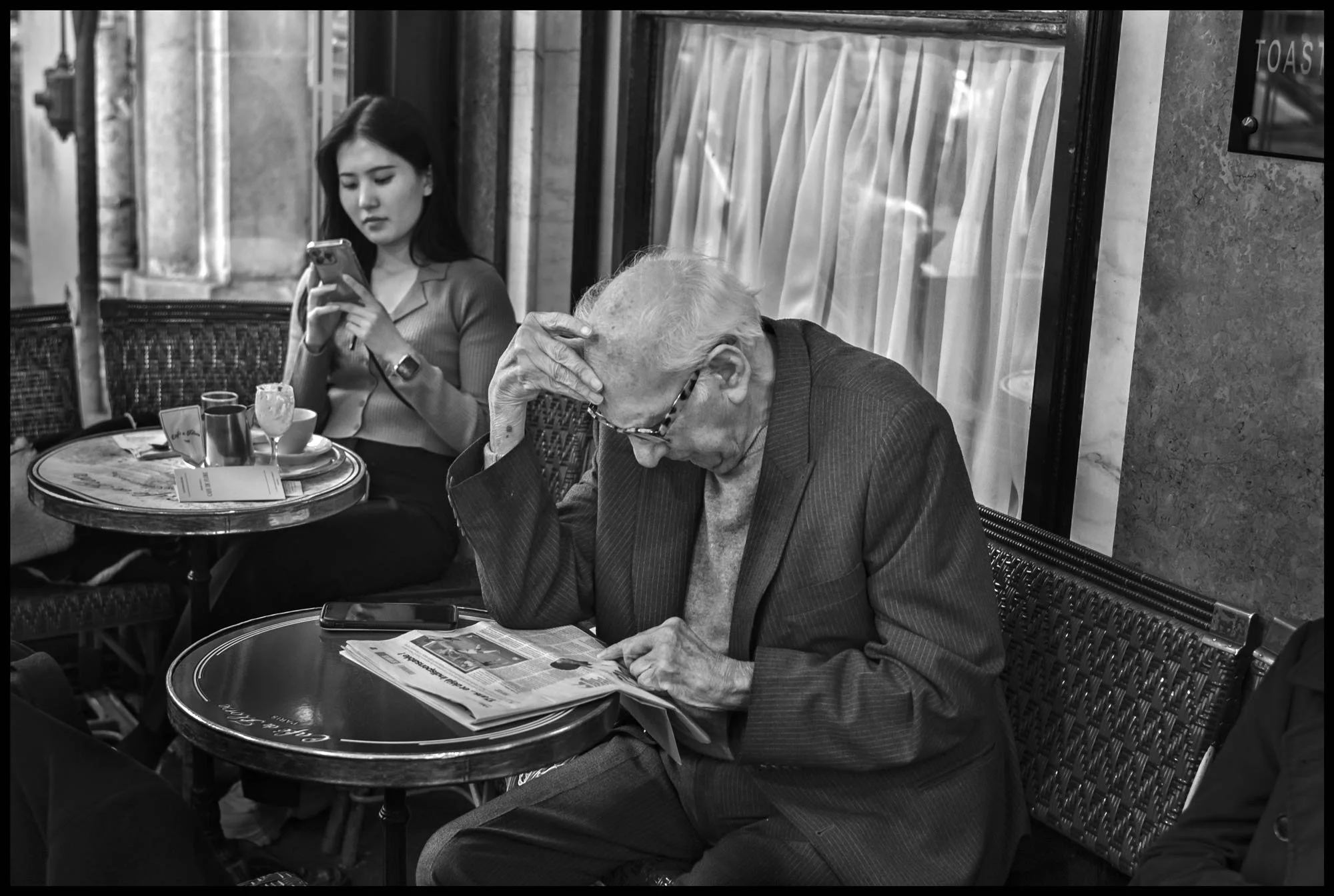
Café de Flore, Saint Germain-des-Prés, 2023
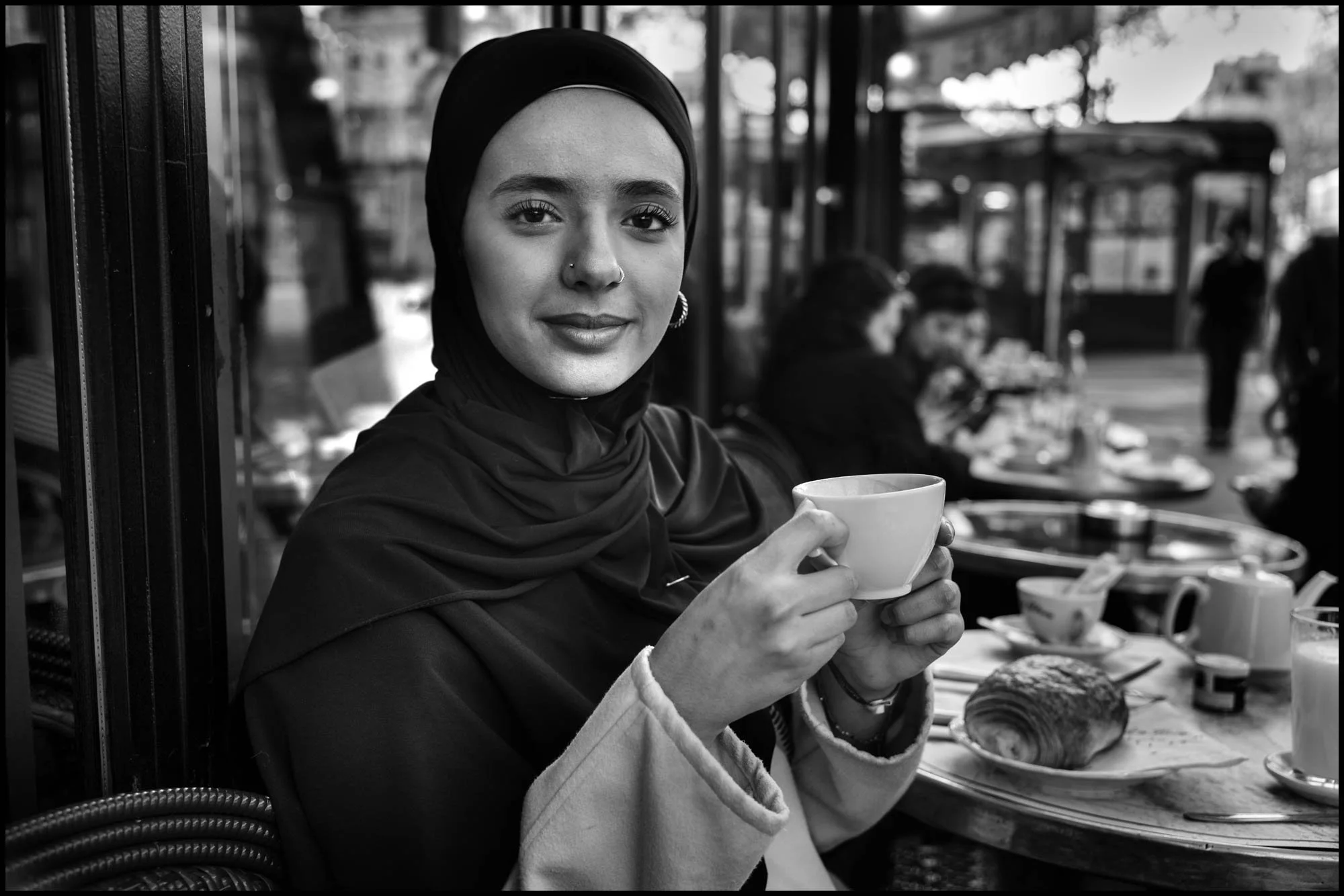
Café de Flore, Saint Germain-des-Prés, 2024
Sanctuary and Counterweight
The book's deeper structure becomes clear only when you understand what Turnley was returning from. The Gulf War. Bosnia. Somalia. Rwanda. Chechnya. Haiti. Tiananmen. September 11th. Katrina. His photographs from these assignments appeared on the cover of Newsweek forty-three times. He photographed Gorbachev more than any other Western journalist during the collapse of the Soviet Union.
"Amid all this that has profoundly impacted my heart," he writes in the book's preface, "there has been one constant: I have always returned to Paris, my adopted home, which has been both a necessary and essential balm for my soul."
The word "necessary" carries weight here. This is not tourism, not escape. It is medicine. The city provides what the work takes away. In Paris, Turnley finds "the most public expressions of love, romance, elegance, friendship, sensuality, and grace" of any city in the world. The kisses and embraces visible "literally anywhere, at any time, and always" become evidence that tenderness persists despite everything he has witnessed.
Looking through these photographs, I was reminded why I too love Paris and the people who reside there. Out of all the cities I have visited, Paris is the one place that feels like home. As a New Yorker, I know this sounds cliche. But with any cliche, there are always nuggets of truth. I feel a certain kinship as I read through this book and look at his images - the recognition that another photographer has found in this city what I have found, and has spent fifty years documenting it with patience, awareness, and quickness.
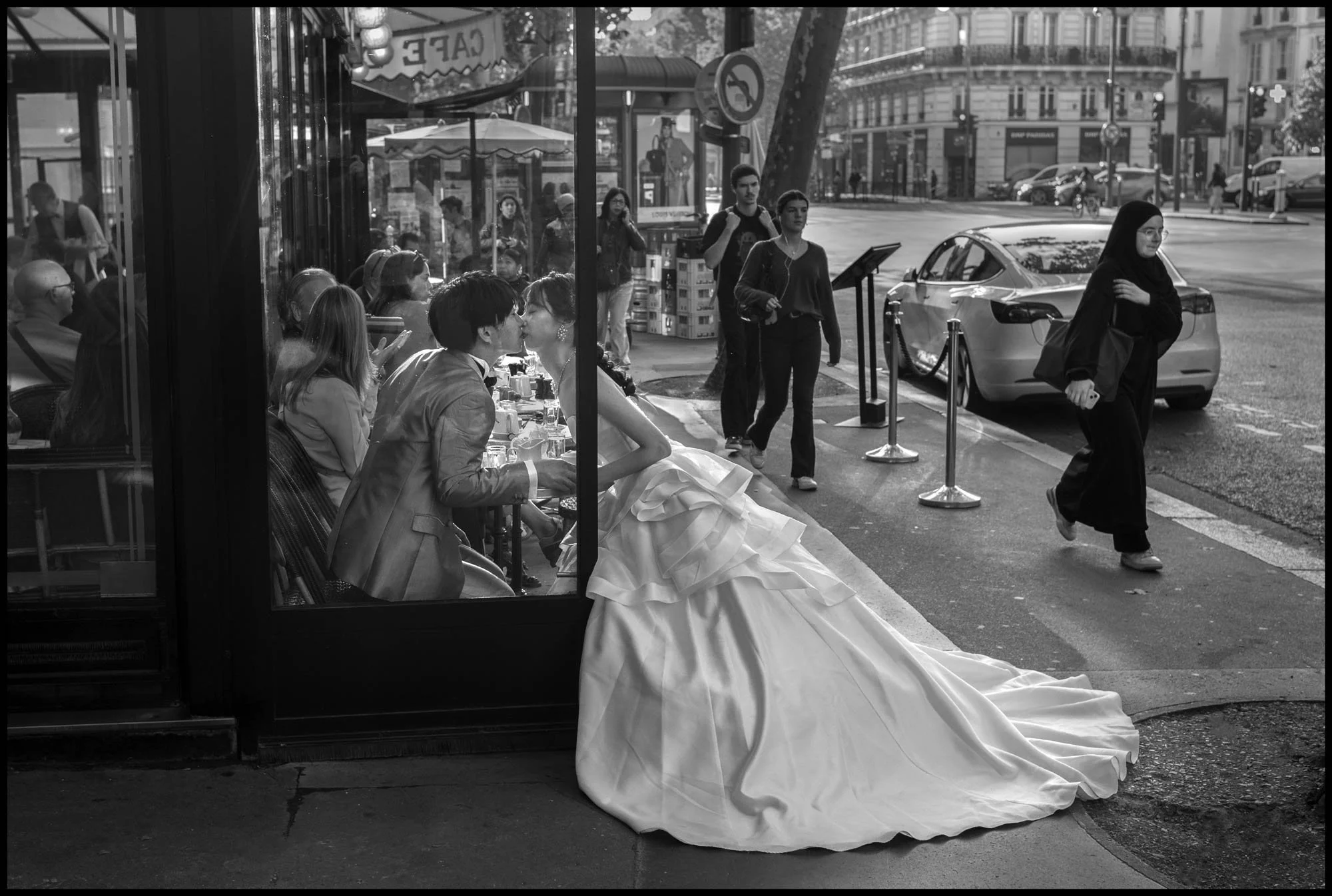
Café de Flore, Saint Germain-des-Prés, 2024
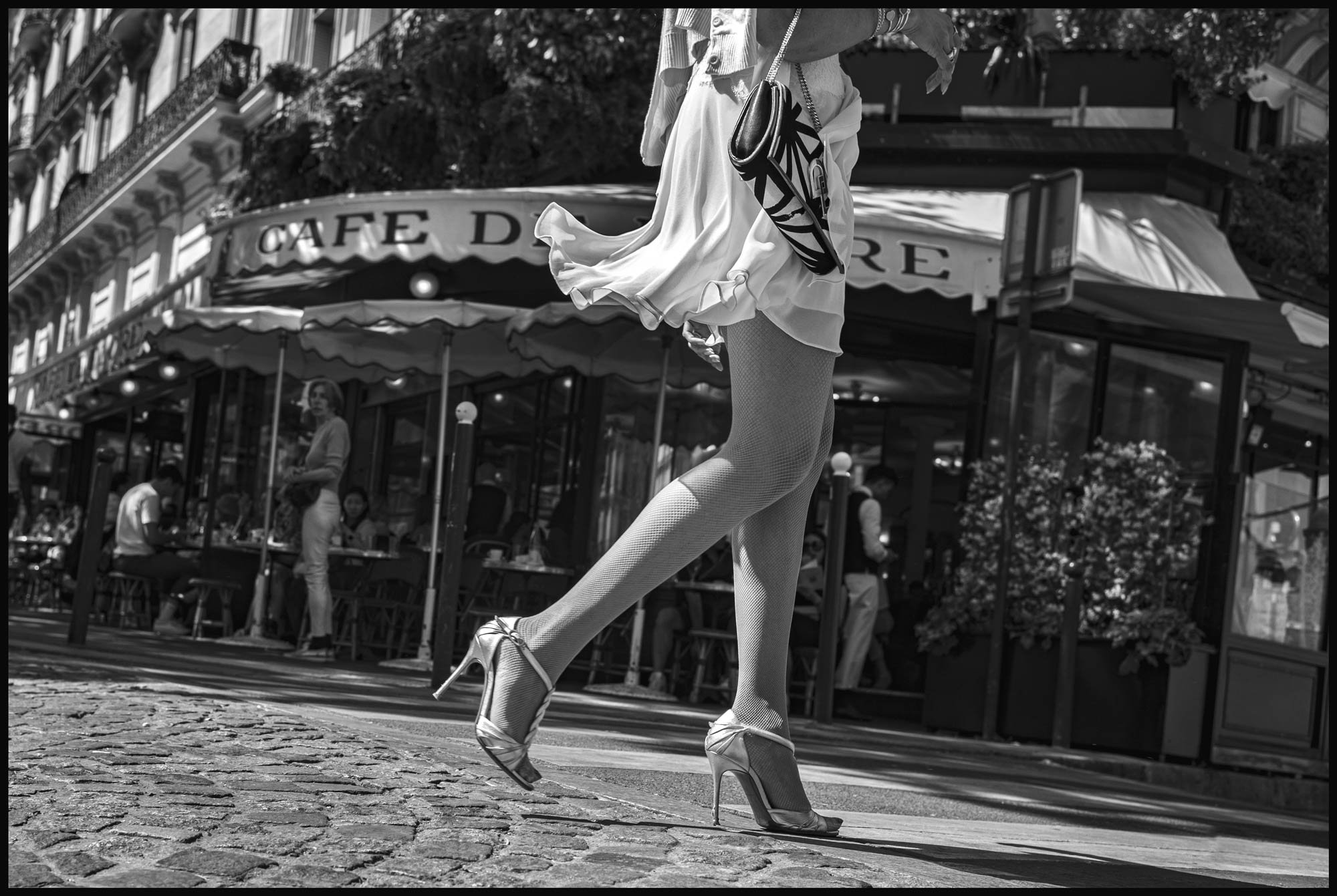
Café de Flore, Saint Germain-des-Prés, 2023
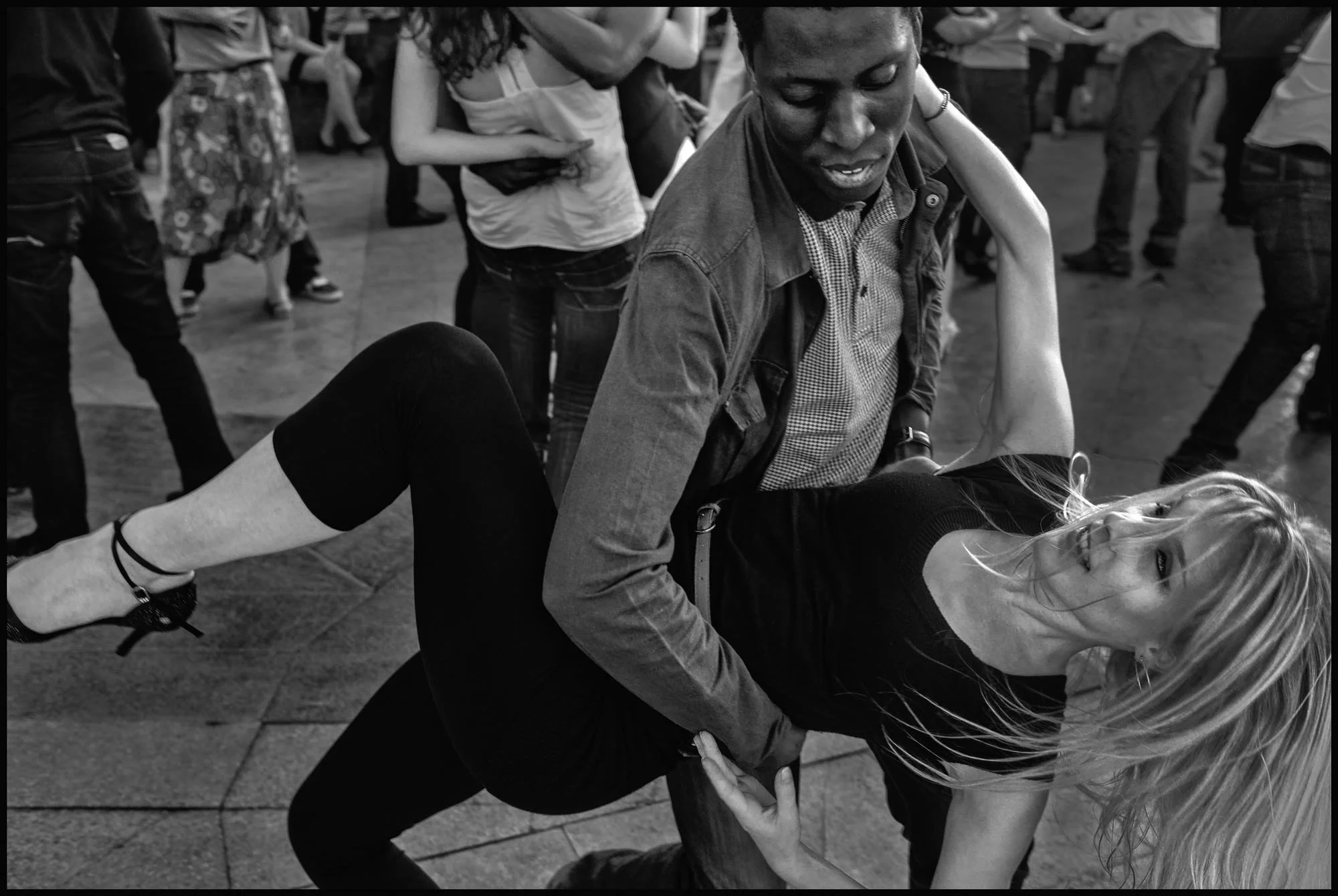
Quai Saint-Bernard, 2012
Photography as Feeling
Turnley resists discussing his work in technical terms. "Photography is more about capturing life's essence than technical skills," he once said. "Vision is shaped by one's understanding of the world, not just photography." For him, the craft is secondary to spirit - what you bring to the encounter matters more than the settings on your camera. "The one thing that is always clear in my mind," he has said, "is that the people, and their stories, and the themes of life that I photograph are always more important to me than the process of photography itself."
This philosophy shapes how he works. Turnley emphasizes the importance of looking people in the eye when photographing them, honoring their life and existence through that direct gaze. The energy and intent you bring to the work, he believes, creates a profound connection. Many of the faces in Paris: Je t'aime return the viewer's gaze with an openness that suggests hidden stories, lives glimpsed in passing. These are not stolen moments but offered ones.
Turnley teaches this approach to aspiring photographers who travel from around the world to attend his seminars in Paris. His method focuses on capturing moments rather than making pictures - a distinction that sounds subtle but changes everything. He coaches students on how to interact with subjects, how to gain trust quickly, how to make a deep connection with a stranger in the space of a few minutes. Then he sends them out to walk the streets with open hearts.
This tracks with his long-held philosophy. He has never tried to describe Paris, he says - "I have always been much more interested in feeling it and offering others the chance to feel it as well." The distinction matters. Description implies distance, objectivity, the photographer as observer. Feeling implies immersion, vulnerability, the photographer as participant in the life being photographed.
It also helps explain why the images in Paris: Je t'aime feel timeless in a way that resists dating. The differences in fashion and car models across fifty years are present but somehow beside the point. As one reviewer noted, if you don't check the captions, you might not notice which decade you're looking at. The emotional register stays constant because what Turnley is photographing - human connection, solitude, pleasure, contemplation - doesn't change.
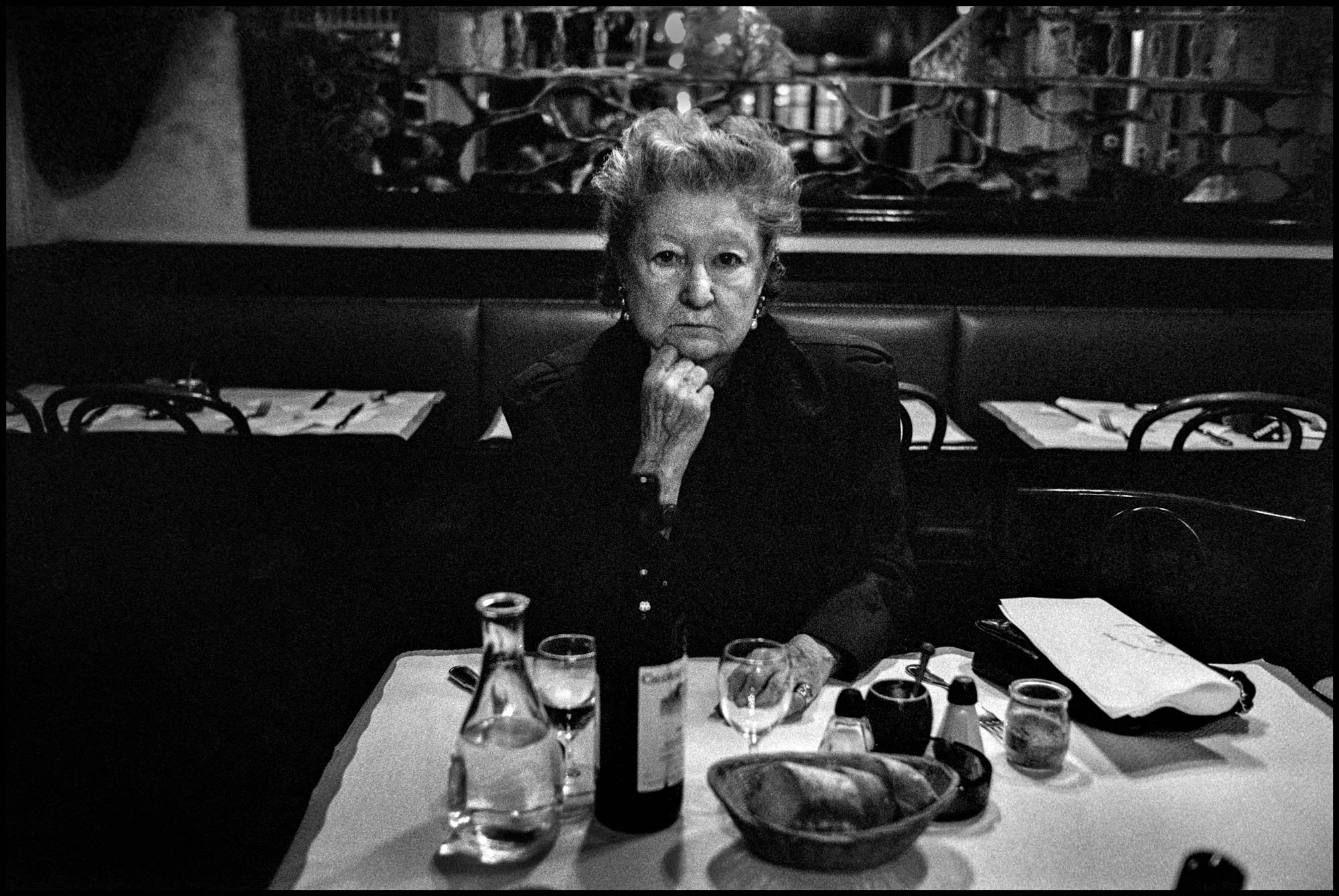
La Brasserie de l’Isle Saint-Louis, 1994
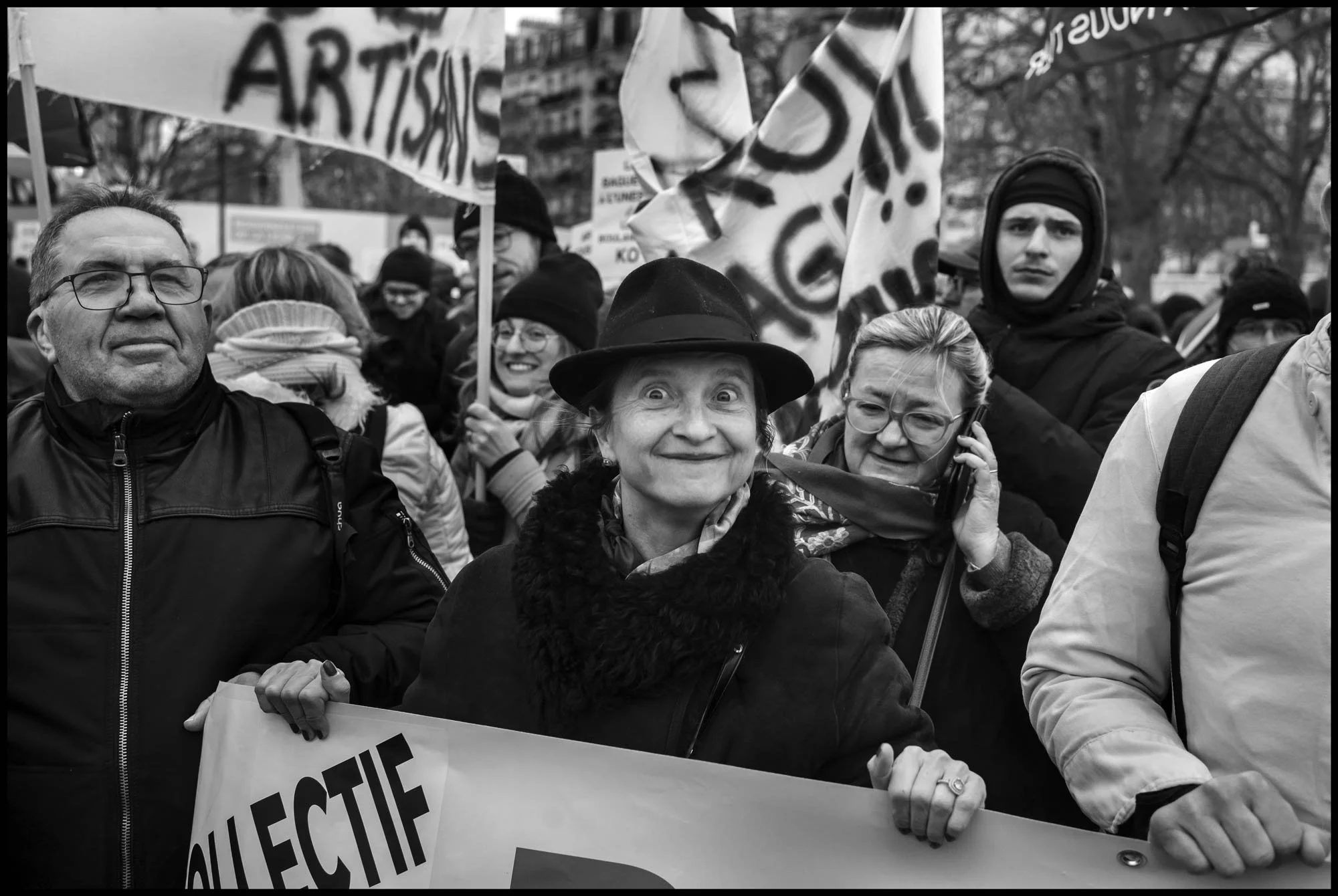
Baker’s demonstration, Place de la Nation, 2023
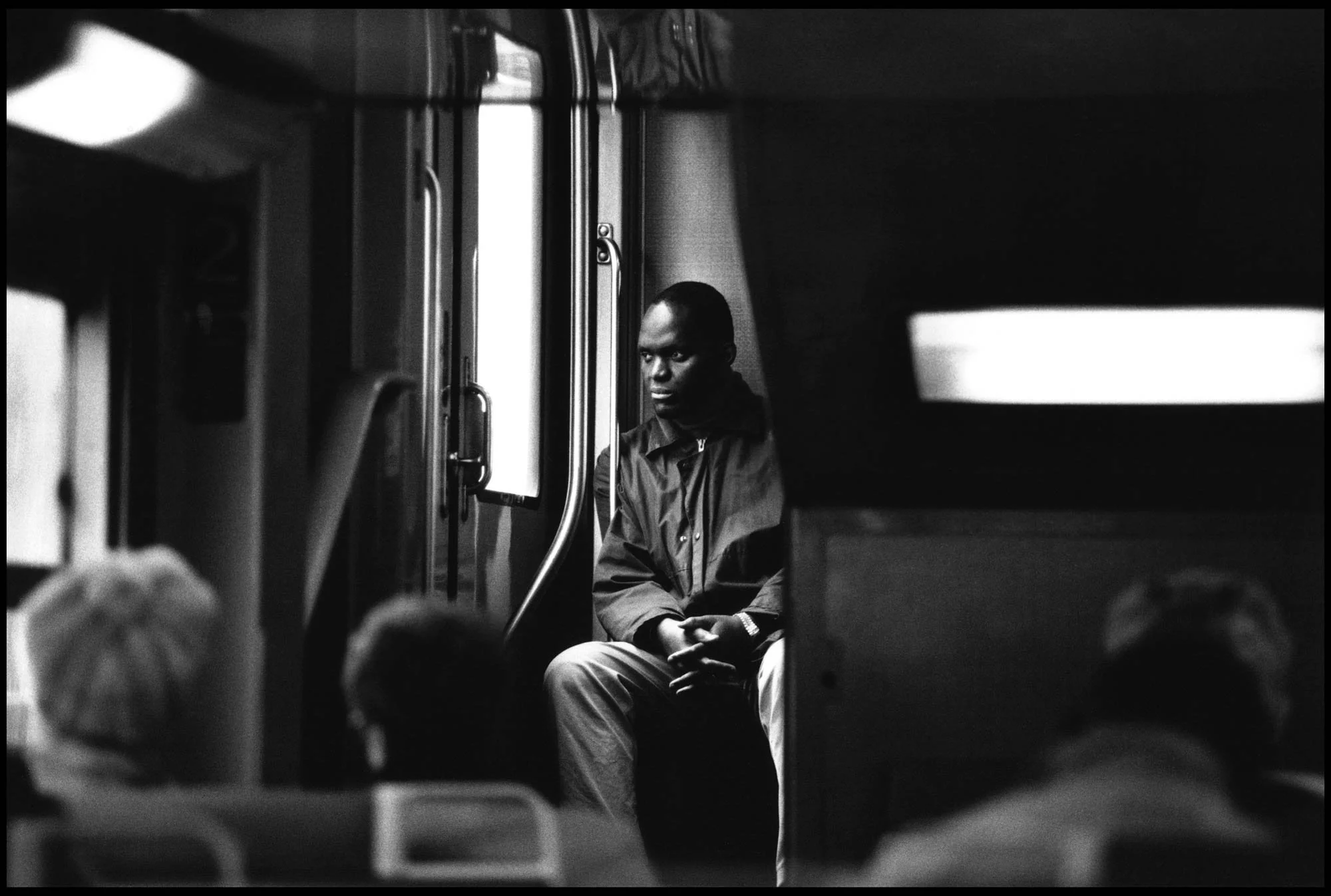
RER to Paris, 1996
The Lineage
A photograph on page 182 shows Doisneau photographing Rudolf Nureyev. It is a direct acknowledgment of the tradition Turnley sees himself extending. The French humanist school, with its emphasis on ordinary life, on dignity, on the poetry of the everyday, runs through this book like a current.
Turnley is explicit about his debt. "I am proud to think that my photographs carry on the strong legacy of humanistic photography that has been expressed by many of my predecessors like Cartier-Bresson, Doisneau, Boubat, Brassai, Weiss, Stettner, and others," he writes. "I am honored to carry on the traditions and to have joined a group of predecessors who have devoted their inspiration and hearts to sharing the intangible and rich spirit of this most amazing of cities."
The relationship between photographer and printer is one of the medium’s most underappreciated collaborations. A great printer brings more than technical skill—they develop an intuitive understanding of what the photographer is reaching for, sometimes before the photographer can articulate it. Turnley found this in Voja Mitrovic, the Bosnian Serb who had been Cartier-Bresson’s principal printer for thirty-five years. Their two-decade partnership rests on visual fluency: Voja knows how Turnley sees, understands the emotional weight he wants in the shadows. The best such relationships transcend instruction—conversations conducted in tones of silver, where the printer’s hands complete what the photographer’s eye began. The luminous tonal range in Paris: Je t’aime owes much to that partnership.
What distinguishes Turnley's contribution is the counterpoint his career provides. Doisneau and Boubat photographed Paris without the intervening experience of conflict zones. Turnley's Paris photographs are always implicitly in dialogue with the other half of his work - the wars, the disasters, the suffering. The tenderness he finds on the banks of the Seine is sharpened by what he has seen elsewhere. The healing is real because the wounds are real.
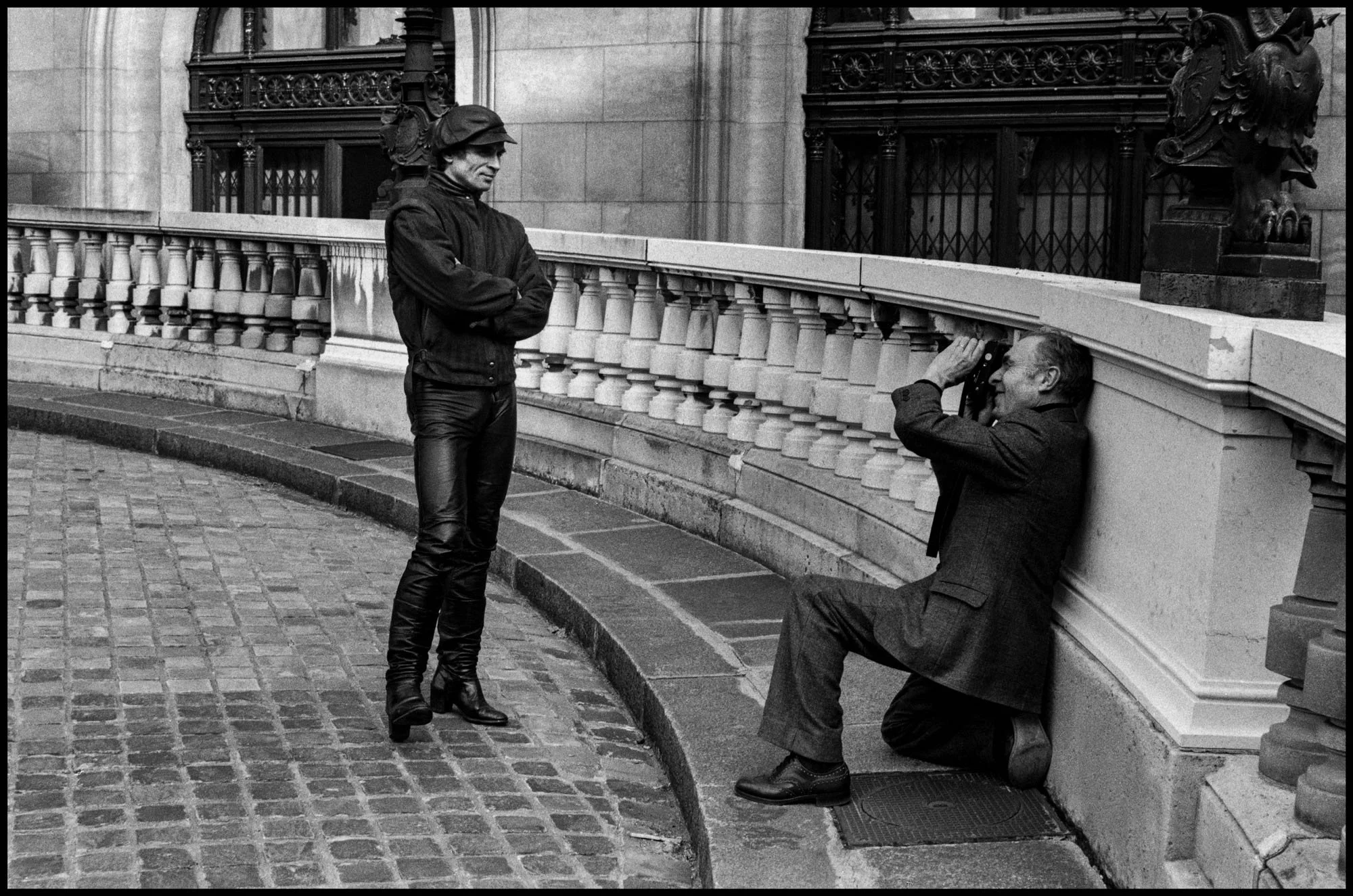
Robert Doisneau photographs Rudolf Nureyev, Opéra Garnier, 1983
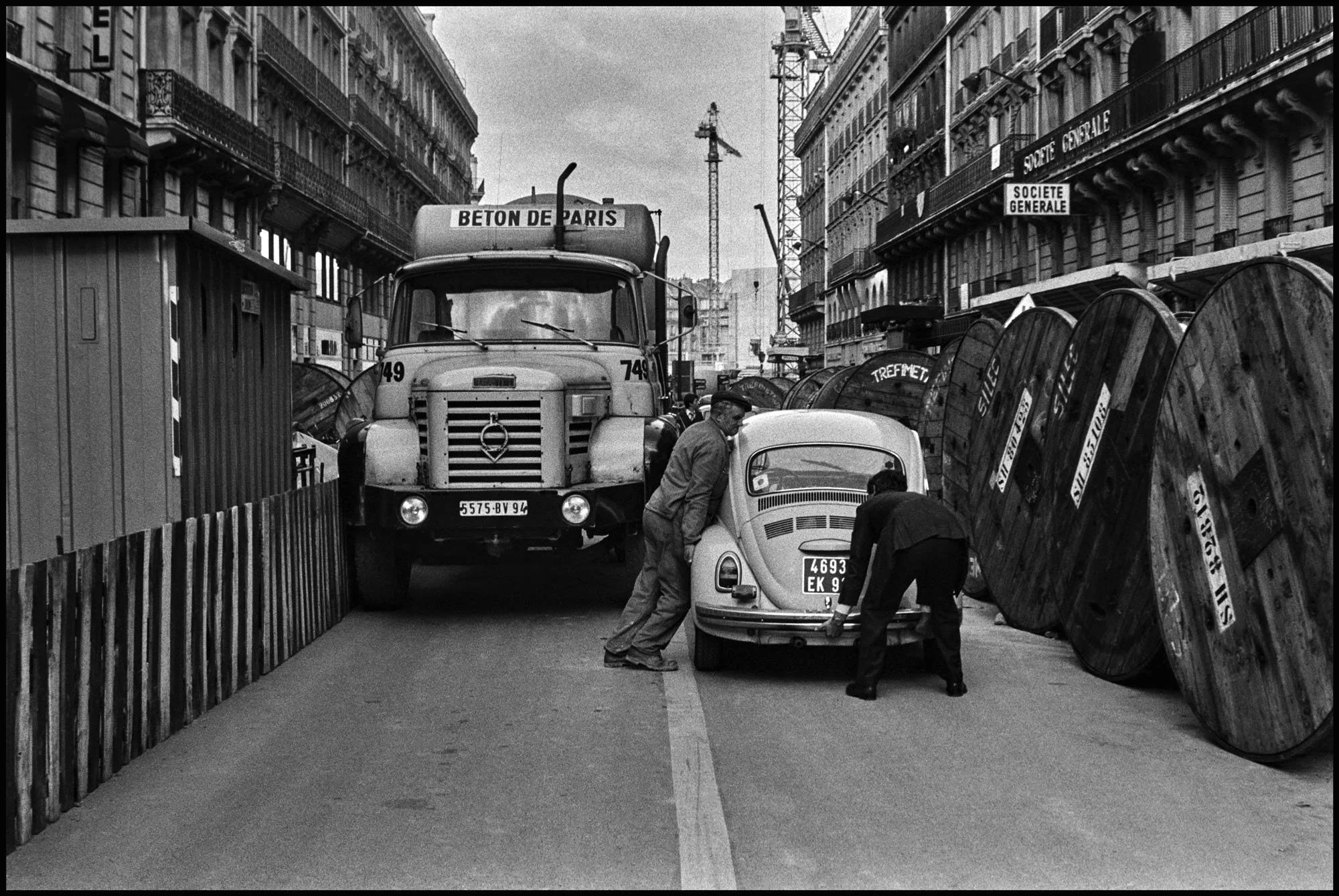
Les Halles, 1982
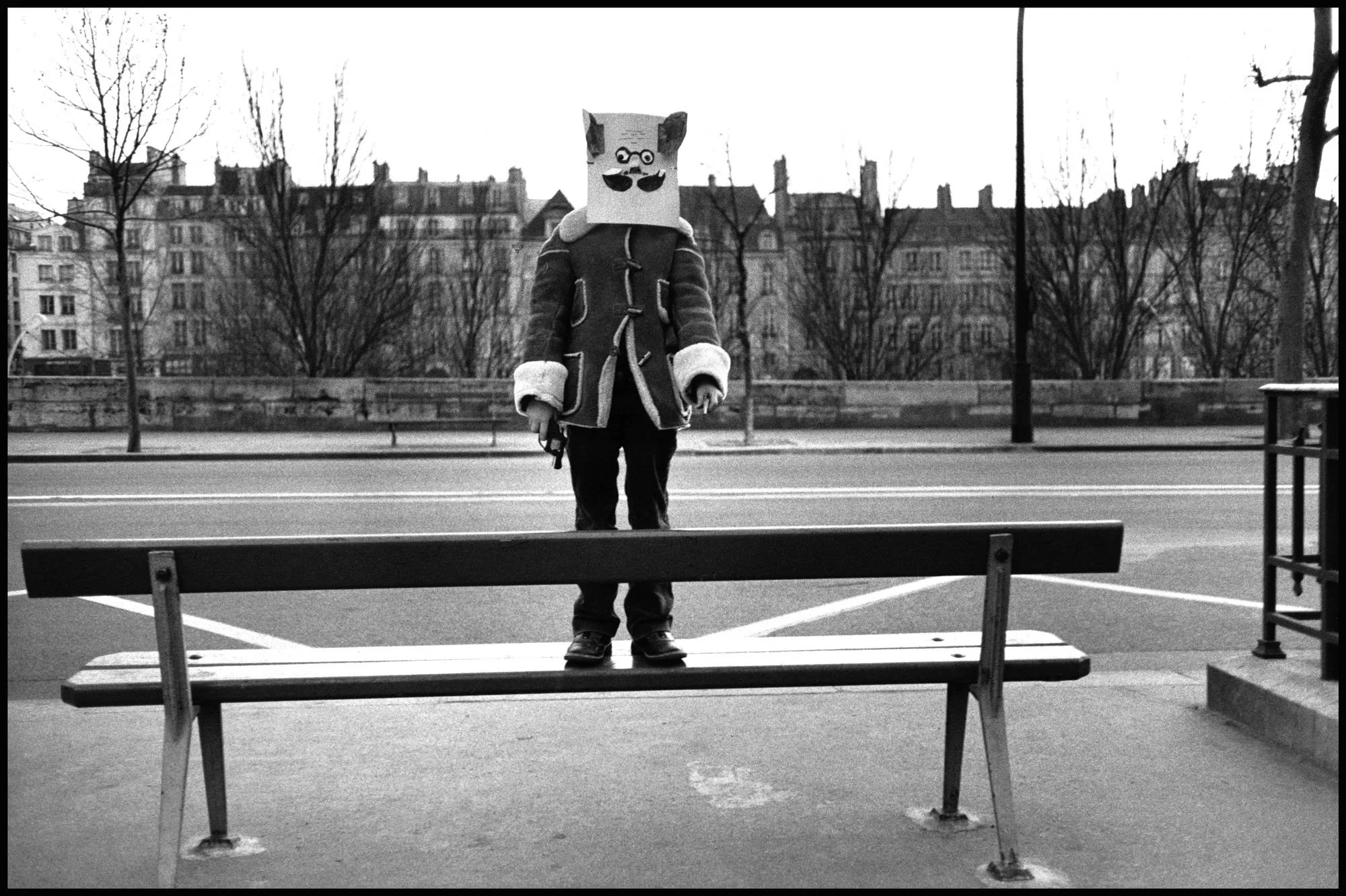
Paris, 1981
The Gift
"Photography is about sharing, with ourselves and others, moments that touch our eyes, and more importantly, our hearts," Turnley writes. "Implicit in sharing, like a kiss, is a notion of love, and of giving. Paris has given me so much, as it has given to so many. This book is my love letter to Paris... Like a kiss, I offer here an expression of hope and love for our present and our future."
The book is available exclusively through Turnley's website, every copy signed. A special edition includes a silver gelatin print. But the photographs themselves are the real gift - fifty years of evidence that beauty persists, that connection endures, that walking out the door with open eyes might still yield something worth saving.
For Turnley, making the book was itself an act of healing, a way of gathering the accumulated grace of five decades into a single object. For the rest of us, it is an invitation to see Paris - and perhaps any city - the way he does: as a place where the soul might be restored, one photograph at a time.
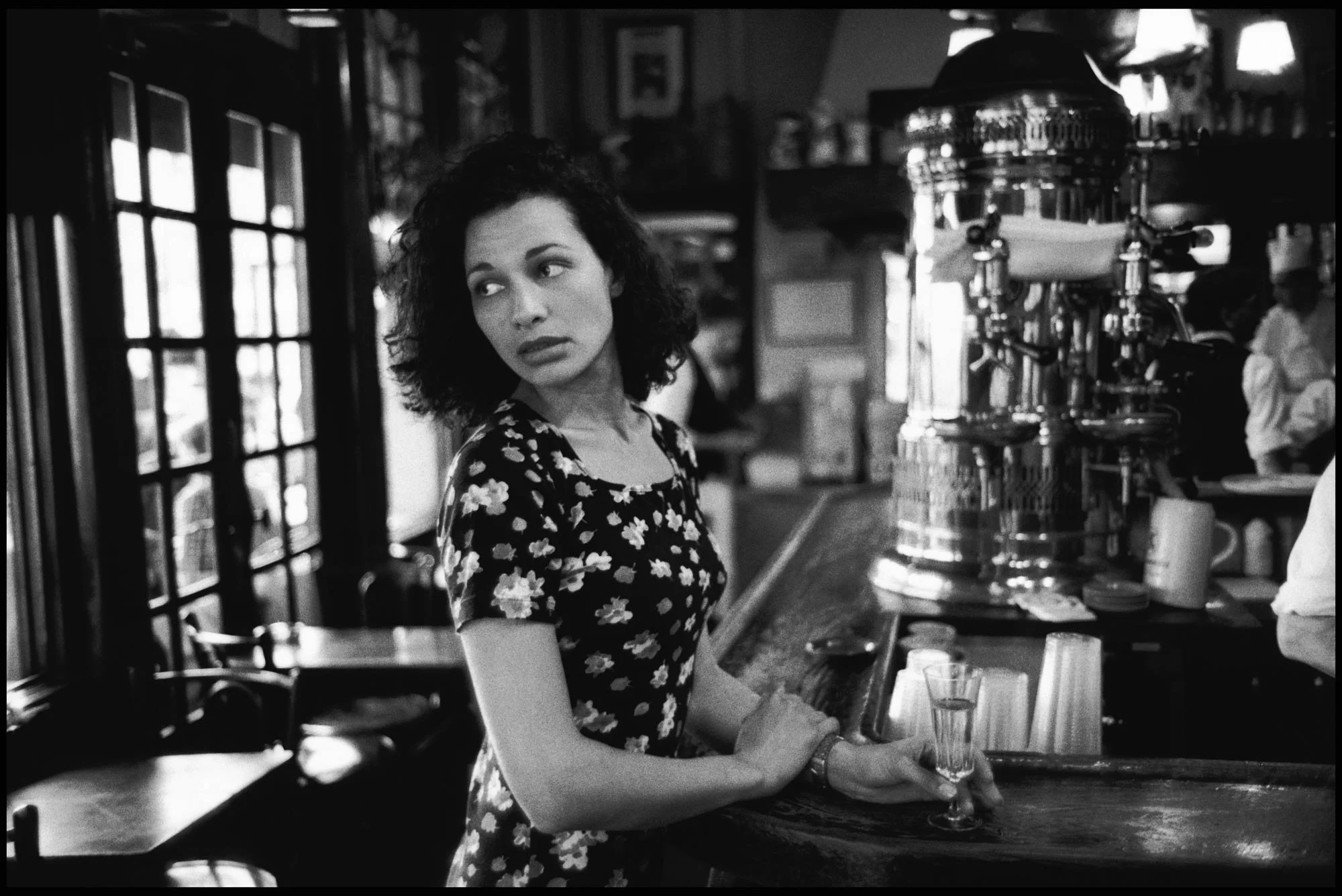
La Brasserie de l’Isle Saint-Louis, 1994
All images © Peter Turnley
Paris je t'aime is available for purchase at peterturnley.com. The limited edition hardcover runs 320 pages, with each copy signed by the photographer, priced at US $85 with worldwide shipping. A Special Collector's Edition — including the book and a signed and numbered print — is available for US $495 while supplies last.