
Christian Clauwers: The Day the Arctic Gave Me a Purpose
Christian Clauwers is a Belgian documentary photographer, explorer, and visual storyteller dedicated to revealing the fragile relationship between humanity and the natural world. With an academic background in Political Science and Global Management and years of experience with exclusive projects and expeditions, he documents the consequences of climate change, loss of biodiversity, and vulnerability of ecosystem — particularly in the polar regions and the world’s oceans.
His mission is to bridge science, policy, and industry through compelling imagery and visual storytelling, transforming complex environmental realities into accessible narratives that resonate across cultures and generations.
Clauwers is an ambassador for the European Union's climate pact, a fellow of The Explorers Club (New York) and the Royal Geographical Society (London), has given lectures on every continent, published nine books, and exhibited his work internationally. By integrating scientific research, indigenous knowledge, and artistic expression, he aims to inspire informed action and global responsibility for the protection of our planet.
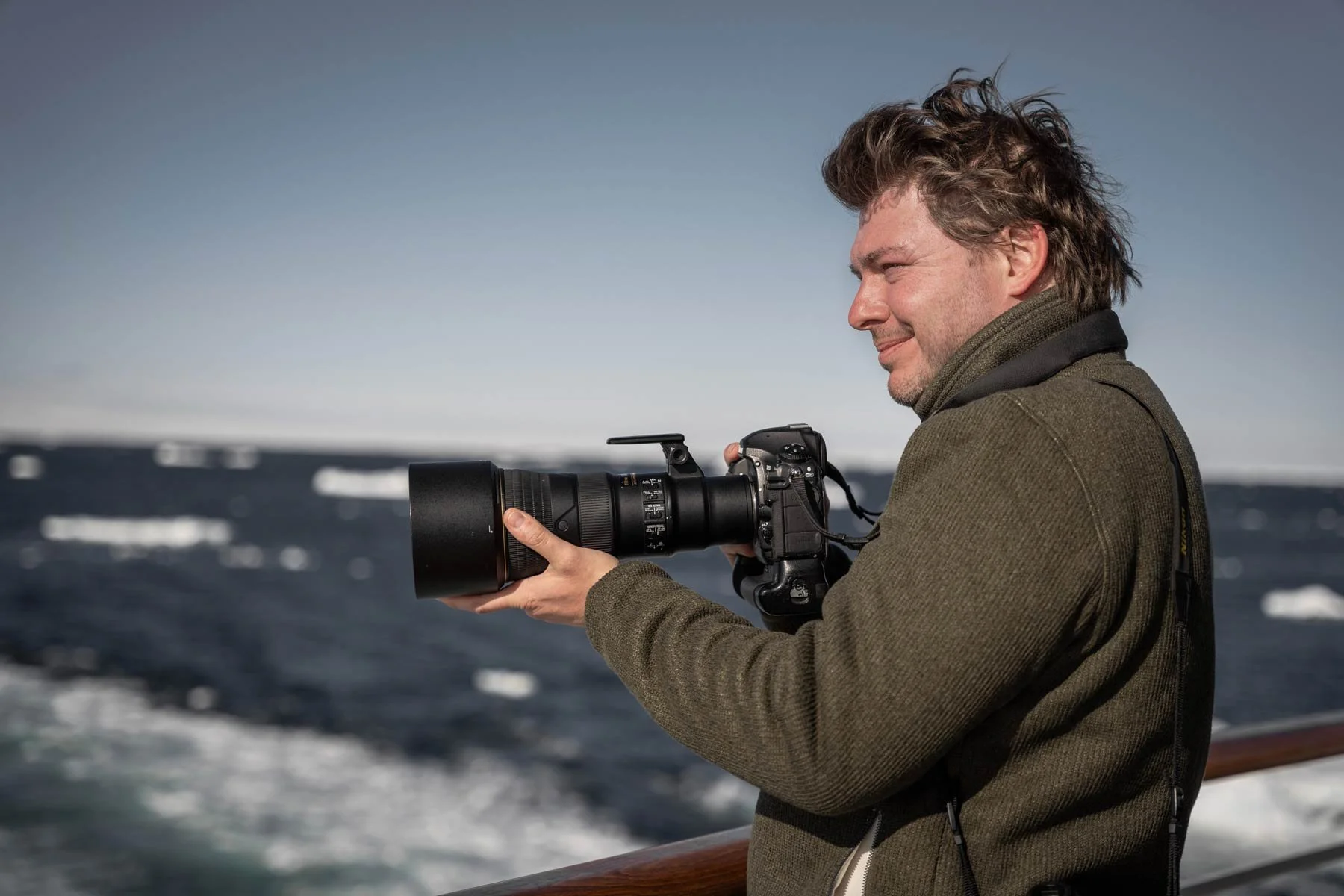
©Morgane Monneret
ORIGINS: CHILDHOOD, CAMERAS & FREEZING TIME
HM: Christian, how did photography first enter your life?
CC: I grew up in a small town near Antwerp called Schoten. Antwerp is still my base today.
My father had a collection of old cameras. When I was about eight, I secretly took one – a fully manual Zeiss Ikon with film still inside – and began shooting behind his back. He only found out when he developed the film and didn’t recognize any of the photos.
From that moment it became an obsession. Not just with the camera as an object, but with the idea of freezing time – taking a moment and making it last. And quickly it went deeper: I became fascinated by how a photograph can tell a story, how a frame can say more than the objects inside it.
At 14 my parents bought me a small semi-manual camera. But when I finished school at 18 and said I wanted to study photography, they firmly said no. My mother feared I’d never earn a living; my father warned me I’d end up photographing weddings at night, which he knew would be torture for me. So, I took another path.
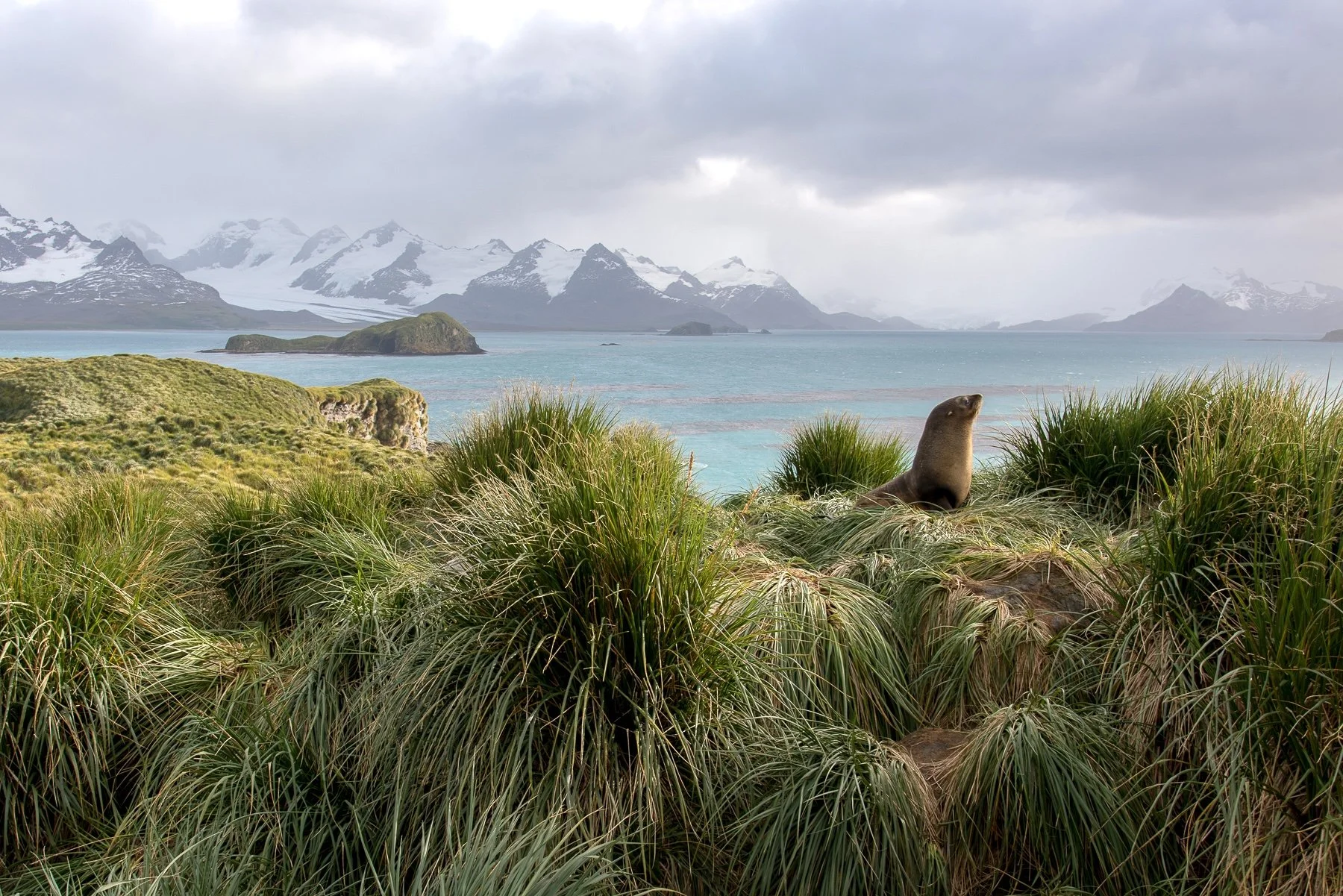
South Georgia is an uninhabited mountainous barren island in the South Atlantic Ocean, thriving with biodiversity, both fauna and flora.
FROM ARCHITECTURE TO POLITICAL SCIENCE – AND BACK TO PHOTOGRAPHY
HM: So what did you study instead, and how did that bring you back to photography?
CC: I studied architecture for three years. During that period, I began travelling to regions marked by conflict and divided identities—parts of China, the Caucasus, the Middle East. I became fascinated by the stories behind borders and by people whose cultures were separated by political lines.
At the same time, in architecture I was thinking ecologically, and I realized that career wouldn’t fulfill me. So, I sat down with a pencil and wrote out what truly moved me: photography, human conflict, politics, ecology, and human stories.
That led me to study political science at the University of Antwerp. I thought: Even if I can’t make a living from photography, I can still take photos. But with political science I can be a journalist, work analytically, maybe even work for the United Nations.
Later I added a master’s in Global Management to understand systems and economics. My first job after graduating was as a communications advisor at the Flemish Parliament. It taught me how politics and messaging function—knowledge I still use today.
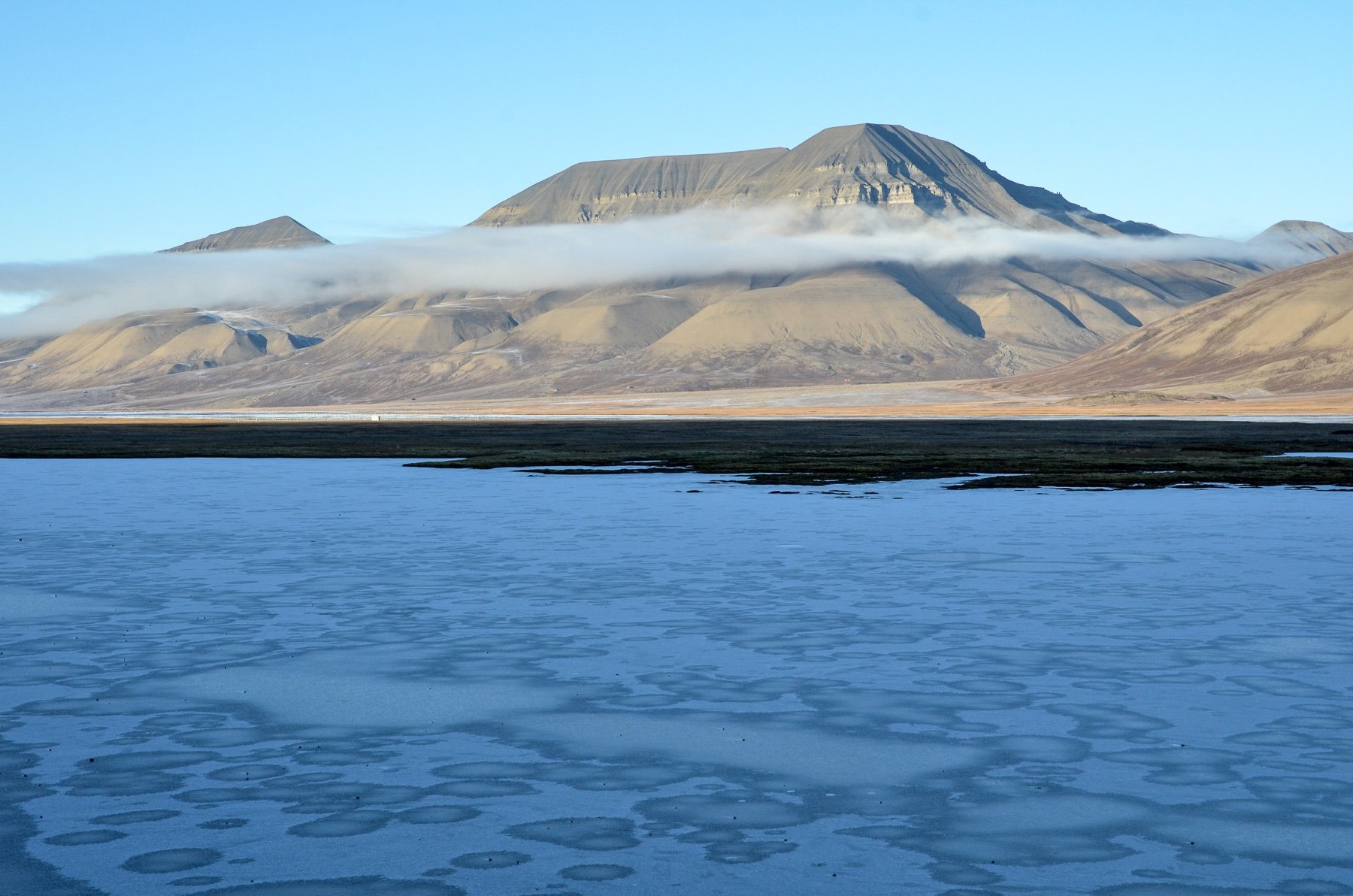
Svalbard is feeling the alarming effects of climate change. Since 1970, average annual temperatures have risen by 4 degrees Celsius, with winter temperatures rising more than 7 degrees.
A DOOR IN THE ARCTIC THAT CHANGED EVERYTHING
HM: Your first trip to the Arctic seems to have transformed your life. What happened there?
CC: In 2013 I travelled to Svalbard in winter, when almost no tourists were there. I wanted to understand how people live in such isolation—how they survive, communicate, build community.
Then I saw this triangular concrete structure: the entrance to the Global Seed Vault.
I asked locals, “What is that?” They said, “It’s the Seed Vault. You cannot enter.” Which, of course, made me want to enter.
That started an eight-month quest across three continents and four countries, following clues and sending emails, until I finally reached one of the three key-holders, an elderly professor. Somehow I convinced him. He told me, “Book your ticket. Be discreet. We will go again in a few months.”
In 2014, I returned, met him in Oslo, and together we flew to Svalbard. Stepping inside that tunnel changed my life.
I realized: we already need this bunker in permafrost to protect the world’s food crops. That fact alone shows how damaged our relationship with nature has become. We behave as if humans are separate from nature—but we are nature. Our disconnect has grown into a conflict.
In that vault, everything I’d been carrying—my travels, my early fascination with the Club of Rome, my ecological concerns—came together. I walked out with a mission.
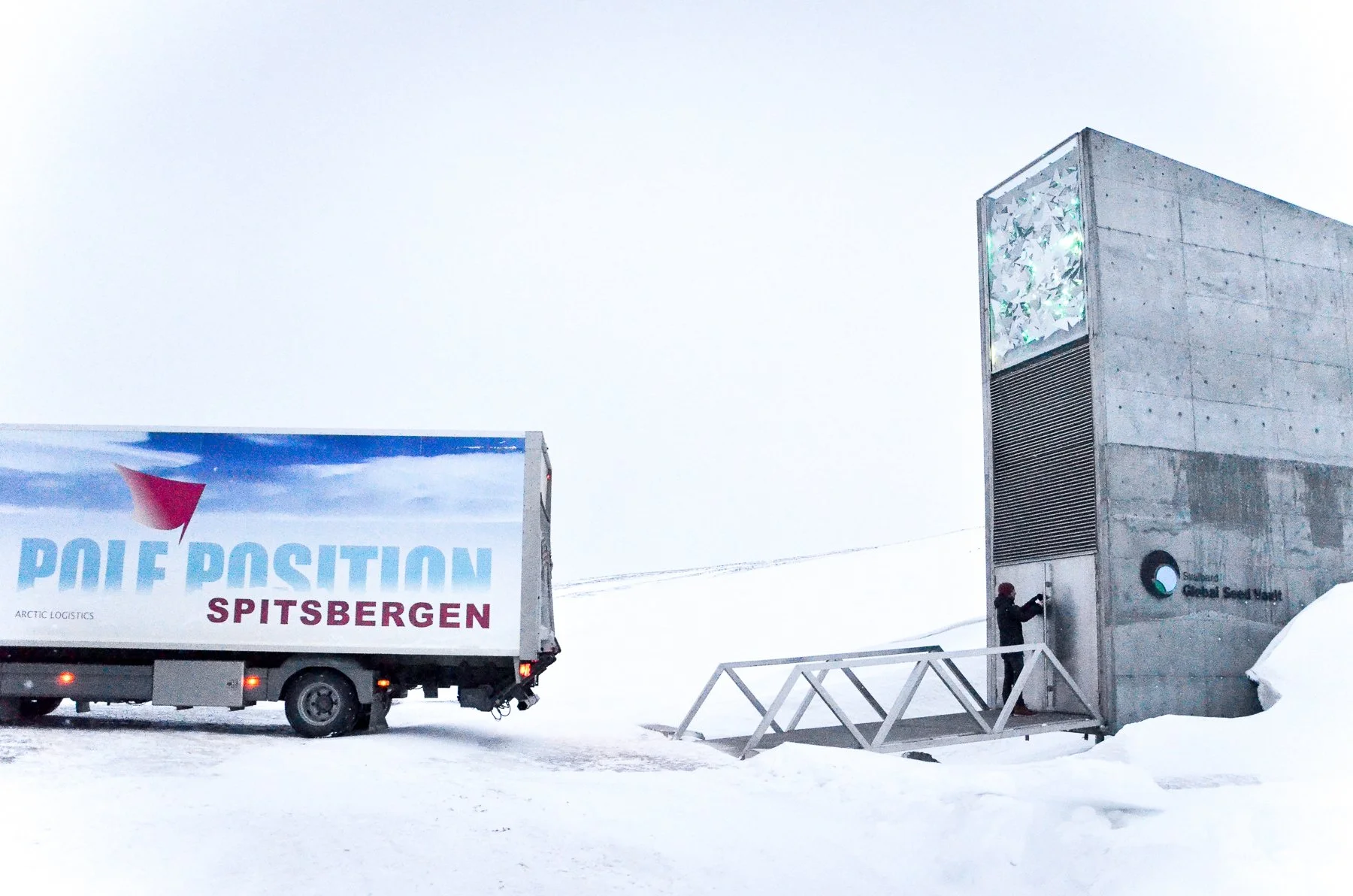
The entrance to the Svalbard Global Seed Vault leads to what is often described as the most important vault in the world. Located deep in the Arctic permafrost, at –18°C, the facility safeguards the greatest diversity of crop seeds on Earth. Built to endure earthquakes, rising sea levels, missile impacts, and even nuclear disasters, it is often referred to as the Noah’s Ark of global food production.
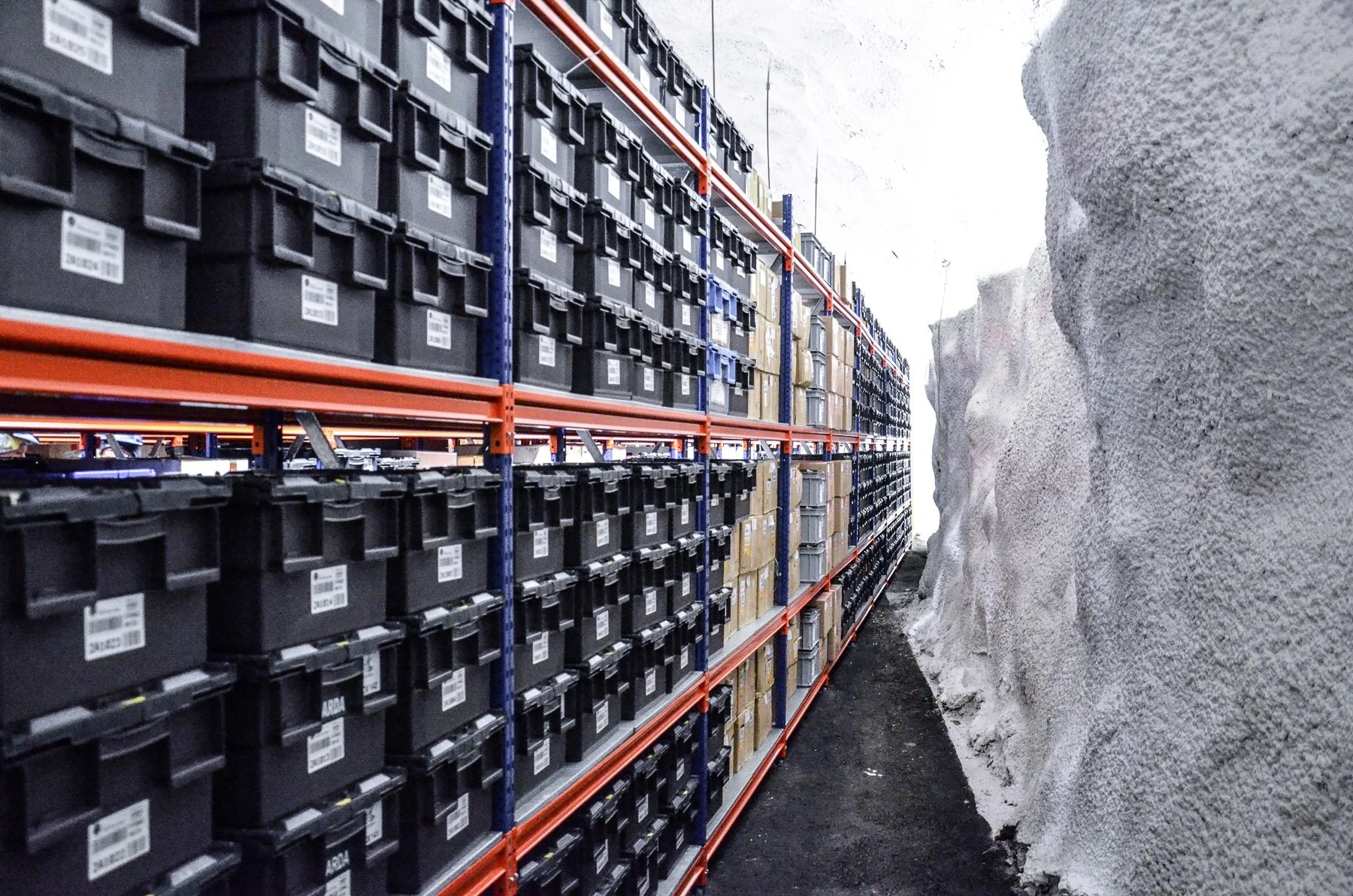
This is the left chamber of the three most important rooms in the world: the Svalbard Global Seed Vault. Kept at a constant –18°C, the vault preserves the greatest diversity of crop seeds on the planet. Constructed between 2004 and 2008, the facility was carved approximately 120 meters into a sandstone mountain and designed with three storage chambers, at a time when the total number of seed species worldwide was still unknown. Today, only one chamber—the central vault—is almost completely full, underscoring both the scale of global collaboration and the growing urgency of safeguarding our agricultural heritage.
A MISSION OF WITNESSING AND BRIDGE-BUILDING
HM: When you say “mission,” what do you mean?
CC: My mission is to be both a witness and a bridge-builder.
As a witness, I document the defining tensions of our time:
The conflict between humans and nature
Climate change and its effects
Biodiversity loss
Cultural loss in indigenous and coastal communities
Polar and marine scientific work
I don’t create stories; I pass on what nature, science, and communities are telling us.
As a bridge-builder, I connect:
Scientists
Policy-makers
Industries
The public
These groups rarely communicate well with each other. Scientists produce crucial knowledge but struggle to communicate it. Politics has its own rhythm and language. Industries hold power but often lack clear guidelines and communication regarding innovative and ecological initiatives. I try to build bridges so that knowledge can actually be exchanged between these worlds.
Photography and storytelling—images and words—are my tools.
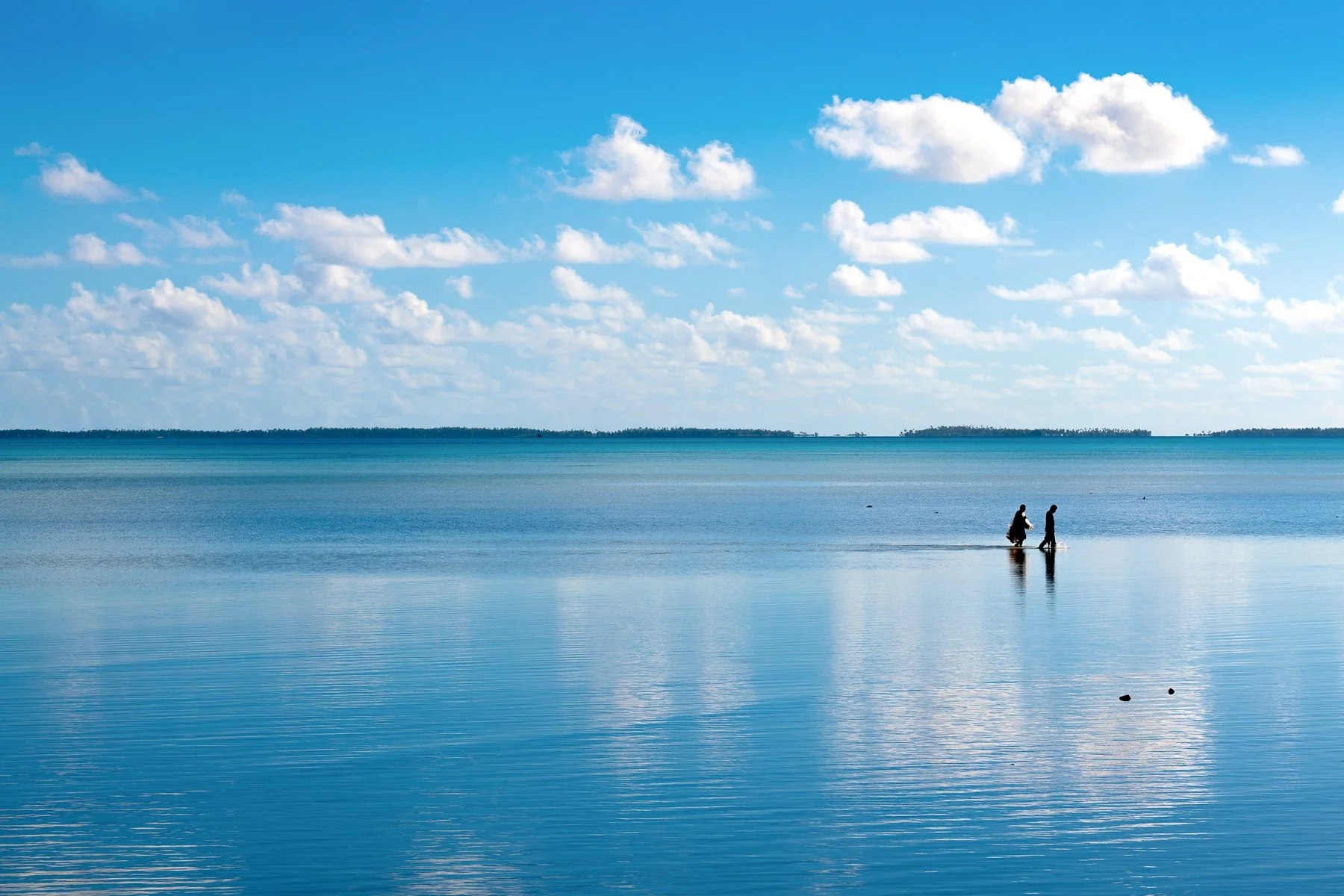
Pacific islanders on Tarawa, Kiribati, in the Pacific Ocean are on their way to visit their family on the next atoll. Twenty years ago, the water didn’t come up to their knees yet.
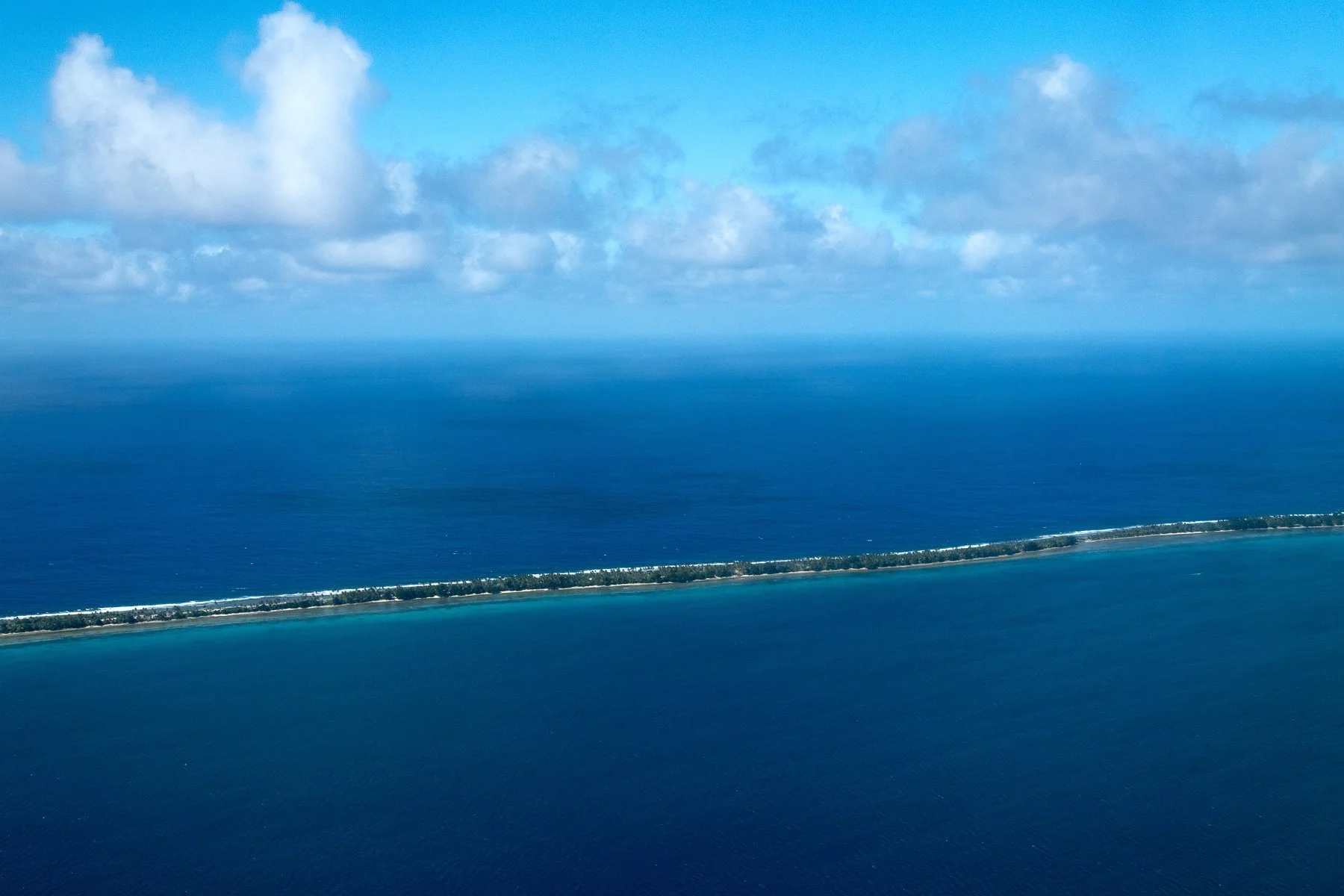
Tuvalu is the fourth smallest country in the world and also the narrowest island in the world. This Pacific atoll is doomed to disappear due to climate change. The rising sea level literally washes inhabited islands like this off the map.
CULTURAL LOSS & HUMAN STORIES AT THE FRONTLINE
HM: You speak passionately about cultural loss. What does that mean to you?
CC: Culture is the transmission of knowledge, practices, and identity from one generation to the next. Much of it is intangible: ancient navigation knowledge in the Pacific region, hunting techniques in the Arctic, oral history, rituals, languages.
Climate change isn’t only altering landscapes; it’s dissolving cultural foundations.
In the Arctic, when sea ice disappears, Inuit cannot hunt, travel, or orient themselves as their ancestors did. I’ve heard an Inuk say, “This summer I saw a ladybird, butterflies and bees for the first time.” That tells you how quickly the ecological baseline is shifting.
In Pacific atoll nations—Tuvalu, Kiribati, Marshall Islands—people face rising seas, salinized water, stronger storms, disappearing crops. You don’t just lose land; you lose identity, practices, and heritage. That is cultural loss.
So my work is not just about climate; it’s about people, identity, belonging.
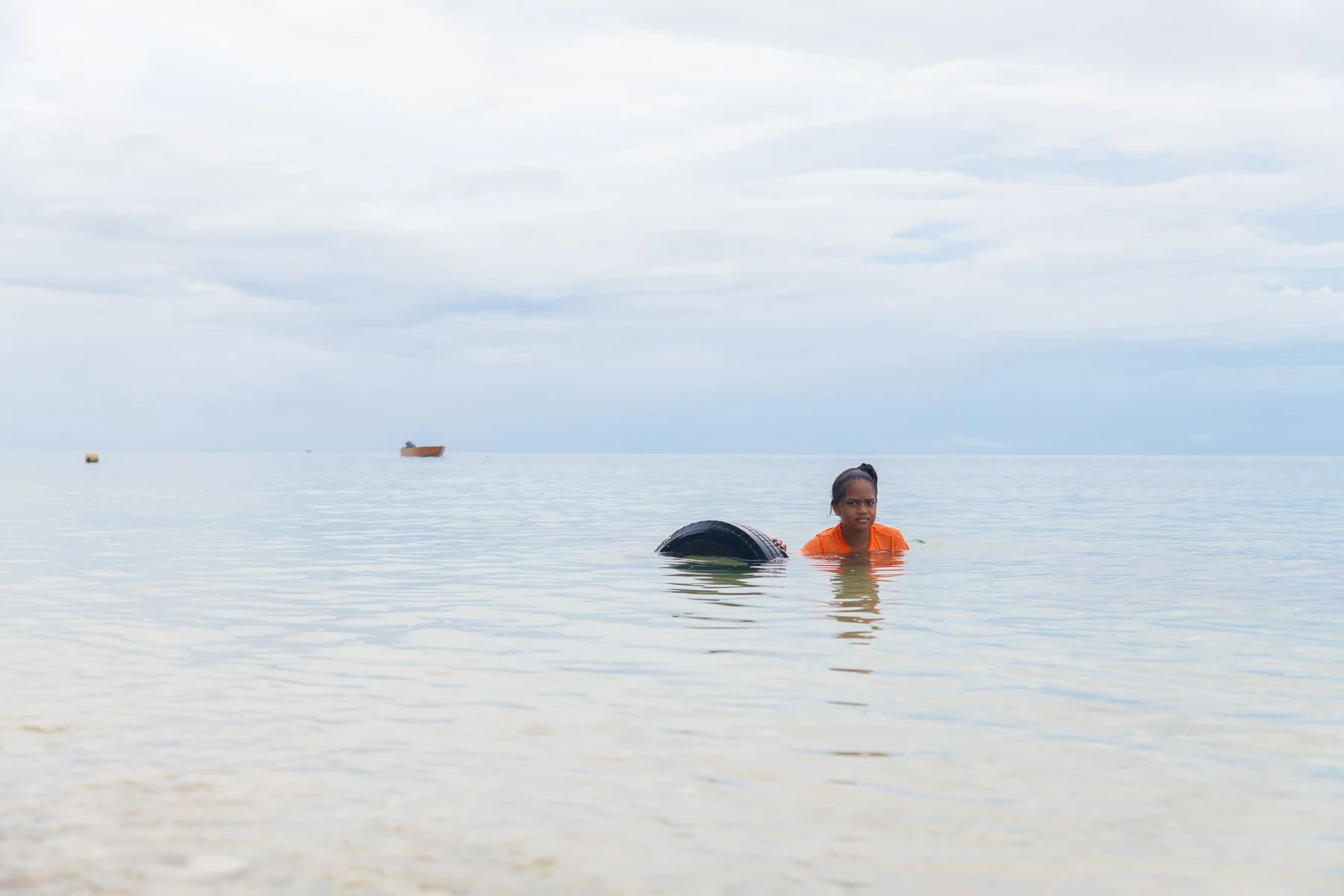
The sea is a daily part of life in the Pacific region. Tarawa, Kiribati, Pacific Ocean.
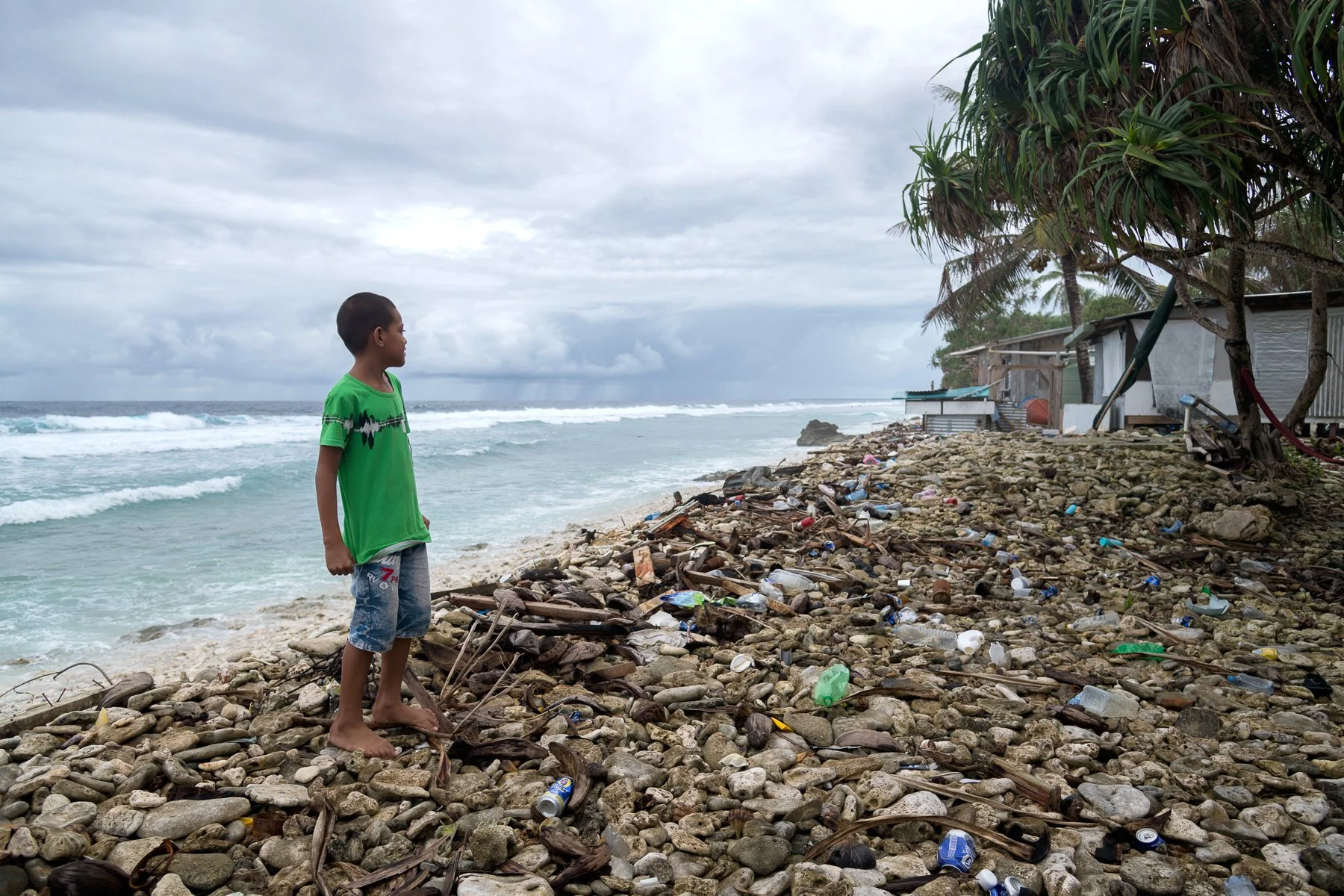
The ecological footprint becomes very clear on small islands, where the impact of plastic on the ecosystem has dramatic consequences.
SHOWING BEAUTY, SHOWING IMPACT, CREATING HOPE
HM: How do you prevent people from feeling overwhelmed by negative news?
CC: By balancing truth with hope.
I show the impacts—melting glaciers, pollution, permafrost thaw—but I also show the most pristine places that remain: sub-Antarctic islands, untouched coastlines, ecosystems full of life. People need to see what is still worth saving.
Photography is a universal language. A single powerful image can cut through politics. But I always insist on captions and context. Without them, people only see the surface.
My work takes the form of:
Books dedicated to specific projects
Exhibitions with strong visual storytelling
Talks at schools, universities, institutions, enterprises, parliaments
My aim is to help people understand both the problem and the beauty that still gives us hope.
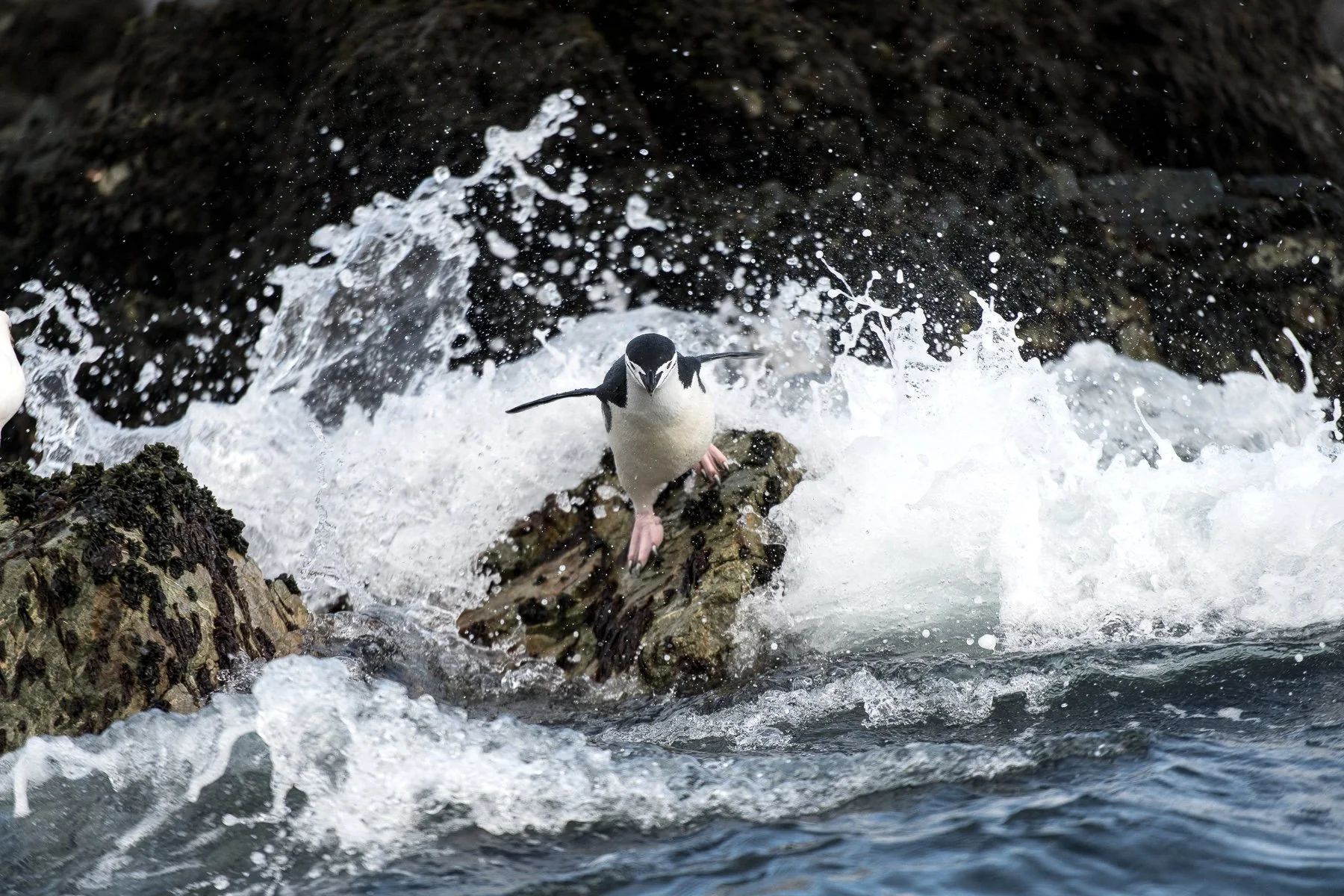
A chinstrap penguin. Its name stems from the narrow black band under its head, which makes it appear as if it were wearing a black helmet, making it easy to identify.
WORKING WITH INDUSTRY – WITHOUT BEING USED
HM: You also work with industry. How do you avoid greenwashing?
CC: By being honest and selective.
Every company pollutes, so the question is: where is there genuine effort to improve? I worked with a major Belgian retailer that planted 12,000 hectares of trees in Congo. I saw real benefits: agroforestry, beekeeping, community building, livelihoods. I photographed and documented their work honestly—not as propaganda, but as an example of what improvement can look like.
With industries involved in things like deep-sea mining, I’m extremely cautious. I speak with them to understand, not to promote.
My rule is neutrality with integrity: neutral enough to talk to everyone, but not neutral to the point of silence or complicity.
SEA: SOCIETY FOR ENVIRONMENTAL AWARENESS
HM: Tell us about your new organization, SEA.
CC: I founded SEA – Society for Environmental Awareness (supportsea.org) because my mission grew larger than what I could carry alone.
SEA is an international non-profit, officially recognized in Belgium and approved by the King of Belgium. The goal is simple: reconnect with nature, raise environmental awareness through visual storytelling and science communication.
SEA focuses on:
Environmental and scientific education
Exhibitions, books, and impactful projects
Building a community of people who want to act
Creating new tools, including a children’s book I’m working on
Even in its early days, SEA is attracting supporters—from donors to high-level advisors and board members like the former director of the European Environment Agency.

Ice masses warm up, float to northern warmer and saltier water, which accelerates the process of melting. Amundsen Sea, Antarctica.

A lonely Adélie penguin looks at how his environment changes because of the human footprint. Amundsen Sea, Antarctica.
LOOKING TEN YEARS AHEAD
HM: Where do you hope this mission will be in ten years?
CC: We are, in many ways, lost—lost from our essence as part of nature. But we are not doomed.
In ten years, I hope:
SEA will be a strong platform connecting science, art, industry, and policy.
My work will reach many more classrooms, public spaces, and decision-makers.
A global community will grow around the belief that we can still act.
Most importantly, I hope more people will rediscover that they are nature. Once you feel that deeply, your choices shift. And from there, real change becomes possible.
That is my mission: to help rebuild that connection and to build bridges strong enough to carry us into a more balanced future.
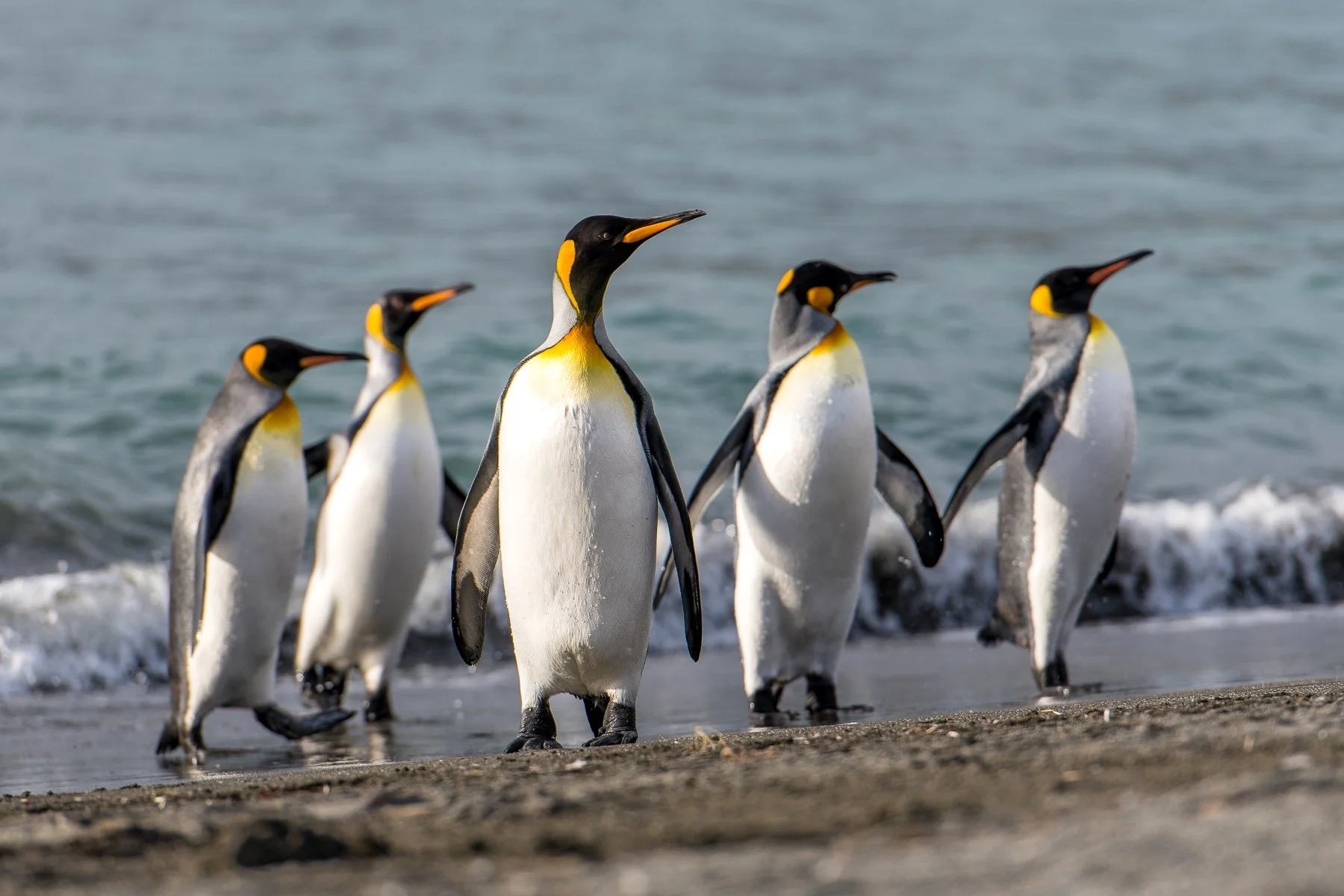
Penguins are among the most social of all birds. They may swim and feed in groups, but some may be solitary when diving for food. South Georgia.
All images © Christian Clauwers unless stated otherwise