
Lynsey Addario: Women in War. A Retrospective Finds its Rightful Home by Brian Byrd
Brian Byrd is a freelance photographer with over two decades of experience using communication to drive social change. He serves on the boards of the Overseas Press Club of America and WITNESS, a global human rights organization founded by Peter Gabriel.
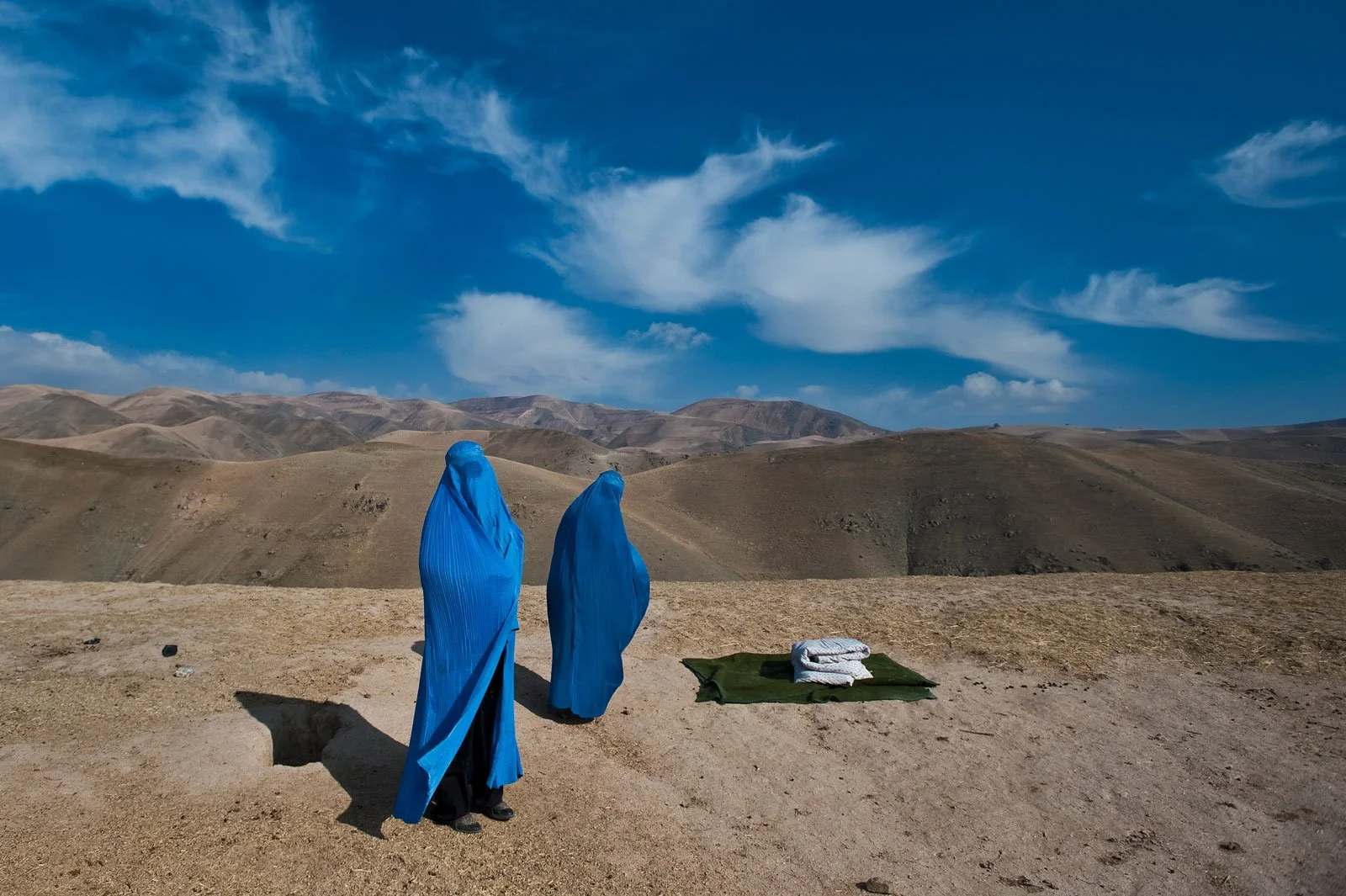
Noor Nisa (right), 18, in labor and stranded with her mother in Badakhshan Province, Afghanistan, November 2009. © Lynsey Addario
When New York Times columnist Nick Kristof needed a photographer to join him on a weeklong road trip through Ohio, Mississippi, and Alabama to document the collapse of health care in some of the poorest communities in America, he called Lynsey Addario. He and his wife Sheryl WuDunn had worked with her before — in Ethiopia, in the Central African Republic — and he knew what he would get. Not just extraordinary images, but a collaborator who would push beyond what was in front of her, returning to a subject’s home at dawn or dusk to find the light and the moment that would make a photograph feel true. “She was an essential part, not only of the photography, but also of the reporting,” Kristof told me. She found stories he hadn’t seen. She brought back people he then went and interviewed. When I asked whether he ever had to direct her — tell her what to shoot, where to point the camera — he laughed. “The last thing I’m going to do is tell Lynsey what to photograph.”
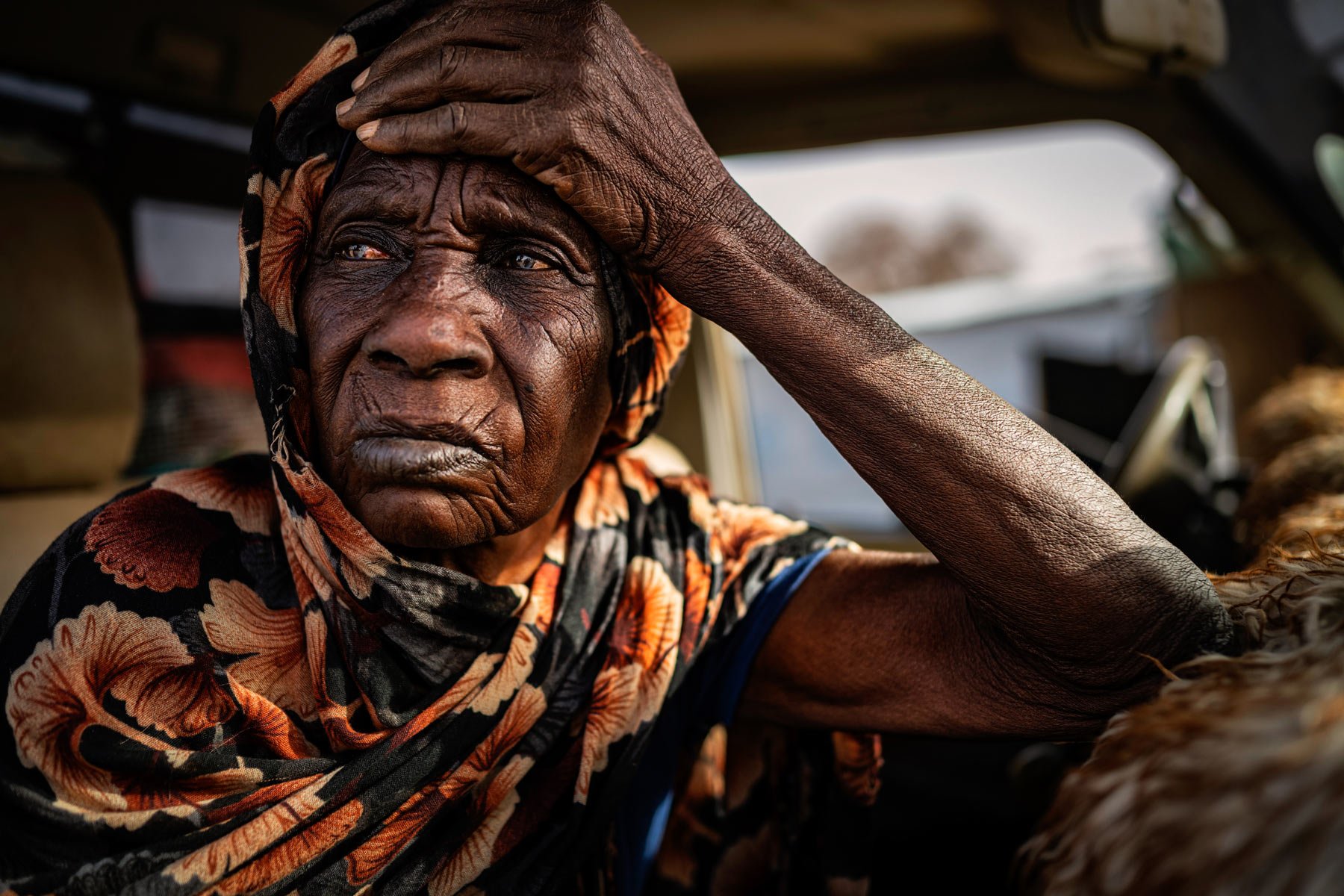
Sudanese refugees from Zam Zam camp outside of El Fascher, in Darfur, arrive at the Chadian border in Tine, in Eastern Chad, May 2025. © Lynsey Addario
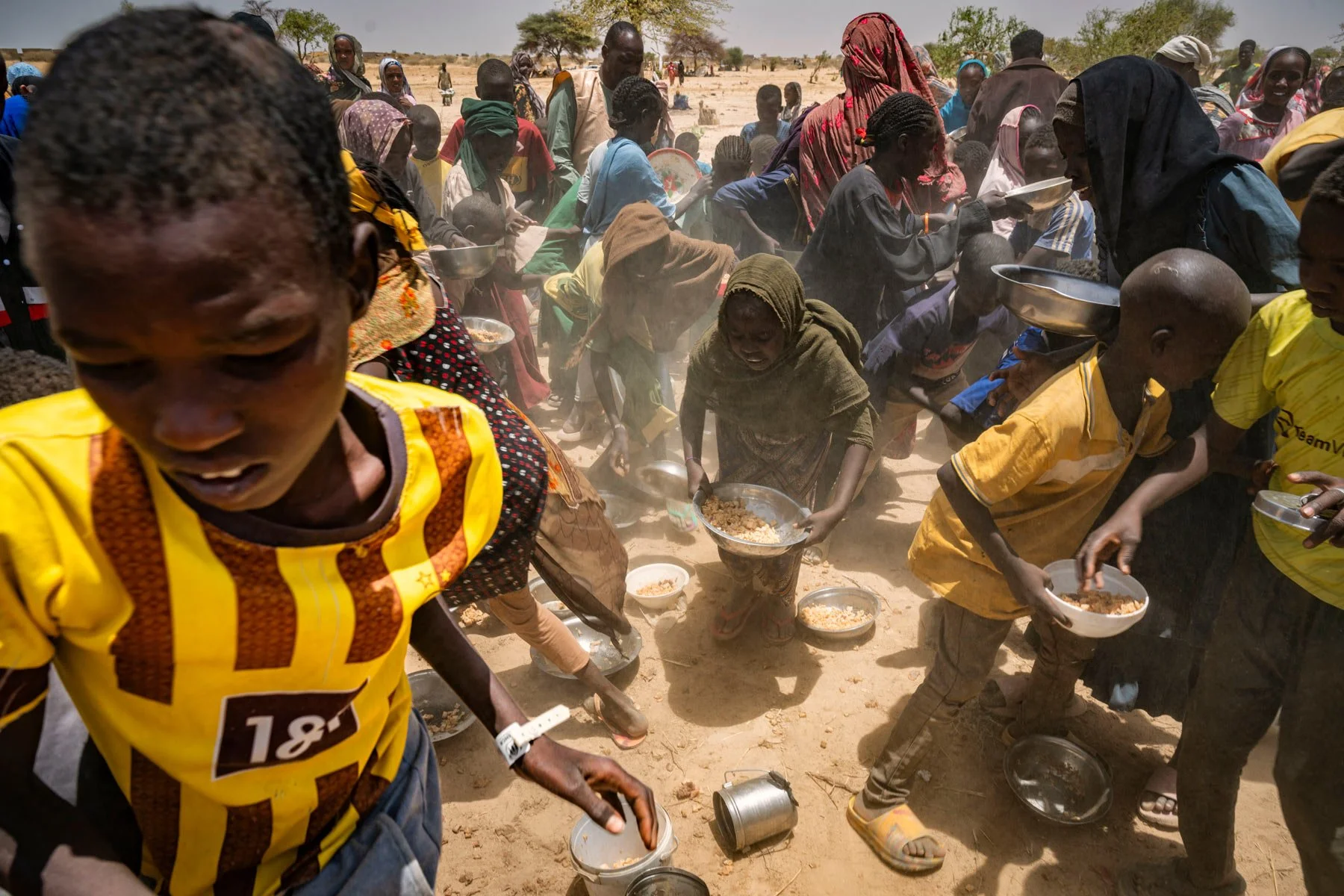
Sudanese refugees scramble for food provided by a local aid group at the Zam Zam camp outside of El Fascher, Tine, Eastern Chad, May 2025. © Lynsey Addario
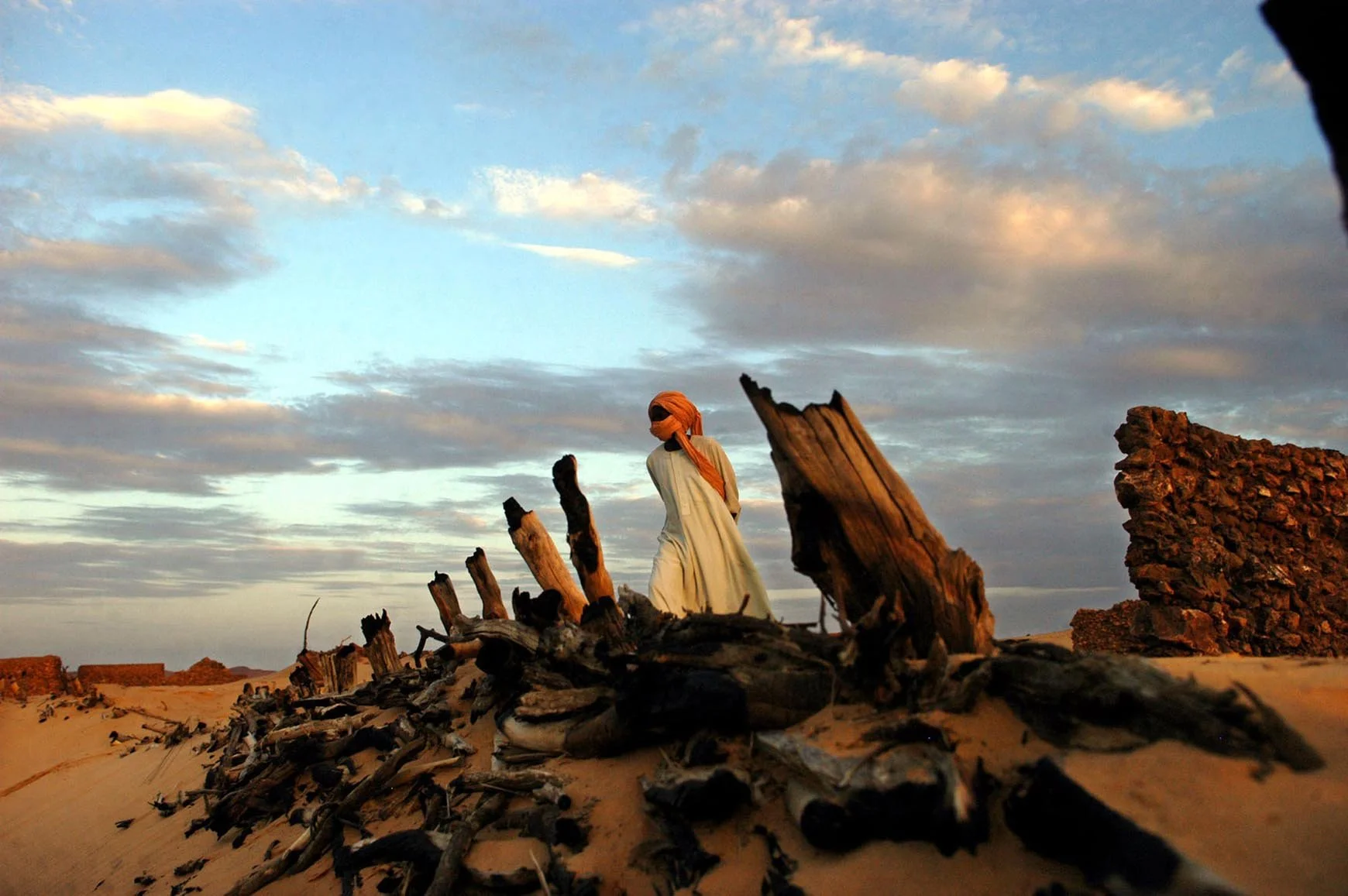
A SLA (Sudanese Liberation Army) soldier walks through the remains of Hangala village, burned by Janjaweed, the Sudanese Arab nomad militia group, near Farawiya, Darfur, August 2004. © Lynsey Addario
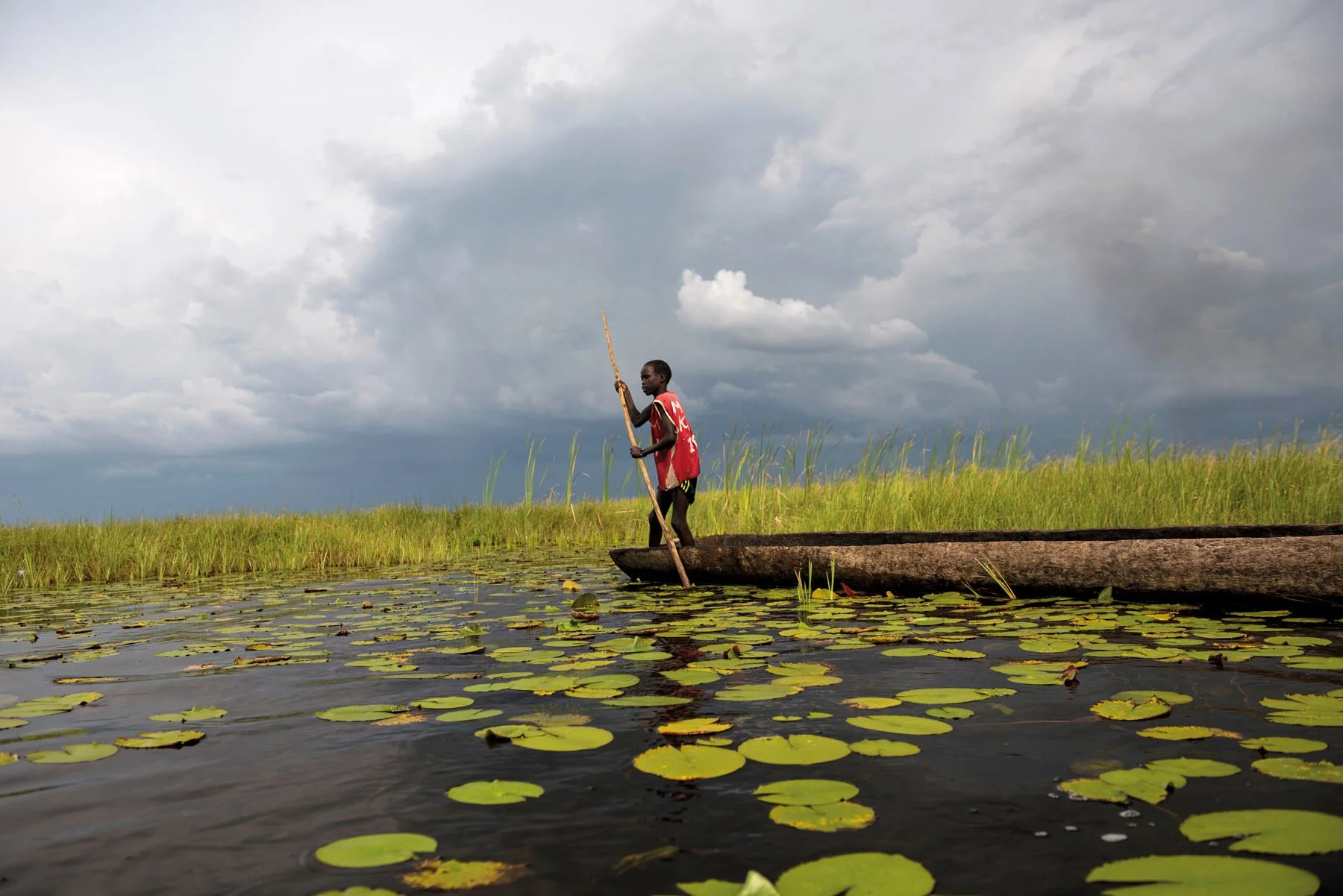
Chuol, 9, escaped into a vast swamp in South Sudan when fighters swept into his village, September 2015. © Lynsey Addario
What struck Kristof most was not the difference between working in the Mississippi Delta and working in a conflict zone, but the similarity. “The kinds of stories that Lynsey and I both believe in telling tend to be those about people who the world is neglecting a little bit,” he said. Whether in Sudan or in the poorest part of the United States, the goal is the same: find the people no one is paying attention to, and make it impossible to look away. “It takes a certain amount of courage to leave the herd and go off and try to not do journalism about things that are on the agenda, but tackle issues that are off the agenda and try to propel them onto the agenda,” Kristof said. “And that’s what Lynsey has done very well.”
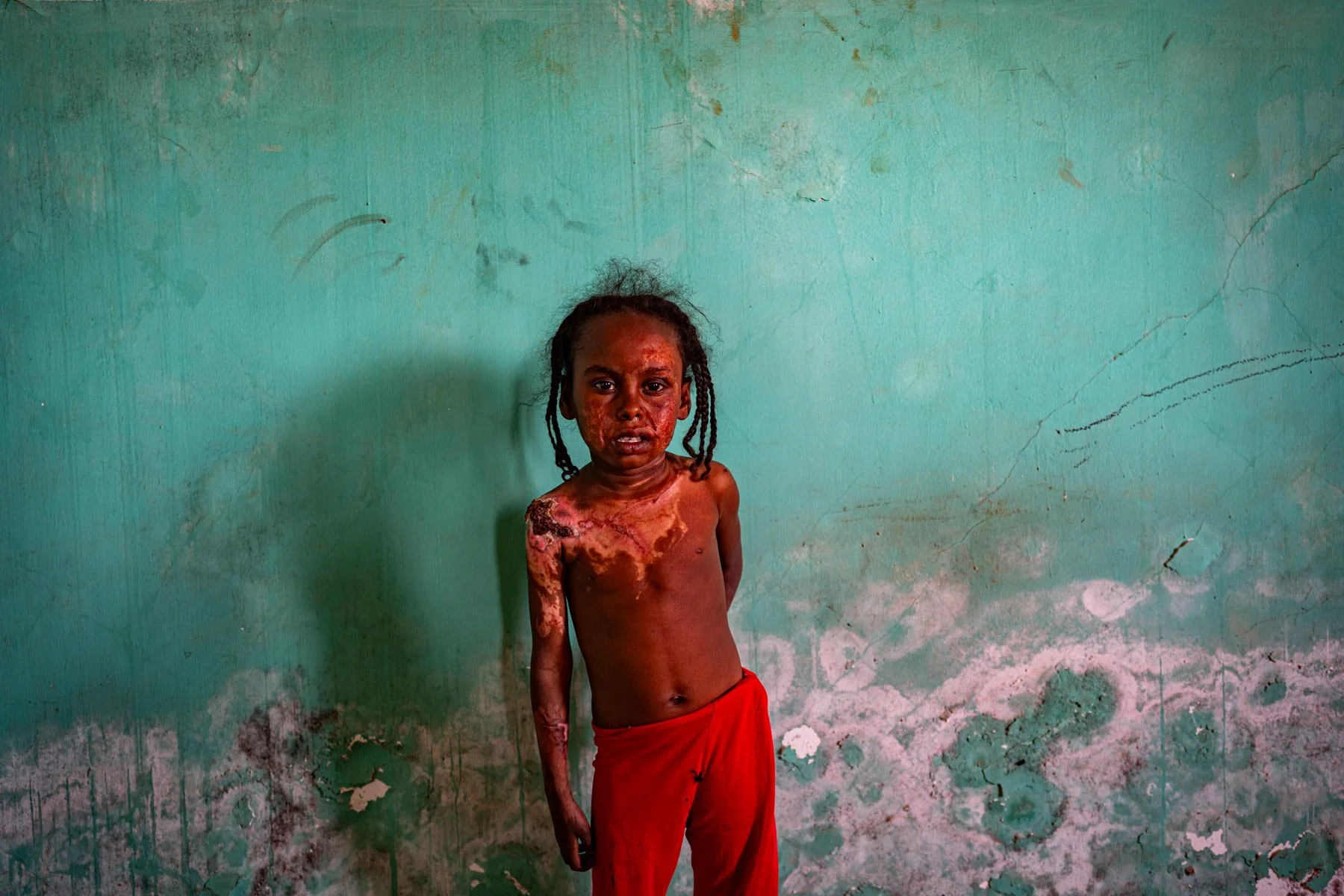
Sudanese civilians are treated for malnutrition in the neonatal ward by Doctors without Borders in the Geneina Hospital, West Darfur, Sudan, May 2025. © Lynsey Addario
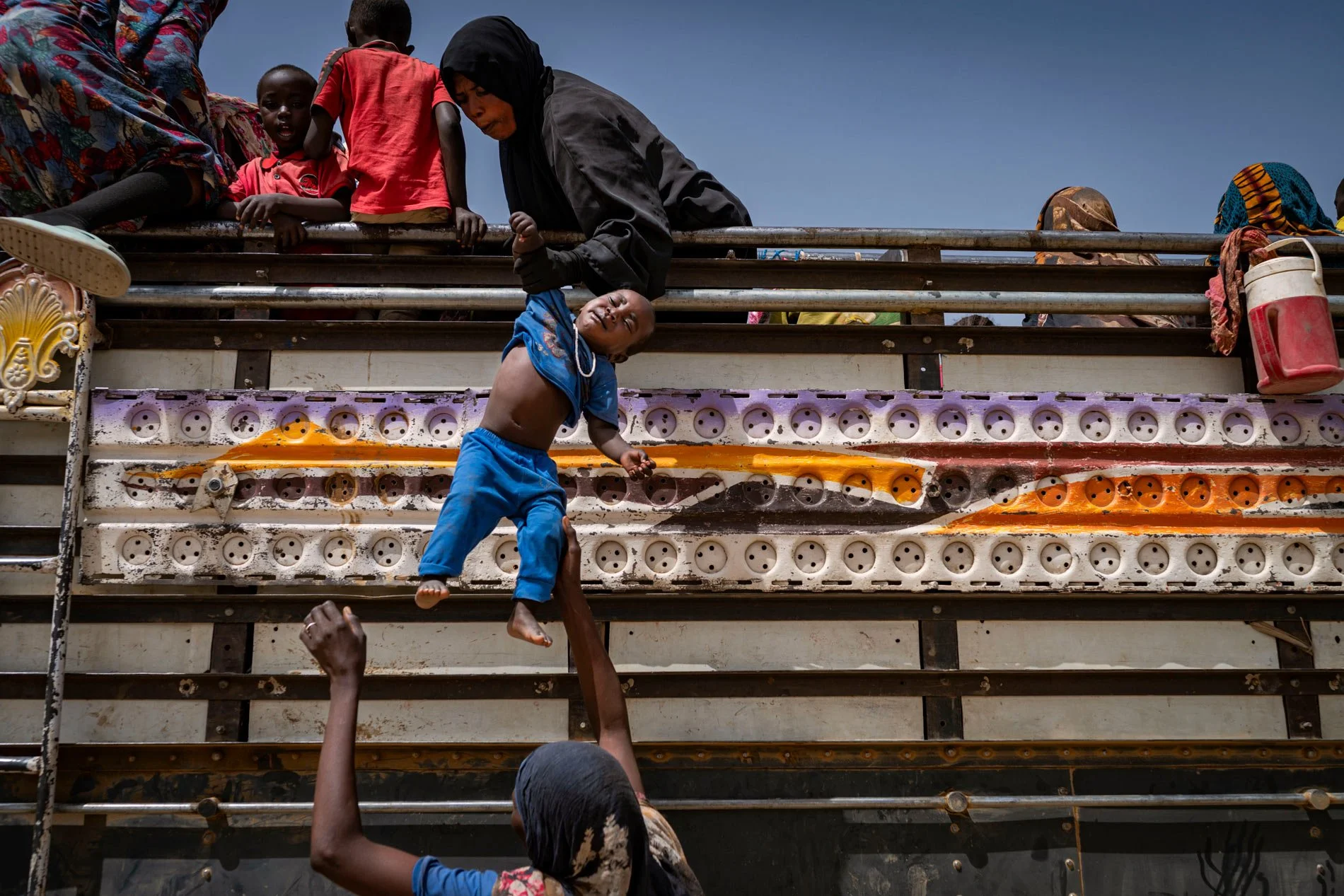
Sudanese refugees from the Zam Zam camp outside of El Fascher are relocated to the Iridimi transit camp from the Chadian border in Tine, Darfur, Eastern Chad, May 2025. © Lynsey Addario
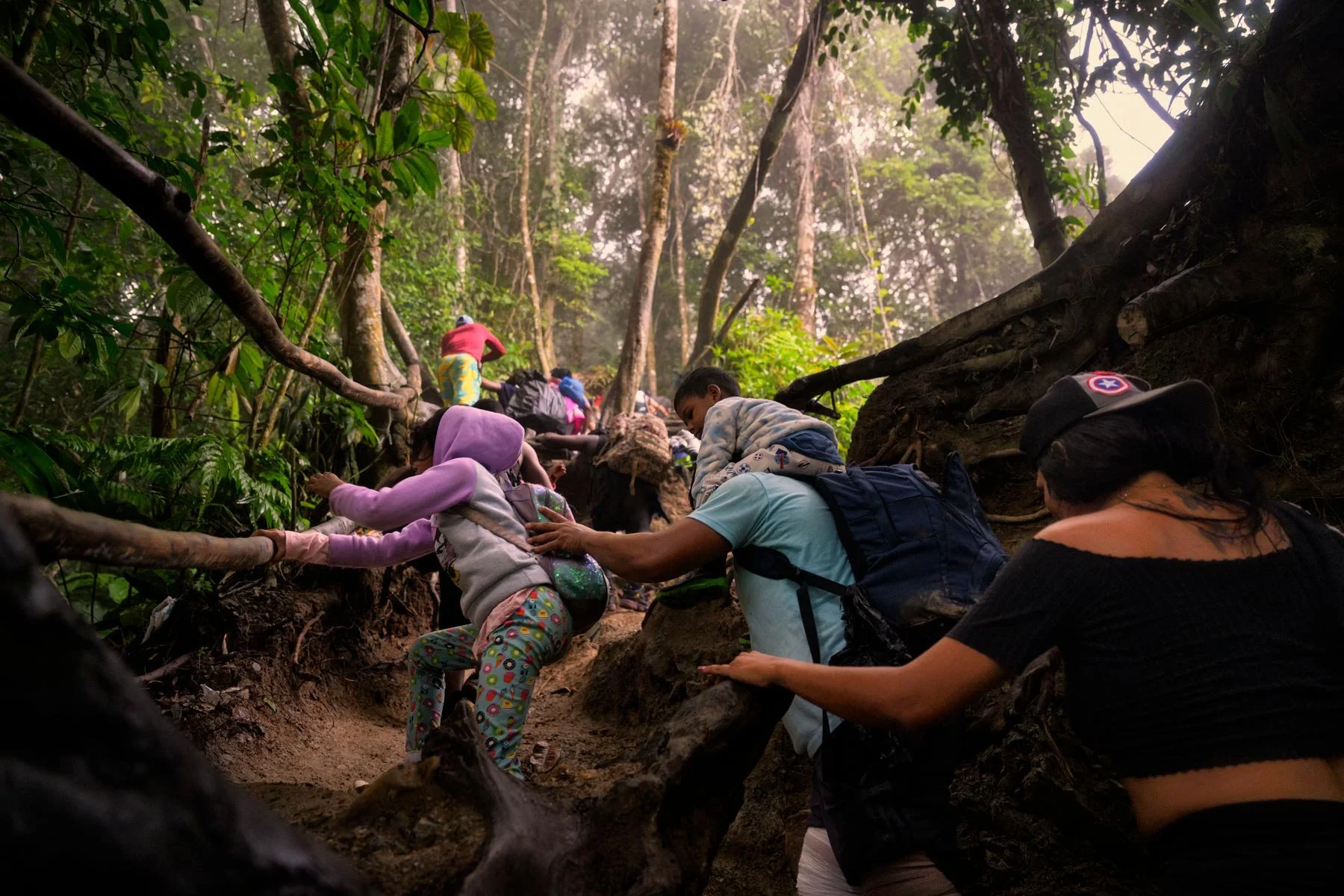
Venezuelan migrant Bergkan Ale, 29, carries his son Isaac, 2, while his wife Orlimar and daughter Camila walk with other migrants along the Acandí route through the perilous Darién Gap jungle between Colombia and Panama, December 2023. © Lynsey Addario
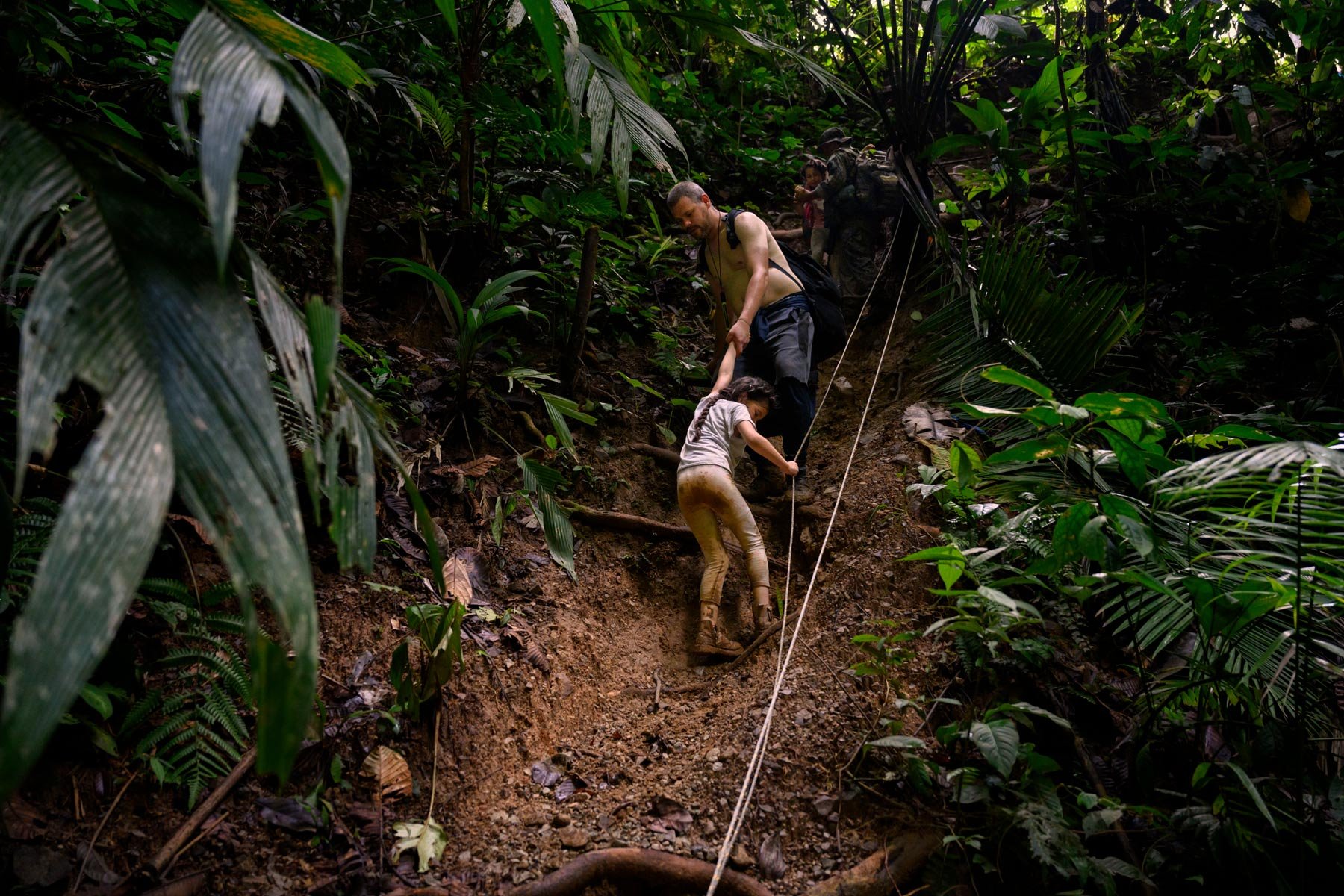
Jesus Eduardo Acosta Machado, 37, assists his daughter Susej, 7, on the second day of a 65-mile trek through the Darién Gap from Capurganá, Colombia to Boca Chica, Panama, December 2023. © Lynsey Addario
It is also, as it happens, precisely what Addario has done with her new exhibition in Luxembourg.
There is a particular kind of logic at work when a museum built to honor resistance chooses to mount an exhibition about women who endure war. Luxembourg’s National Museum of Resistance and Human Rights, founded in 1956 to preserve the memory of Nazi occupation, reopened in 2024 with three times its original exhibition space and a broader mandate — one that now extends to contemporary human rights and citizenship education. On March 7, 2026, that mandate finds one of its most powerful expressions yet: Women in War, a retrospective of more than twenty years of work by American photojournalist Lynsey Addario.
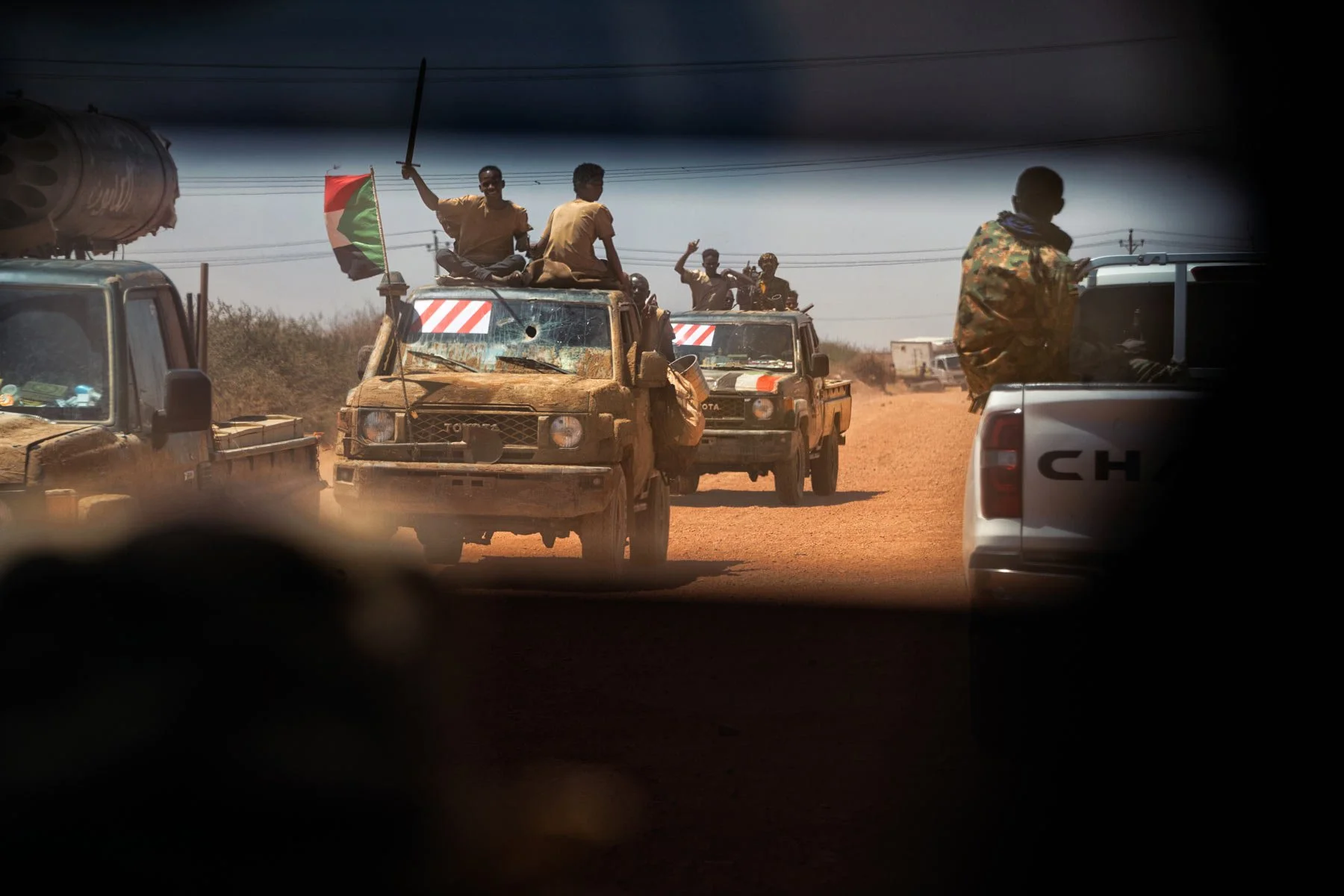
Soldiers with the SAF (Sudanese Armed Forces) return from the frontline in Khartoum state, Sudan, March 2025. © Lynsey Addario
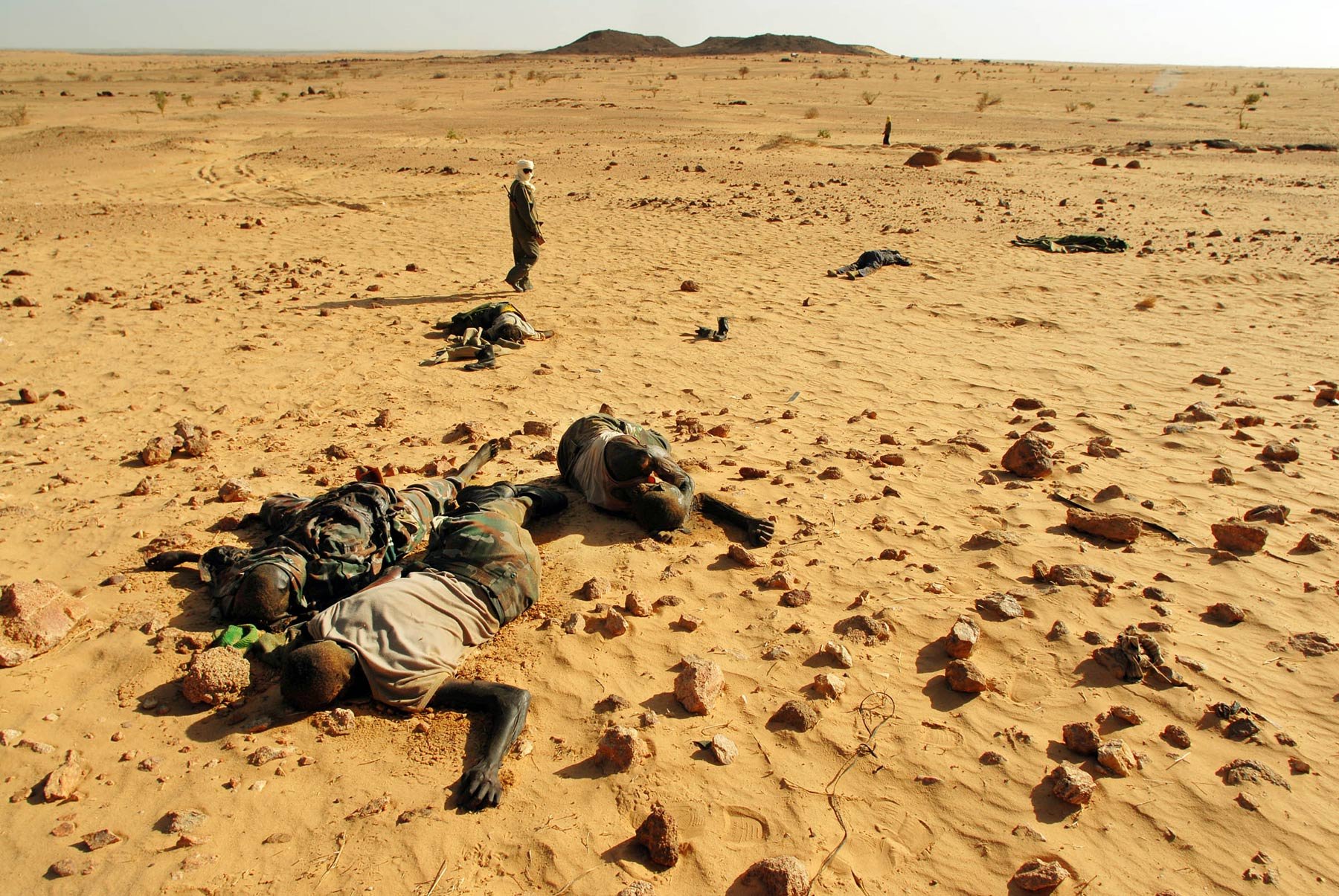
Rebels with the NRF (National Redemption Front), an alliance of Darfuri opposition groups, walk past dead GOS (Government of Sudan) soldiers as they pass through a temporary GOS military camp near the Darfur-Chad border, Darfur, October 2006. © Lynsey Addario
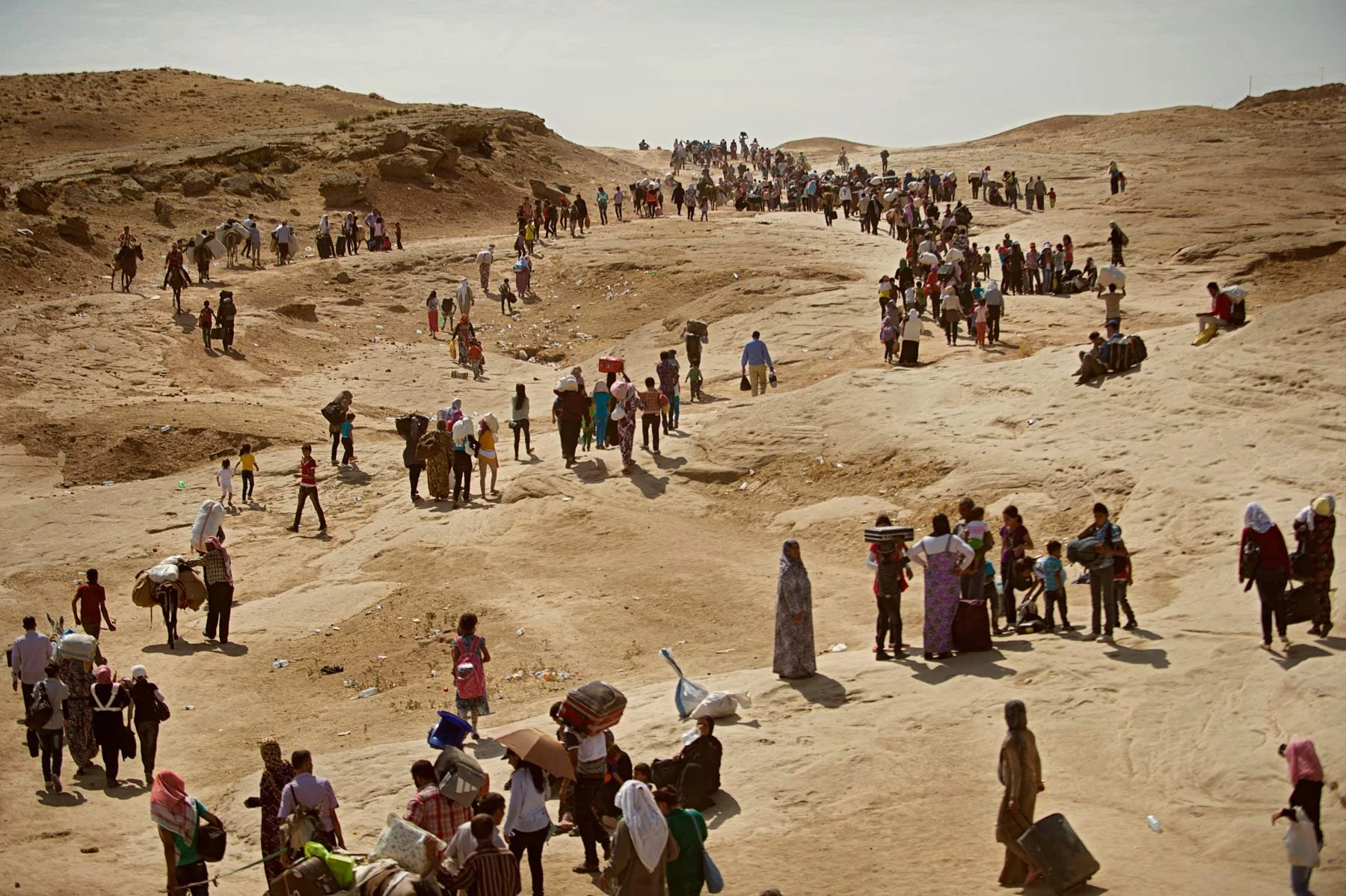
Thousands of Syrians cross from Syria into Northern Iraq near the Sahela border point in Dahuk, Northern Iraq, August 21, 2013. © Lynsey Addario
Drawing on more than two decades of work, Addario’s first solo museum exhibition traces how women live, endure, and resist in the shadows of conflict, from Afghanistan and Iraq to Sudan, Syria, and Ukraine. Rather than focus solely on front lines, her images bear witness to the intimate, often hidden spaces where war’s consequences register most profoundly: in maternity wards, cramped kitchens, refugee camps, and gender-segregated rooms where women give birth, raise children, mourn, and negotiate survival. Long drawn to documenting injustice against women — from rape as a weapon of war to maternal mortality — Addario uses this exhibition to insist that women are not peripheral to conflict but at its very center, both as subjects and as storytellers. “Men and women have different access, we relate to people on different levels, and people respond to us differently,” she has said — a recognition that it's a field still dominated by men. Women in War stakes out a distinctly female perspective rooted less in sentiment than in access: the hard-won ability to enter spaces closed to her male colleagues and, from there, to expand what the world is allowed to see and understand about war. It is an ambition she identified early. “I became fascinated by the notion of dispelling stereotypes or misconceptions through photography,” she wrote in her memoir. Women in War is the fullest expression of that fascination to date.
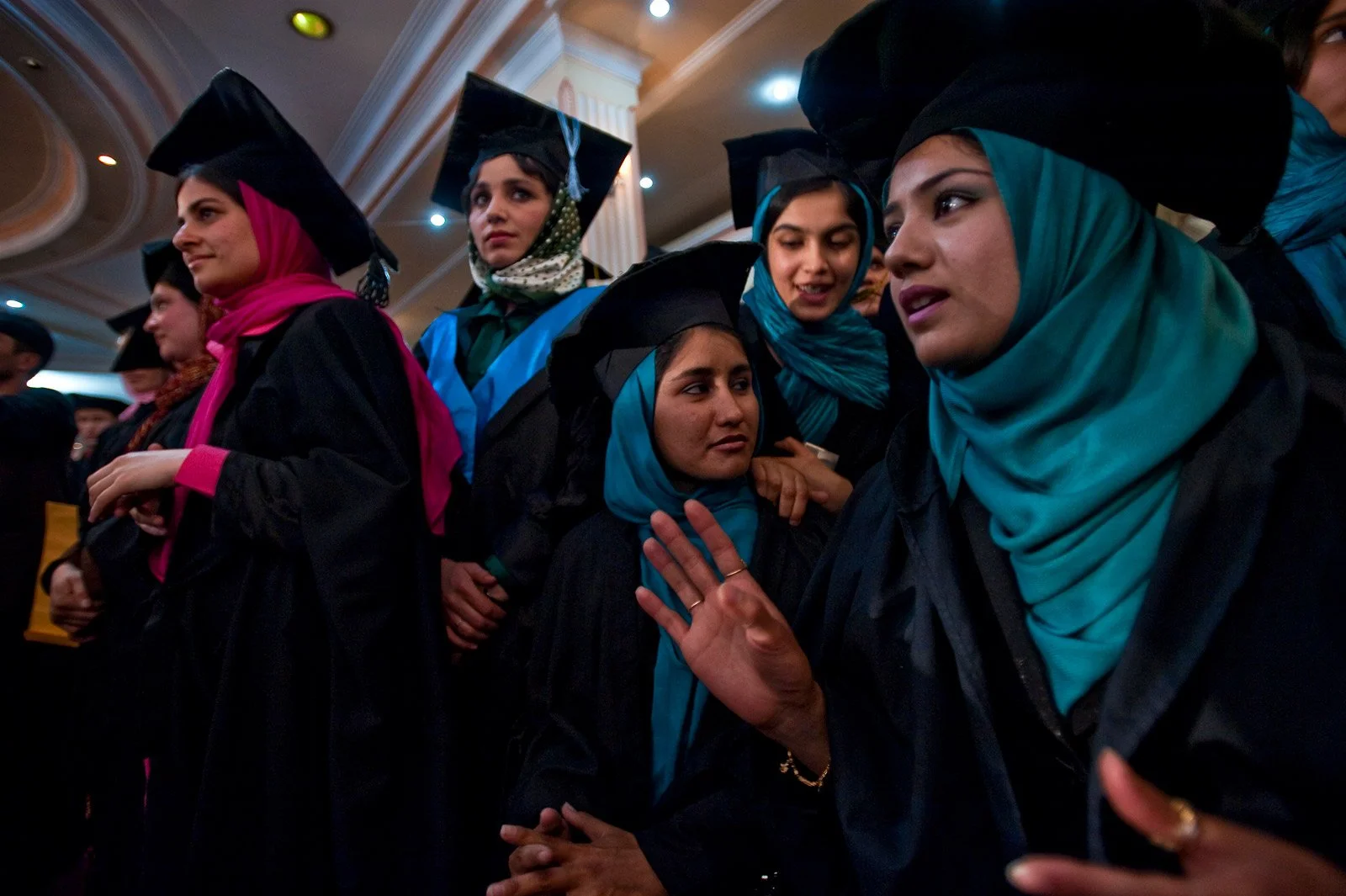
Afghan graduates from the University of Kabul attend a graduation ceremony in Kabul, Afghanistan, April 2010. © Lynsey Addario
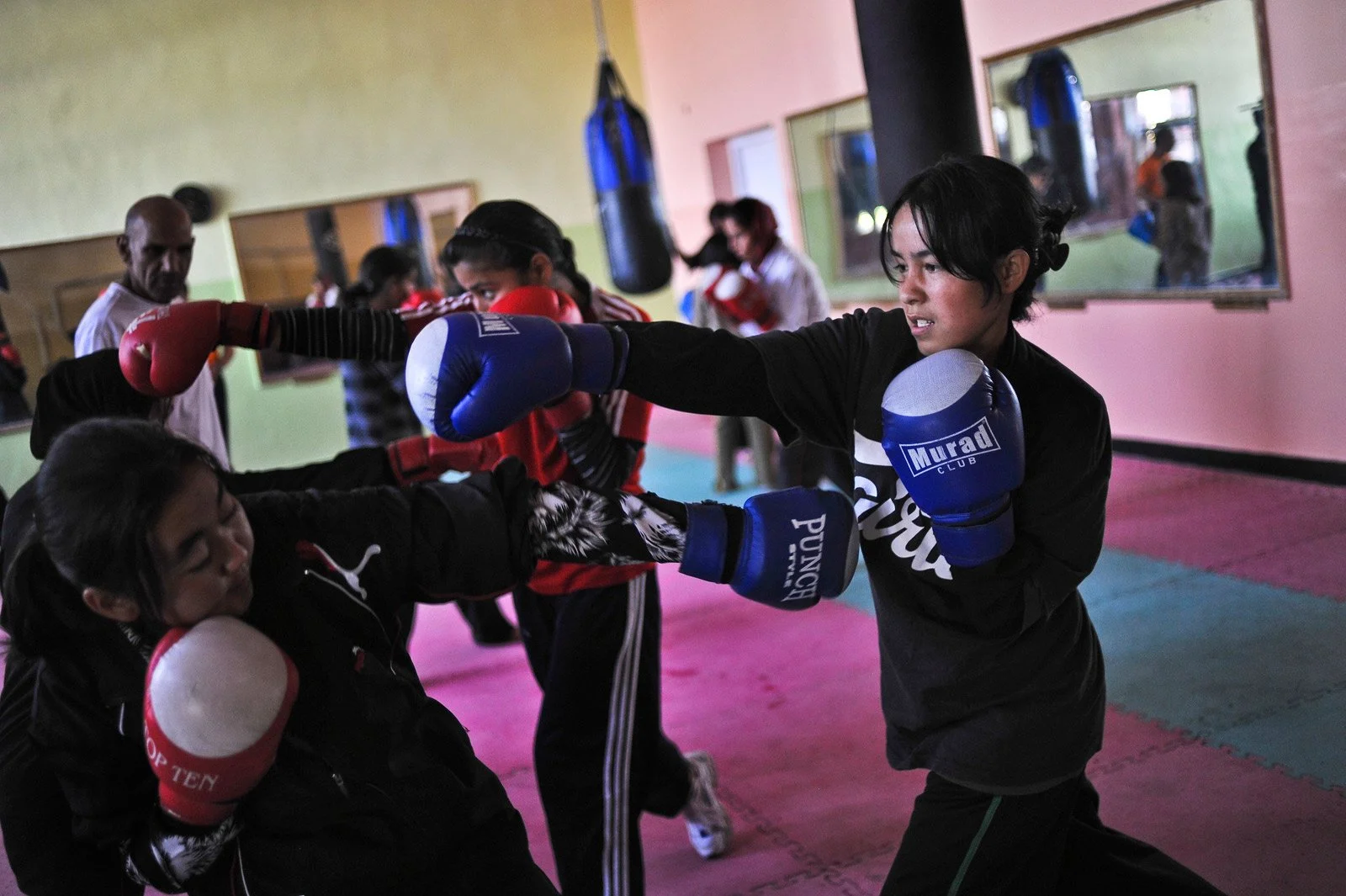
Female boxers train at the sports stadium in Kabul, Afghanistan, August 2009. © Lynsey Addario
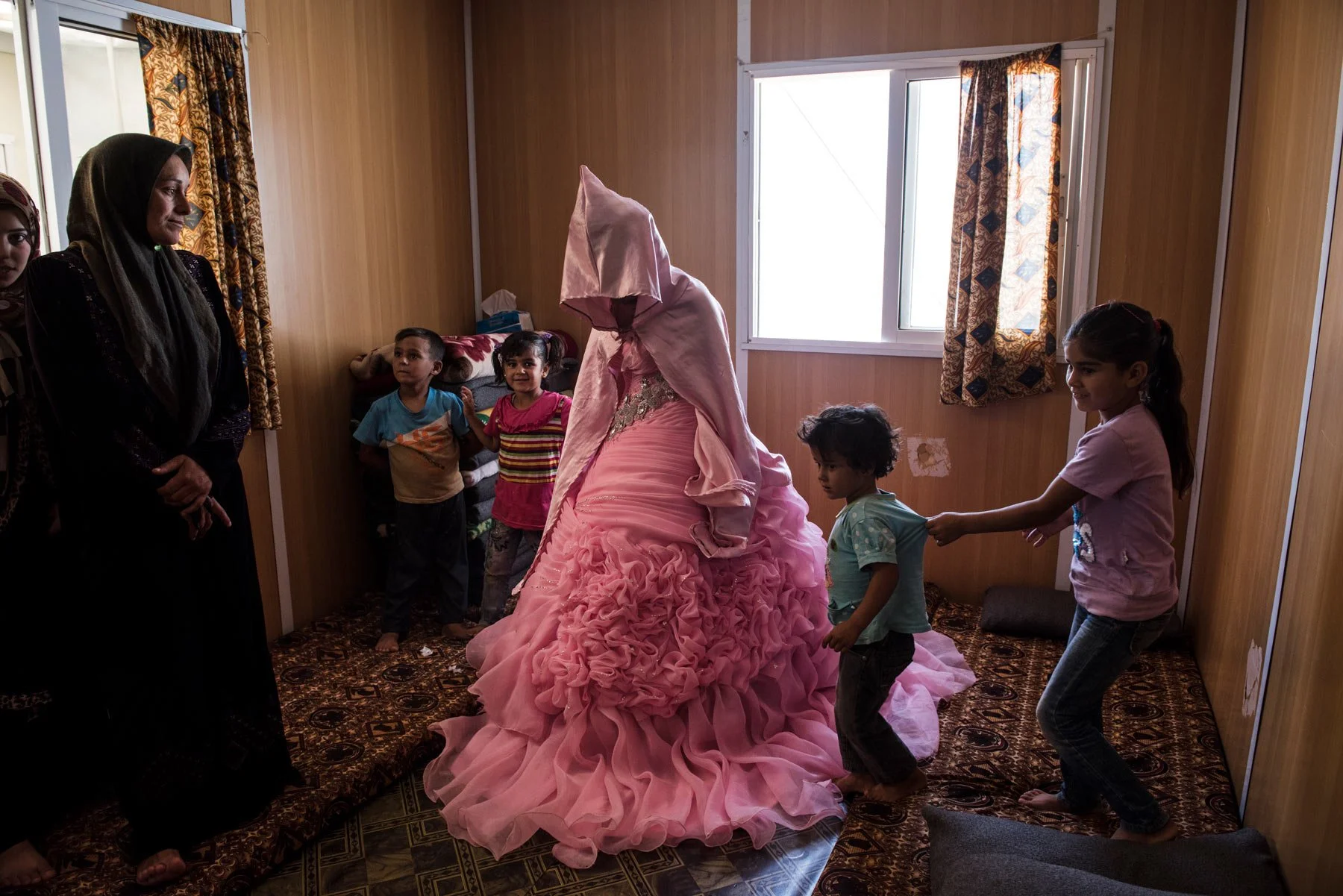
Rahaf Yousef, 13, a Syrian refugee from Daraa, poses for a portrait in her family’s trailer on the day of her engagement party at the Zaatari refugee camp in Jordan, August 2014. © Lynsey Addario
The exhibition also documents women who have chosen to fight. Among the photographs are images of women recruits for the U.S. Marines during basic training, Afghan women police being trained at a firing range by Italian Carabinieri, and a devastating portrait of sexual assault survivors. These are not images of passivity. They are images of women stepping into roles that war has forced open, and Addario is there because she understands that these moments — a recruit’s exhaustion, a teacher’s terror — are as much a part of the record as any front-line photograph.
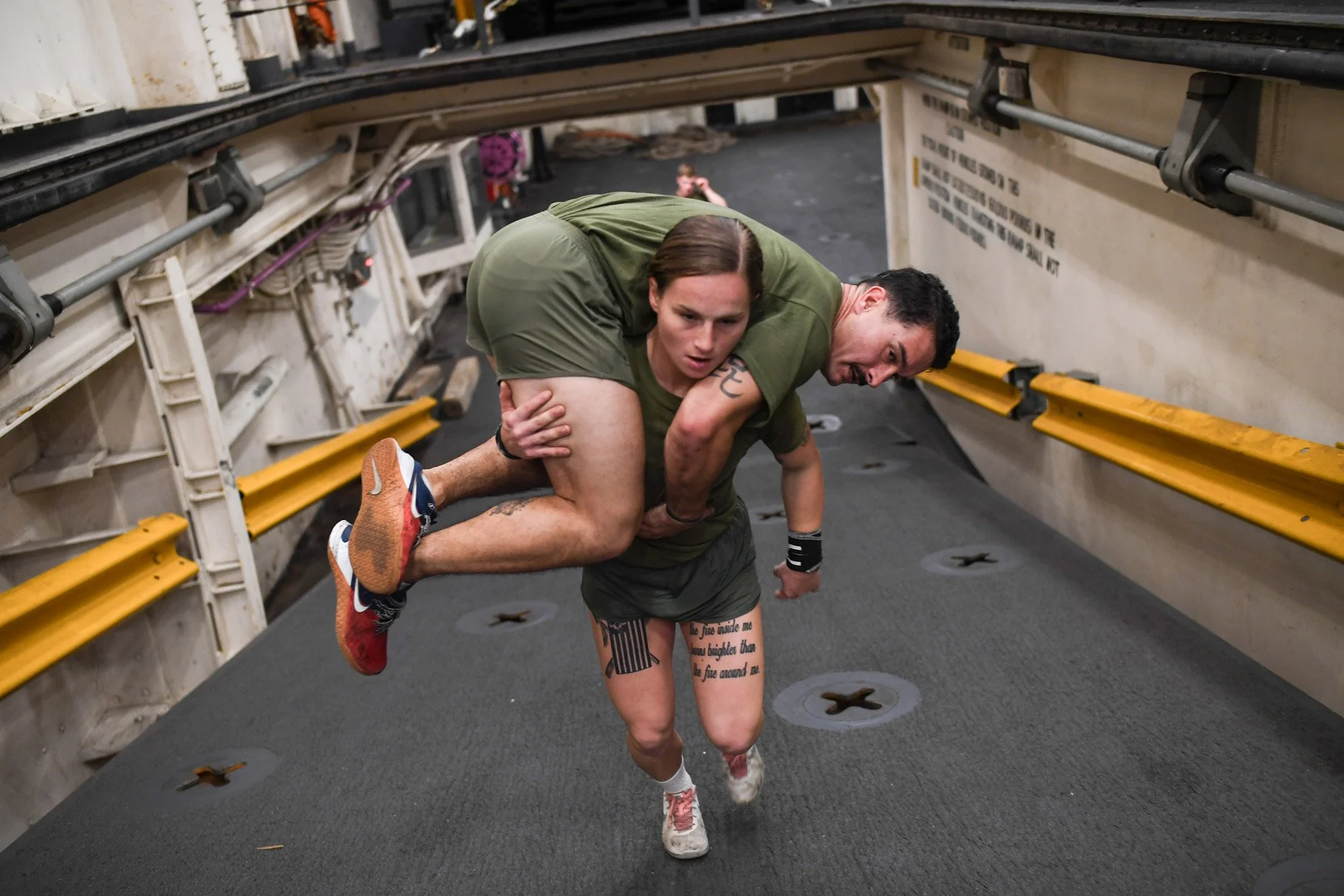
A United States Marine Corps recruit trains at Camp Lejeune as her unit readies for deployment aboard a Navy ship, North Carolina, United States, December 2017. © Lynsey Addario
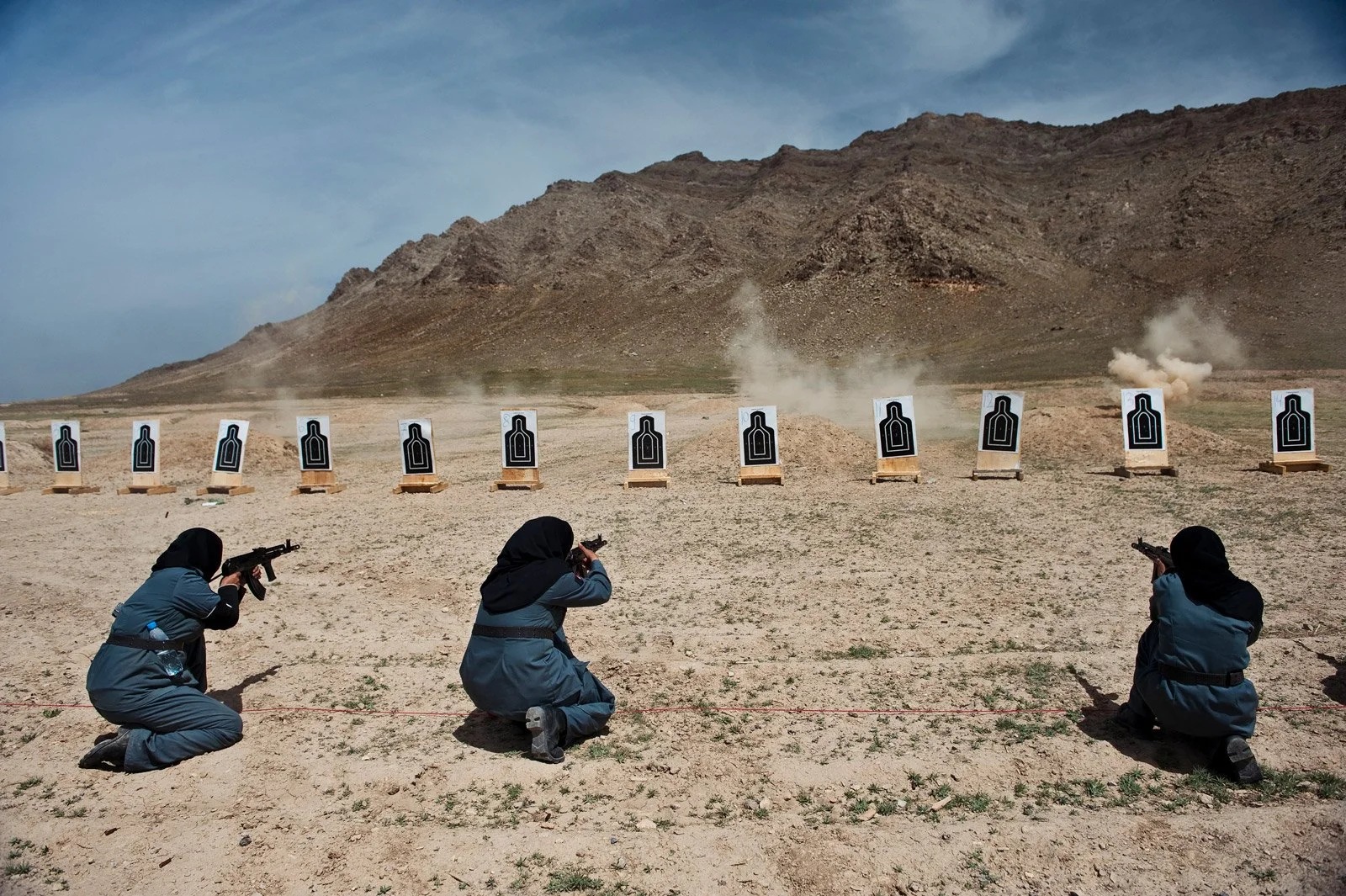
Afghan women police are trained at a firing range by Italian Caribinieri outside of Kabul, Afghanistan, April 2010. © Lynsey Addario
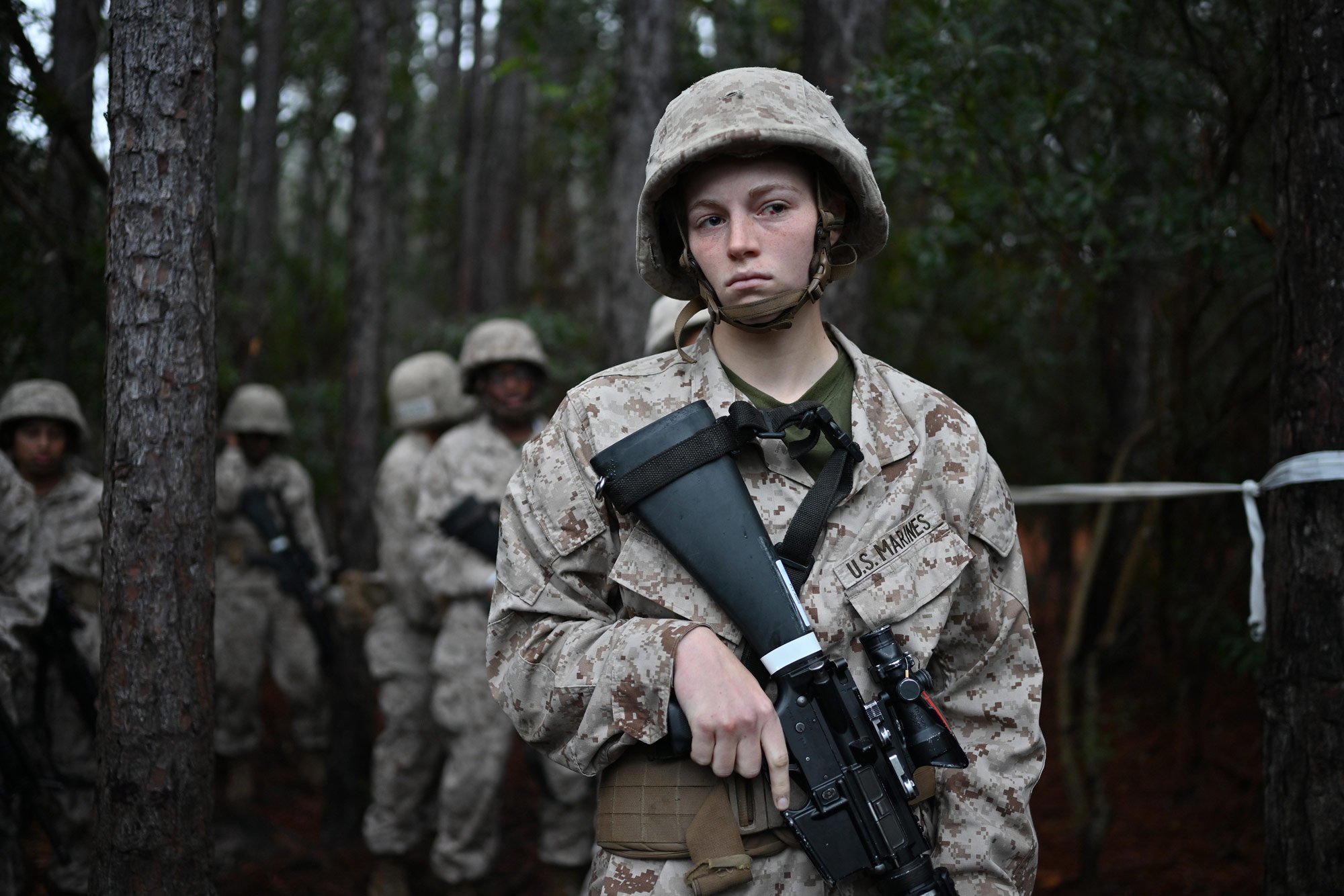
Recruits for the United States Marine Corps (USMC) on the first day of “The Crucible,” the 54 hour final physical test, before they officially become Marines at Parris Island, South Carolina, United States, February 2019. © Lynsey Addario
Asked why she felt the exhibition was necessary, Addario was direct. “Women are often overlooked as participants in war, because images of war often focus on men, and the dramatic, kinetic images of the frontline,” she said. “Twenty-five years into my work on the frontlines of war, I increasingly focus on how war impacts women and children, as this is an angle that is often overlooked.” It was a fitting detail, then, that the exhibition was opened by Yuriko Backes, Luxembourg’s Minister of Defense and Minister of Gender Equality and Diversity — a woman who holds both titles.
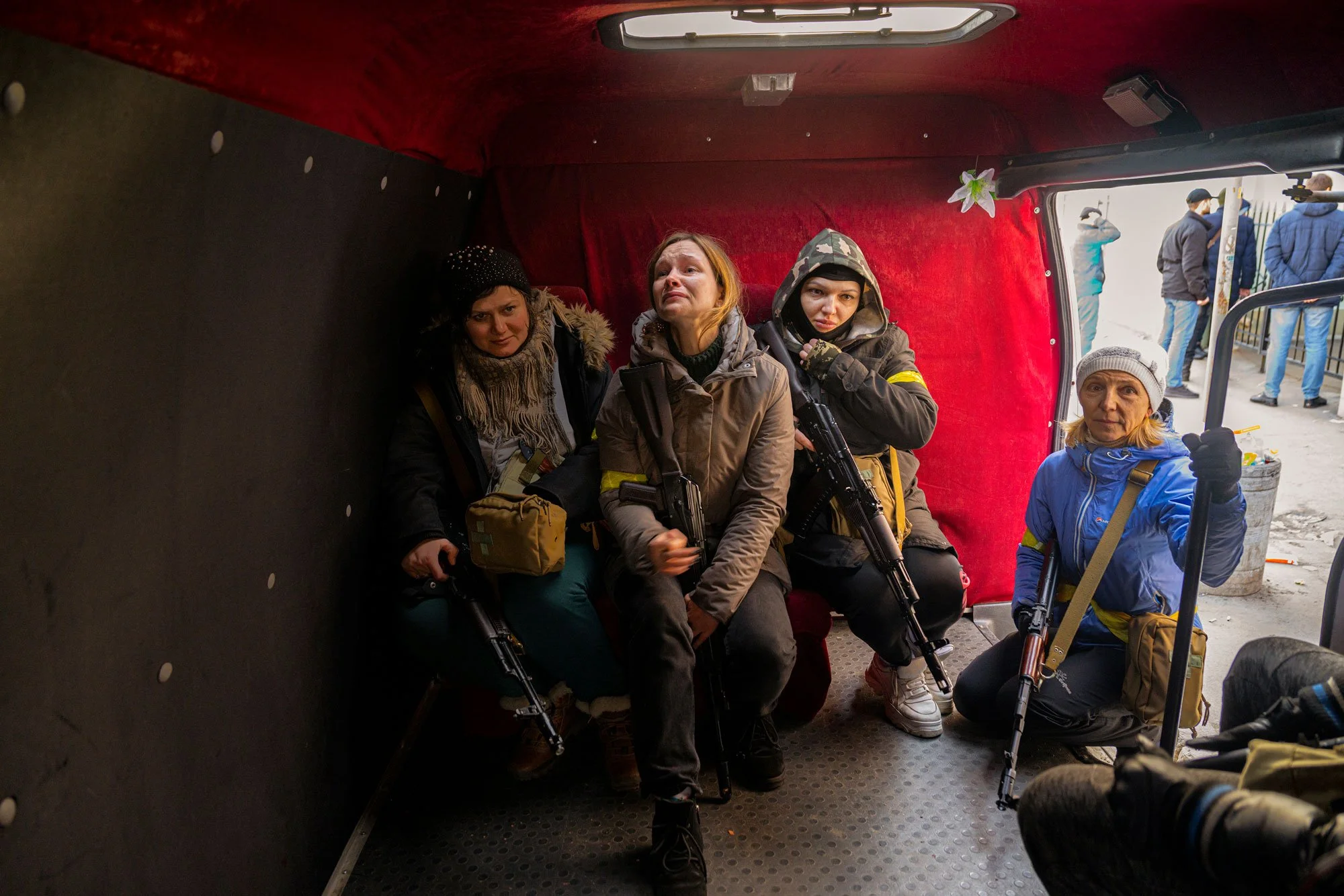
Ukrainian teacher Yulya, 29, cries in fear for her life and her country as she waits to be transported to a center for volunteer fighters, who will be deployed to fight Russian troops, on the third day of the war in Kyiv, Ukraine, February 2022. © Lynsey Addario
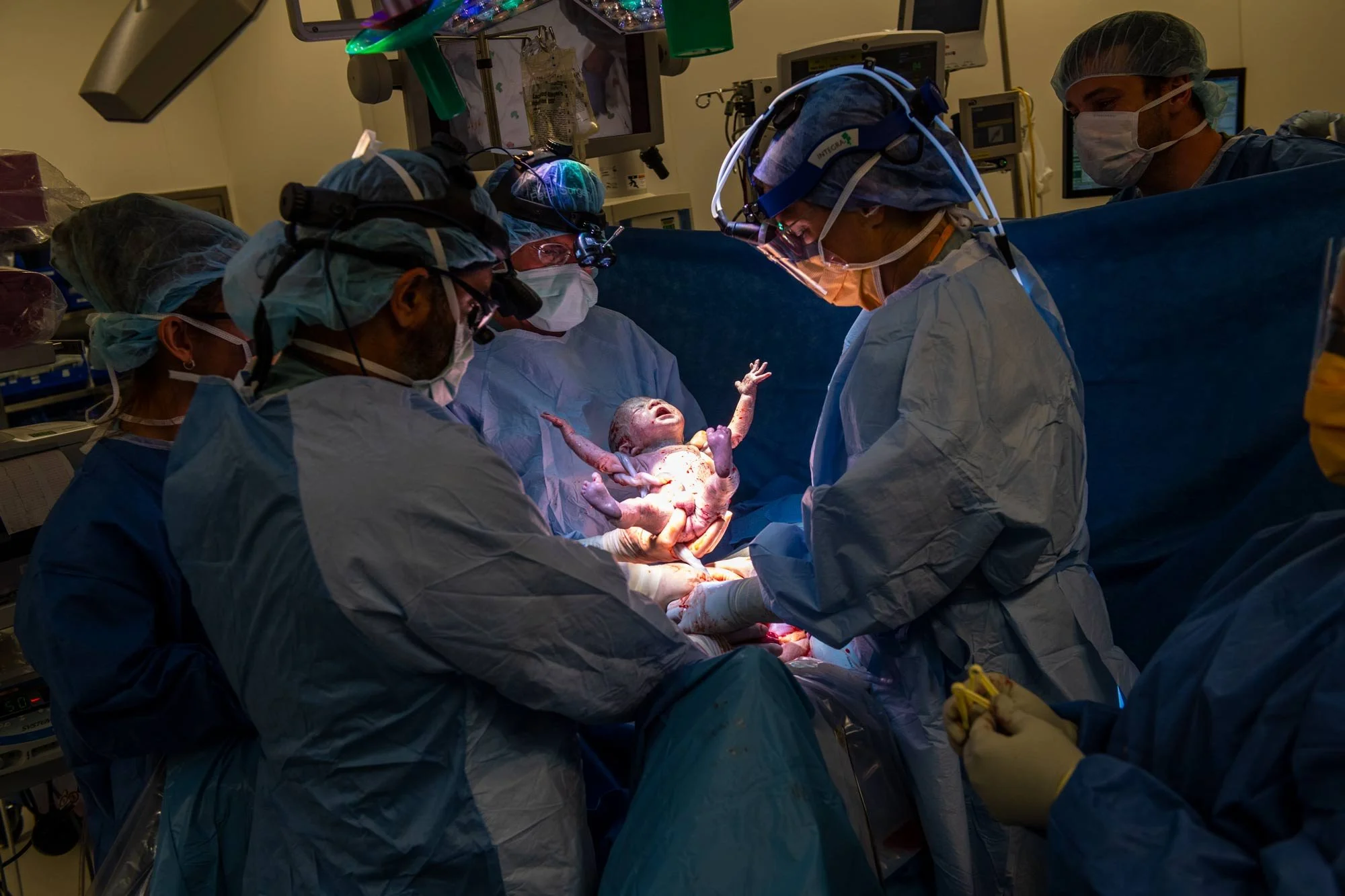
Casey Otto Haubelt greets the world after he was delivered by cesarean section at the Texas Children’s Hospital Pavilion for Women in Houston, U.S., November 2014. © Lynsey Addario
The exhibition is not a traveling show making a stop. It was created specifically for this museum, as part of its Women in Conflict cycle of historical and artistic exhibitions. That distinction matters. It means the work has been conceived in dialogue with a space whose permanent collection already addresses persecution, forced conscription, and the Holocaust in Luxembourg. Addario’s photographs are entering a context that takes the cost of war seriously.
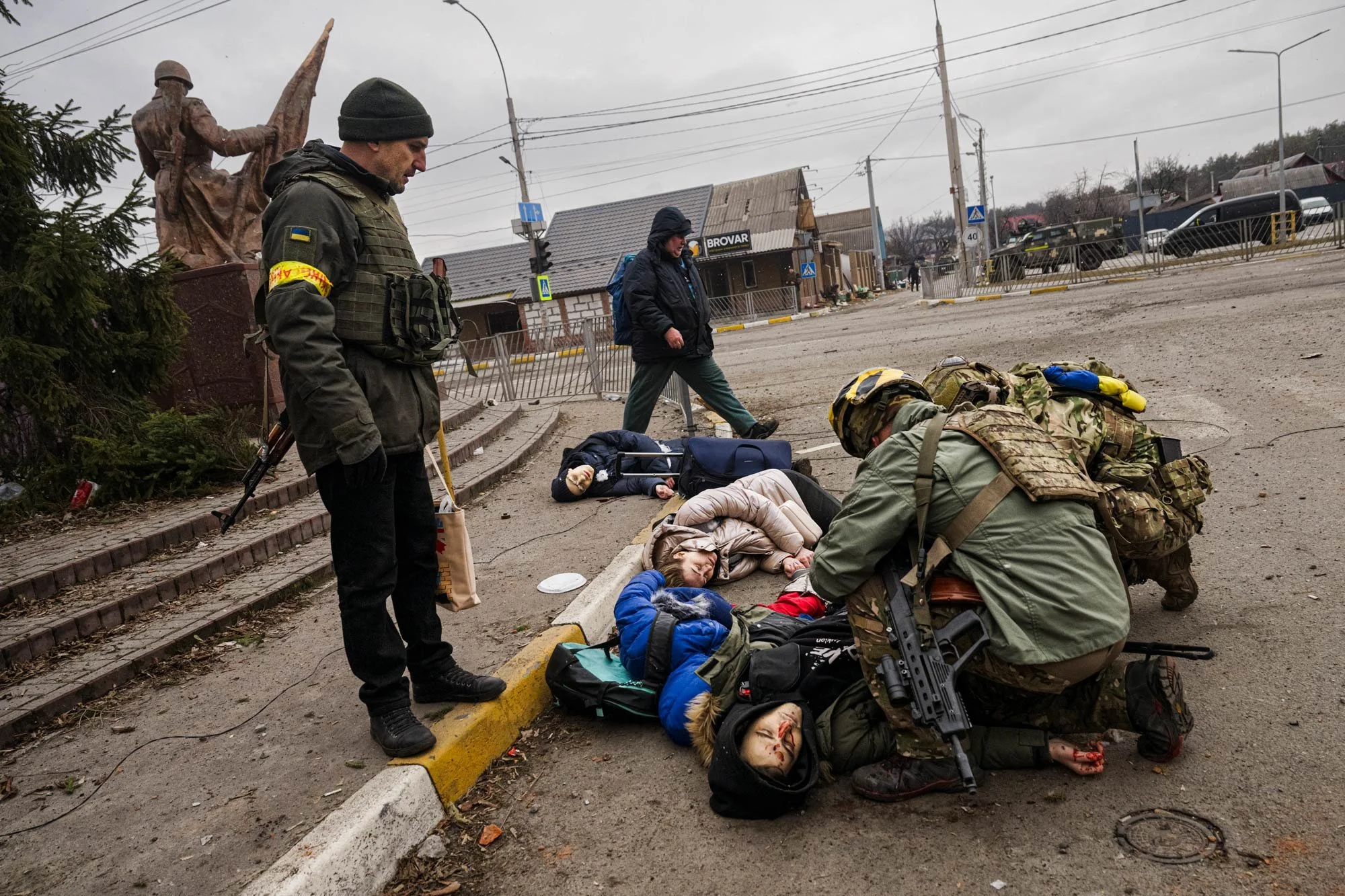
Ukrainian soldiers attempt to save civilians recently hit by a mortar strike while fleeing Irpin, near Kyiv, Ukraine, March 2022. © Lynsey Addario
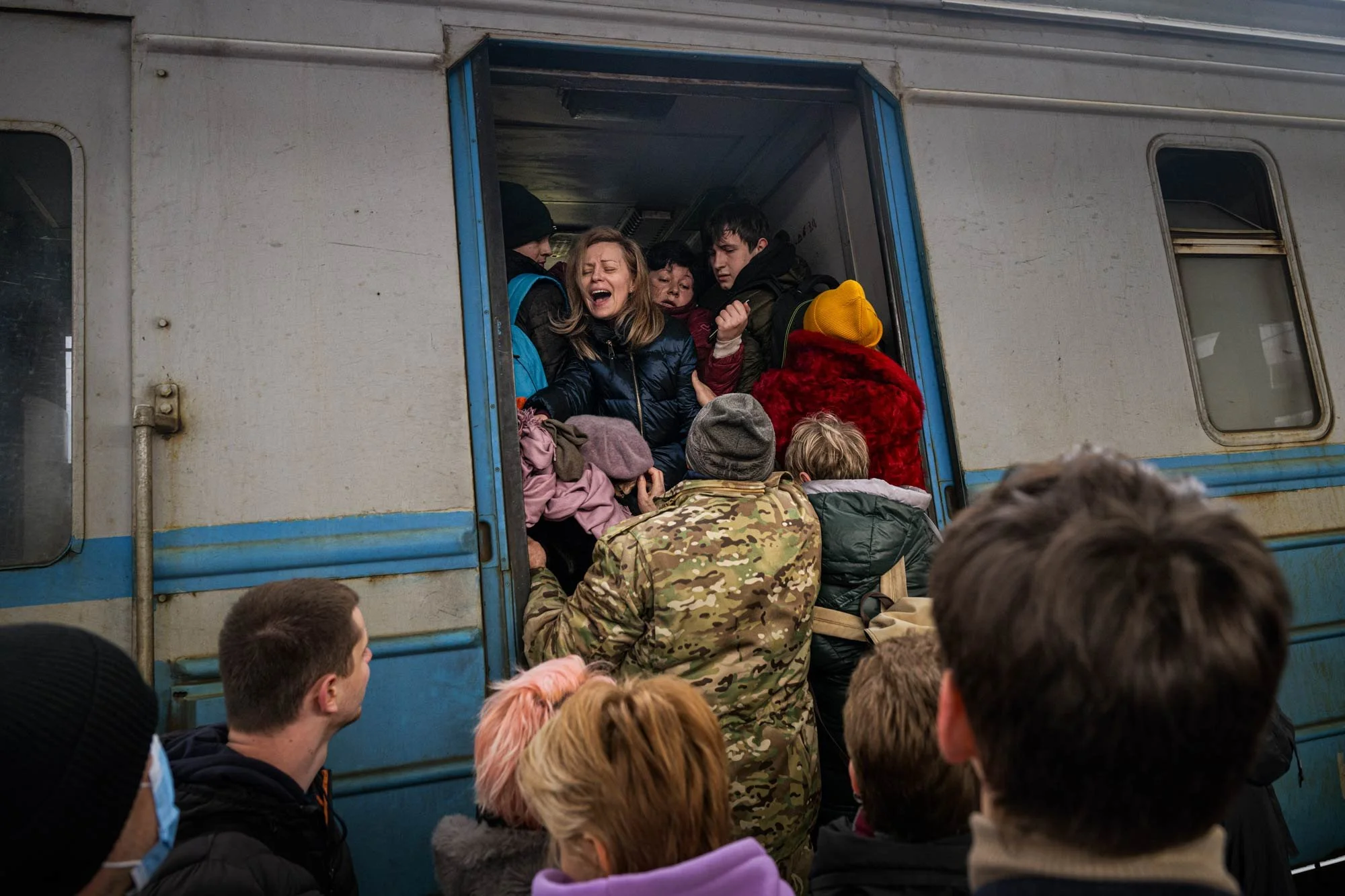
Ukrainian families run across train tracks to get to the next train heading west out of Kyiv toward Lviv, at the main train station in Kyiv, Ukraine, March 4, 2022. © Lynsey Addario
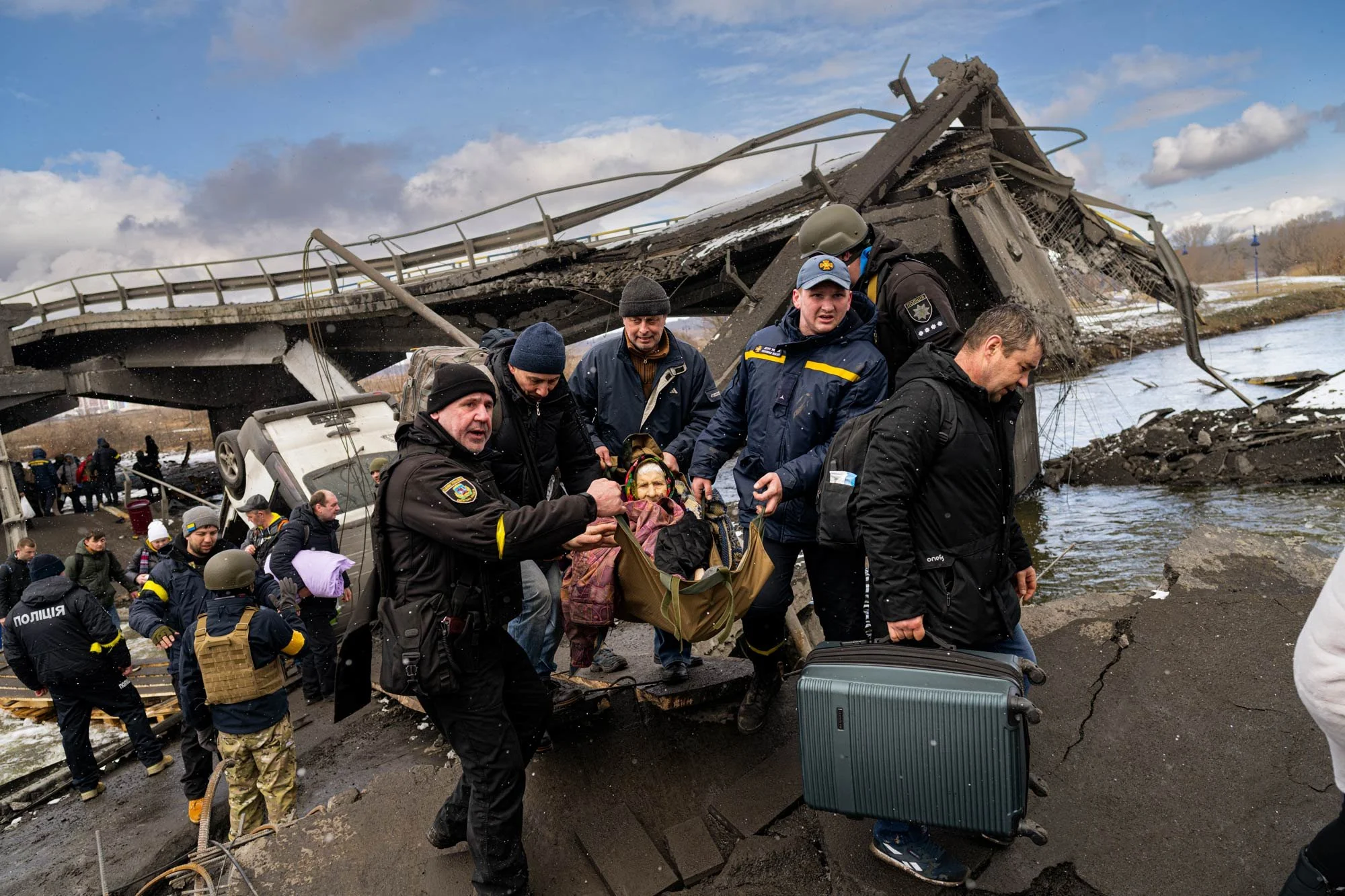
Remaining Ukrainian civilians are evacuated from across a bridge on Kyiv’s outskirts as fighting continues, Ukraine, March 2022. © Lynsey Addario
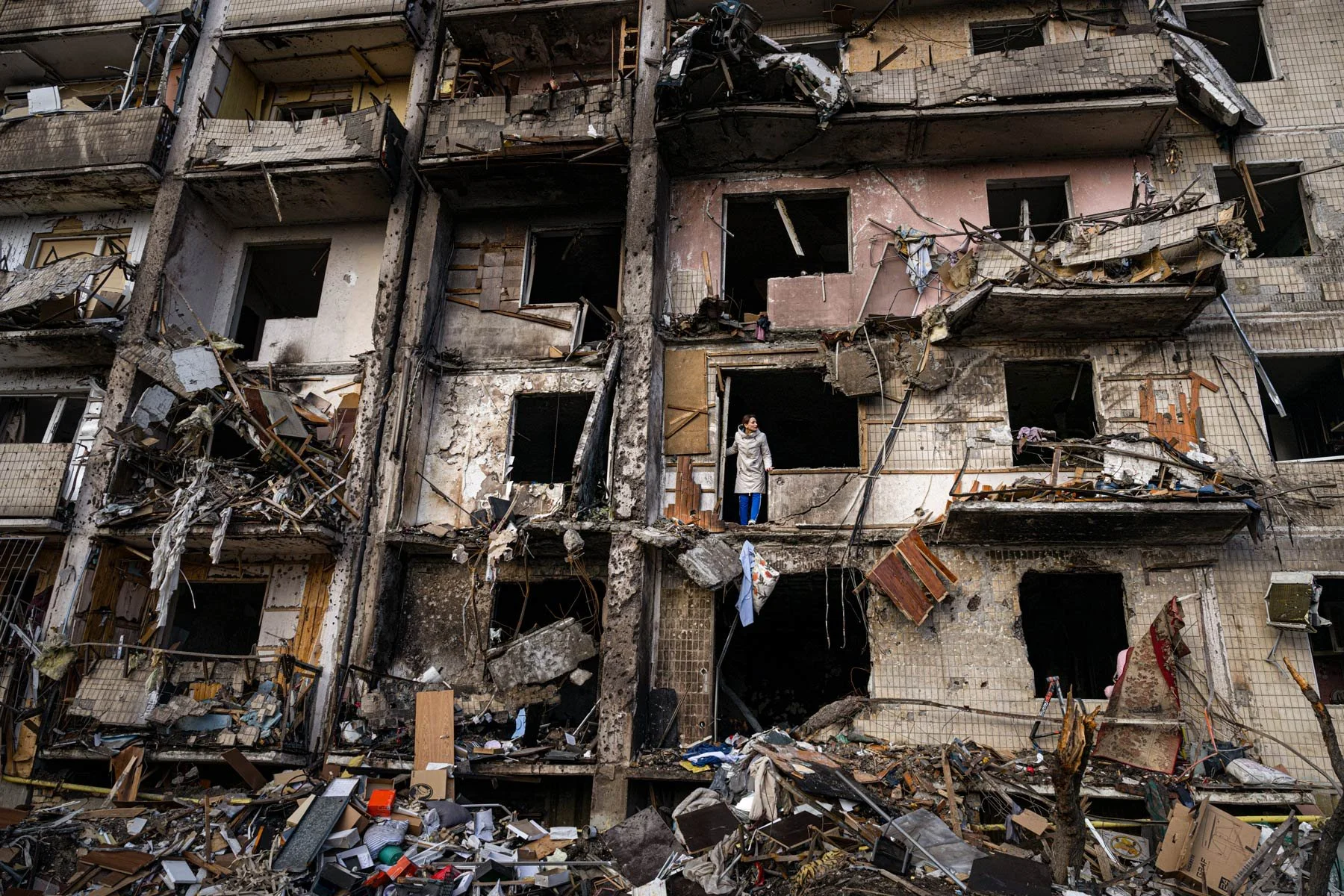
Ukrainians clean up debris after a residential building was hit by missiles in south Kyiv, Ukraine, February 2022. © Lynsey Addario
The museum approached Addario about eighteen months ago. Working with curator Perri Hofmann — who also curated her retrospective at the School of Visual Arts in New York — Addario combed through more than twenty-five years of work to find images organized around women specifically in the context of war. “There are themes that often come up in my work, and are often one of the ensuing effects of war,” Addario told me: “displacement, civilian casualties, survivors of rape as a weapon of war, injustices against women, and maternal mortality — which often is a result of the destroyed infrastructure of a country in the wake of war and the fact that many educated professionals, like doctors, leave when there is war.” She and Hofmann also made a deliberate decision to include recent work from 2025, particularly from the wars in Ukraine and Sudan, ensuring the exhibition speaks to this moment as much as to the previous two decades.
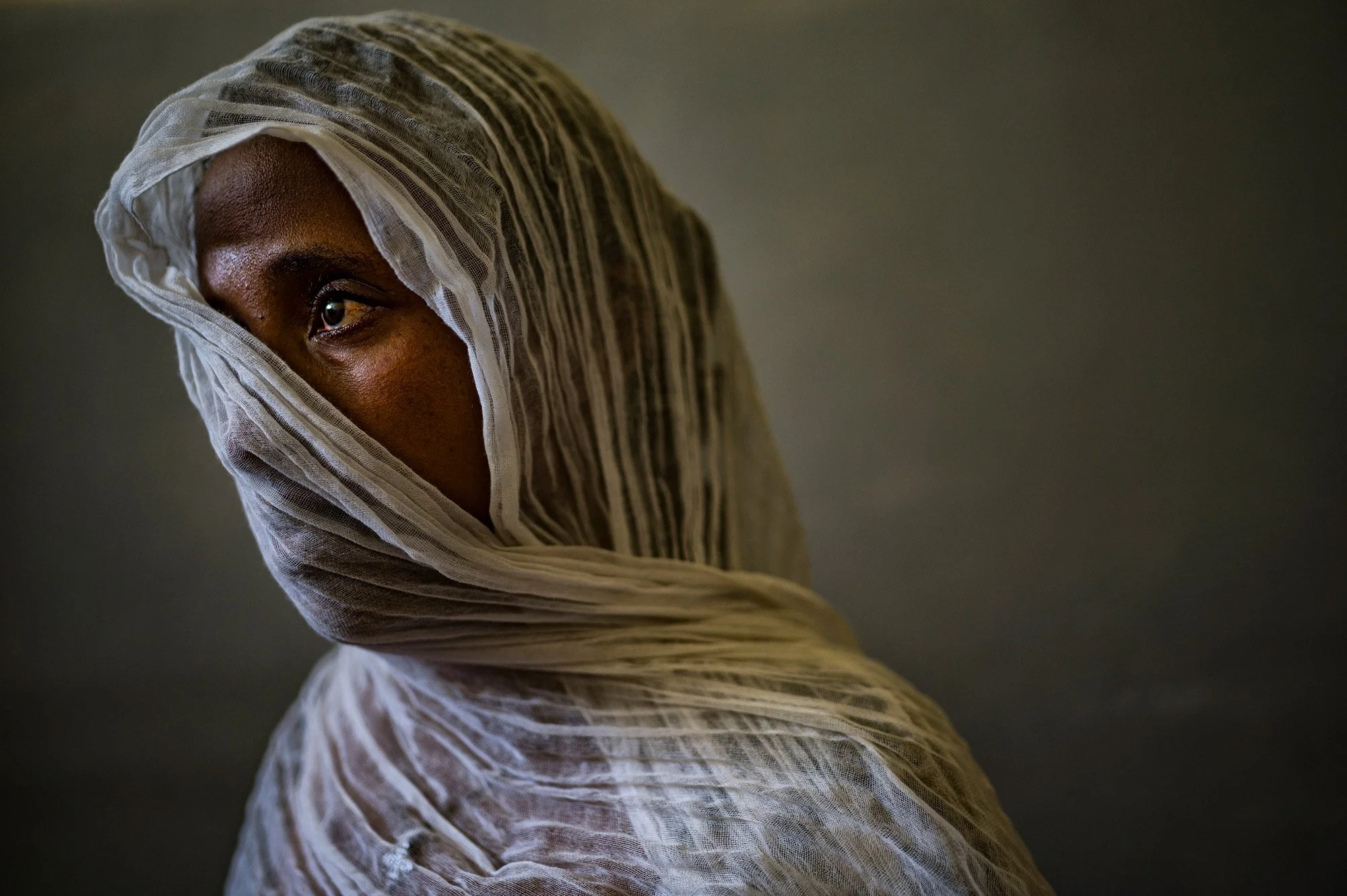
Eyerus, 40, poses for a portrait in a safe space for victims of sexual assault in the Ayder Hospital in Mek’ele, Tigray, Ethiopia, May 2021. © Lynsey Addario
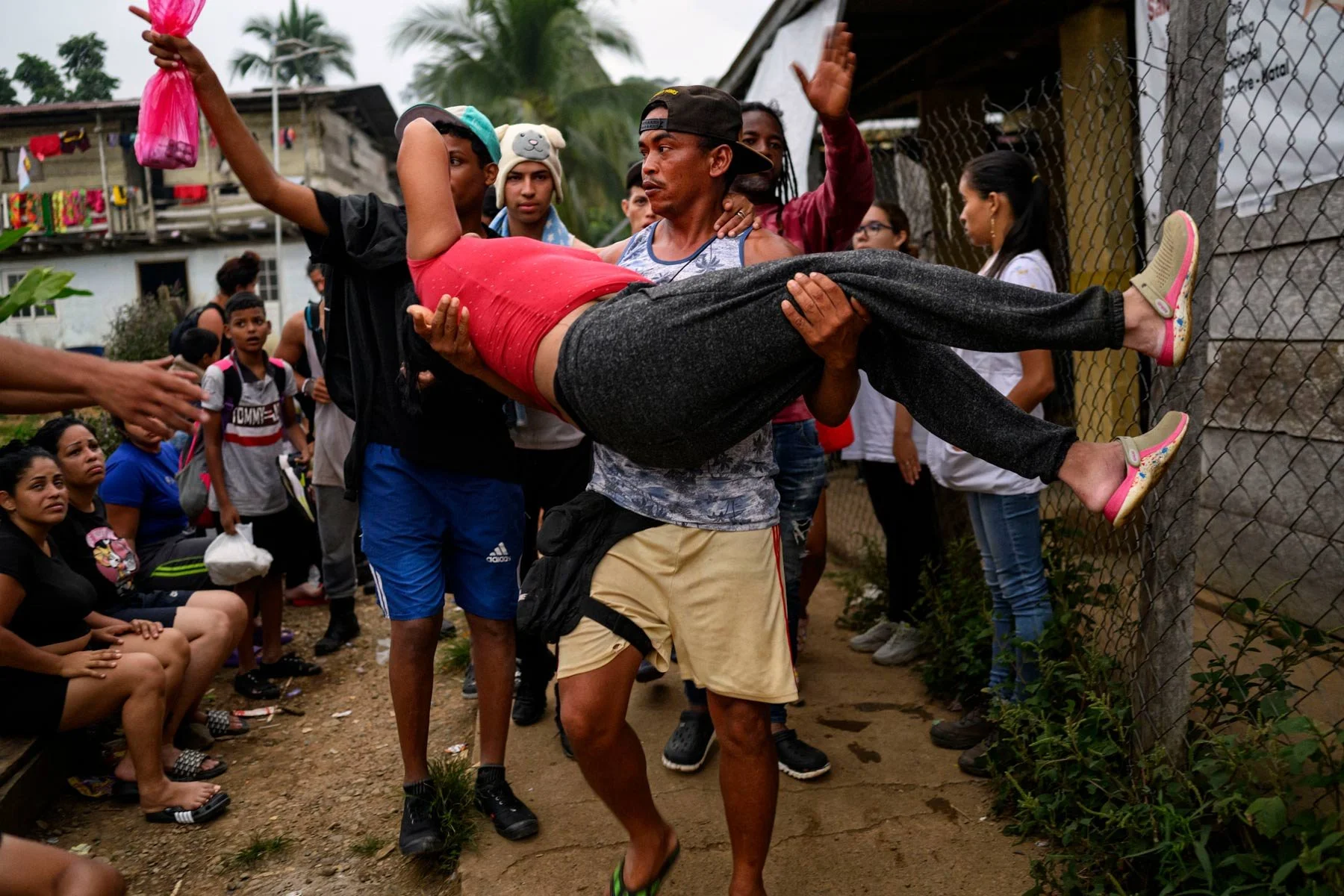
Venezuelan migrant Yanneris, 41, is carried from a clinic to a tent at the first reception point off the Darién Gap trail, Bajo Chiquito, Panama, January 2024. © Lynsey Addario
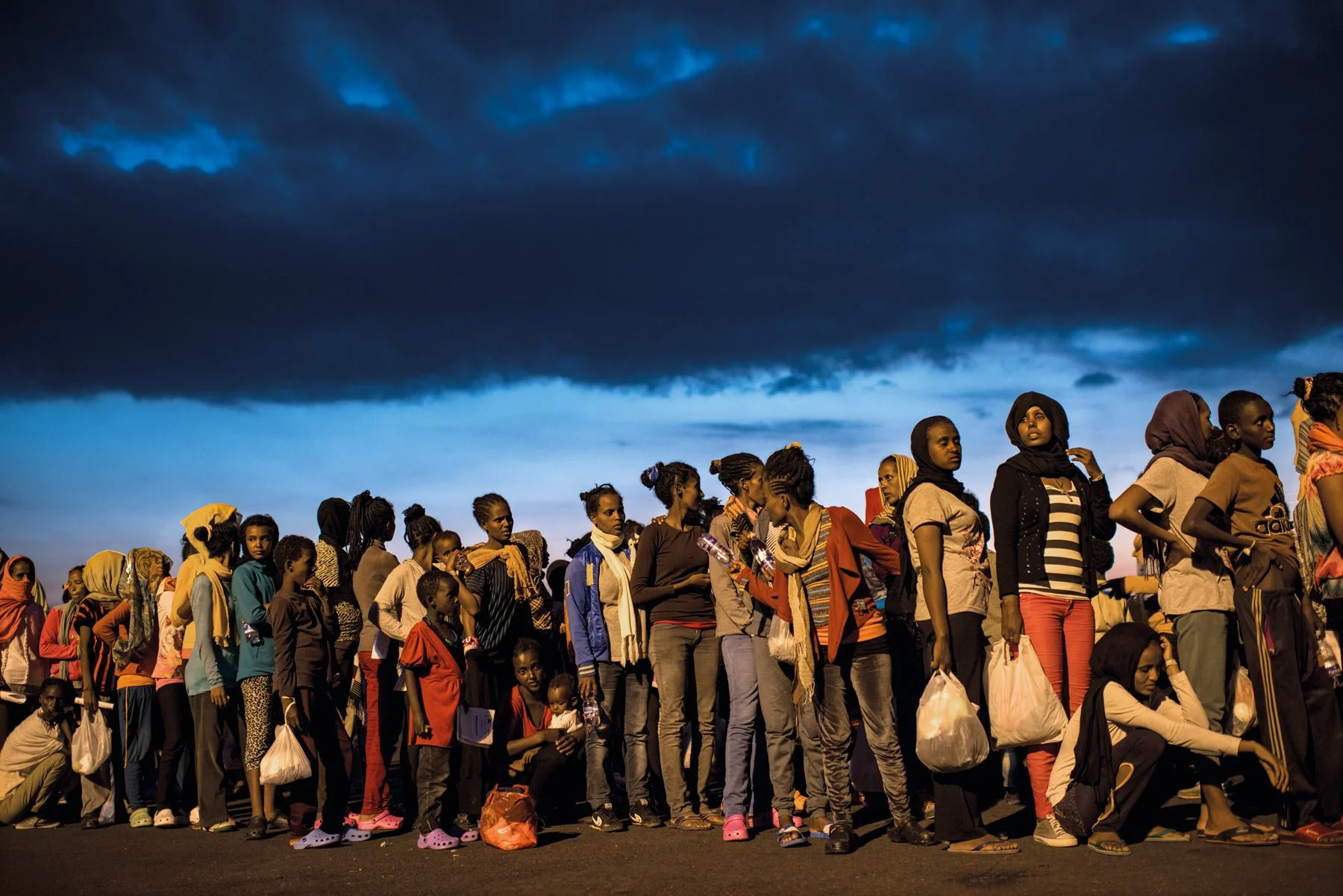
Possessions limited to what they could carry, roughly 500 refugees from sub-Saharan Africa arrived at the port of Augusta, Sicily, Italy, September 2014. © Lynsey Addario
For those unfamiliar with Addario’s career, the breadth is staggering. She began working in 1996, and her trajectory since then reads like a map of the world’s worst crises. Two Pulitzer Prizes. A MacArthur Fellowship. Two kidnappings. Assignments for the New York Times, National Geographic, and Time. In 2015, American Photo Magazine named her one of the five most influential photographers of the previous twenty-five years. Her memoir, It’s What I Do: A Photographer’s Life of Love and War, became a New York Times bestseller. Her photography collection, Of Love & War, followed in 2018. She began a long-term project on maternal mortality in 2009, documenting women dying in childbirth in Sierra Leone, India, the Philippines, and the United States. But until now, she has never devoted an entire retrospective exhibition to the plight of women in wartime. Women in War represents a consolidation of a thread that has run through her entire body of work — the status of women, motherhood in conflict, survival and resilience in the face of destruction — now given its own room to breathe.
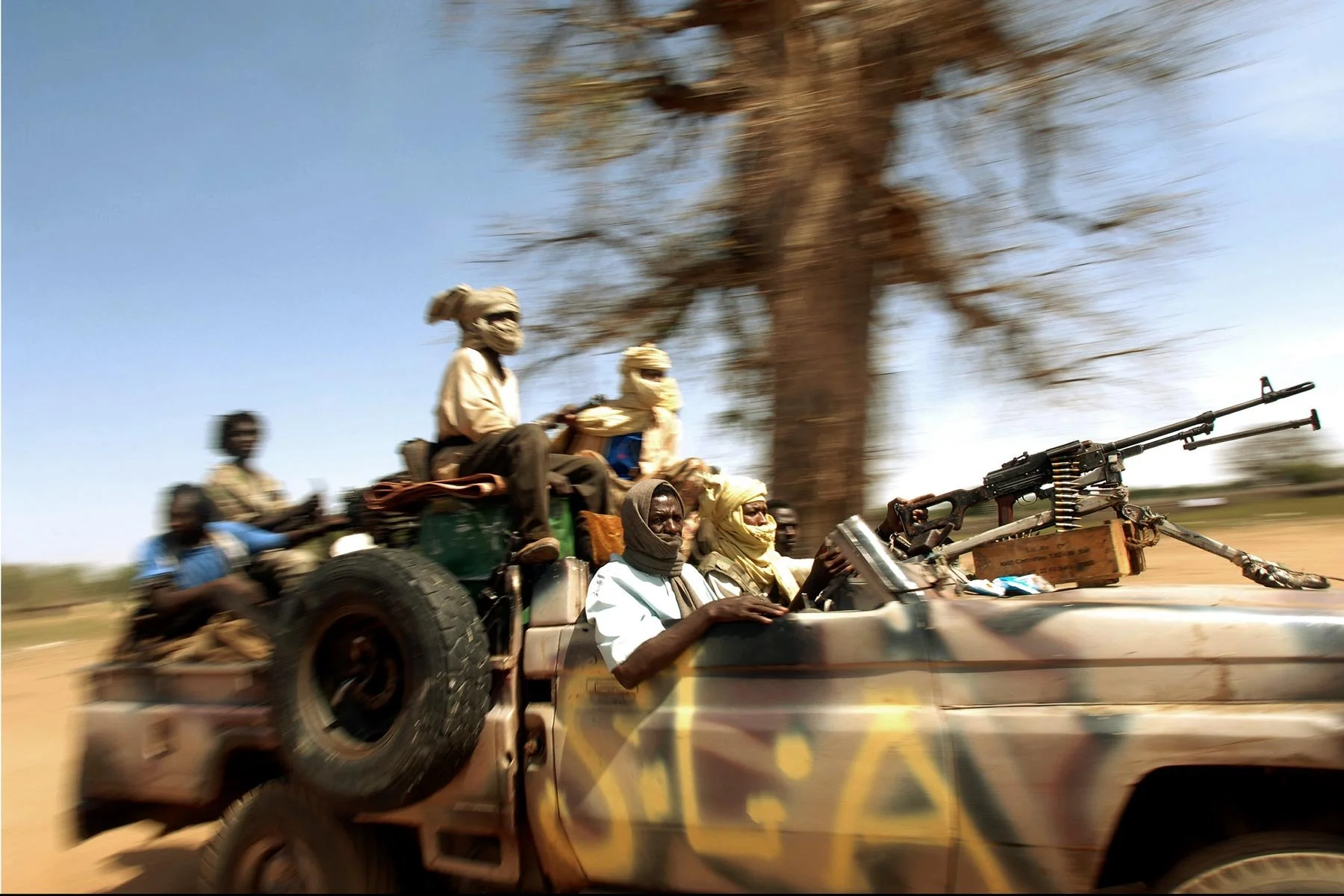
Soldiers with the SLA (Sudanese Liberation Army) parade their weapons during a rebel conference in Haskanita, in SLA territory in Darfur, Sudan, October 2005. © Lynsey Addario
The museum is treating the exhibition as more than a gallery event. From March through December 2026, programming will include guided tours of Addario’s photographs, introductory workshops on photojournalism and image analysis, discussions on ethics and the role of artificial intelligence in image-making, and thematic conferences on war photography, the status of women, media responsibility, and image manipulation. The content is being tailored for an unusually wide audience: families, schoolchildren, students, tourists, photography professionals, journalists, refugees, and expats. Several public meetings with Addario are planned, during which she will discuss her career, methodology, and commitments.
In a smart programmatic move, the museum will also organize a photojournalism contest inviting participants to produce a series of images on the daily lives of women in Luxembourg — grounding the global concerns of the exhibition in local reality. The results will be presented in an open-air exhibition, alongside a separate free outdoor installation on Place de la Résistance featuring Addario’s work.
An educational guide will accompany the exhibition, designed for teachers to address human rights, conflicts, humanitarian crises, and the specific challenges faced by women working as photojournalists. The guide will also explore how empathy develops through visual expression — a pedagogical ambition that feels timely, given how quickly the capacity for sustained looking is eroding in our image-saturated environment.
On opening day, Love+War, the National Geographic documentary about Addario directed by Oscar-winning filmmakers Chai Vasarhelyi and Jimmy Chin, was screened at the Neimënster Abbey in Luxembourg City. The film traces Addario’s career in the male-dominated world of war photography — a subject she has spoken about with characteristic directness. “I kept seeing men in the protagonist role,” she has said. “I thought maybe it’s time to feature a woman, to show young women that it’s possible to do this job and have a family. It’s messy, it’s hard, it’s exhausting, but it’s possible.”
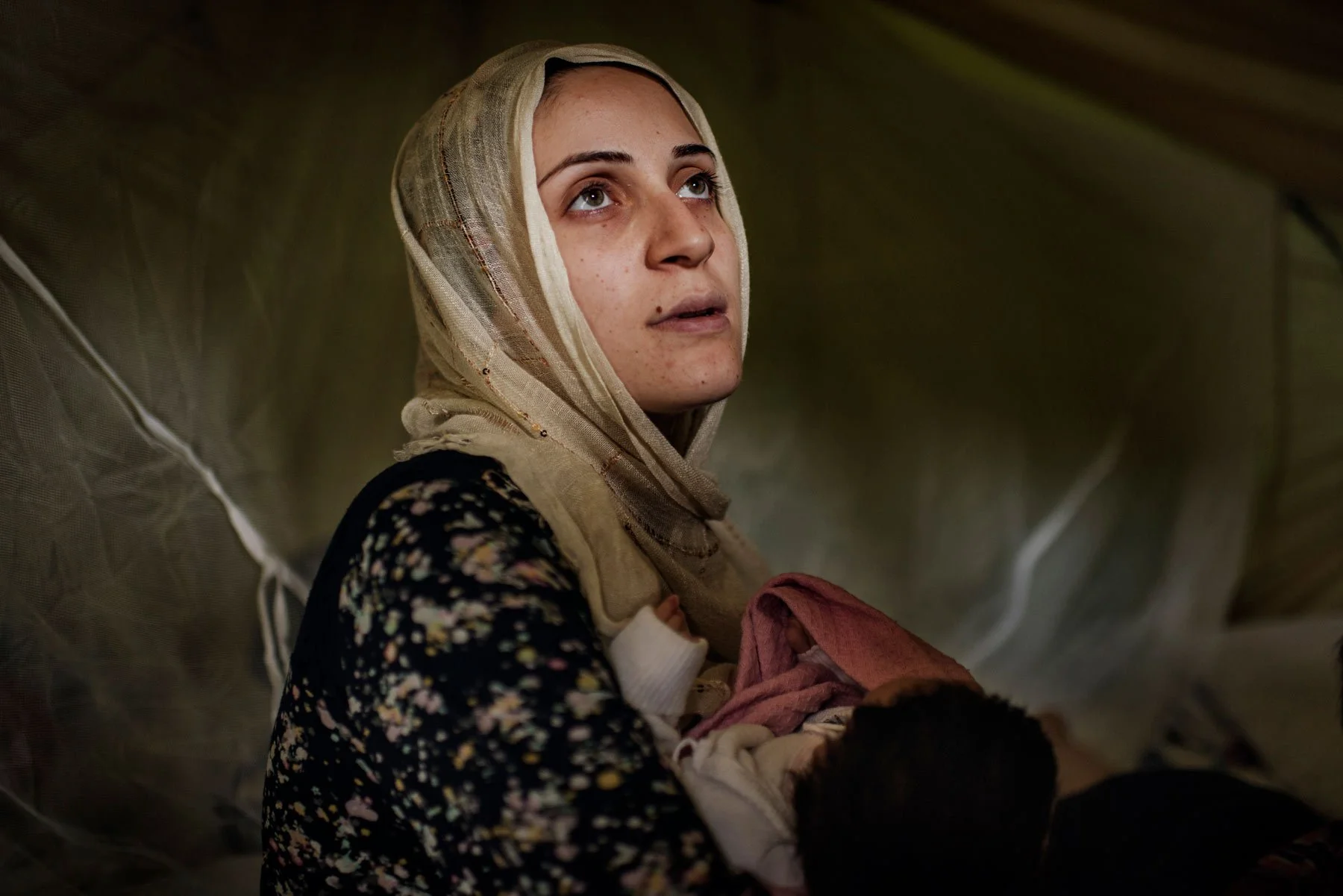
Taimaa Abazli, 24, holds her new baby Heln in their tent at the Karamalis camp in Thessaloniki, Greece, September 2016. © Lynsey Addario
That tension — between vocation and vulnerability, between the field and the family left behind — lies at the heart of both the documentary and the exhibition. It also speaks to why the Women in Conflict cycle at this particular museum feels like more than institutional programming. A space built to remember resistance is now asking its visitors to consider what resistance looks like today, and who is doing the resisting.
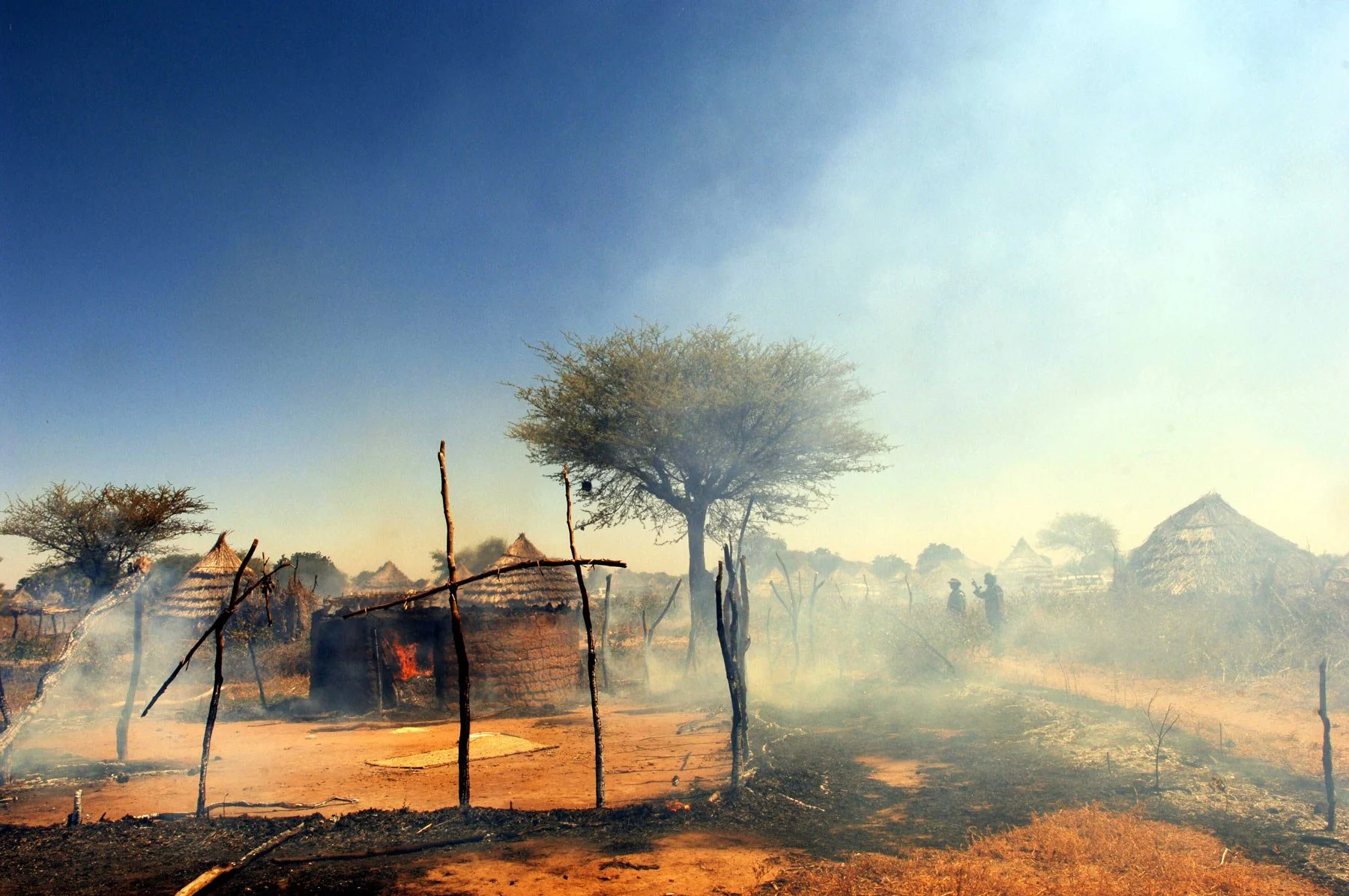
African Union soldiers arrive at the burning village of Tama, attacked over a week earlier by government-backed Arab nomads, north of Nyala, Sudan, November 2005. © Lynsey Addario
From 2027, the exhibition will be available for display at other European museums and institutions. It deserves the widest possible audience. When I asked Addario what she most wanted viewers to carry with them, she spoke not about her own work but about the conditions that make it possible. “Increasingly journalism is under attack, and we are at the mercy of leaders who try to shape world views based on their opinions rather than fact,” she said. “We need journalism and freedom of speech more than ever now.”
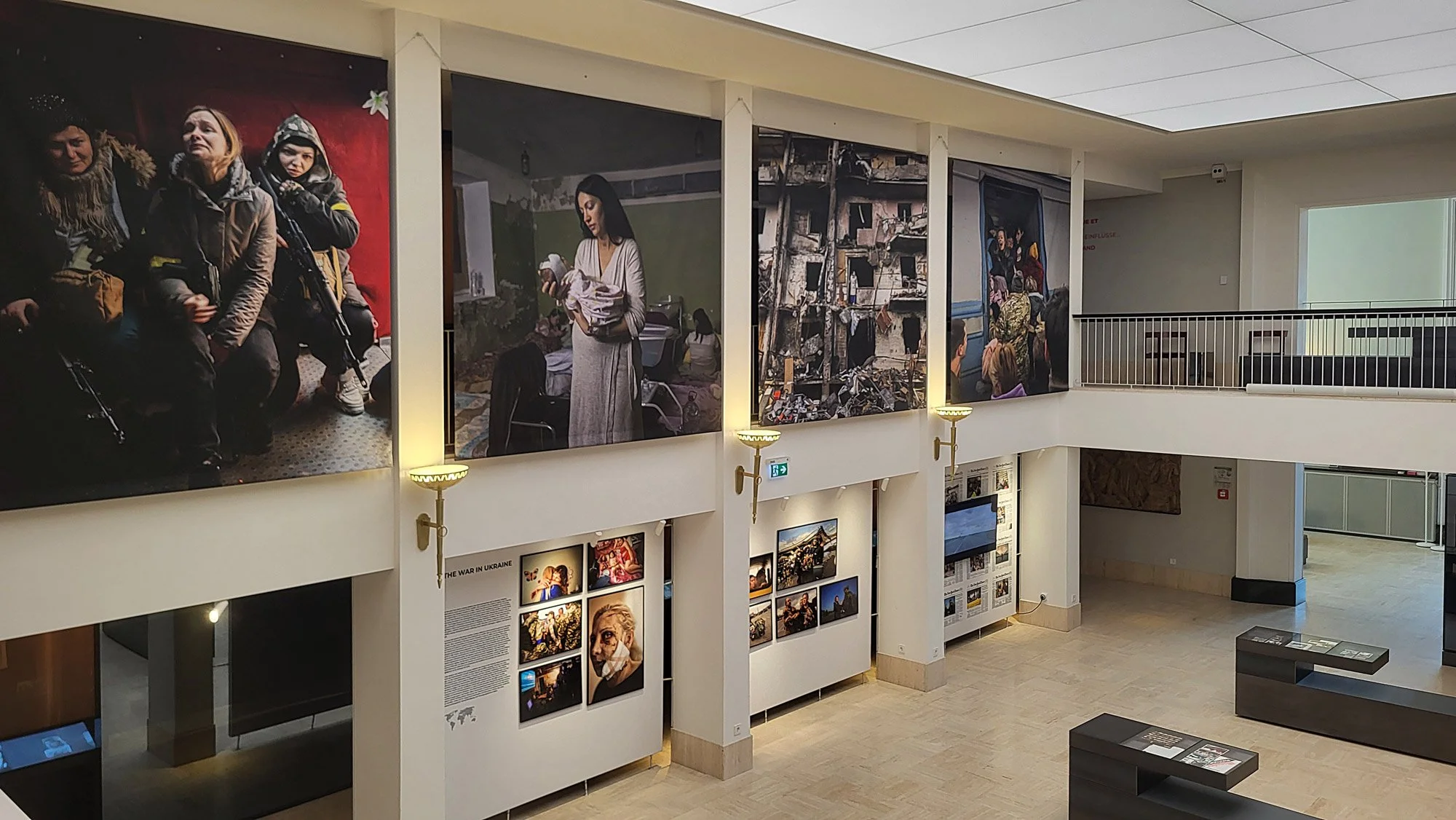
The Women in War exhibition, March 2026. © Lynsey Addario
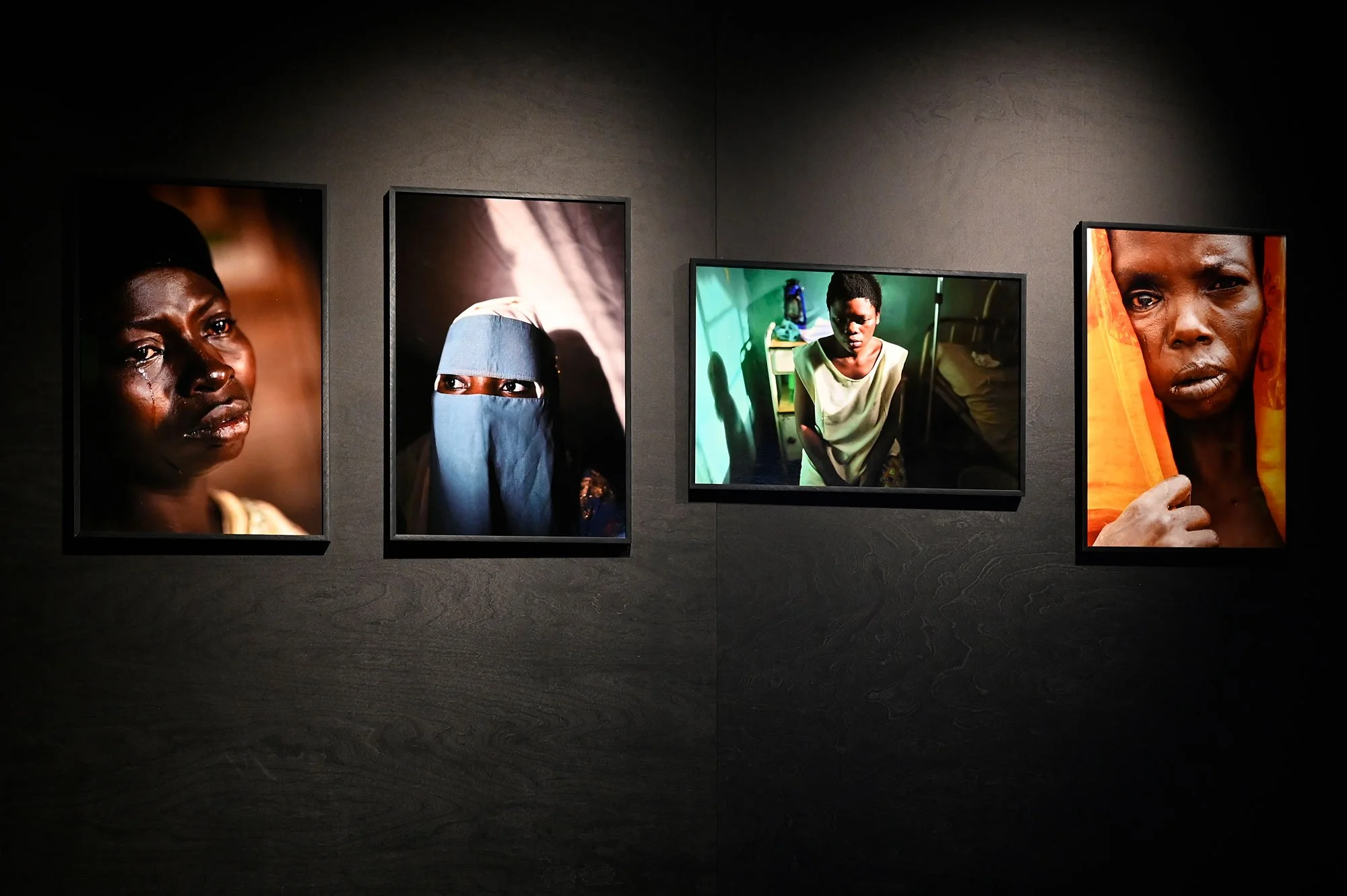
The Women in War exhibition, March 2026. © Lynsey Addario

The Women in War exhibition, March 2026. © Lynsey Addario
Women in War by Lynsey Addario runs from March 7 through December 20, 2026, at the Musée National de la Résistance et des Droits Humains, Place de la Résistance, Esch-sur-Alzette, Luxembourg. Admission is free. For more information, visit mnr.lu