
Tanya Braganti: Catching the Sparks of Everyday Life
Tanya Braganti has built a photographic life shaped by curiosity, adaptability, and an enduring faith in human connection. Her path has moved from a childhood darkroom in Marblehead, Massachusetts, to Soho in the 1990s, to Magnum and mentorship from the legendary Philip Jones Griffiths, to years photographing for the New York Daily News, and back again to the North Shore, where the ocean, family life, and small-town rituals now inform much of her personal work.
What emerges in conversation with Braganti is not nostalgia, exactly, but a deeply lived understanding of photography as a way of paying attention — to people, to fleeting moments, to the strange electricity hidden inside ordinary life. She speaks about newspaper work with gratitude, about film with reverence, about digital with pragmatism, and about portraiture as a collaborative act. Throughout, one idea returns again and again: photography begins with connection. In this conversation with Hot Mirror, Braganti reflects on growing up in Marblehead, working with Philip Jones Griffiths and Donna Ferrato, the transition from film to digital, the possibilities and pressures facing younger photographers today, and what she calls a kind of “firefly philosophy” — the urge to bring and capture light and spark into the everyday.
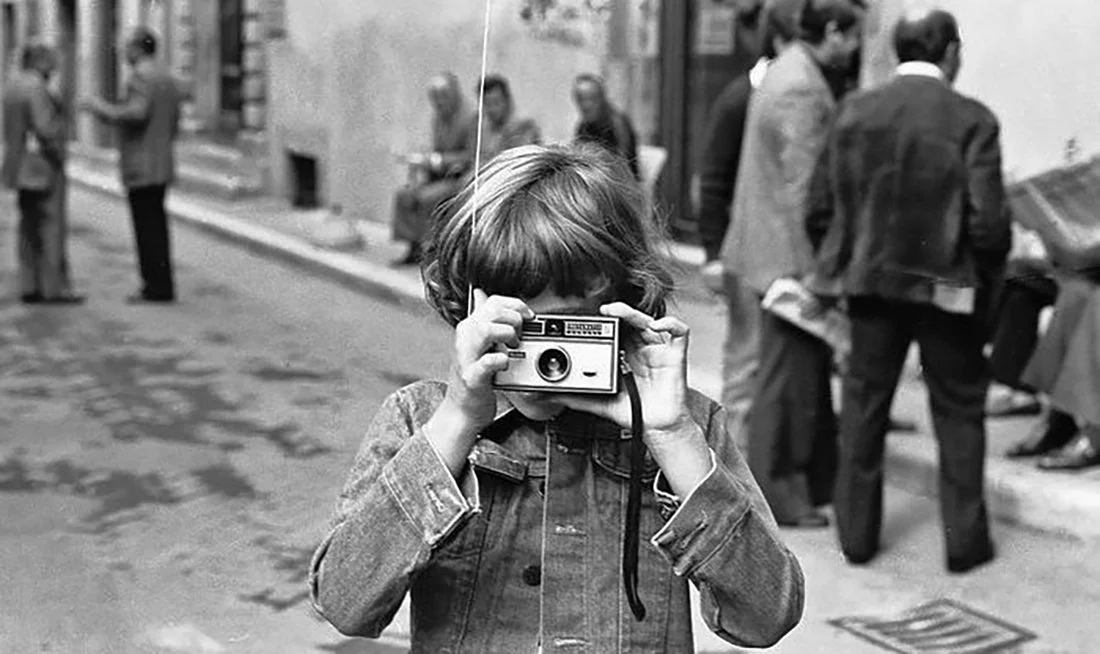
Tanya Braganti, 1978, age 7 years old, photographed by her father, Fausto Braganti. She’s holding her first camera: a Kodak Instamatic, in her father’s hometown of San Sepolcro, Tuscany, Italy. The photo was taken on the main thoroughfare where everyone in town would do their “passeggiata.” The string is a balloon, tied to the buttonhole on her jean-jacket, so that she’d have her hands free to photograph.
HM: You grew up in Marblehead, Massachusetts — a place with such an evocative name. What was it like growing up there, and how did it shape you visually?
TB: Marblehead really did shape me. My mother grew up there, and she was part of one of the first Jewish families in town. My father was from Tuscany — my parents met in London in the late 1960s, and somehow she convinced him to move to this small New England coastal town. So I grew up between very different worlds. What stays with me most is the ocean. I think if you grow up by the water, it marks you permanently. There’s something emotional and instinctive about it — the light, the movement, the weather, the horizon. It becomes part of how you see. Marblehead is beautiful and historic, but it also has its own social codes — a sailing-town culture, a certain old New England character. So from early on, I think I was aware both of beauty and of social nuance.
My father had a darkroom in the basement, and that was really the beginning. He encouraged me to take pictures when I was young. I photographed my stuffed animals, printed the pictures with him, and then by myself. I remember being completely enchanted by the process. The fact that you could record something and then watch it appear in a tray — it felt like magic. It still does.
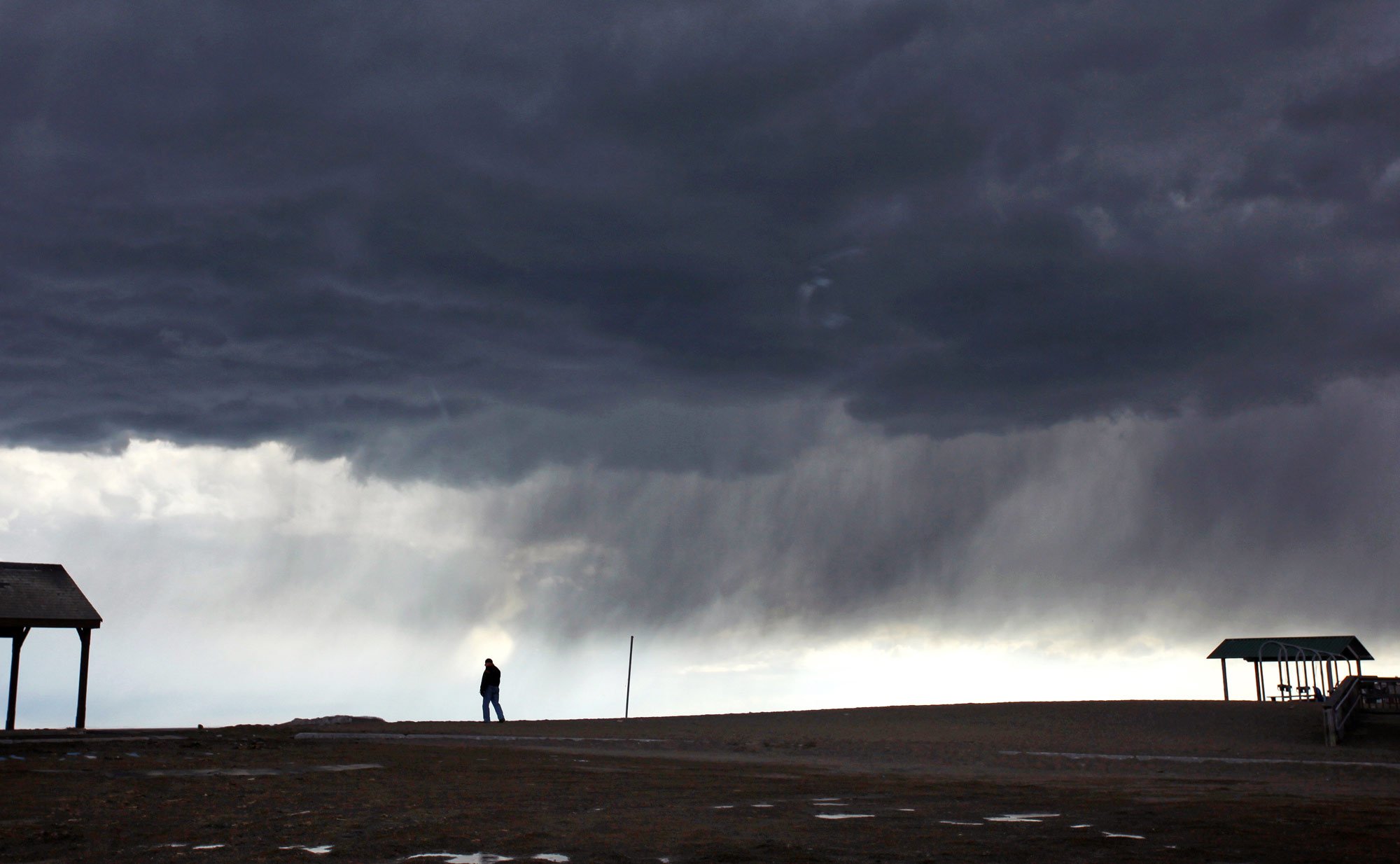
Storm clouds and rain over Marblehead beach. When the skies darken, I run to the shore.
HM: Was photography always the plan?
TB: Not at first. I went to Boston University and studied English literature and Spanish, with a minor in Latin American Studies. For a while I thought maybe I would teach, but by my junior year I realized the only thing I really loved enough to organize my life around was photography.
So I started taking photography courses and got a job in a darkroom in Cambridge. We handled work from all kinds of people — Harvard, MIT, and even the Julia Child archive. I have this hilarious memory of printing photographs of Julia Child’s husband painting in the nude, wearing only glasses and a pipe. That job gave me discipline, darkroom experience, and proximity to all kinds of visual material.
Then I had an extraordinary stroke of luck. Photographers Andrea Robbins (who was actually from Marblehead) and her husband and collaborator, Max Becher — needed someone to apartment-sit their place in Soho while they traveled in Europe. Suddenly I was in New York in my early twenties, living alone in Soho. Magnum at that time was on Spring Street, and I was on Crosby. My commute was about 45 seconds. That’s really where my adult photographic life began.
HM: And that’s where you met Philip Jones Griffiths.
TB: Yes. I was an intern at Magnum and had just arrived in New York. I couldn’t really afford to live there, and Philip said, “Work for me two days a week in exchange for a room in my apartment.” On paper, it sounds like the kind of arrangement you’d question, but I trusted him completely and moved in as soon as I could. He was utterly generous, deeply ethical, and without a doubt, the smartest person I’ve ever met. I became his printer. He traveled constantly, so he would send film back and I would develop and print it. I was very fortunate to live some place with a free darkroom, any equipment I wanted to borrow right in the apartment, and a natural mentor. I also worked with Donna Ferrato, developing and printing for her and assisting on shoots, so I was learning from two completely different photographic temperaments at the same time.
What made Philip so extraordinary wasn’t only the work — though of course the work was perfect on many levels — it was his commitment to passing knowledge on. He never got tired of explaining things. He could discuss f-stops, shutter speeds, politics, history, composition, ethics — all of it — with total seriousness. He believed that sharing knowledge was part of how the world continues. Some photographers guard what they know. Philip was the opposite and felt humanity would suffer if we didn’t continue to pass along knowledge.
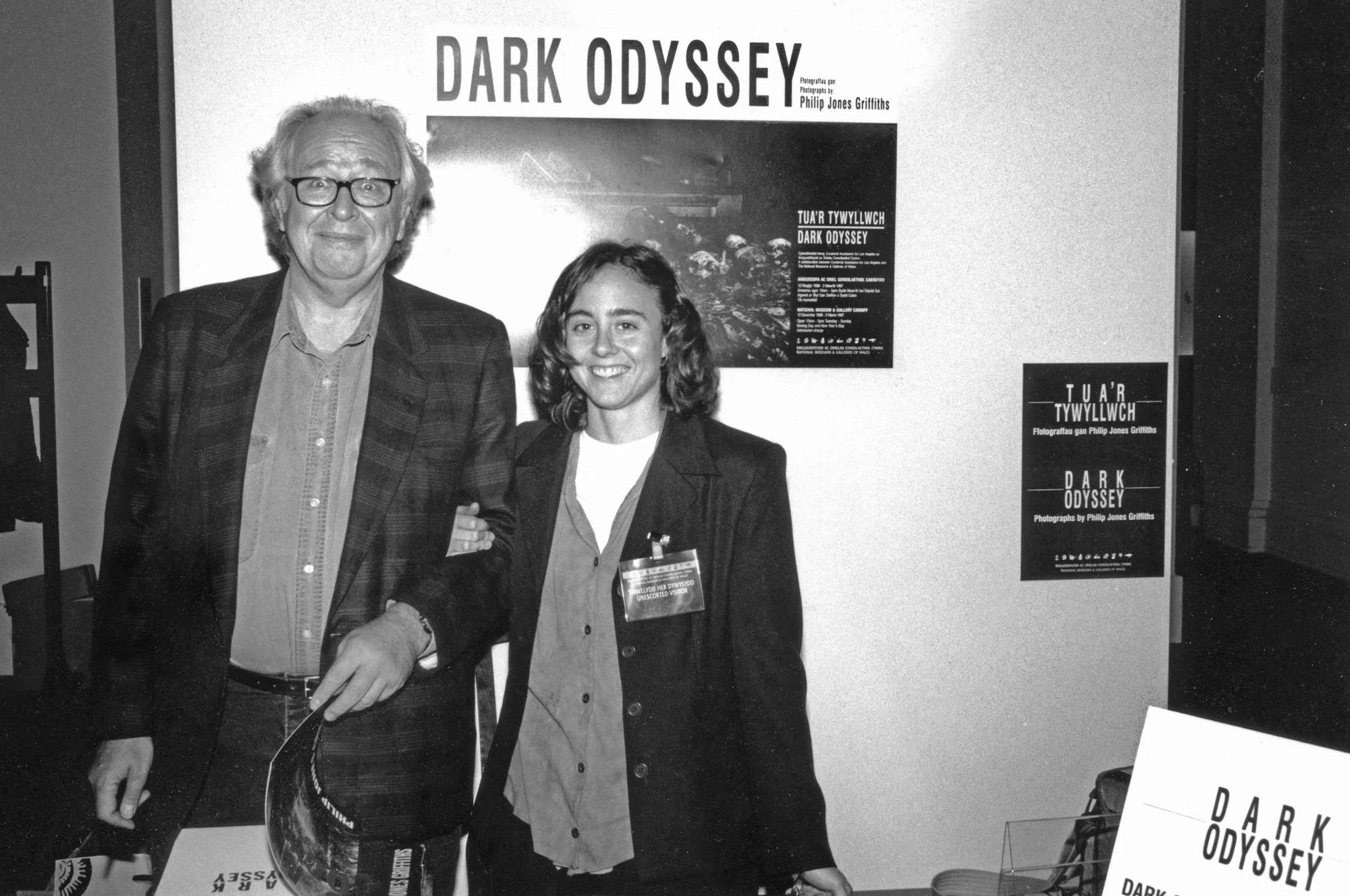
Philip Jones Griffiths and me, Cardiff, Wales, for the opening of his Dark Odyssey exhibit. National Museum of Wales in Cardiff in December 1996
HM: What was the biggest impact he had on you?
TB: Generosity, first of all. Generosity of spirit, curiosity, respect for other people, and a sense that photography mattered because people mattered and photography could sway opinions.
He also pushed me to look harder and more critically. He believed you had to study photographs constantly in order to understand what made a good picture. He had this instinctive sense of composition. He used to say that even as a child in church he was arranging things in his mind — aligning figures, looking at relationships in the frame. That stayed with me.
He also taught me to question everything. Not only in photography, but in the world. He distrusted received wisdom. He wanted you to interrogate assumptions, systems, authority, narratives. That intellectual restlessness became part of how I think and I get sad to think this vital mind and person is not still with us.
There was also his belief in persistence. He felt photography was the best job in the world. Whatever frustrations came with it, he believed in continuing. He’d often say he’d “do it all again, with no film in the camera”.
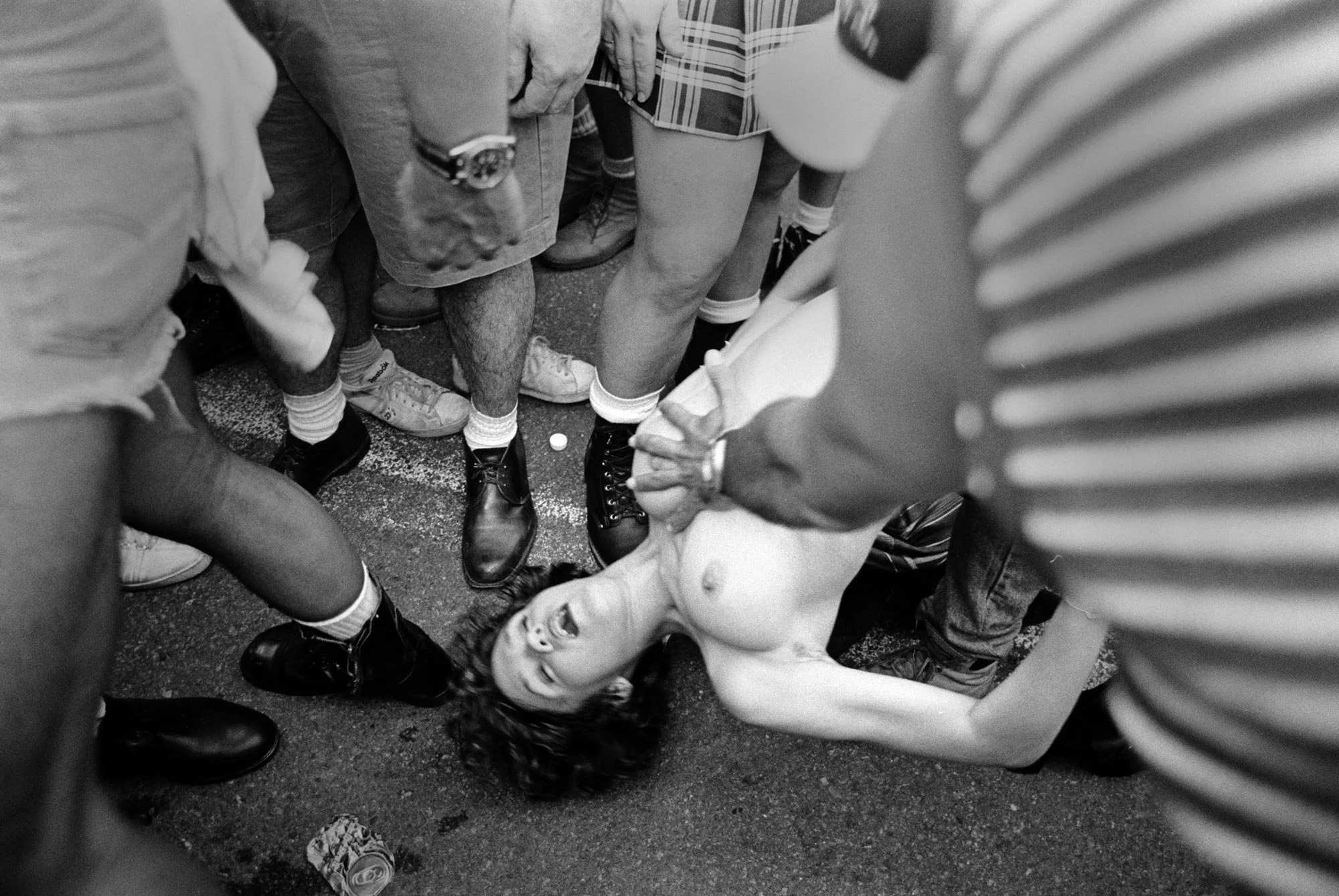
Gay Pride parade, West Village piers 1995. This woman was mesmerized by all the male attention around her.
HM: And Donna Ferrato — what did you learn from her?
TB: I feel Donna has many of the same ideals and drives as Philip, but her work sometimes feels like the camera is secondary to the connection. Her ability to gain someone’s trust, to truly and deeply care for people is peerless. When she works, it’s not a one-and-done event; for years or decades-on she continues to check-in on “subjects.” Philip was technically savvy which sometimes I aspired to, but when developing Donna’s film… sometimes photographs would appear here and there—interesting, competent, even beautiful—but every so often there was that one image that seemed to arrive out of nowhere and completely stop you. The kind that almost hits you in the head: everything suddenly aligned—light, timing, composition, emotion, intention. Nothing felt accidental, nothing felt forced. It was the moment when all the components of a photograph came together with such clarity and precision that the image moved beyond being merely good and became unmistakably great. You could feel it immediately.Those are the photographs that remind you why photography matters—the rare images where vision, circumstance, and instinct converge in a single frame.
The biggest aspect of photography she inspired in me, was that human connection comes first. She can get people to trust her, to let her into their lives, to reveal themselves. There was something fearless and emotionally direct about the way she worked. Donna encompasses to me a life when art is part of it every day. Art is life and life is art. Like the stupendous Agnes Varda. It made me understand that the real work often happens before the shutter clicks.
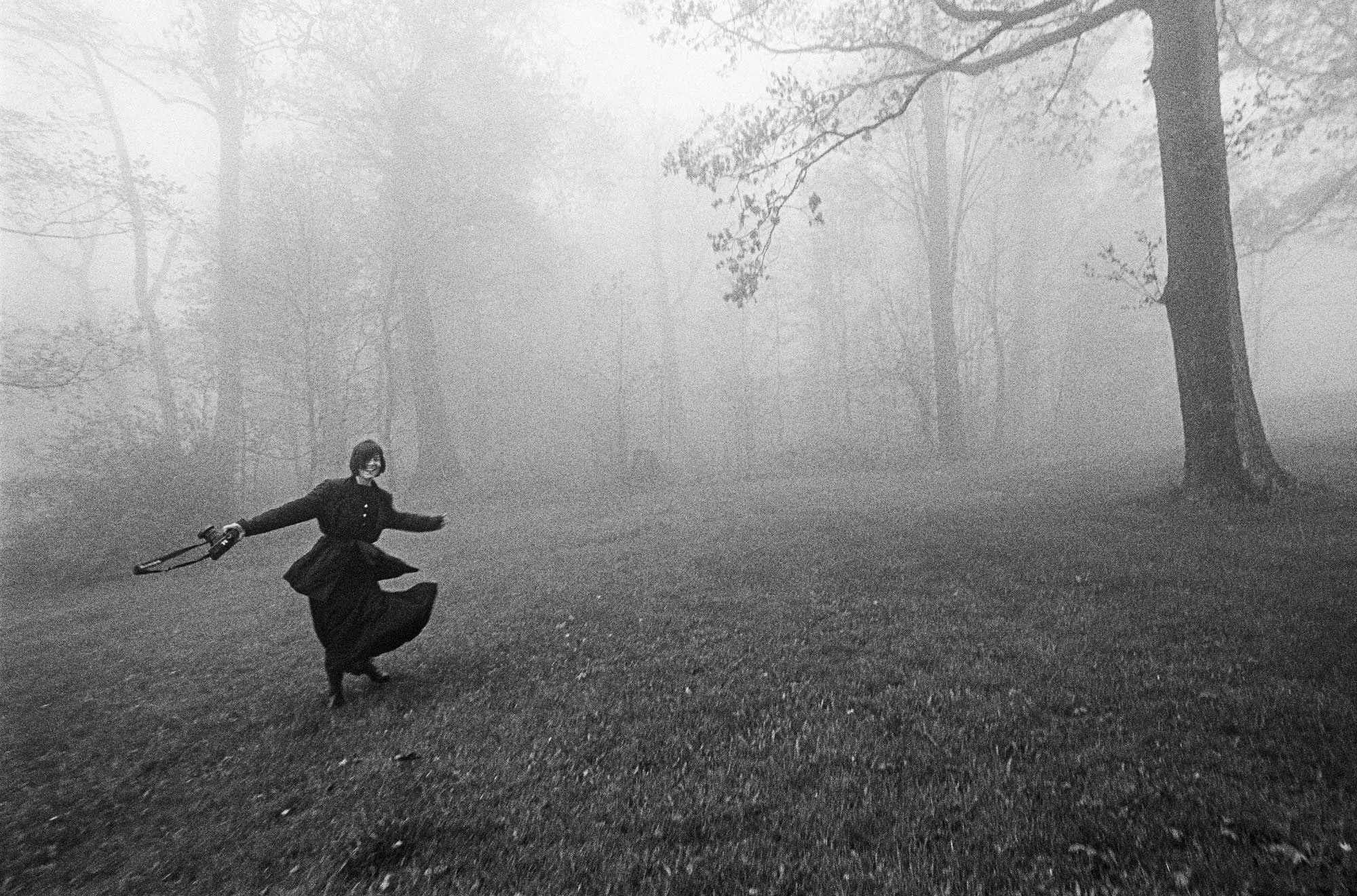
Donna Ferrato in the fog off the Palisades Parkway in NJ. Mid 1990s. Donna encompasses to me a life when art is part of it every day. The dense fog was just an opportunity/spur for us to go make something joyful and engaged with it.
HM: You later spent years photographing for the New York Daily News. How did that experience affect your work?
TB: Immensely. It sharpened everything — especially speed, instinct, and problem-solving. Newspaper work taught me how to move fast and think clearly. You might photograph a surgery in the morning, a film director in the afternoon, a fashion event at night, and then a feature on the city’s oldest doorman the next day. You had to arrive, read the room immediately, make a picture, and leave with something usable — and hopefully something more than merely usable.
It also taught me how to coax light from seemingly nowhere. I loved the challenge of walking into a hotel room or backstage area with almost no time and finding a way to make an interesting portrait. That’s where you learn that simplicity is often your best ally. One wall, one bounce, one light, ten minutes — and you have to find the photograph.
What I loved most was that it gave me access to the city. New York became this endless visual and social field. I rode a motorcycle for six years, so I was literally racing from assignment to assignment, always looking for the fastest route from A to B. That rhythm changes you. It makes you decisive. It makes you able to talk to anyone. It makes you less afraid.
And I still feel enormous affection for the Daily News. It wasn’t The New York Times, but it felt like New York’s hometown paper. There was something scrappy and democratic about it and really it was a perfect match for me.
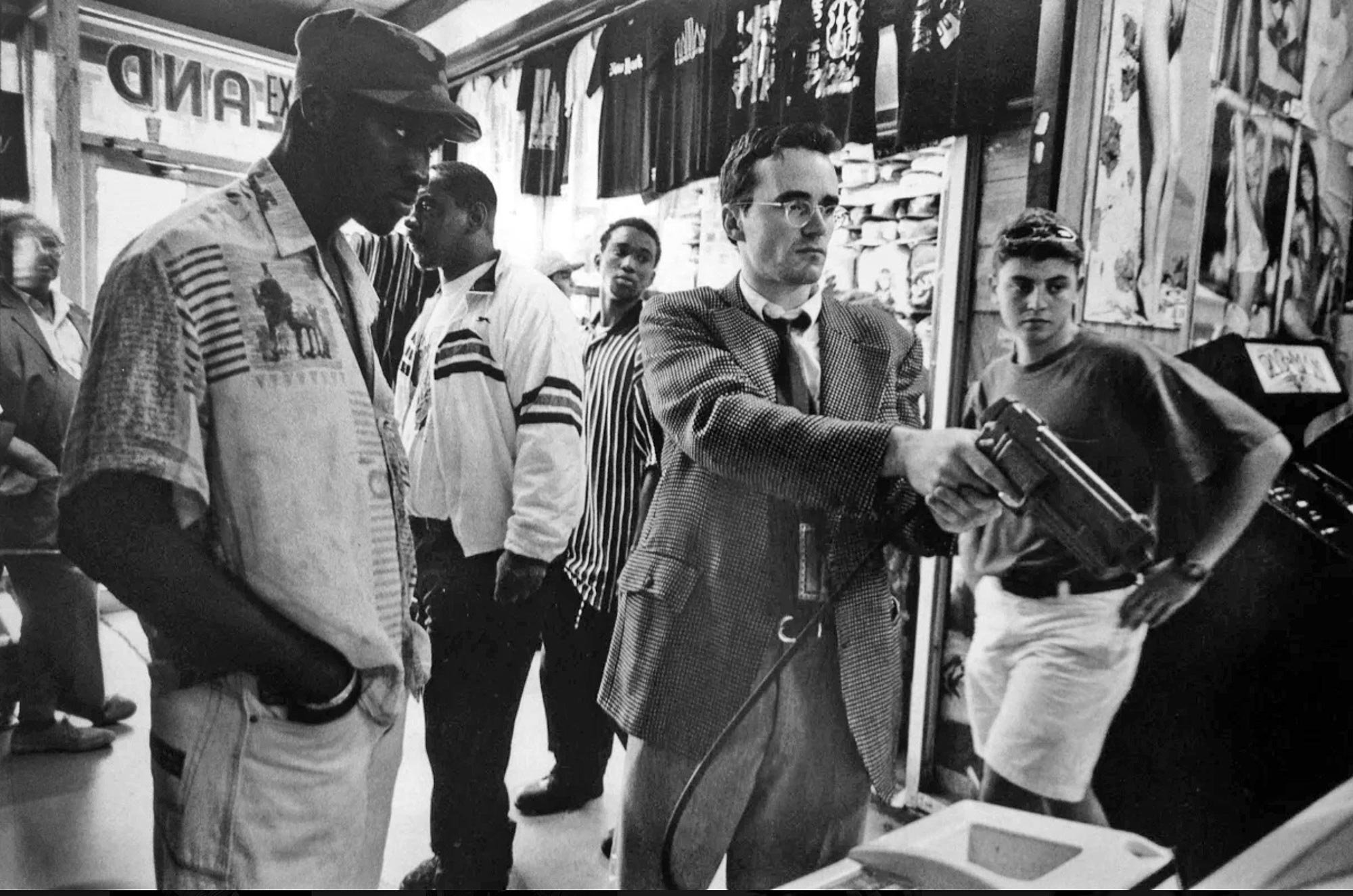
Storyland arcade, Times Sq. Businessman on lunch break.
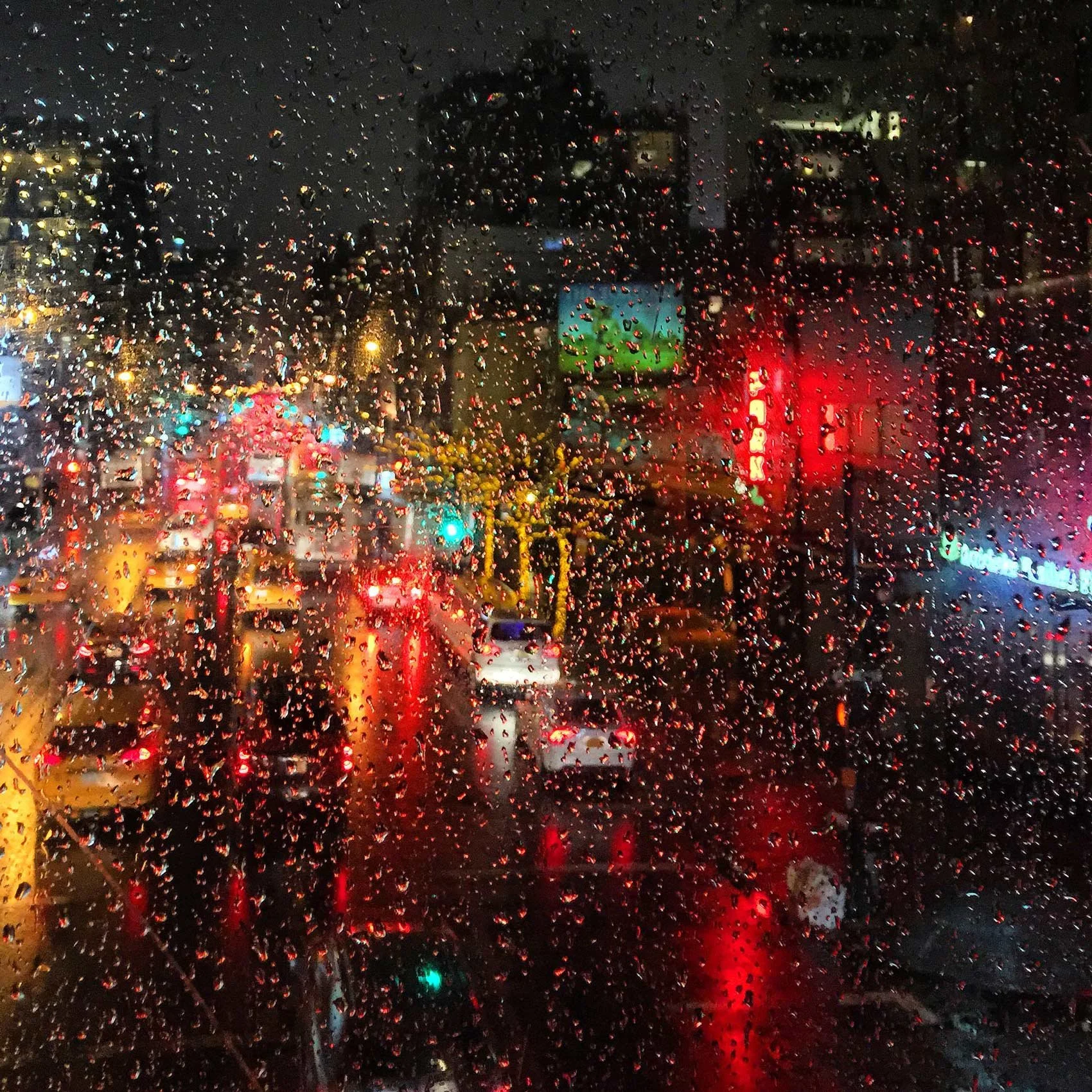
Rainy view from Highline bleacher window, looking up 10th. To me this is all my romantic feelings toward NYC. When you’re lucky enough to be able to hop on the empty Highline during a storm on a walk home.
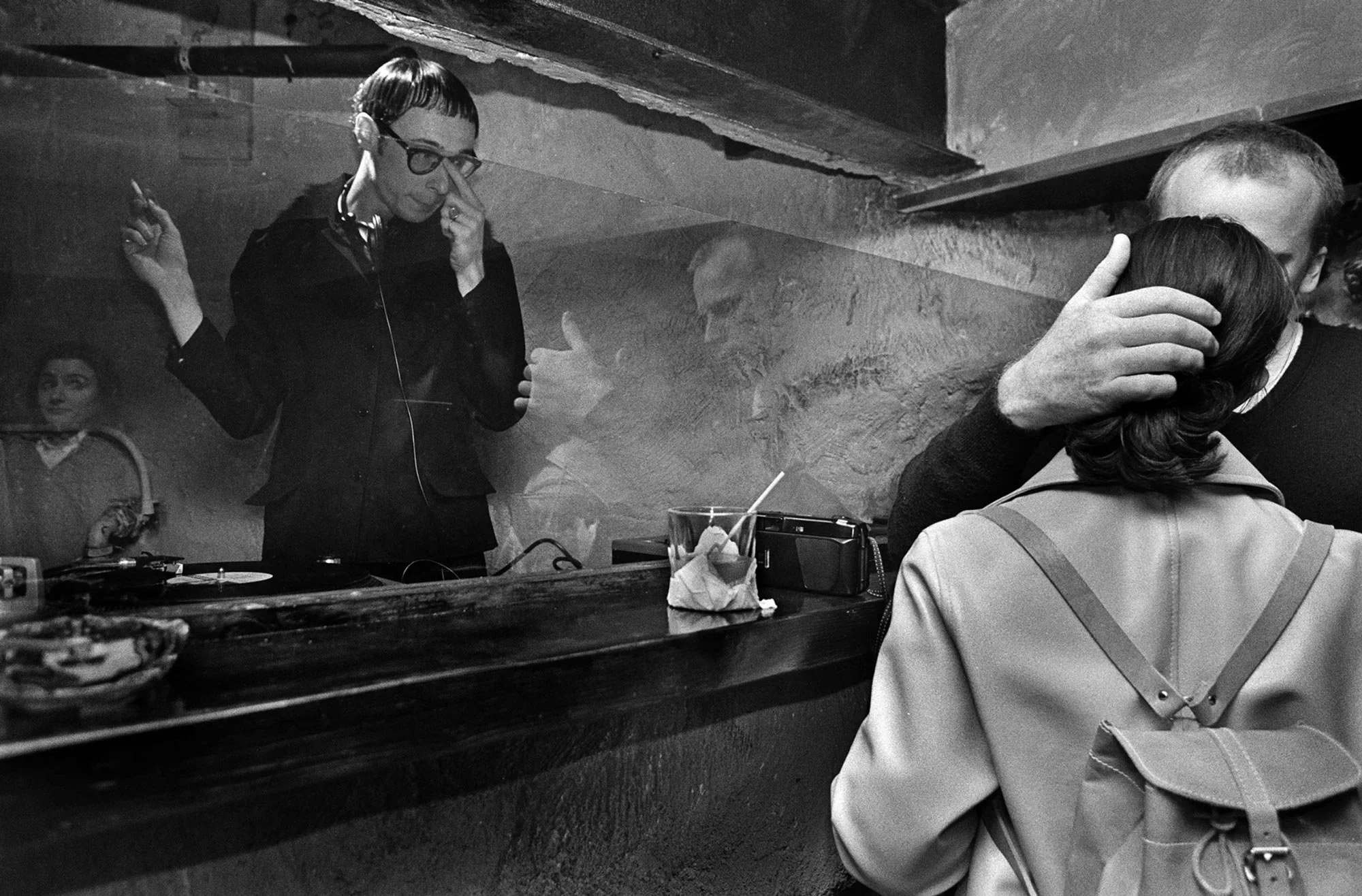
Bar DJ with couple, Sunday Night, West Village
HM: Photojournalism at that time was still very much a male world. Did you feel that?
TB: Yes, especially early on. At Magnum, in those years, it absolutely felt like a male domain. There were women, of course, but the mythology, the authority, the hierarchy — it all skewed male. When you’re young, you internalize that. You find yourself trying to win approval from these “masters.”
Oddly enough, I felt more supported at the Daily News. The environment could be rough — the photo editor could be intimidating, to put it mildly — but they trusted women photographers and gave us serious assignments. Gender seemed irrelevant.
I felt empowered by the work they gave me and by the expectation that I could handle it.
I was technically a full-time freelancer for seven years, because the staff pay wasn’t better than what I could cobble together with other jobs. So alongside the paper, I did nonprofit work, corporate portraits, and assignments for film and arts organizations. That mix gave me flexibility and helped me survive. It was the best job I’ve had.
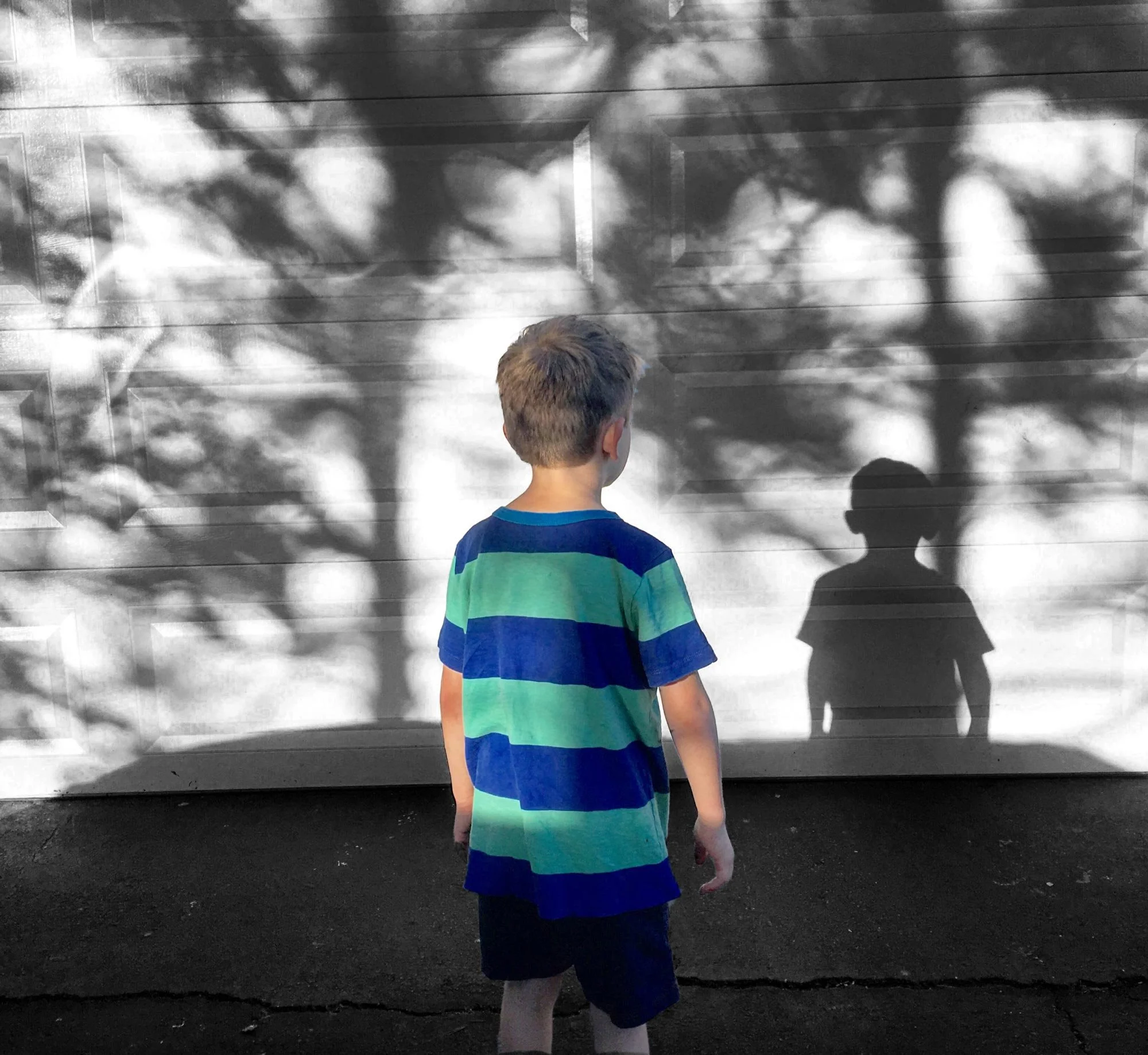
Coming of age with shadow, Newton, MA
HM: In the rush of newspaper work, where speed is everything, how did you navigate the ethical decisions inherent in photojournalism—questions of access, privacy, and sensationalism?
TB: That's where Philip's influence really mattered. Even under deadlines, he taught me that respect for the subject is paramount. The ethical line is thin and moves constantly. At the Daily News, the pressure for a "splash" photo was real. My rule was simple: if I wouldn't want that photo taken of someone I loved, I wouldn't take it. It meant occasionally losing a shot, but it meant keeping my integrity. The crucial distinction for me was between revealing a truth about someone and exploiting their pain or vulnerability. Access is granted through trust, and you can't abuse that trust for a quick headline.
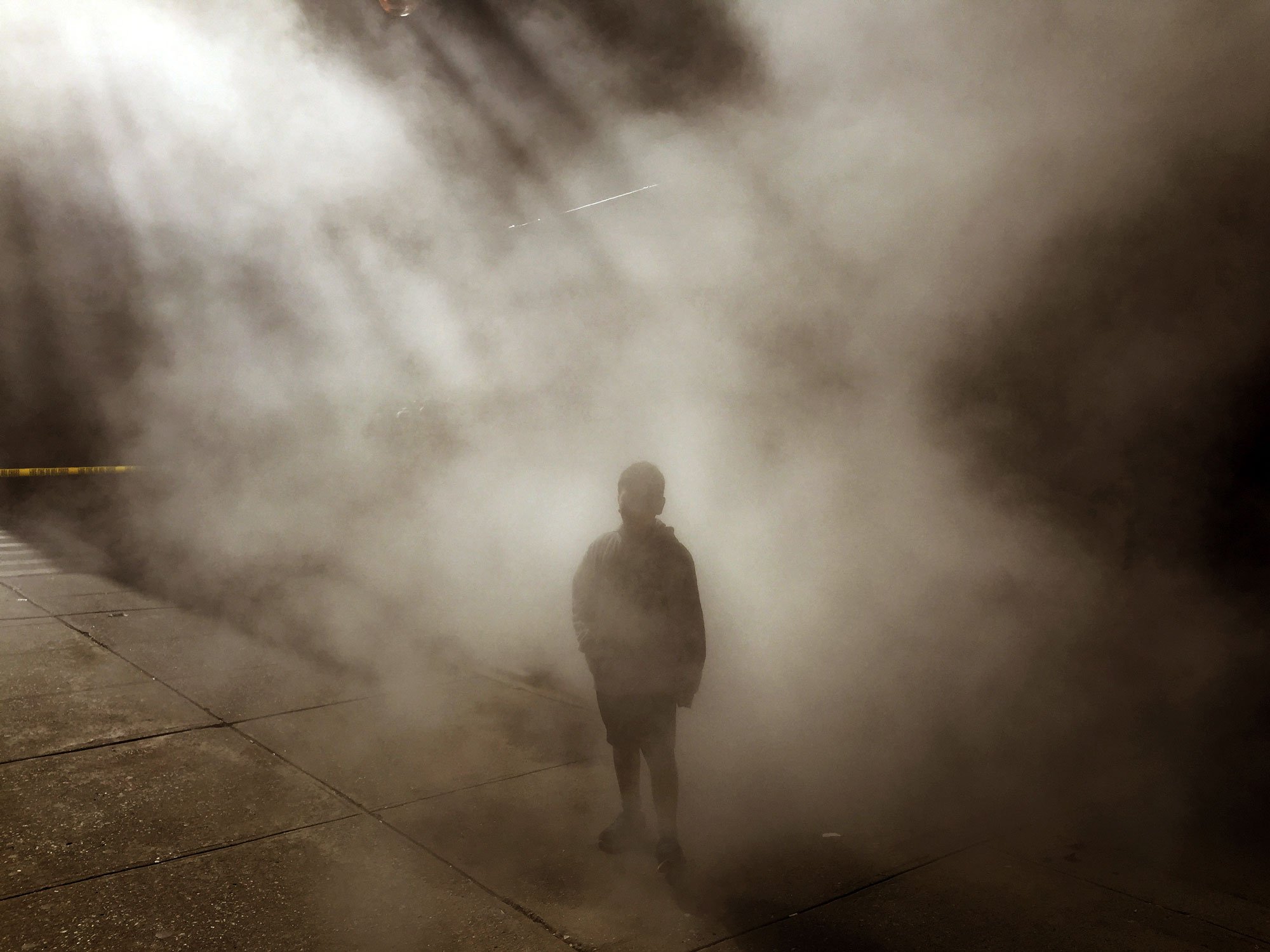
10th Avenue, NYC, boy in steam of a laundry duct. If you stand on a corner of NYC long enough, a surreal or wild moment will most likely unfurl in front of you.
HM: Before photography, you immersed yourself in English literature and Latin American Studies. Did that academic background, particularly the study of narrative and culture, inform your visual approach later on?
TB: Absolutely. I think literature taught me how to structure a narrative, and how to read subtext. A great photograph, like a great short story, implies a whole world outside the frame. My studies in Latin American culture, particularly magical realism, taught me to look for the "strange electricity" hidden inside ordinary life. It gave me permission to believe that the mundane is just a thin veil over the profound, which ties directly into the "firefly philosophy." It reinforced the idea that an image shouldn't just record a surface; it should convey complexity, history, and unspoken emotion.

“Bubble Pilot”, Massachusetts
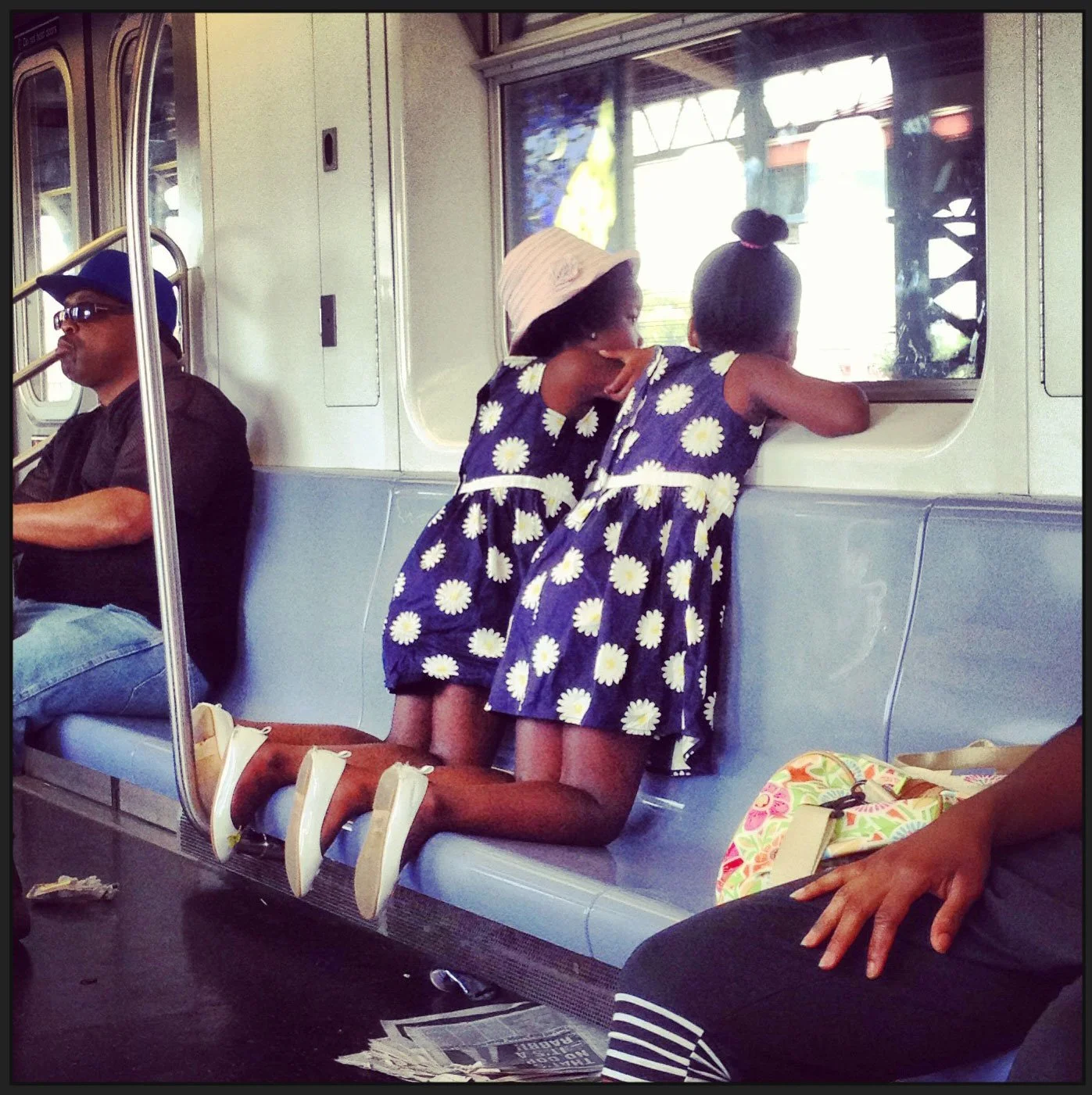
Girls on the 1 train, North, Bronx NY
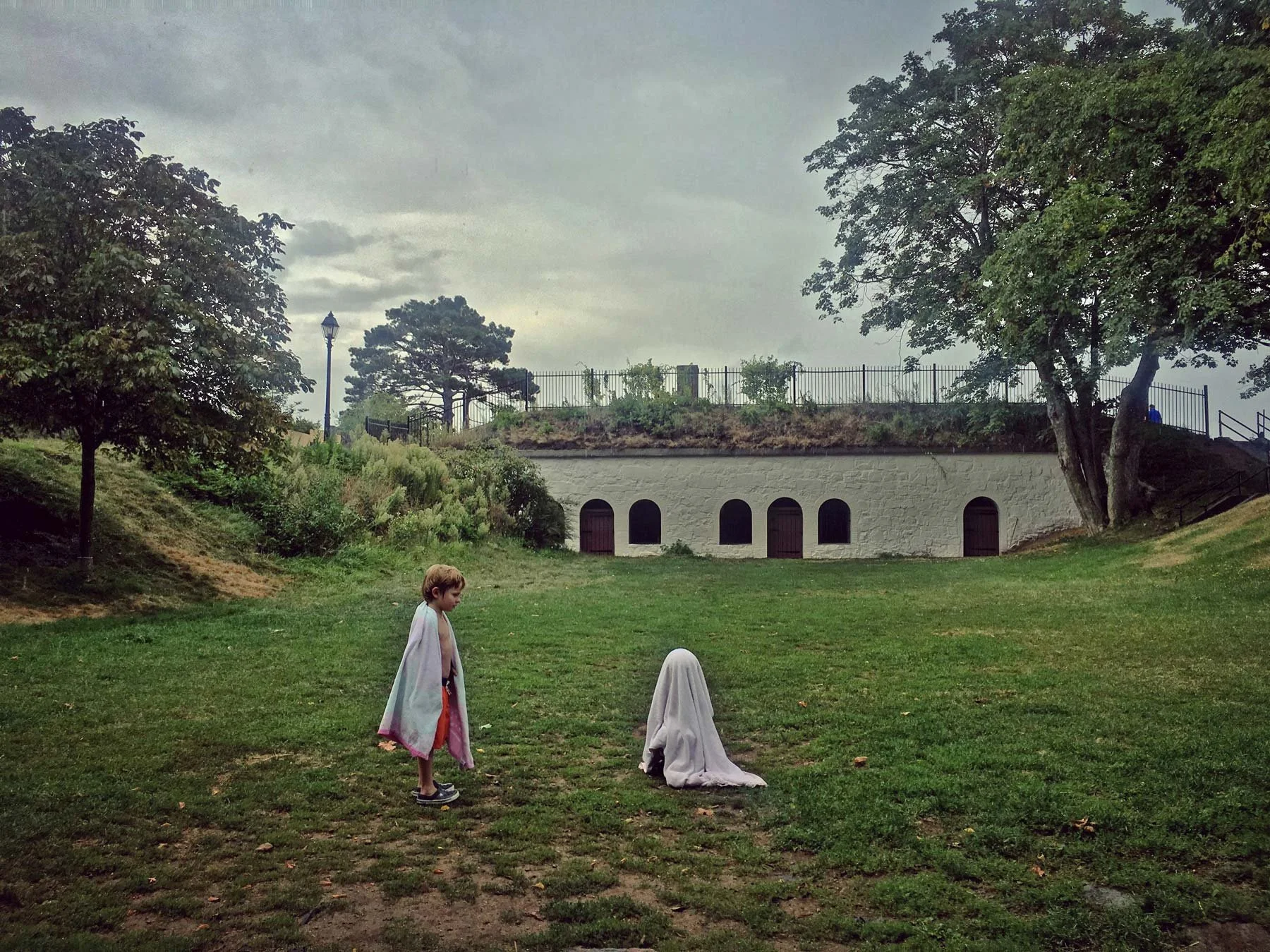
“Ghosts,” Fort Sewell, Marblehead, MA
HM: You’ve done a great deal of portraiture. What draws you to it?
TB: Portraiture feels like the ideal meeting point between observation and collaboration. For me, the most exciting portraits are environmental portraits — when the setting becomes part of the psychology of the image. I’m less inspired by a plain studio backdrop, though I’ve done that too. What really interests me is how to incorporate a person’s world into the picture.
I love the challenge of working in spaces that are not inherently glamorous — an office, a hallway, a hotel room, a backstage corner — and finding a way to make something alive there. That, to me, is creativity: not waiting for perfect conditions, but making something loaded and memorable from ordinary material. Photographing creative people is especially exciting because the exchange becomes cumulative. They bring something, you bring something, and the conversation itself begins to shape the image. At its best, portraiture is a crescendo of energies.
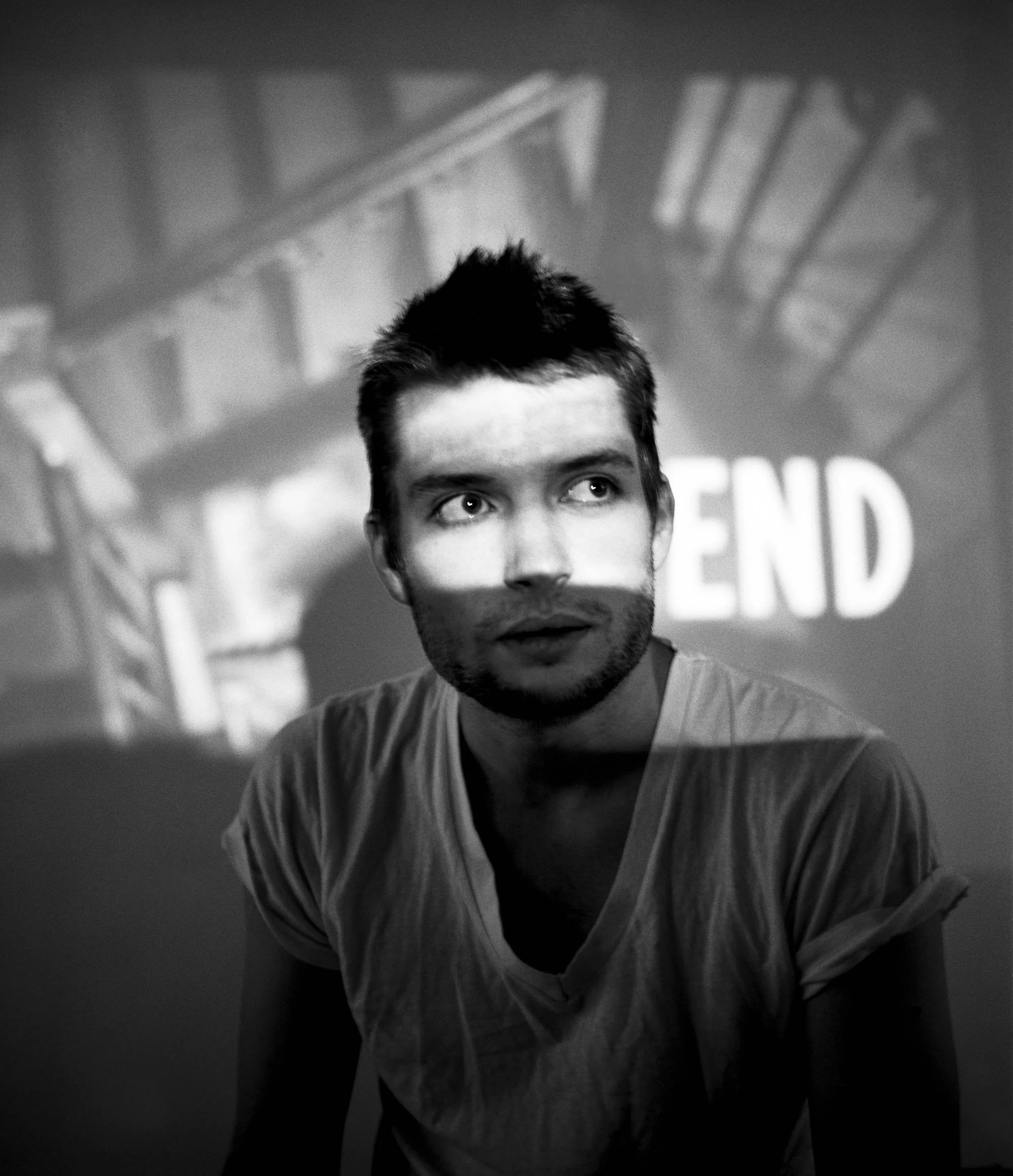
“The End,” portrait with projection, Tribeca NYC
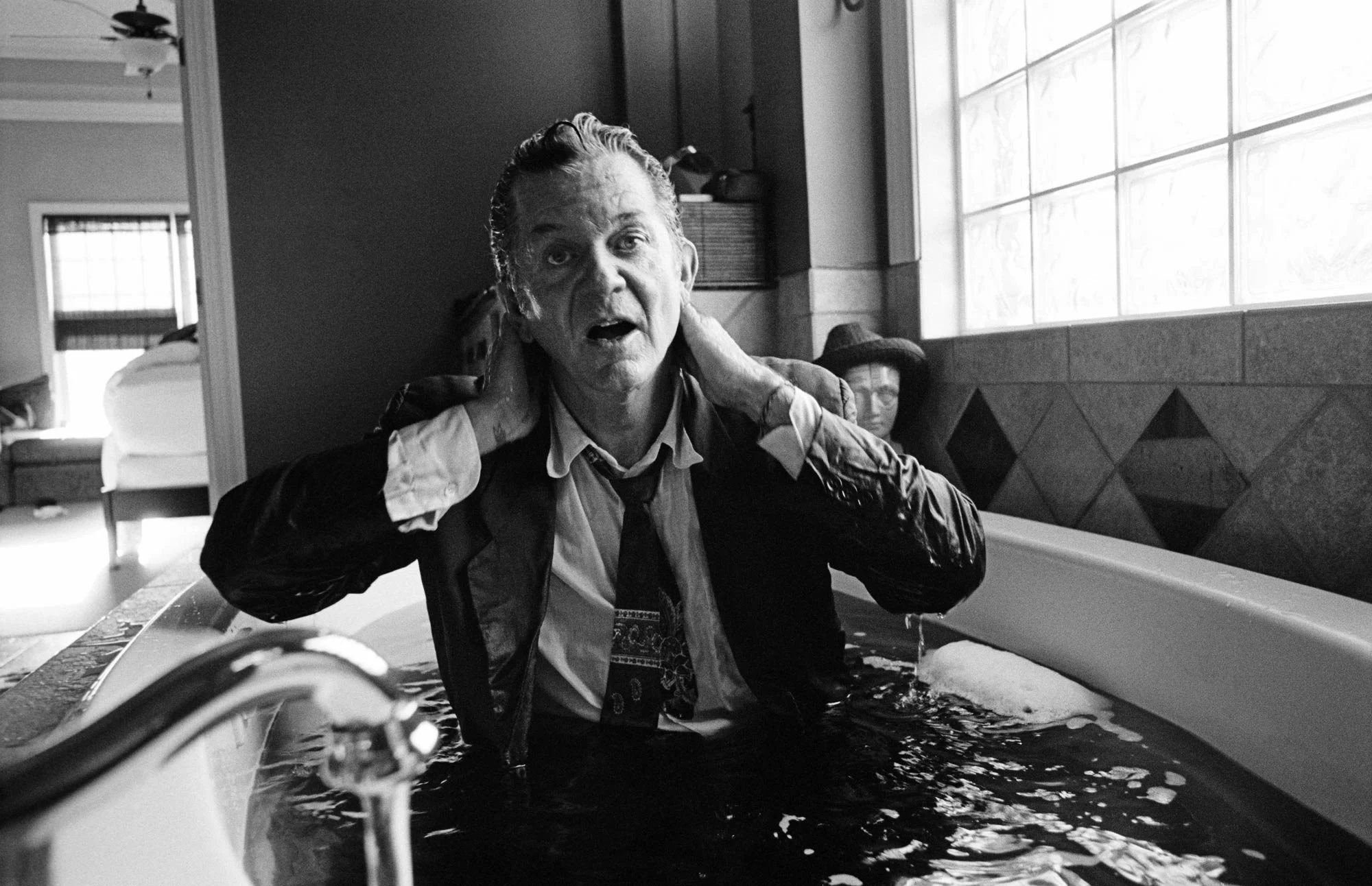
Rodney Crowell, bathtub, outside of Nashville TN. One of my favorite singer/songwriters and getting to collaborate was a dream come true. Again, a house, an artist - what will you do? He suggested the tub!
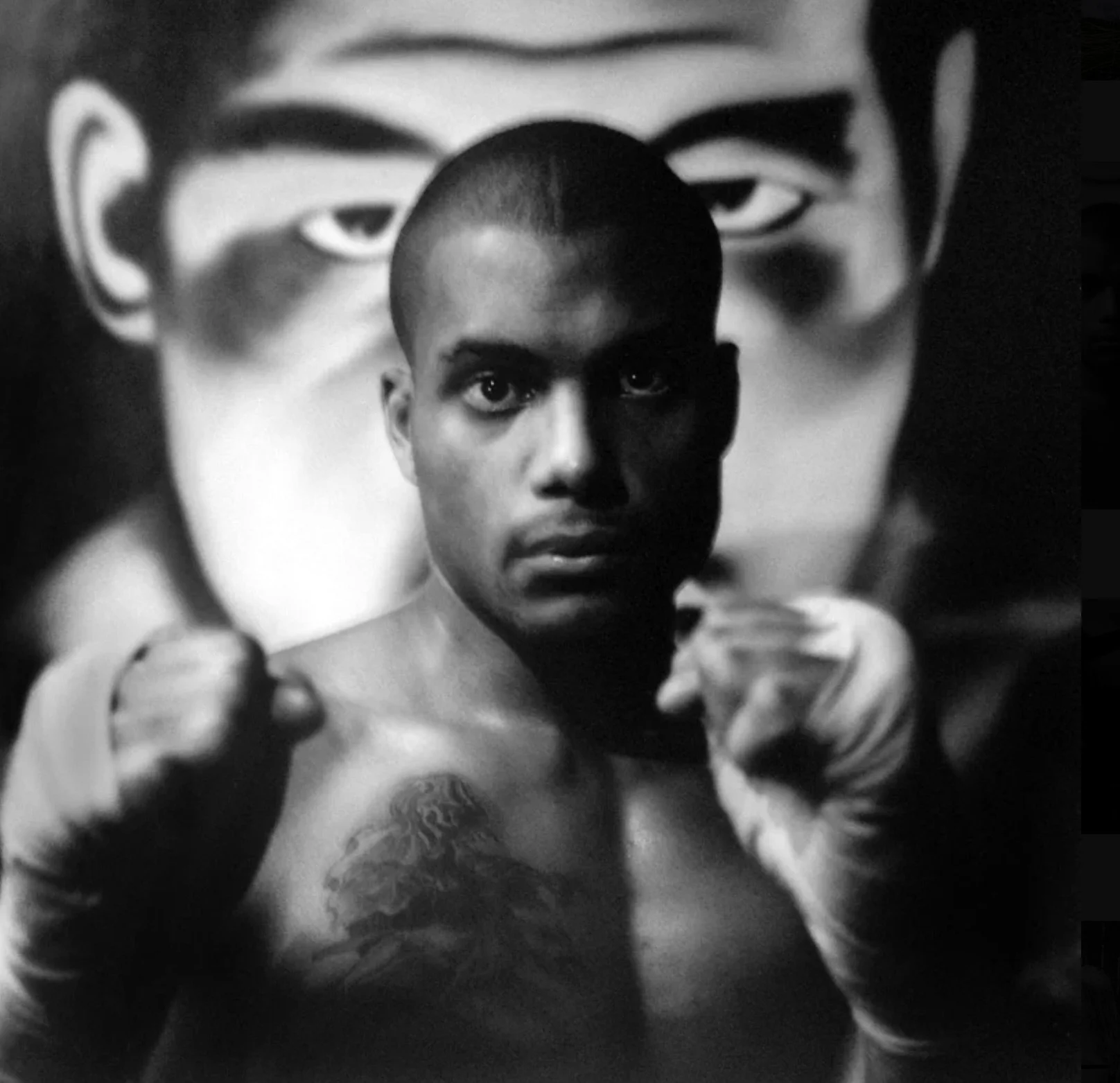
Garfield, Boxer portrait, NYC
HM: You’ve said you admire Sally Mann, especially her pictures of children and family life. What do you respond to in that work?
TB: I love the emotional density of it — the feeling that ordinary domestic life can hold myth, danger, tenderness, imagination, all at once.
If you were lucky enough to have a good childhood, there’s a kind of freedom in play that feels profound (a time when your work was to play). Even when it’s wild or strange or muddy or feverish, it unfolds under some invisible shelter — an umbrella of safety, love, containment. Sally Mann could photograph that beautifully: not sentimentally, but with real psychological force.
My own work is very different in style and camera language, but I think I’m drawn to some of the same territory — the extraordinary hidden inside the ordinary. Family life, children, domestic moments, the emotional charge of small gestures. I want to make pictures that feel singular even when the subject is basic.
I saw Sally Mann speak recently, and one thing I found fascinating was seeing how much material led up to the famous images — all the pictures that didn’t quite become the picture. That’s reassuring, in a way. It reminds you that even iconic work is built through attempts, misses, and near misses.

“Cloud” Newton, MA
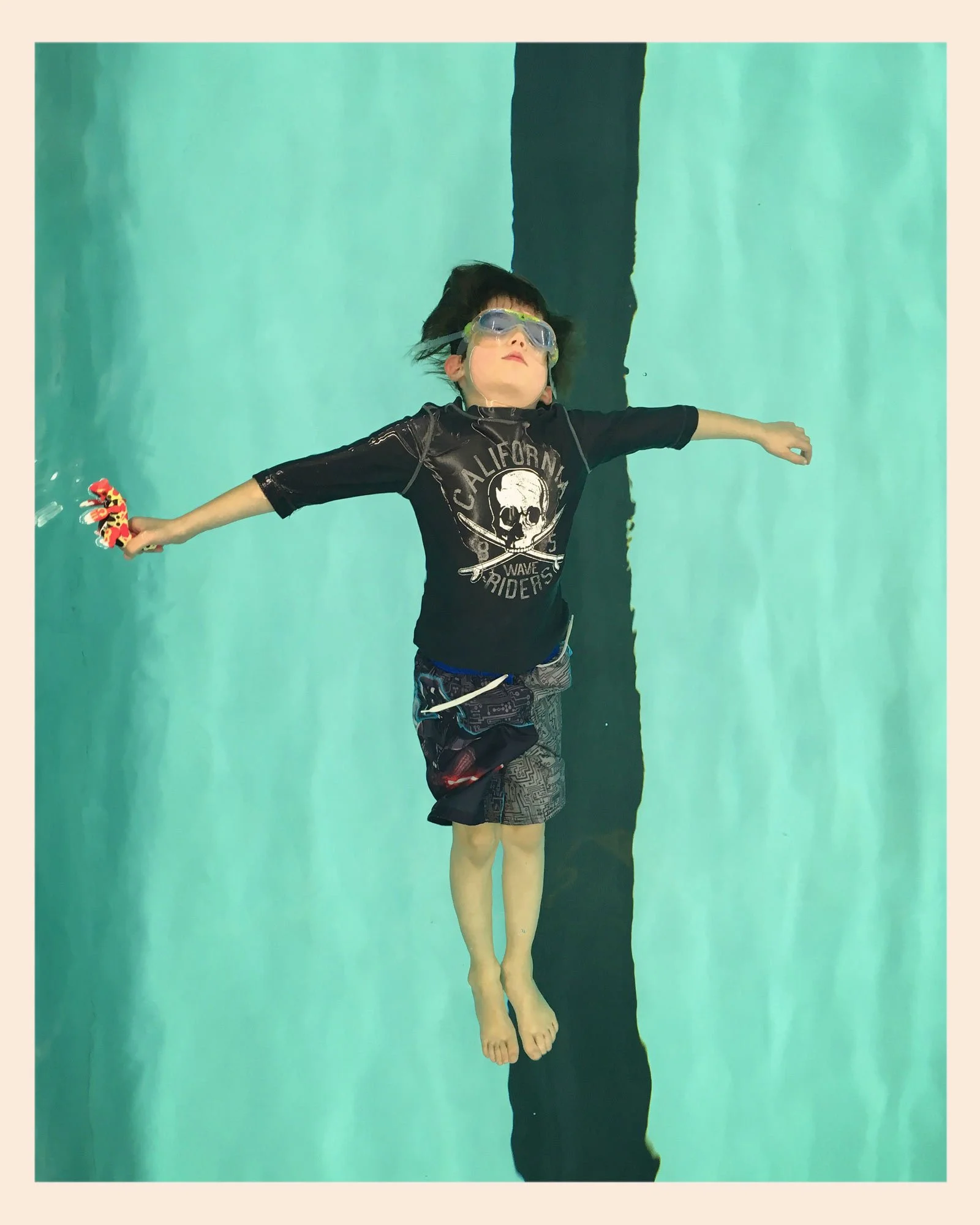
Untitled, Dedham MA (pool)
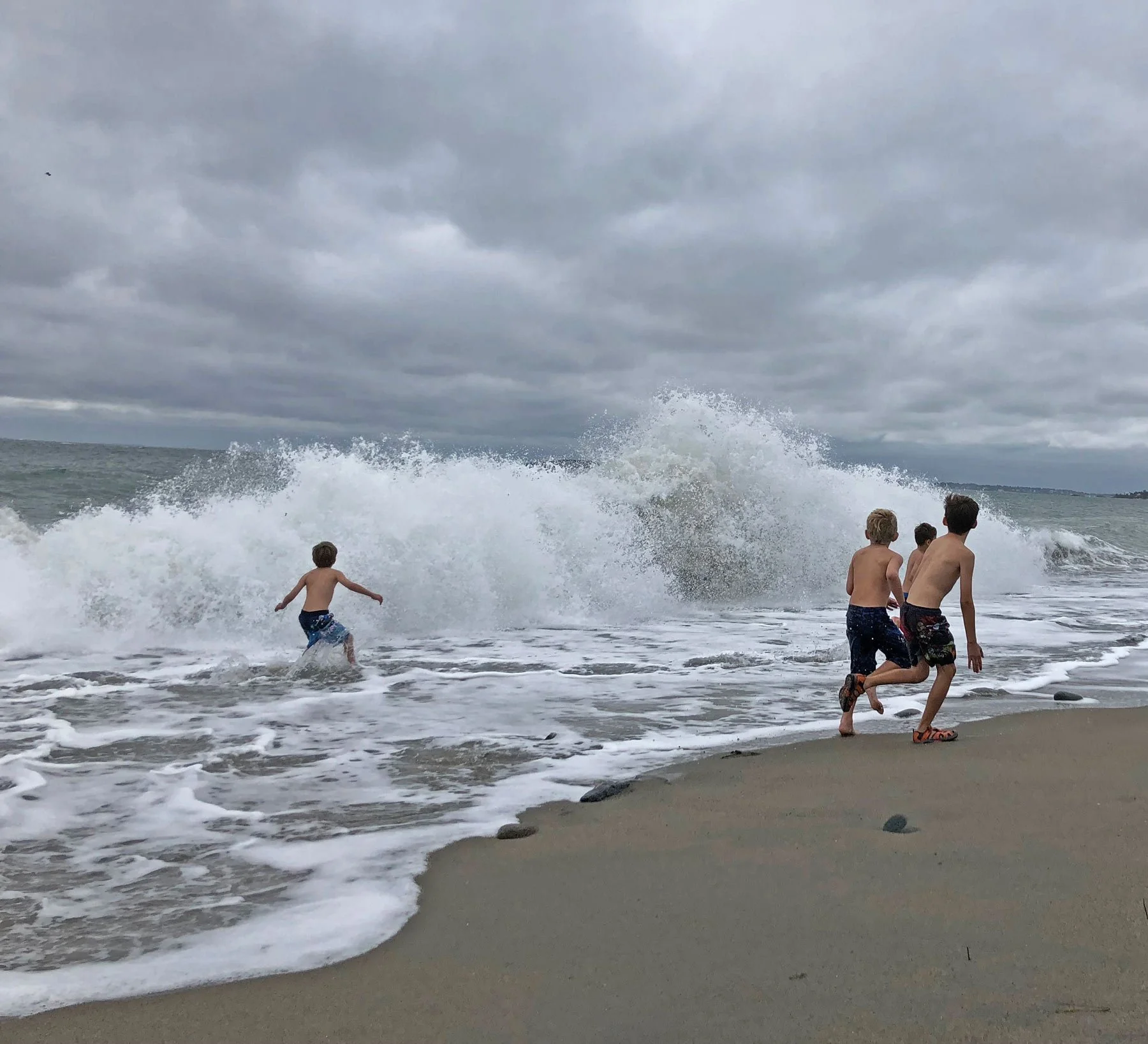
Wave crashers, Marblehead, MA
HM: You once used the phrase “firefly philosophy.” What does that mean to you?
TB: I love that phrase. To me it means finding or creating spark in places that might otherwise be overlooked. A mundane world can still glow. Small moments can still flash with life.
I’m drawn to those little flickers — gestures, tensions, light, atmosphere, human eccentricity. I want to illuminate moments that people might pass by. Not with grand declarations, necessarily, but with attention. With energy. With a sense that something is alive here. I think that’s true whether I’m doing street photography, photographing family, or making portraits in some very plain setting. How do you make something shimmer? How do you reveal a charge everyday? That’s what I’m always after: seeing what’s unseen to the regular eye, but is there.
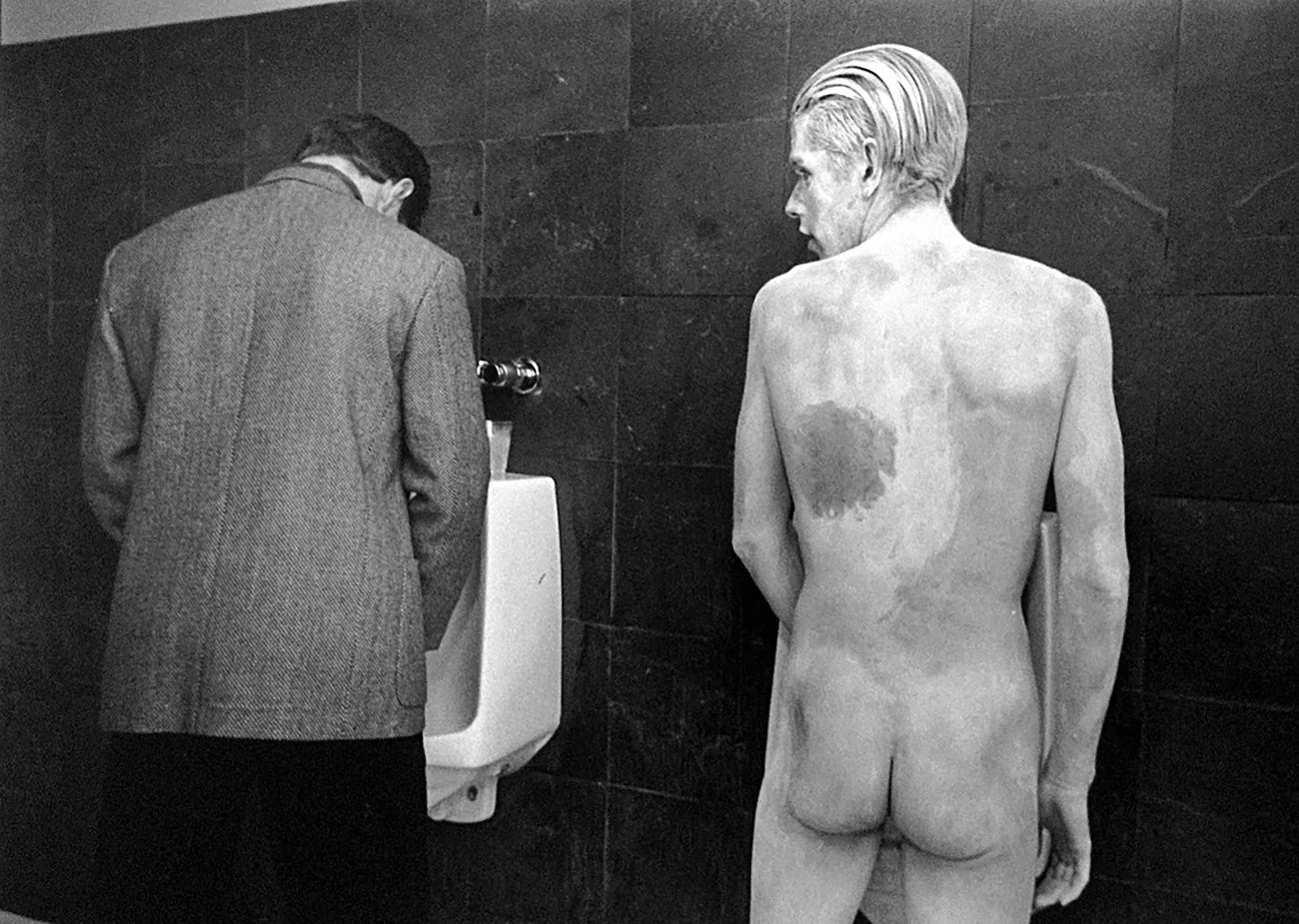
Men’s Room, Chelsea NYC
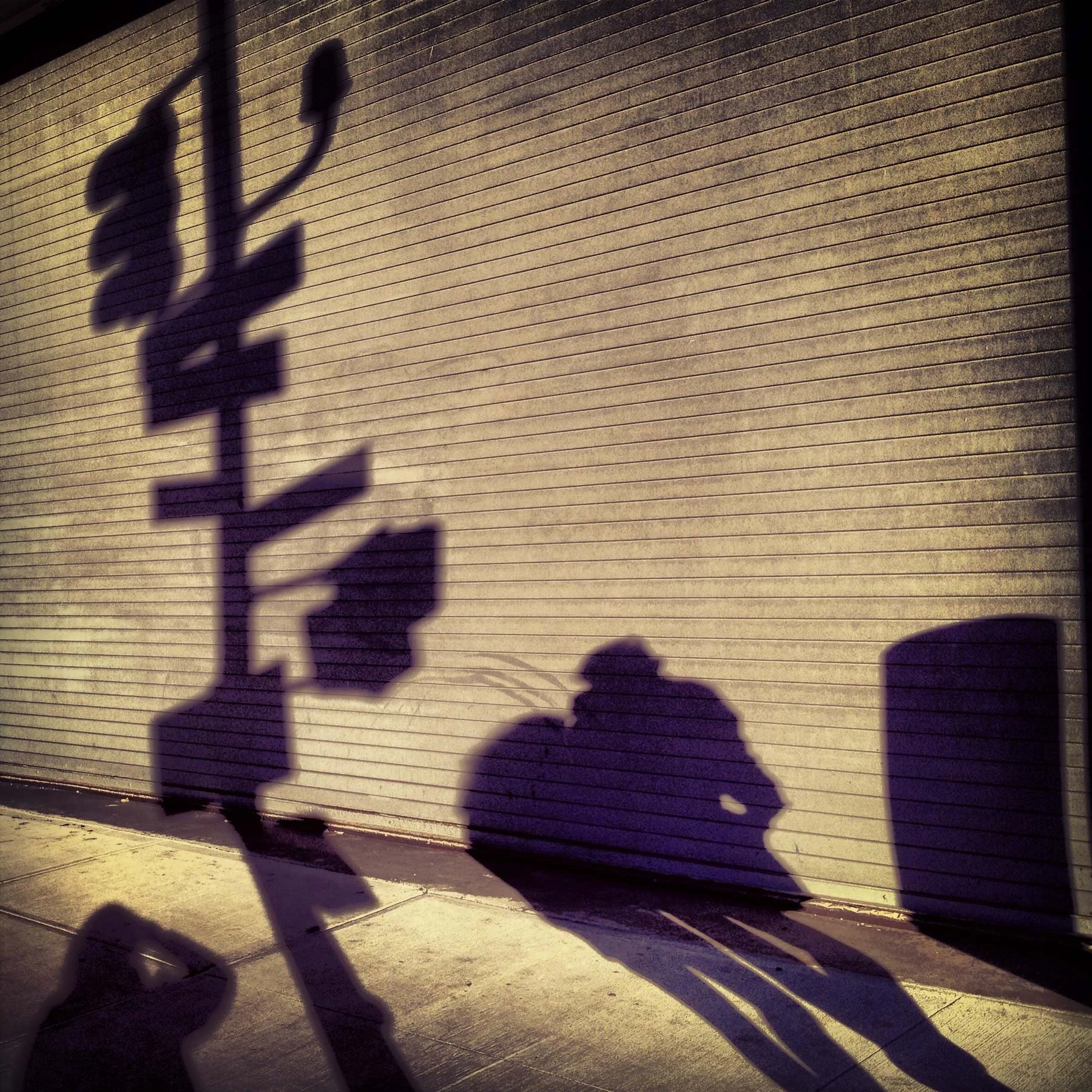
Street Shadows and self portrait, 11th Ave, Manhattan NYC
HM: You’ve spoken very beautifully about working in New York. What was it like to leave and return to Marblehead?
TB: Hard. Very hard.
I had a long love affair with New York. Leaving felt like a breakup. I had been there for 21 years. So much of my professional identity, and honestly my emotional identity, was tied to the city. It gave me work, pace, stimulation, community, anonymity, drama — all of it. I am not alone when I say just walking around New York City is one of life’s great pleasures. You could also stand on any corner long enough, and something wild would unfurl in front of you.
At the same time, life changed. I was no longer just a single photographer organizing everything around work. I became part of a family structure. I moved back to the town where I’d grown up. My mother had already died years earlier, my grandmother too, so I was returning to a place that was familiar but also fundamentally changed.
I leaned heavily on the ocean, on nature, on routine. Those things steadied me. I still go back to New York for assignments sometimes, and whenever I do, there’s a part of me that slips right back in emotionally. But New York changes, and so do you. You never re-enter the same city, because you’re not the same person either.
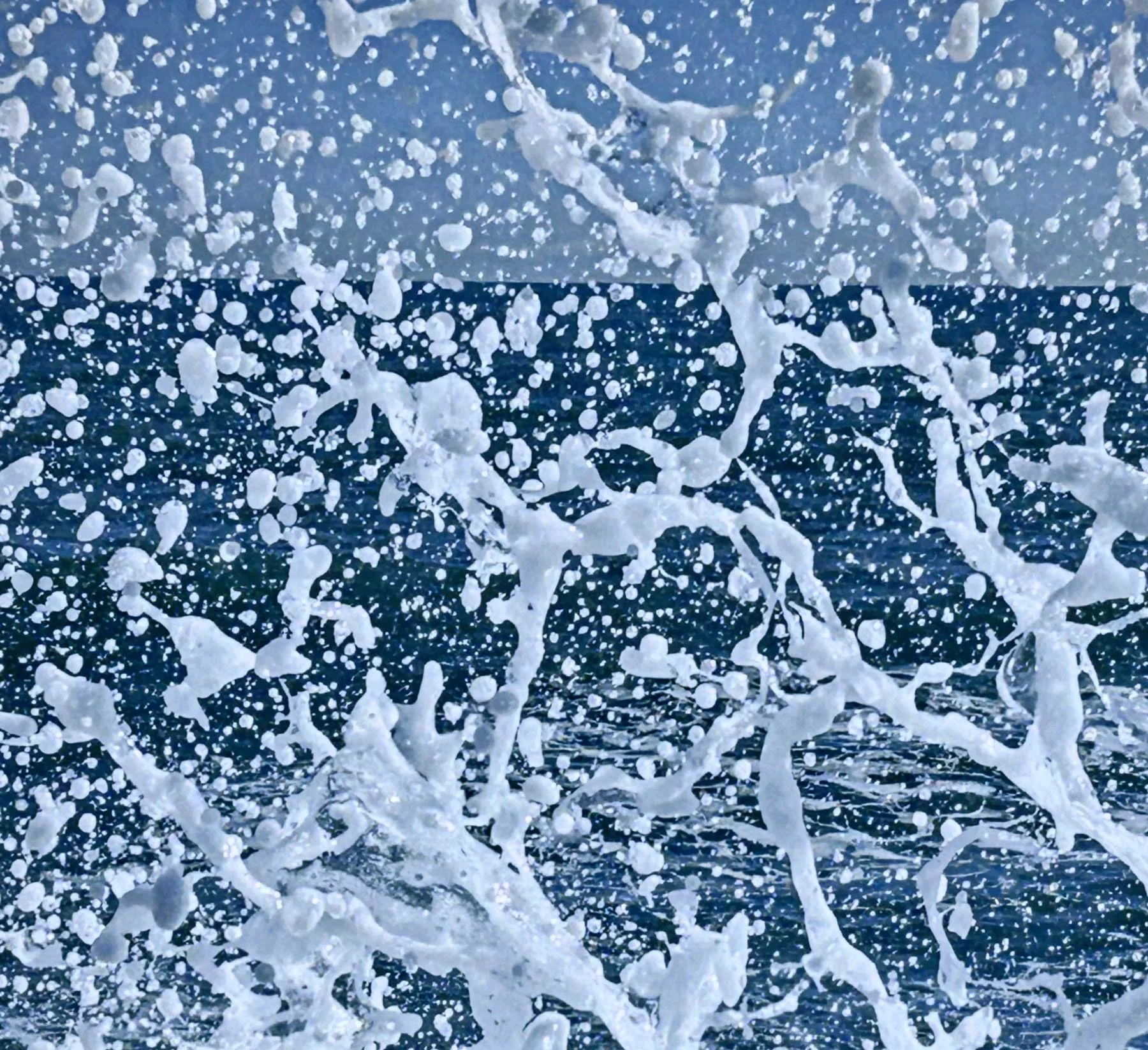
Splash, Lynn, MA
HM: Has living in Marblehead changed the work?
TB: Definitely. The scale is different, the pace is different, and the material is different. But that doesn’t mean it’s lesser. I’ve become more attentive to the environment as an emotional force — especially the ocean. I’ve also been photographing women in a local cold-water swimming group. They’re bold, funny, alive, and completely themselves. A few would gather during full moons and were open to being photographed nude, outdoors, in winter, as a kind of declaration of their connection to the ocean landscape, pride and embodiment . I look for the moxie some might have to challenge norms in suburban life. What’s that Bruce Springsteen quote, “is anyone alive out there?” These women are and I’m drawn to collaborating with this energy and slight subversiveness.
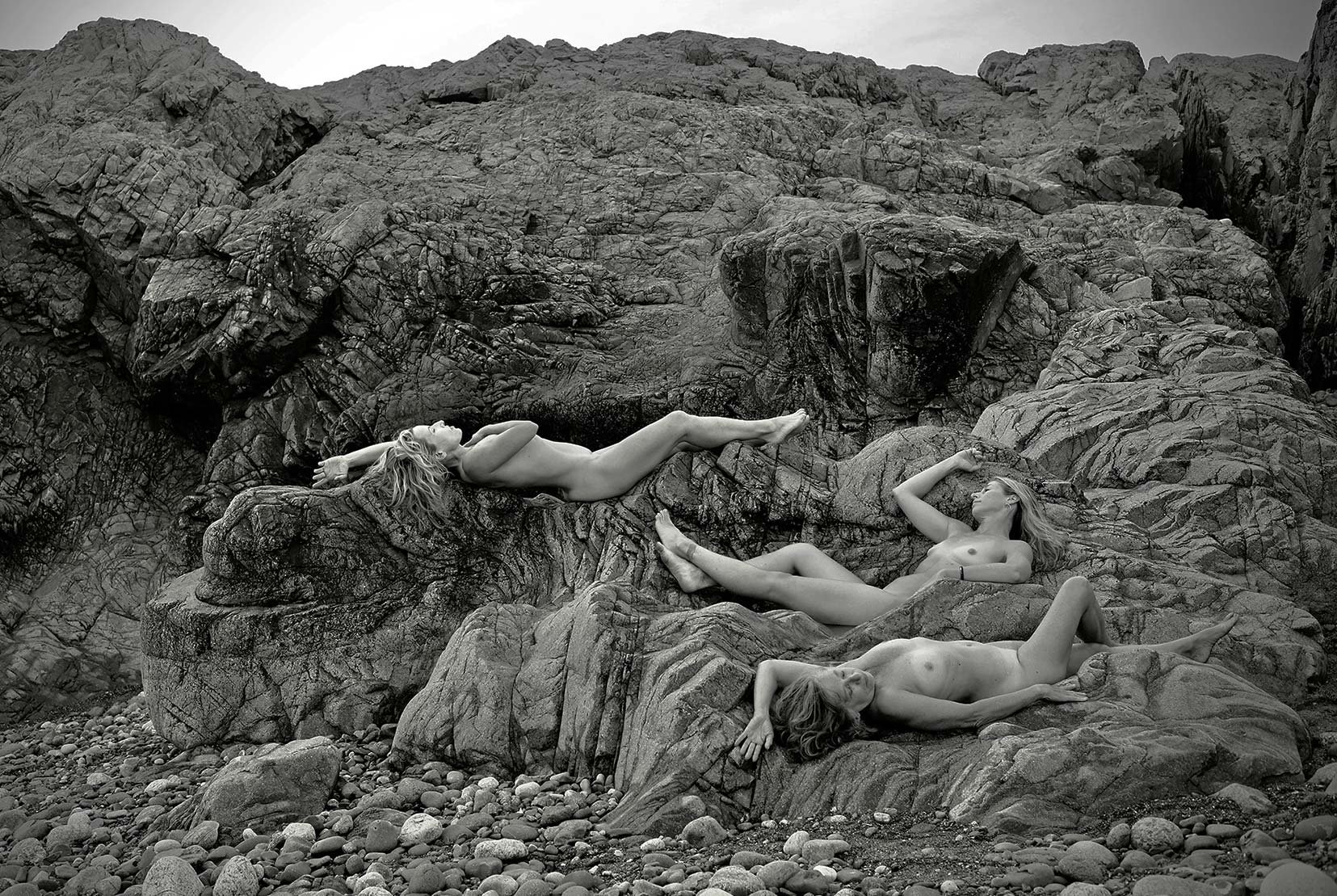
Sirens, nude, Marblehead
HM: You worked through the transition from film to digital. For younger photographers, it’s hard to imagine that shift. What was it like for you?
TB: The film had a soul. The darkroom had soul. There’s no way around that. The physical process, the waiting, the risk, the smell, the silence, the surprise — it was deeply meditative and emotionally charged.
But digital made working life easier in very real ways. Especially in newspaper work, it eliminated an enormous amount of anxiety and delay. You weren’t worried the film might get damaged, processed badly, or lost. Once cameras had dual cards, that added another layer of security, especially on corporate jobs or one-time-only situations.
So I don’t romanticize film to the point of denying the practical advantages of digital. I embraced digital because I had to, and because working photographers adapt. That said, I do think some images from digital can feel flatter or more soulless than film. There’s a kind of mystery that film carries naturally.
The more recent transition — from DSLR to mirrorless — was actually more disorienting for me. A good friend and photographer basically sat down and made me accept mirrorless and I’m very grateful. Suddenly there were a hundred autofocus options, tracking modes, behavioral settings. I found it frustrating. I don’t want the camera to get between me and the picture. I want directness. But every generation has to learn its tools. The important thing is not to worship or fear equipment. The important thing is what you do with it.
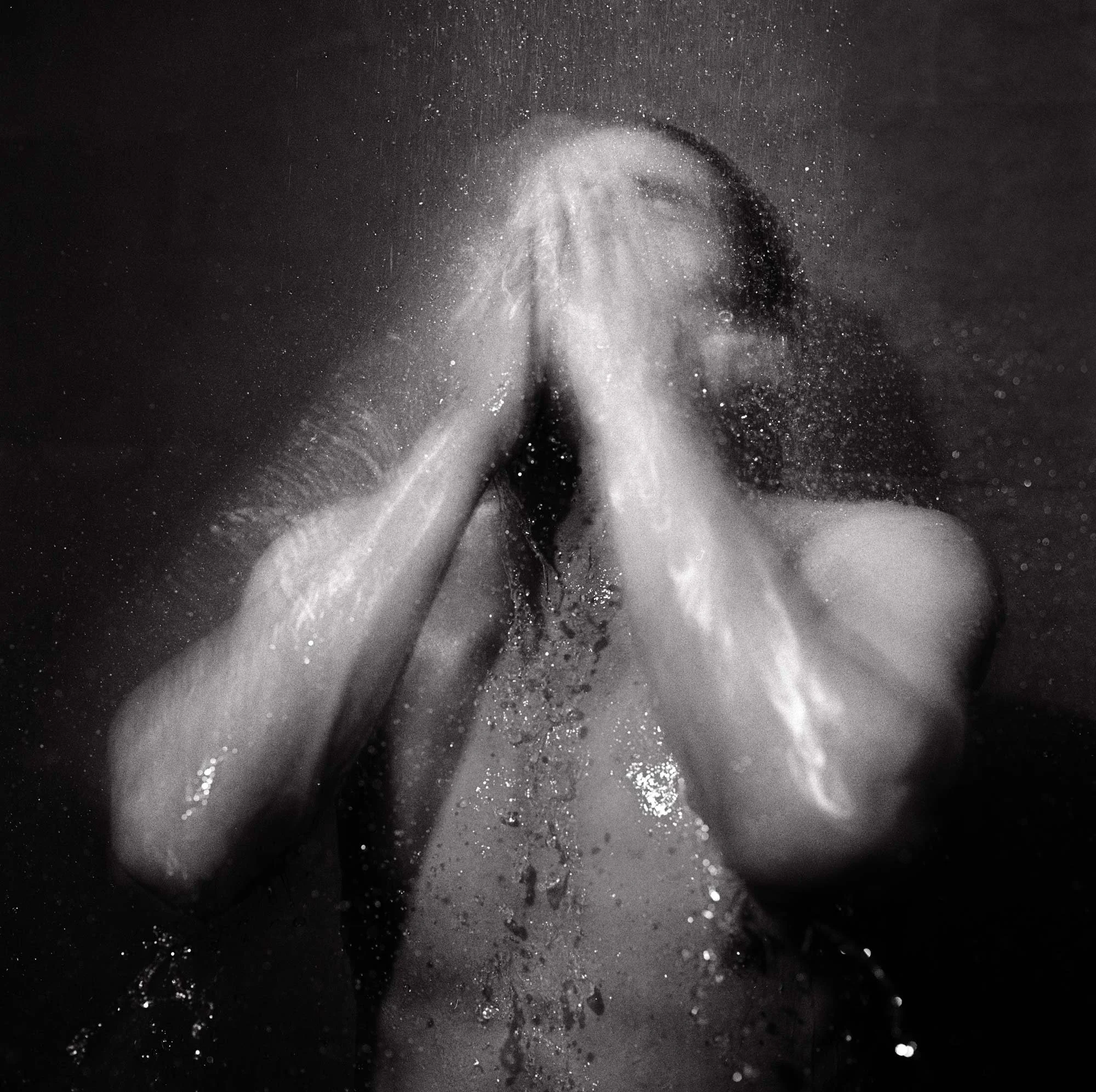
Johnny in the shower, Tribeca NY
HM: That connects with something we were discussing: technology changes, but vision remains the essential thing.
TB: Exactly. Give ten people the same camera, or even the same phone, and you’ll get ten different photographs. Equipment matters to a point, but eyes matter more. Timing matters more. Sensibility matters more.
You can see it very clearly in history. Think about major events where many photographers were present, all looking at the same thing. Jim Nachtwey’s photos from Ground Zero on 9/11 come to mind. Because of his experience in dangerous situations, his exceptional “eye,” his photos of the same situation so many photographed, are elevated and stand alone. A handful of images endure because certain photographers saw more clearly, moved more intuitively, or responded more deeply. That difference is not just gear.Young photographers should absolutely learn the new tools. Don’t become a purist in a way that harms your livelihood or limits your possibilities. But also: don’t confuse technical novelty with seeing.
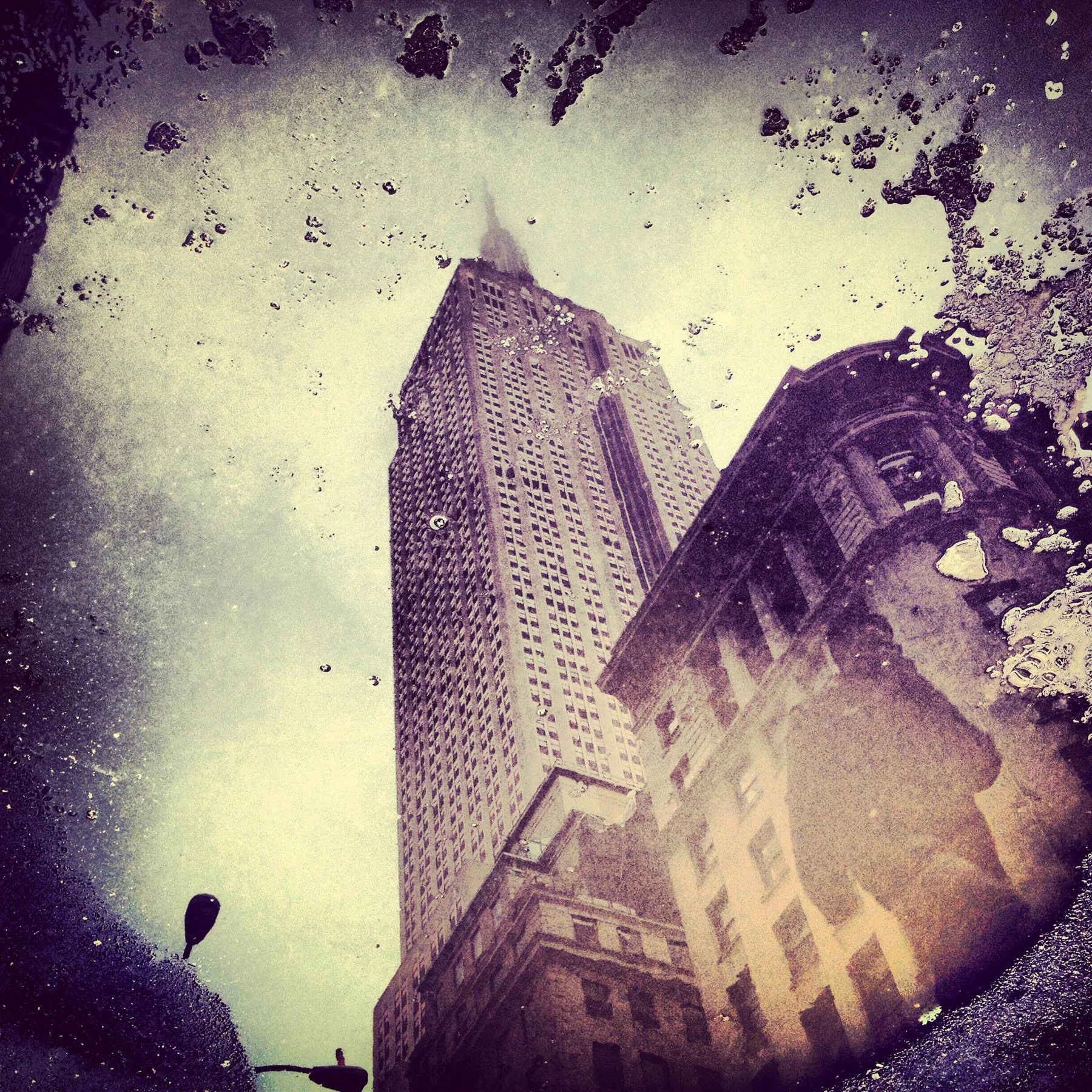
Empire State Building, as seen in puddle NYC
HM: What advice would you give to a young photographer starting now?
TB: First: if you really want it, don’t be discouraged by all the noise telling you it’s impossible. It’s harder in some ways now, yes. Rates are lower in many areas. The market is fragmented. Everyone takes pictures. But there is still an enormous need for images.
Second: understand that you may have to put in 250 percent effort to get 50 percent return, especially in the beginning. You have to be resourceful. You have to improvise. You may have to piece together different kinds of work. That was true for me too.
Third: adapt. Keep learning. Follow where visual needs are moving — editorial, nonprofit, corporate, social, AI-assisted, whatever the landscape is becoming. Don’t cling to an idea of purity that prevents you from surviving.
Fourth: live somewhere with opportunity if you can. Urban environments still generate more work and more collisions, more things happening, more reasons for pictures to exist. And finally: if you have the passion, it is still one of the greatest jobs in the world. You get to pay attention. You get to meet people. You get to make something out of light and time and feeling. That’s extraordinary.
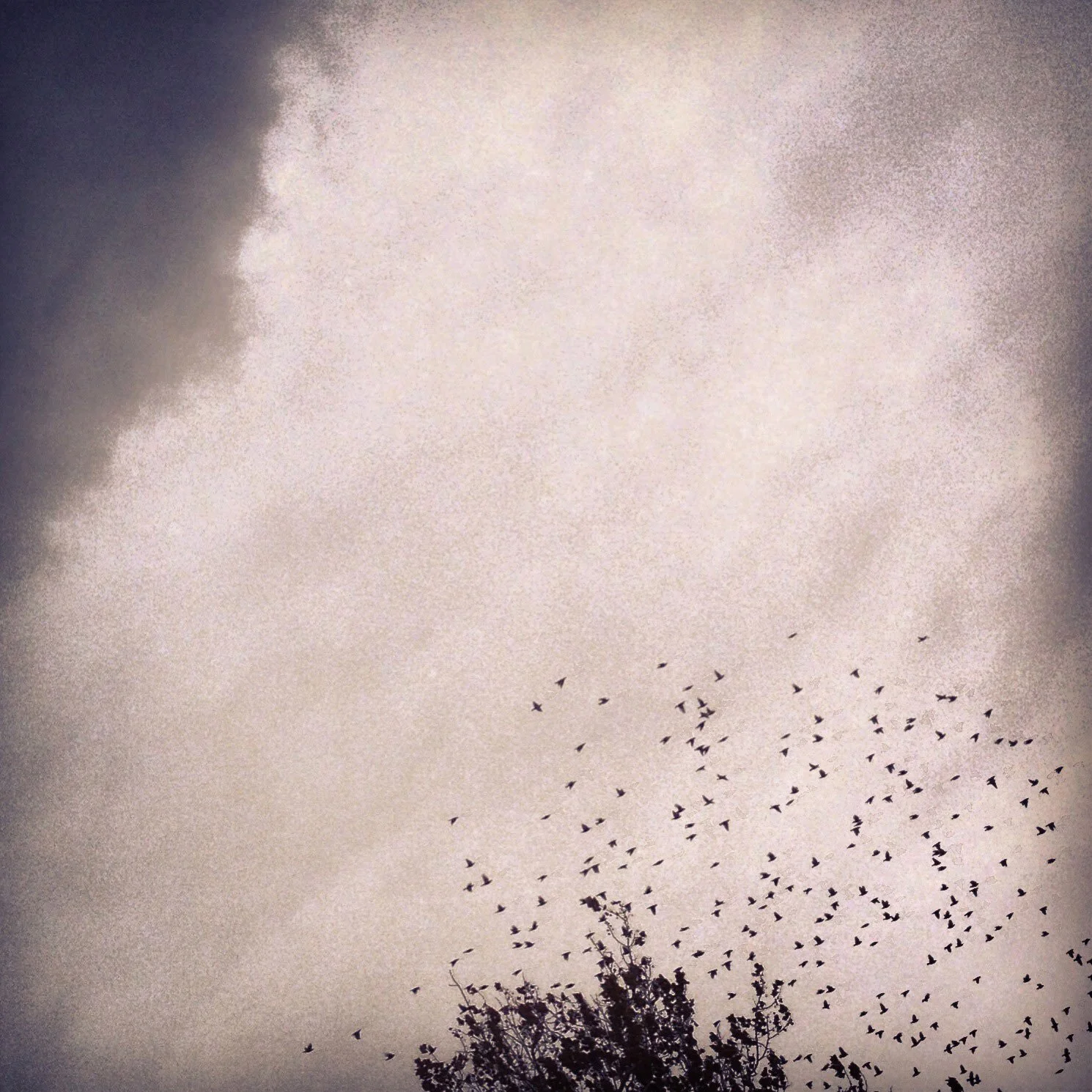
Birds-like-leaves, Queens NY
HM: After all these years, what still keeps you going?
TB: The same thing that started it, really: the magic of seeing something and trying to hold it. And always people. Even now, what moves me most is not spectacle but connection — the possibility of making an image where feeling, form, and moment all come together and become something larger than the sum of their parts. That’s rare, of course. But when it happens, it’s everything. Photography still gives me that sense of being awake to the world. That’s why I’m still here.