
Raymond Grubb: Light, Acceptance, and the Long Pilgrimage
Raymond Grubb is a photographer based in Charlotte, North Carolina, whose work moves fluidly between intimate portraiture, documentary imagery, and fine art photography that explores identity, human connection, and the quiet, vivid textures of American life.
His series “PILGRIMS: Immigrants in my Home,” a body of work in which he shoots portraits of immigrant friends, acquaintances and strangers in his home as if they live there has garnered widespread attention including a placement in the Bar-Tur Photo Award and a $15,000 Creative Renewal Fellowship from the Arts and Science Council of Charlotte-Mecklenburg.
He has also been awarded residencies at the Virginia Center for Creative Arts (VCCA), both at the Mt. San Angelo, VA location and at their program in the small French village of Auvillar, near Toulouse, situated along the ancient Camino de Compostela pilgrimage route.
Hot Mirror publisher Amnon Bar-Tur sat down with Raymond and his partner Tom, a multimedia artist and accomplished cook who has been both muse and collaborator for a wide-ranging conversation about photography, memory, courage, cultural identity, and the enduring power of making pictures.
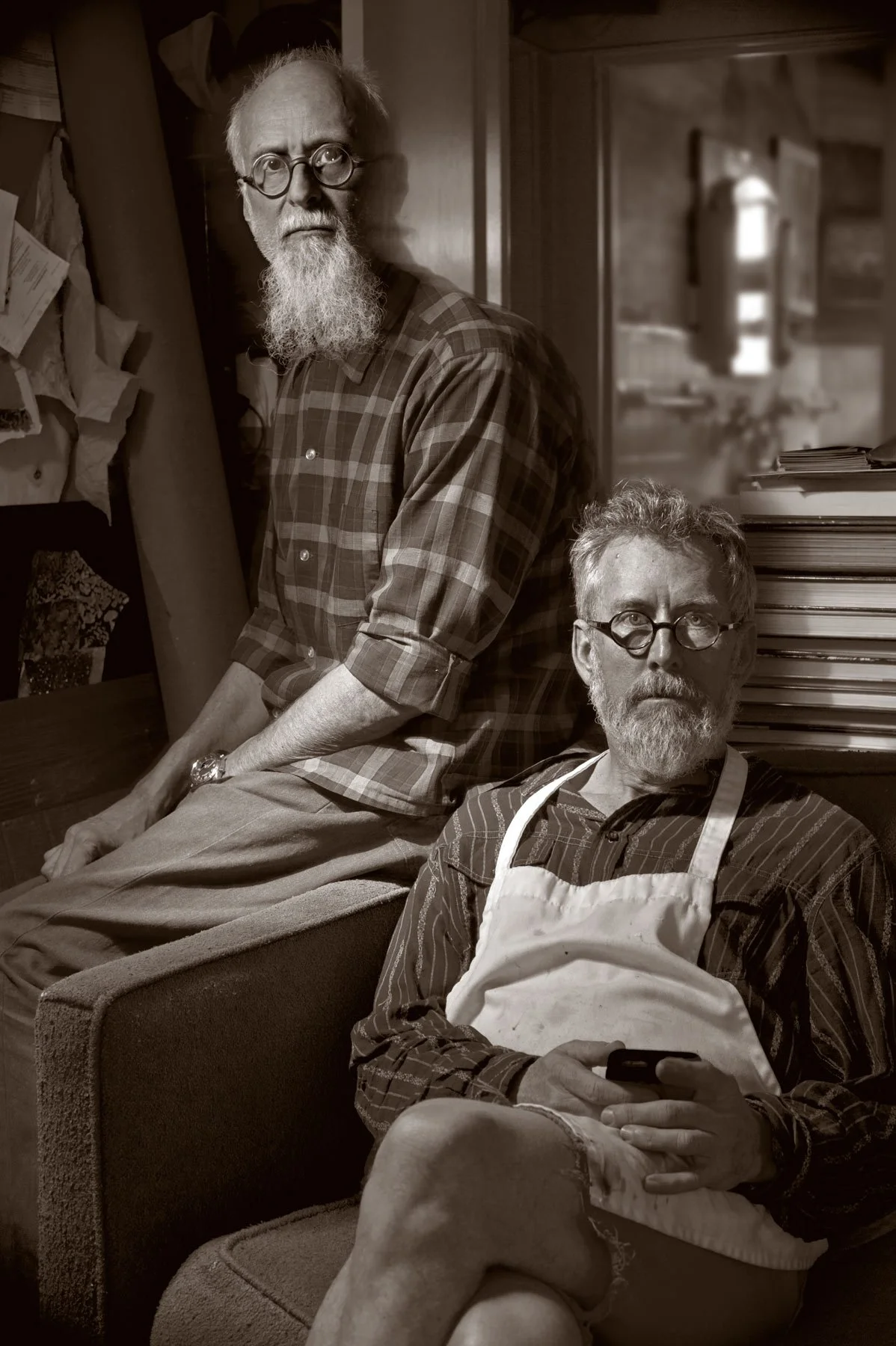
Tom And Raymond Chez Eux. 2015
HM: Raymond, how did you and Tom first meet?
Raymond: He was loading kilns in the ceramics room at the university where I was first learning photography in the mid-1980’s. I asked to photograph him. I think the camera was the best line I ever had.
Tom: He made me feel handsome. And as it turned out, he cooks.
A very good combination, yes. In our house, we cook together. When I was a young boy, I had this fantasy that whoever I ended up with, we would cook together in the kitchen. That was my vision of partnership. I didn’t fully understand it at the time, but there it was.
Raymond: We had to learn how to share a kitchen, of course. That takes some negotiation.
HM: Tom, you also appear in Raymond’s work. What is that experience like, being photographed by your partner?
Tom: There’s an interaction during the photographing that becomes personal. There’s a real connectivity. I see how Raymond is with people he photographs, and I’ve experienced it myself as a subject. It contributes to something, some quality of the experience. I think it’s important , really important that he brings that to the work.
HM: Your PILGRIMS series is deeply rooted in the idea of people coming together across different backgrounds. You’re a Southerner, Tom is from Southern California, that’s already a cultural distance. What does America mean to you as a subject?
Raymond: America is meeting characters from completely different places who came to this country with one thing in common: they want to succeed. That energy is what makes the country so remarkable. You can create a company in a few minutes here. In Germany, it takes three or four weeks, with lawyers and paperwork and stamps. Here you fill out a form online and you’re in business. That ease of movement , the permission to get out of your class, your religion, your background, and just go do your thing is genuinely unusual in the world.
Of course, America is far from perfect. It’s always been a contradiction. You can read the history and see the corruption right alongside the extraordinary achievements. There’s this freedom and this failure at the same time. The country doesn’t always protect its people the way it should. But the energy, the possibility, that’s real. And that’s what I see when I look at the couples and individuals I photograph. They represent what this country is actually capable of when people are free to find each other.
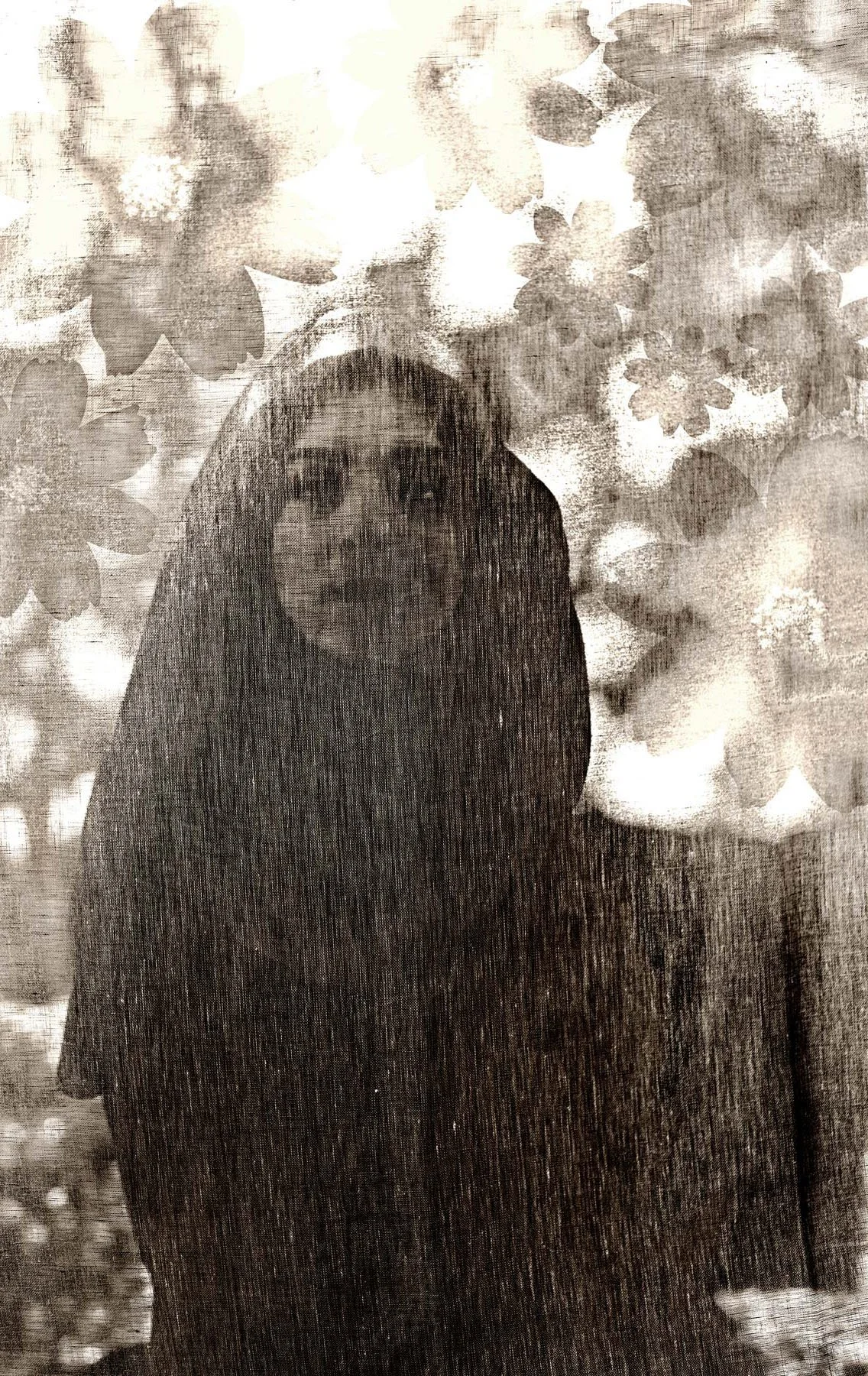
Isra, Afghanistan, Through My Window, With My Scarf as her Hijab
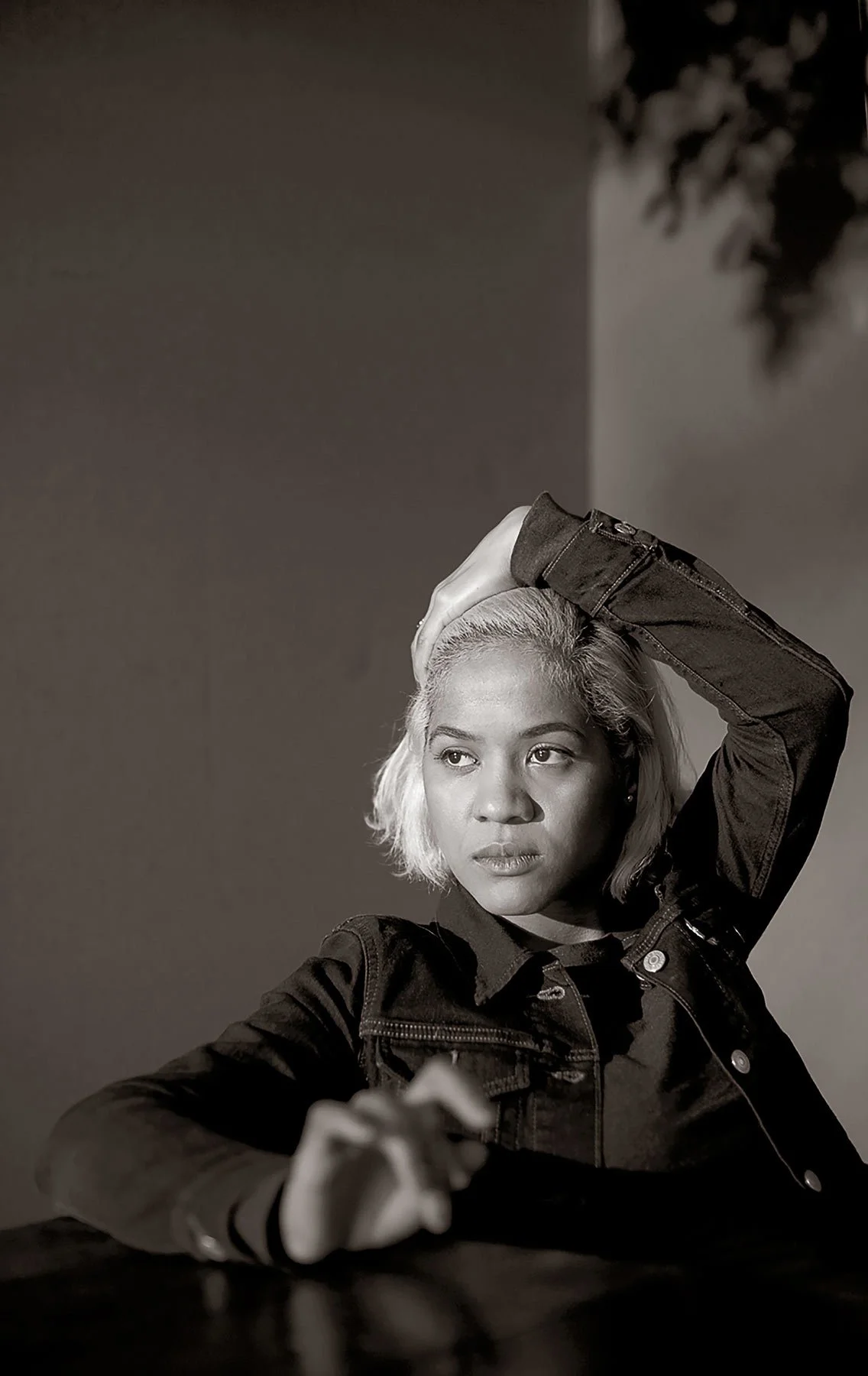
Adriana, Ecuador, in my Front Yard under the Maple Tree
HM: You mentioned your own relationship as an example of that American crossing.
Tom: Raymond is right that the culture often wants you to stay within your own silo, your own tribe. That’s what makes it so moving to see people who get out of that and create a real connection across those lines.
HM: Tell us about the PILGRIMS project. Where did it come from, and what is its central message?
Raymond: The PILGRIMS series is different from anything else I’ve produced. There’s a very succinct message at the heart of it: anyone who encounters these portraits will either be immediately drawn in or repelled, and that reaction itself is the point. My goal is for the work to be an understanding pathway, a way for people to see what acceptance and inclusiveness really means. It’s the first time I’ve produced a body of work that operates on that level.
A lot of my earlier work has been more about aesthetic satisfaction, about producing an image I’m proud of. But PILGRIMS has more of a life to it. It has something to say. I tried to convince myself at one point that I’d finished the project, but people keep showing me it isn’t finished. There are more stories to tell.
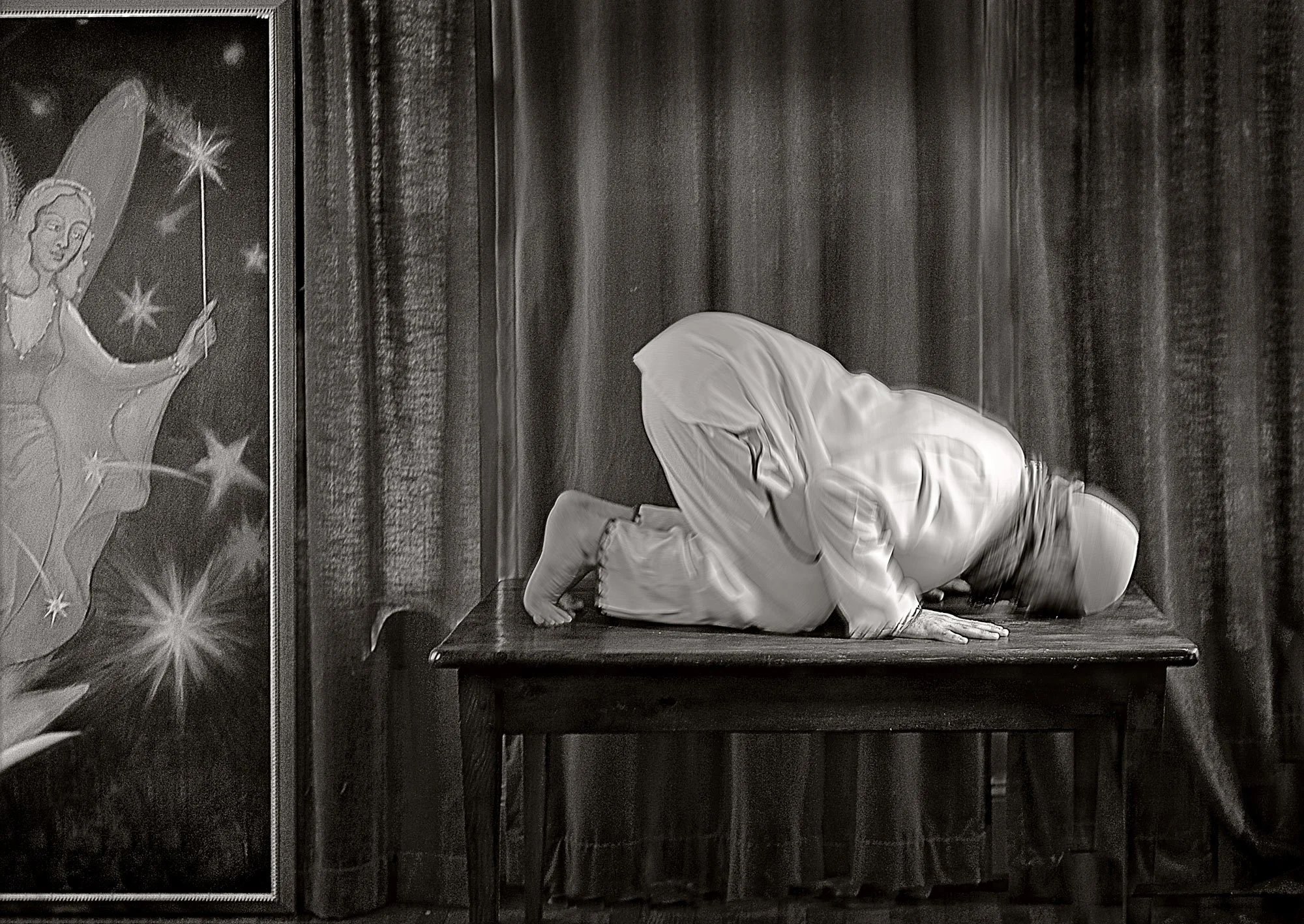
Osama Prays In my Living Room with Tom Thoune Painting of the Blue Fairy
HM: Some of the PILGRIMS portraits are couples, people from entirely different worlds who have chosen each other. Does that dynamic change how you approach photographing them?
Raymond: It does. There’s something lovely about acknowledging that two people have become a unit across cultural distance. The work honours that. One of my favourite pairings is of Annie and Attilio, I initially thought that might be the only couple portrait I did, but looking back, there are others, too. Each pairing has its own story, its own particular gravity.
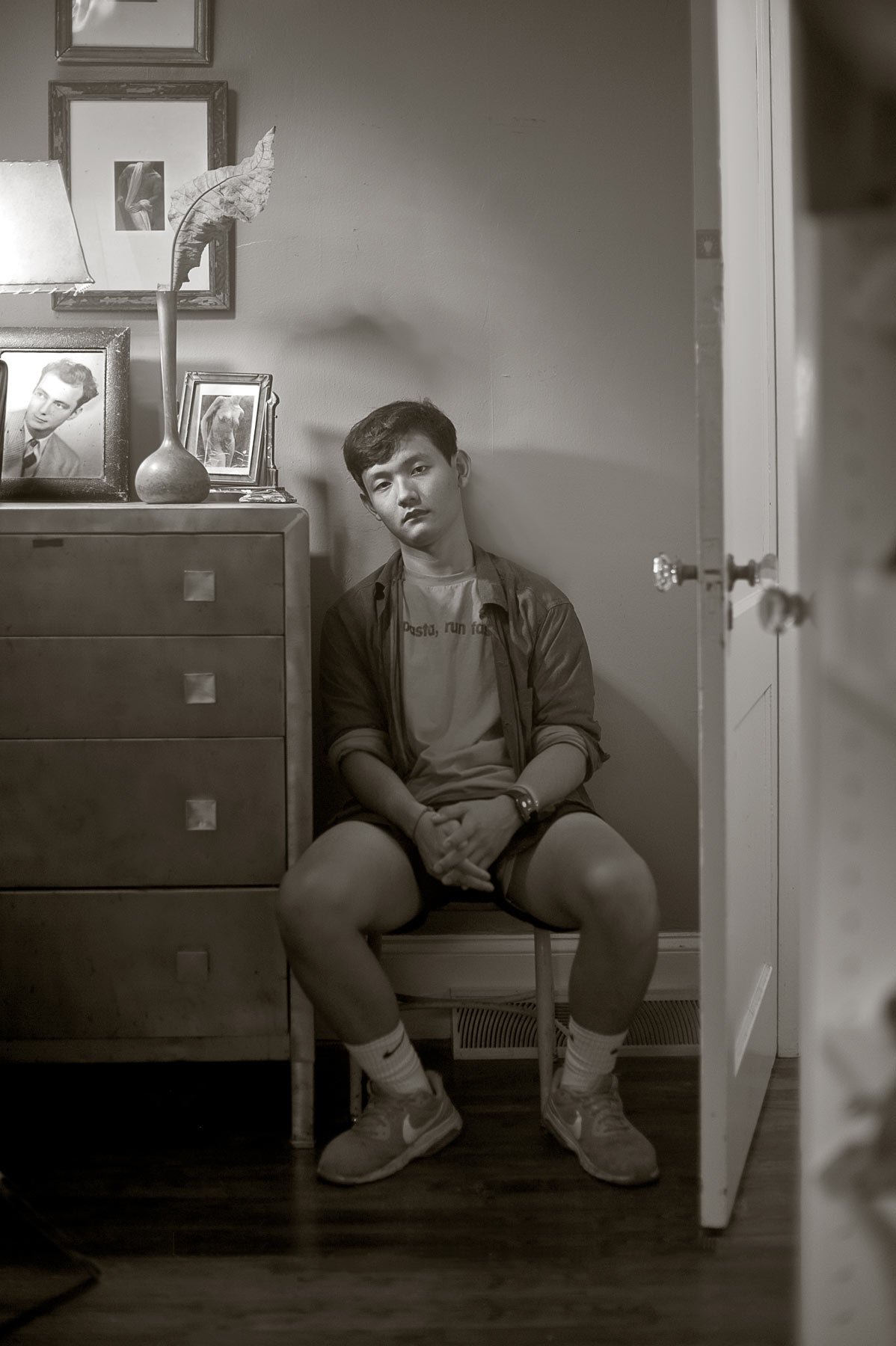
Mang, Myanmar, in My Bedroom with my Father's Portrait
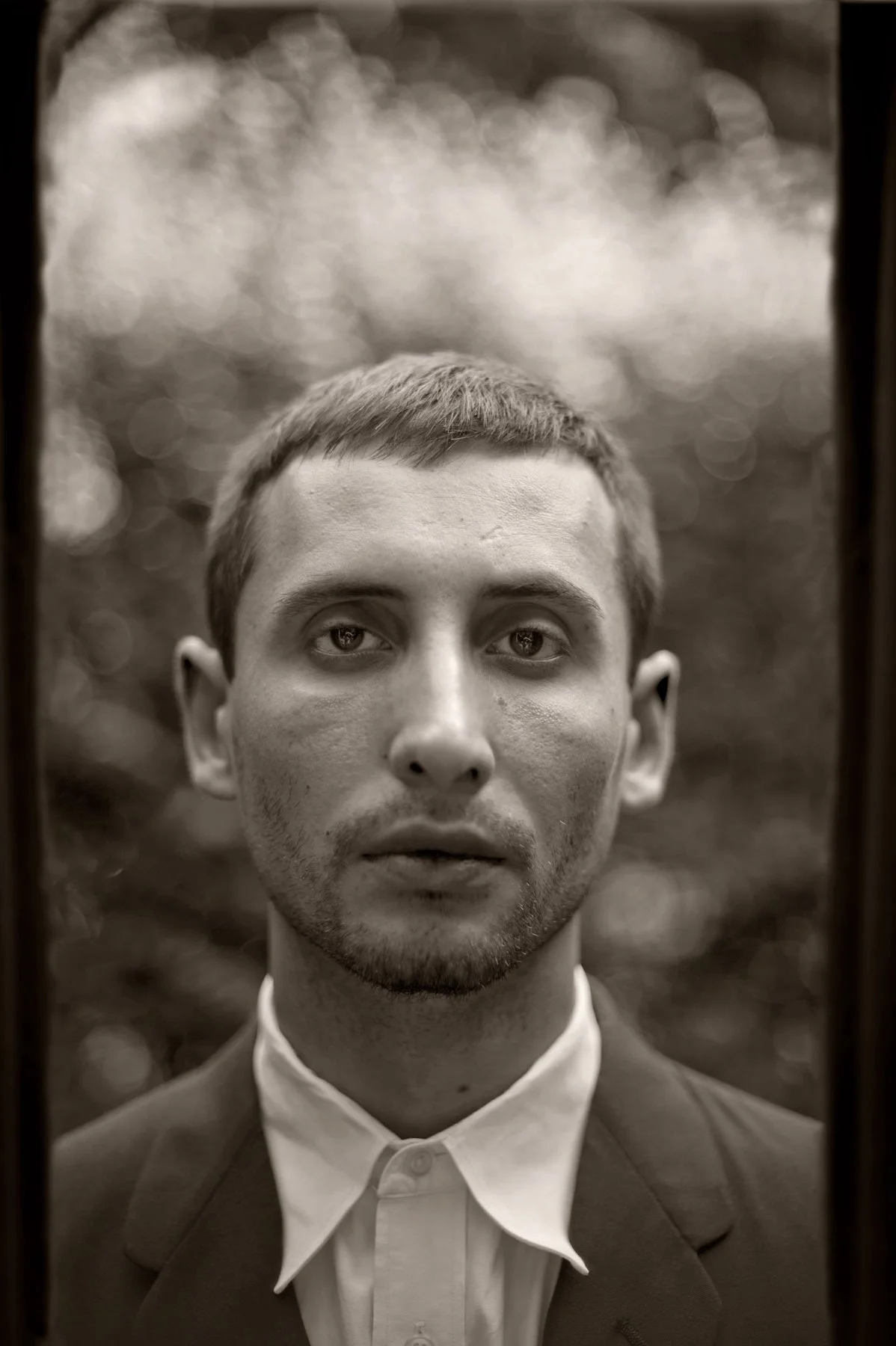
Viktor, Mondova, in the Side Yard
HM: Who were the photographers who shaped you? Who opened the door for you?
Raymond: Ralph Gibson was probably the biggest single influence. He was one of the very first photographers whose work I encountered. Before I found his work, I didn’t know this kind of photography existed, that kind of severe, intimate, formally precise black and white work. His books were my first real introduction, and I found them almost by chance. If they hadn’t been published in the way they were, I probably never would have found them. That was a formative moment.
I go back to Gibson regularly. About six months ago I spent time going through everything he’s done, there’s a vast body of work spanning decades, and he’s still working. I also came to Diane Arbus early on, her willingness to approach people directly, without flinching, was a profound example. And Peter Hujar, who died in the 1980s, was deeply important to me. His portraits have a quality of stillness and intimacy that I still reach for.
I tried early on to emulate Gibson, and I think that’s a legitimate way to formulate a vision. You learn by imitating people you admire, and at some point the imitation falls away and you find your own language. Gibson was more of a guide than a model. He put me on a course that I’m genuinely happy with.
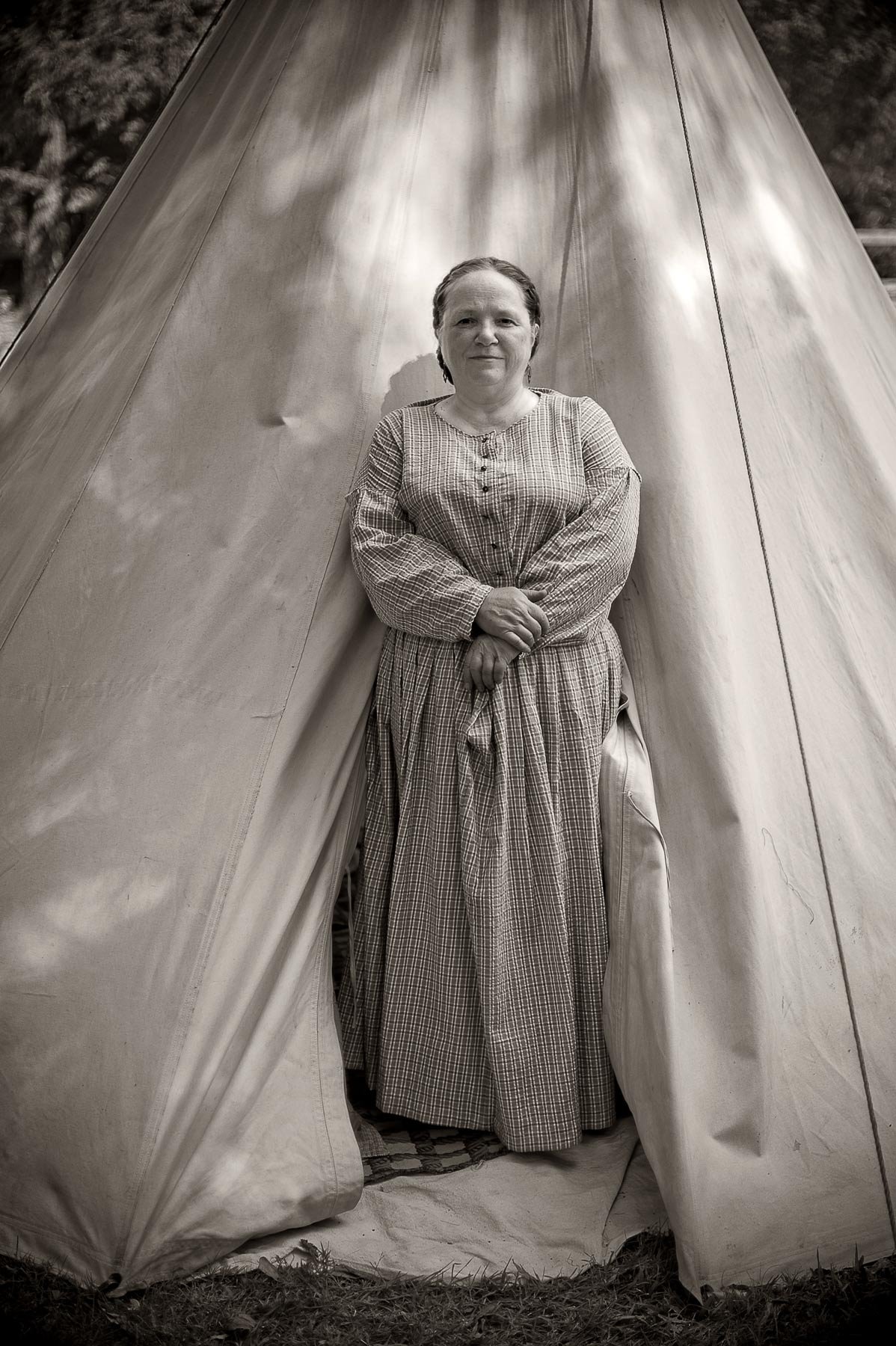
Colleen, reenactor Brattonsville, SC
HM: Were there local guides too, people closer to home who shaped you?
Raymond: Very much so. We have a neighbour who is now in his mid-eighties, a Texan, an incredible photography educator with fifty years of work behind him. A lot of being a photographer is luck: falling into the same circles as people who have devoted their lives to serious work. I was lucky to find my guides and lucky to have some of them simply arrive in my world. It would have made a real difference not to have had those influences.
HM: You mentioned that one of your most significant recent challenges has been a portrait commission that has taken far longer than expected. Can you tell us what happened?
Raymond: I’ve been working on a family portrait commission since November. They wanted images for a Christmas card. It should have been a fairly simple job, I’ve been doing this for decades. But I was working in Photoshop one day, doing a process I’ve done thousands of times, and I simply couldn’t remember the next step. The link was gone. It was disorienting and frightening.
It’s still hard to talk about, but I’ve been diagnosed with early-stage Alzheimer’s. That’s been a large part of this challenge. Realising that the diagnosis was behind what I was experiencing was one thing. Dealing with what the outcome will ultimately be is another level entirely. Of course the outcome will be the same for all of us eventually, one way or another. But it does change things.
Tom: To answer your question about what the challenge has taught him I would say: finding calmness. Sticking to it. Being unstoppable, and learning where you’re stoppable and where you’re not. There’s a kind of fierce clarity that comes with that.
Raymond: This week alone, I photographed a ninety-five-year-old master gardener who is in the last stages of her life. I photographed two young sisters, maybe eight and twelve years old. And I’ve been shooting botanicals every single day. I’m excited about what I’m doing. That, I think, is the answer to the challenge.
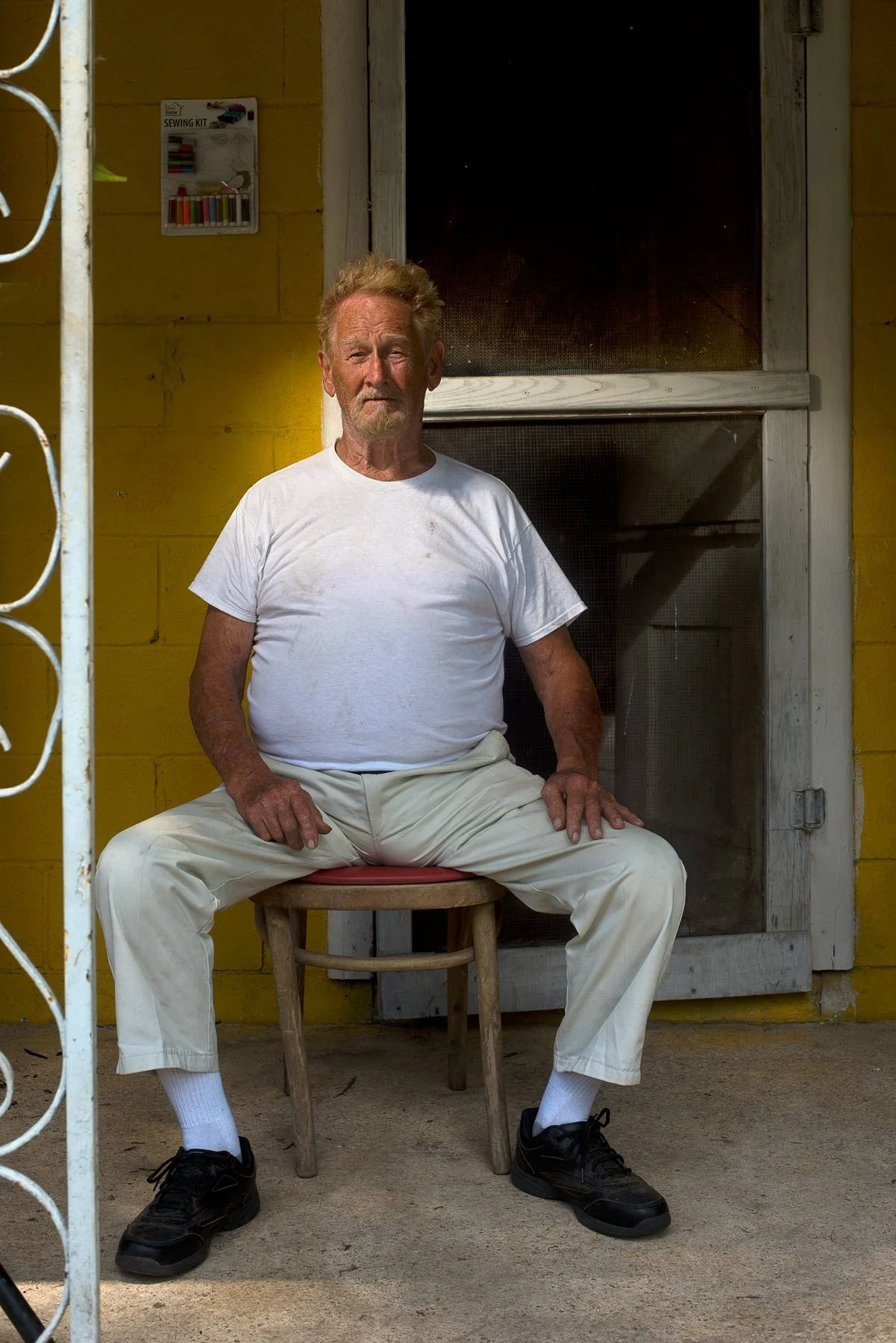
Gerald MacClamrock, owner, Playmore Beach - Burke County, NC
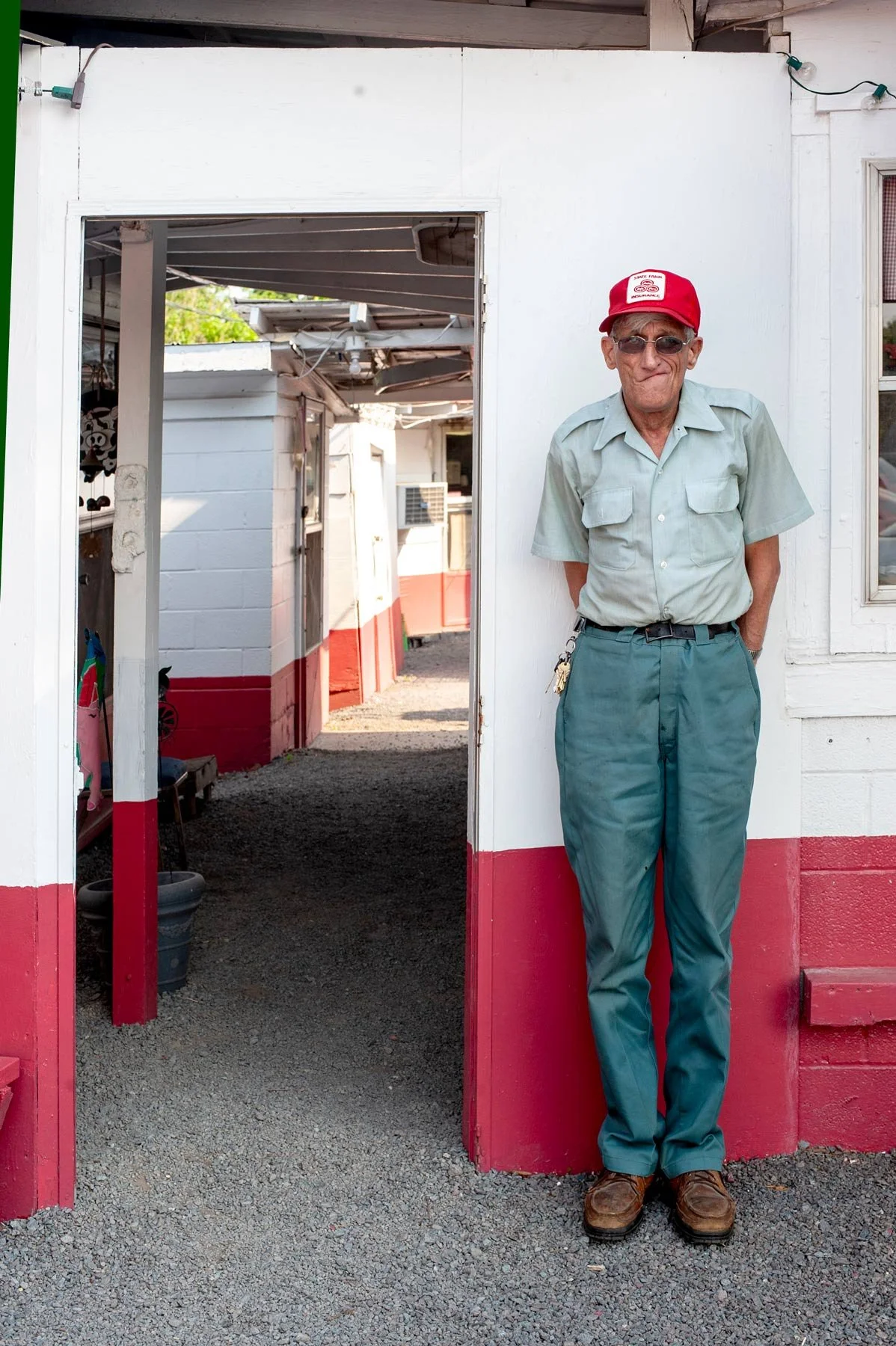
Mr. Glass at Snooks BBQ. - Advance, NC
HM: Your work was recognised in the Bar-Tur Photo Award. What did that mean to you at the time?
Raymond: It came at a moment when I really needed some kind of reaction to the PILGRIMS work. I had put so much of myself into that series, and you never know, in some ways, what impact your work has on other people’s lives. The recognition was genuinely valuable to me. It was a very satisfying encounter.
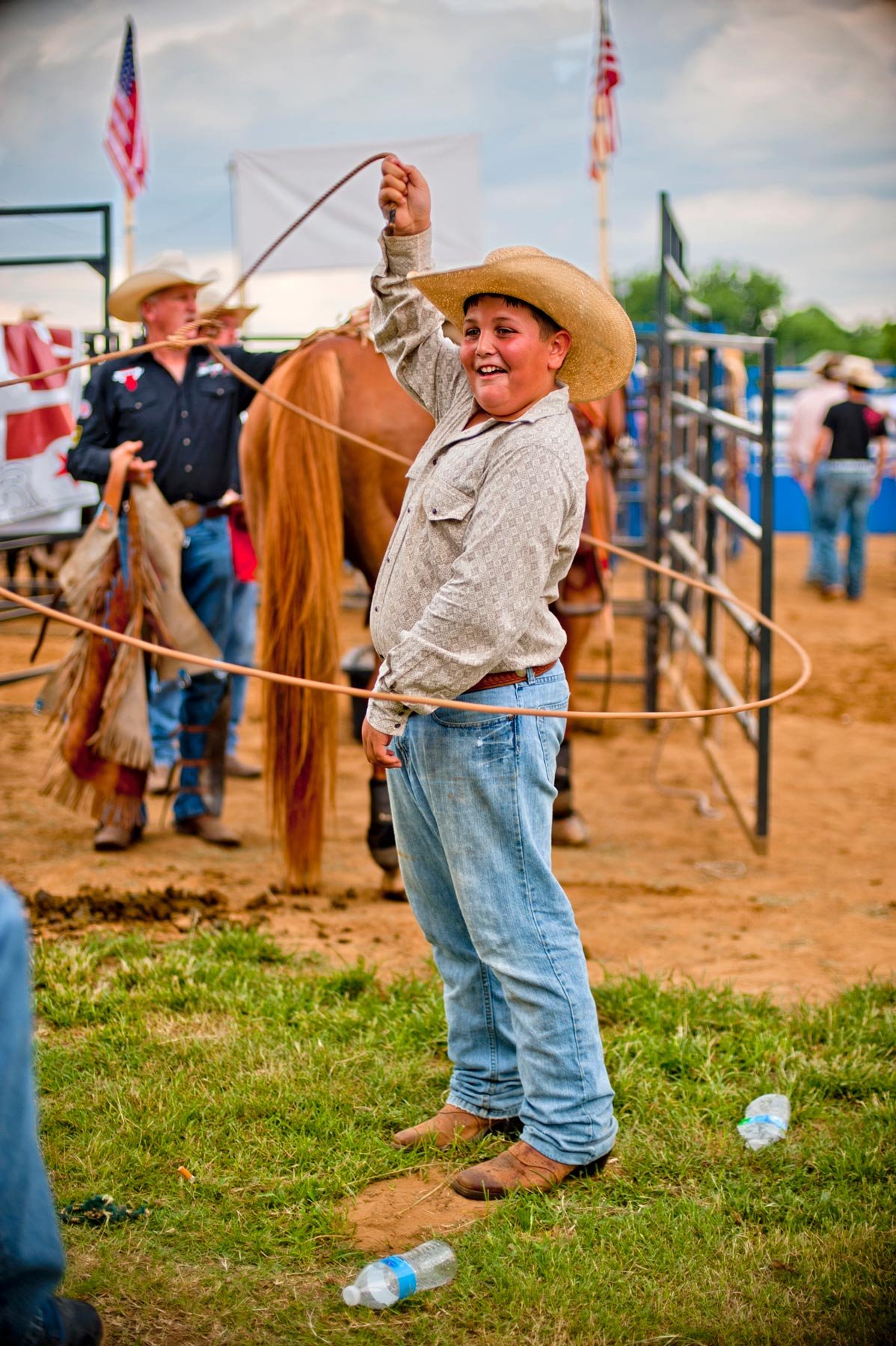
Trick roper - Lilesville, NC
HM: This is something we hear from photographers again and again, that they don’t always know the impact their work has. One photographer wrote to me and said almost exactly what you just said. We don’t always capture that kind of information. The award matters precisely because it closes that loop.
You hadn’t encountered the magazine before we got in touch?
Raymond: I had just heard of it when you reached out. I hadn’t seen it. But I was glad to discover it. There are so many photography platforms now that seem designed mainly to extract entry fees and offer little in return. What struck me about HOT MIRROR is that it goes deeper, into the photographer’s work, their thinking, their background.
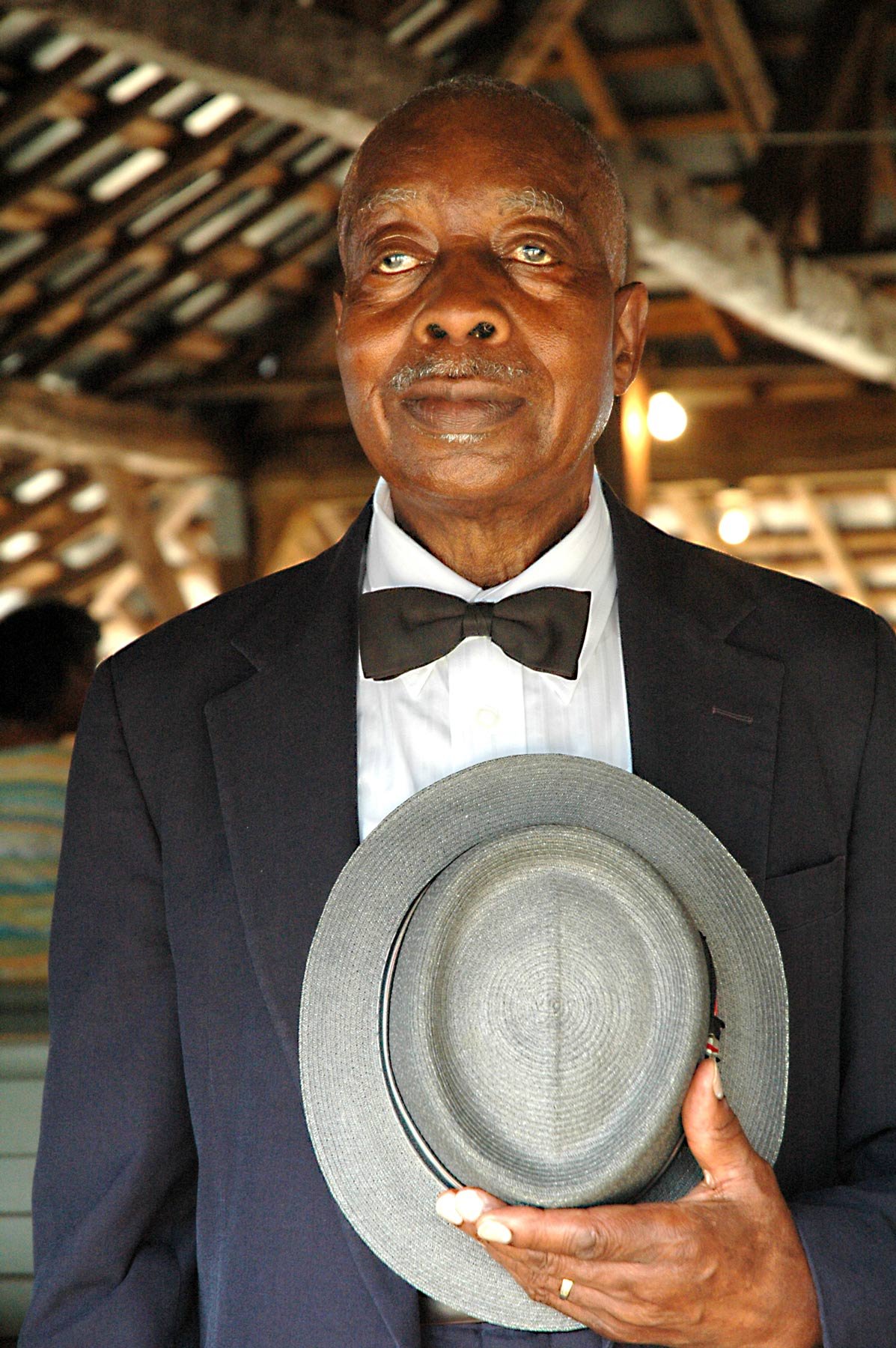
Tuckers Grove - Gentleman with hat - Tuckers Grove - Lincoln County, NC
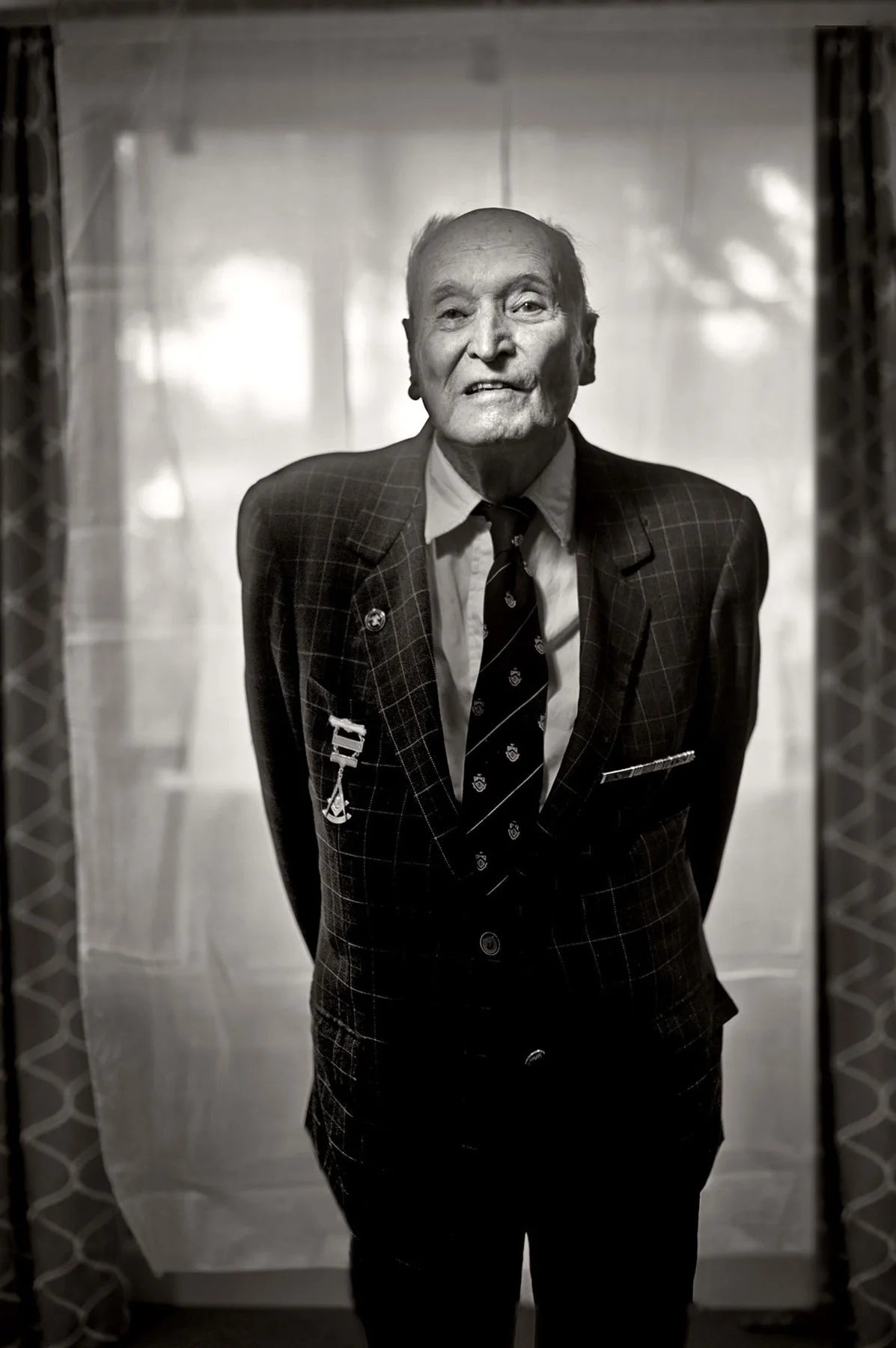
Judge Samuel McDowell Tate at 95, singing a hymn - Morganton, NC
HM: That’s exactly what we try to do. It’s fascinating how different photographers are from different parts of the world, and how similar. The magazine has been running for nearly three years now, and with every issue the range of perspectives grows. Subscribe, it’s free.
Tell us about the recent support you’ve received for your work, the Creative Renewal Fellowship, the VCCA residency.
Raymond: Over the years I’ve received many grants for individual projects, materials and equipment. But, the Creative Renewal Fellowship was about my whole career, an acknowledgment of and support for my body of work. It’s from the Arts and Science Council of Charlotte-Mecklenburg, and it operates on two levels: one for emerging artists and one for established artists. I was placed in the established artist category, which comes with a fifteen-thousand-dollar grant. You propose a project and then you’re free to pursue it. I proposed the book. My partner Tom received the same fellowship ten years ago, so there’s something particularly meaningful about it for both of us.
And then there’s the Virginia Center for Creative Arts, the VCCA. A beautiful residency in rural Virginia. They’ve recently acquired a programme in Auvillar, a small village near Toulouse in southwest France, which sits directly on the Camino de Santiago pilgrimage route. Only four artists at a time. The village has a centuries-old tradition of hospitality because pilgrims are constantly passing through, strangers are always arriving, always welcomed. That’s not what people typically associate with France, but it’s deeply embedded in that place.
I went there wanting to do a portrait project, naturally, but it turned out to be too expensive to do properly this time around. So I’m working on returning. As with my book, it has become one of the things I’m most focused on for the future.
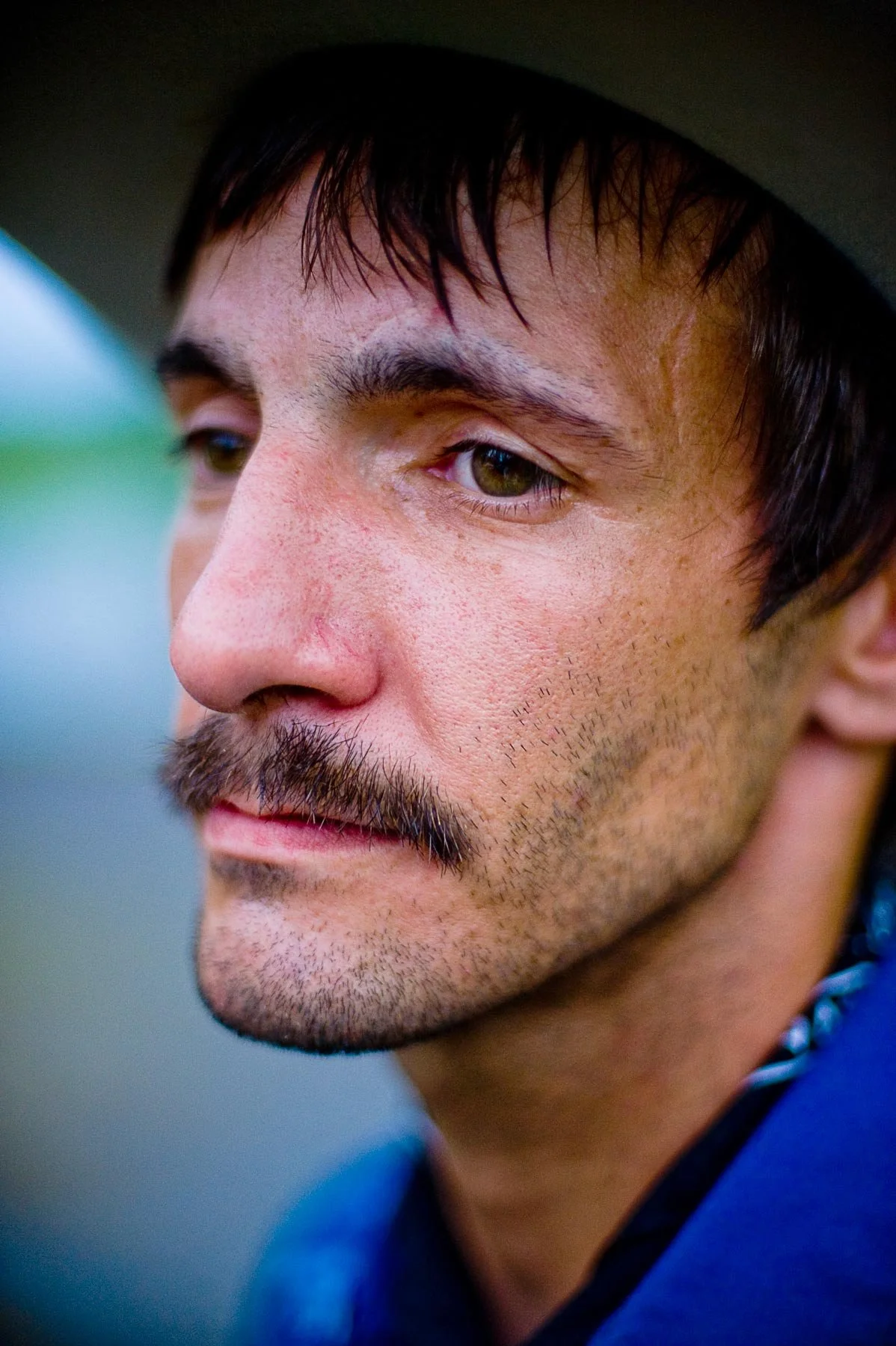
Forlorn cowboy - Rodeo - Blacksburg, SC
HM: Tell us about the book. Why a book, and what form do you imagine it taking?
Raymond: I’m actively dreaming about it, but more than dreaming. I’ve been producing work for a long time, and the last few years have been particularly productive. I feel I’m arriving at a point of genuine recognition for what I’ve done, and I want to mark that. A book means the work is seen as worthy by someone beyond myself. I’m satisfied with what I’ve produced, but you always need that outside affirmation.
It goes back to the beginning for me. Those first Ralph Gibson books were so important, I found them by chance, and if they hadn’t existed in that physical form, I never would have encountered them. That’s how powerful a book is. It lasts. It sits on someone’s shelf and they return to it for years. An exhibition closes. A social media post disappears in minutes. A book endures.
As for the form, I’ve been thinking about it as more of a memoir than a pure photography monograph. Not so much an aesthetic statement as a biography: my life with Tom, the things we’ve done, the places we’ve been. The images would tell that story. That framing actually relieves some pressure about which photographs to include, it’s not about the strongest aesthetic selections but about the truest narrative ones.
HM: When someone encounters your photographs particularly the PILGRIMS series, what conversation are you trying to start?
Raymond: I want the work to be an understanding pathway. A way for people to see what acceptance and inclusiveness genuinely means, not as an abstraction but as something real and human and standing right in front of you. Those portraits are of actual people with actual histories. The viewer is either drawn in immediately or unsettled. Both reactions are valid but I hope the work holds people long enough to move them from one place to another.
A lot of my other work has been about aesthetic satisfaction, I’ve been proud of it, but the conversation it starts is more private, more between myself and the image. PILGRIMS is different. It’s the first time my work has had what I would call a mission. And that changes everything about how it feels to make it.
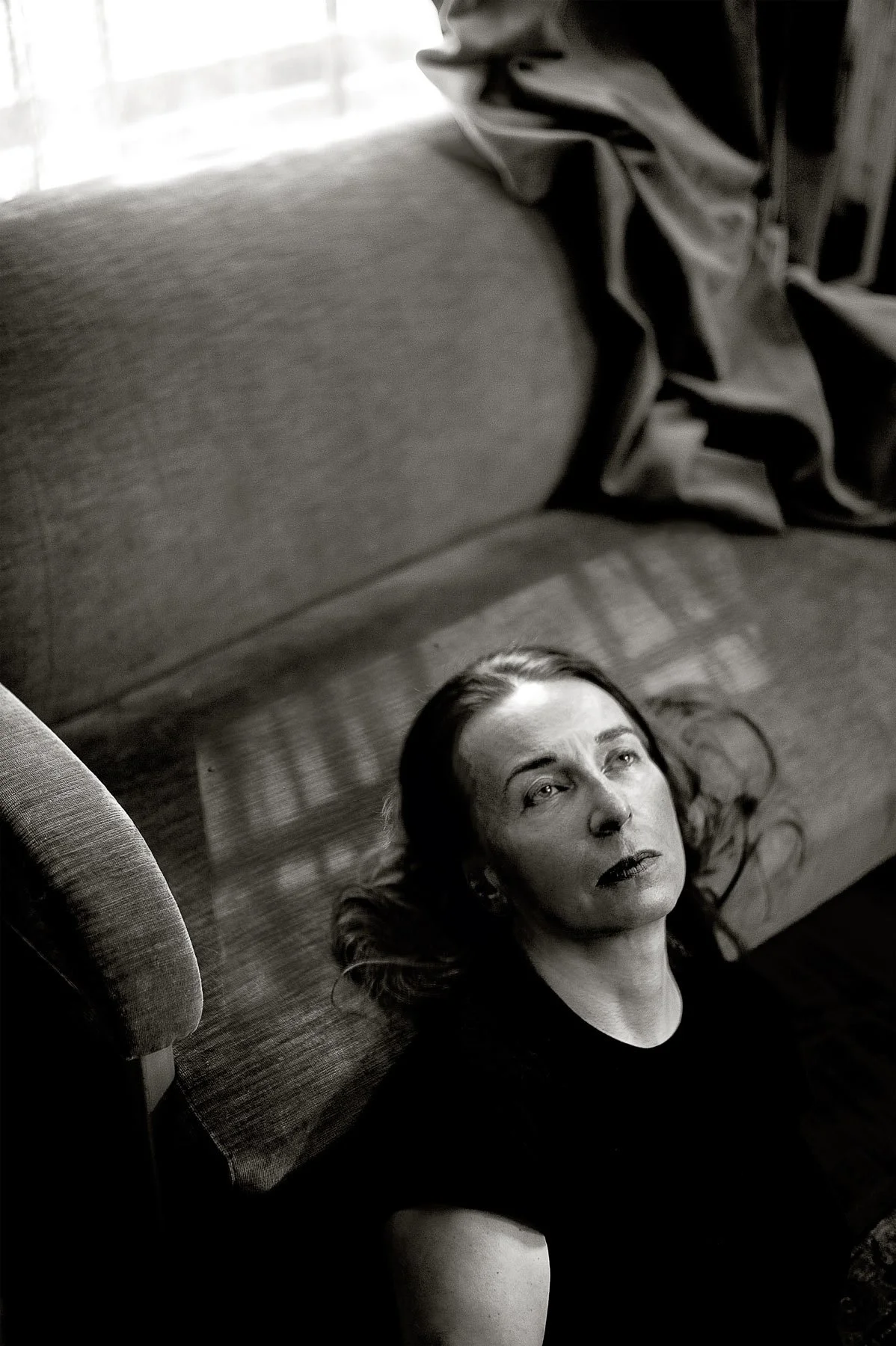
Maja, Poland, Leaning Back on my Couch
HM: There’s a question about whether certain photographs belong in a book and others belong on a wall. How do you think about that distinction?
Raymond: I do think about it. Some images need scale, need presence, need to occupy a room. Others work in sequence, in the rhythm of turning pages. The biographical book I’m envisioning leans toward the latter, it’s about the accumulation of moments and the connections between them, which is exactly what a book does well. A wall gives you an individual encounter. A book gives you a story.
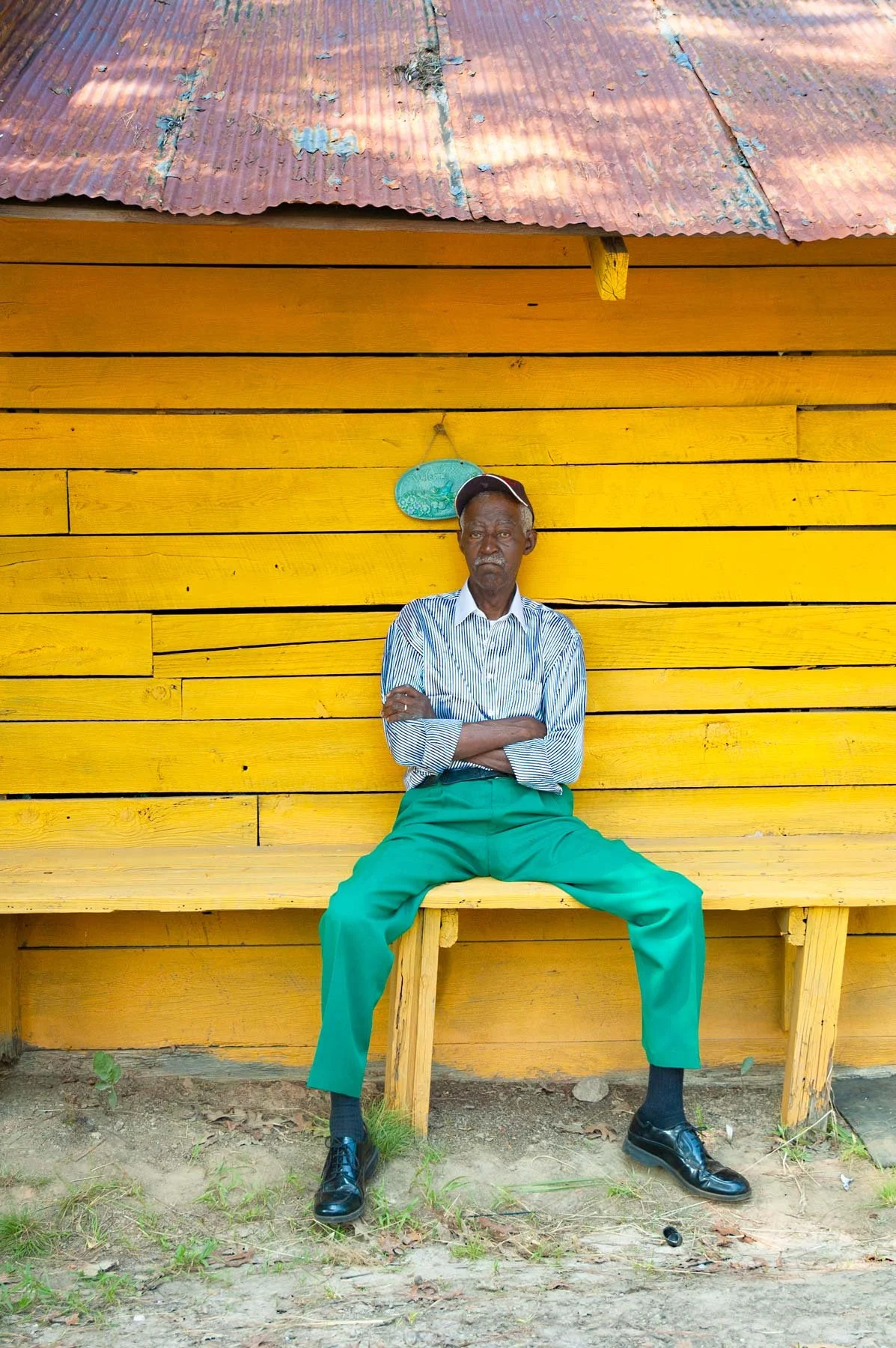
Tuckers Grove - Mr. Green Jeans - Lincoln County, NC
HM: What would you say to a young photographer starting out today?
Raymond: You never know what the subsequent forty or fifty years are going to hold. If you don’t work at it as hard as you can from the beginning, it’s wasted time. Especially early on, it has to be a full-time process. Not just taking pictures but looking at pictures, reading about photography, being in the company of people who take it seriously.
HM: A few weeks ago I heard Albert Watson speak, the Scottish photographer responsible for, among many things, one of the most iconic portraits of Steve Jobs. He told a story that I keep thinking about. Apple gave him an assignment to photograph Jobs and said he could come thirty minutes before the session. Watson said no, he needed three hours to check every light, test every detail. Because it’s not taking pictures. It’s the preparation.
The assistant also warned him: Steve doesn’t like photographers and doesn’t like being photographed. But you have one hour. Watson understood immediately. When Jobs arrived and was clearly in a bad mood, Watson walked straight up to him and said: ‘Steve, I have great news for you. You don’t need to give me an hour. Half an hour will be fine.’ Jobs smiled immediately. The session was transformed. That is the human connection in photography. You don’t leave anything to chance, not the lighting and not the person in front of your lens.
Raymond: That story resonates deeply. The preparation, the reading of the room, the understanding of what the other person needs in order to give you something real. That’s the whole work, before a single frame is taken.
HM: Watson also told a story about a Japanese jewellery client who came with a complete layout for a still-life shoot. He photographed it exactly as they wanted. And then he asked the art director: may I take one picture for myself? They said yes. He rearranged everything completely and made the photograph he had in his mind. The client saw the Polaroid, loved it, and wanted to use it. Watson said: I’m delighted but of course, you’ll pay for both photographs. He had secured the right in advance. That is how a great photographer works: delivering what the client needs, while never surrendering what the work needs.
You’ve photographed extensively in the American South. Charlotte itself has changed enormously. What’s it like to watch that happen?
Raymond: We watched it turn from a town into a city in a single lifetime, that’s unusual. People are arriving from everywhere. Our biggest import, apparently, is from Buffalo, New York. Including our next-door neighbor, who came with all his Buffalo instincts intact, he ploughed our snow this winter when we had a rare storm. Nothing like a good neighbour.
Tom: It used to be a town. Now it’s a city. We watched it happen.
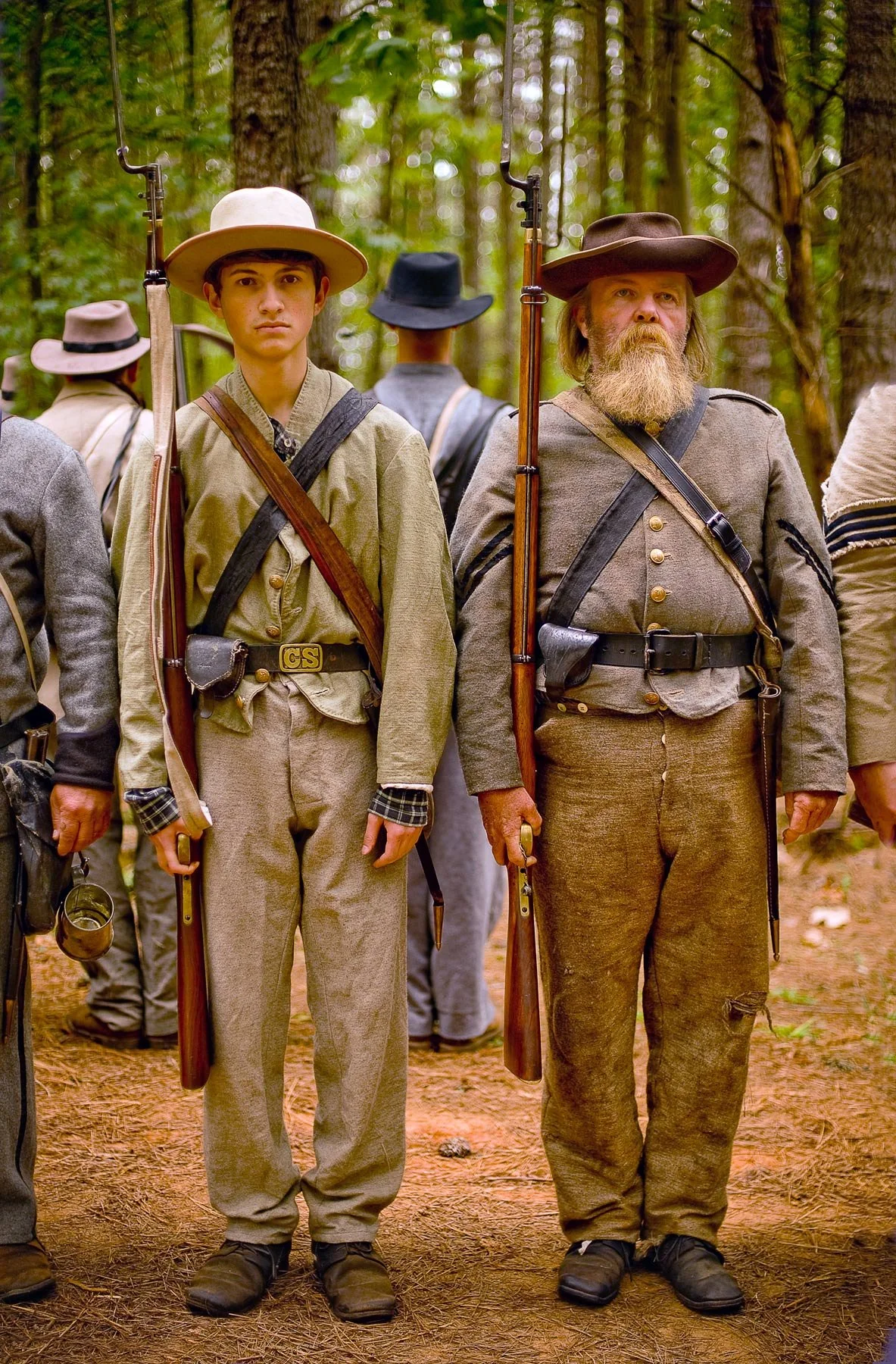
2 reenactors - Allison Woods, NC
HM: I’ve heard wonderful things. I need to visit.
Raymond: Come soon. It’s beautiful. And it’s still changing every day.
All images © Raymond Grubb